

Finding the perfect artificial Christmas tree means looking for realistic needles, sturdy construction, and easy setup. The best trees feature hundreds of branch tips, pre-lit options, and hinged branches for simple assembly and storage.
Why Artificial Trees Are Worth Your Time
Let’s be honest—dragging a real tree through your front door every December sounds romantic until you’re vacuuming up pine needles in July. Artificial Christmas trees have completely changed the game, and if you haven’t seen one up close lately, you’re in for a surprise. Today’s fake trees look so realistic that your guests might actually reach out to touch the branches just to make sure they’re not real.
The truth is, these trees save you money year after year. You’re not spending fifty or sixty dollars every December for a tree that’ll start dropping needles by New Year’s Eve. Plus, there’s no daily watering, no sticky sap on your hands, and zero allergies to deal with. You set it up once, decorate it however you like, and when the season’s over, it folds right back into storage until next year.
But here’s the thing—not all artificial trees are created equal. Some look amazing in photos but arrive at your door looking sparse and sad. Others claim to be easy to assemble but turn into a three-hour wrestling match with metal poles and tangled branches. That’s why we’ve done the homework for you.
King of Christmas King Noble Fir
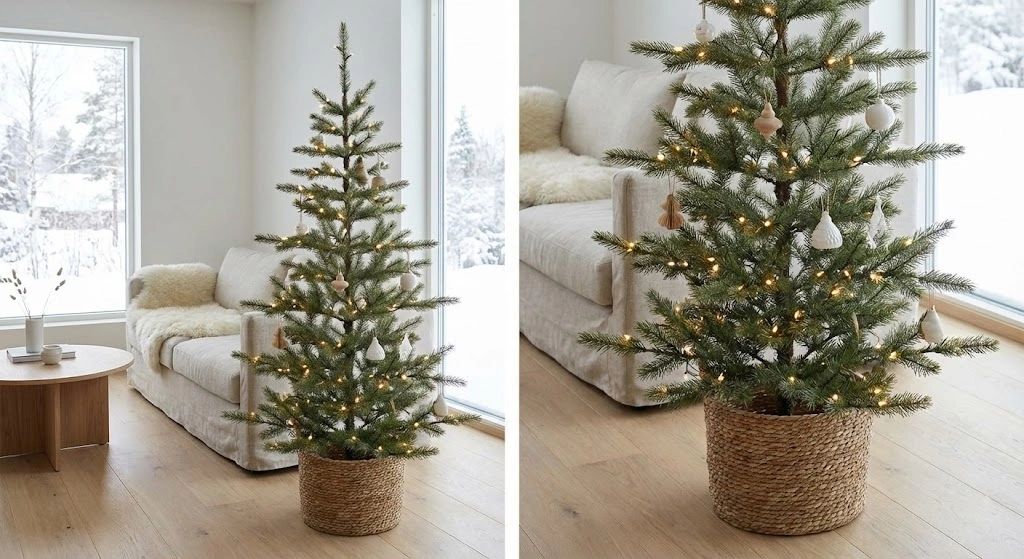
If you want a tree that gets people talking, the King Noble Fir deserves your attention. This isn’t your grandmother’s plastic Christmas tree—it’s a showstopper that combines a unique, minimalist design with serious strength.
What makes this tree special is its sparse, elegant look. The branches are intentionally spaced out, which might sound strange at first, but it actually creates this beautiful, European-inspired aesthetic. Think of those chic Scandinavian homes you see in magazines—that’s the vibe. The open design means your ornaments really get their moment to shine instead of getting lost in a sea of green.
The tree features a strong metal core running through the center, so even your heaviest ornaments won’t weigh down the branches. Many people worry about hanging their special glass baubles or handmade decorations on artificial trees, but this one handles them without any drooping or bending. It comes pre-lit with warm lights that give off a cozy glow, and many versions include a remote control so you can adjust the settings from your couch.
Assembly takes about twenty to thirty minutes, which is pretty manageable even if you’re doing it solo. The branches are hinged, meaning they fold down when you pull them out of the box, and you simply fluff them into position. No complicated instructions or mystery parts involved.
The downside? This tree works best for people who appreciate a more modern, airy look. If you’re after that classic, ultra-full Christmas tree packed with branches, this might feel too sparse for your taste. But for folks who want something different and stylish, it’s absolutely worth considering.
National Tree Company Feel Real Downswept Douglas Fir
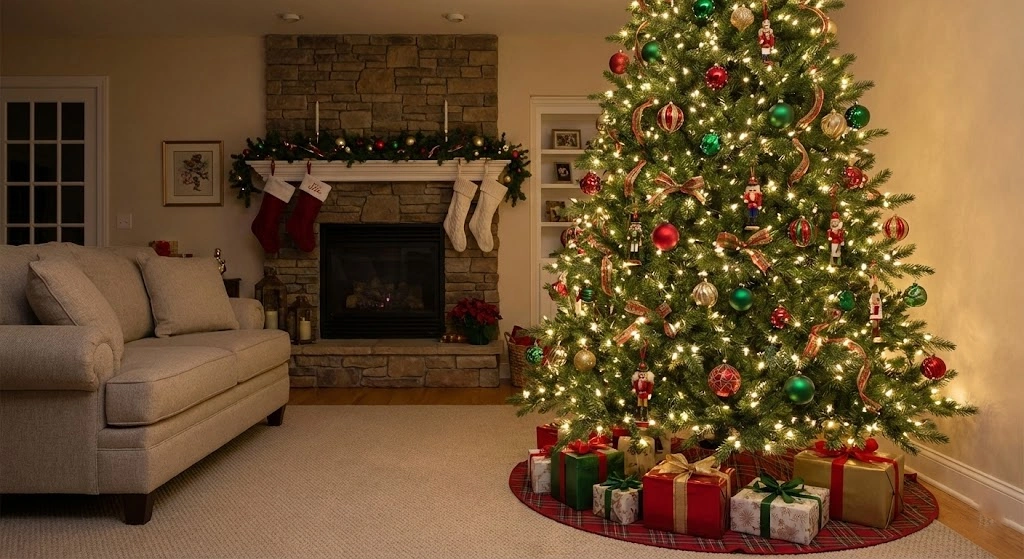
Here’s where things get seriously realistic. The National Tree Company has this technology called Feel Real, and the name isn’t just marketing fluff—these branch tips are actually molded from real tree branches. When you run your hand across them, they have that authentic texture and look that makes you do a double-take.
This Douglas Fir comes packed with branches—we’re talking close to two thousand individual tips on the larger models. That creates the full, lush appearance that most people picture when they think of a classic Christmas tree. The branches have a natural downswept look, meaning they angle slightly downward just like a real fir tree would in the wild.
One of the best parts about this tree is how it comes together. The hinged branches drop into place pretty easily, though you’ll want to set aside about forty-five minutes to properly fluff and shape everything. That initial shaping makes all the difference between a tree that looks okay and one that looks spectacular. Take your time spreading out each branch tip, and you’ll end up with something that could genuinely pass for the real deal from a few feet away.
The pre-lit versions come with clear lights already strung throughout, and they use this clever setup where if one bulb goes out, the rest stay lit. That’s a game-changer compared to older Christmas lights where one dead bulb killed the whole strand. The tree also includes a sturdy metal stand, storage bag, and even gloves for fluffing so you don’t scratch up your hands on the branches.
This tree sits in the mid-range price category—not the cheapest option out there, but not wildly expensive either. For the quality and realism you’re getting, most people find it’s money well spent. It’s especially great for families who want that traditional Christmas tree look without the mess and maintenance of a real one.
Balsam Hill BH Fraser Fir
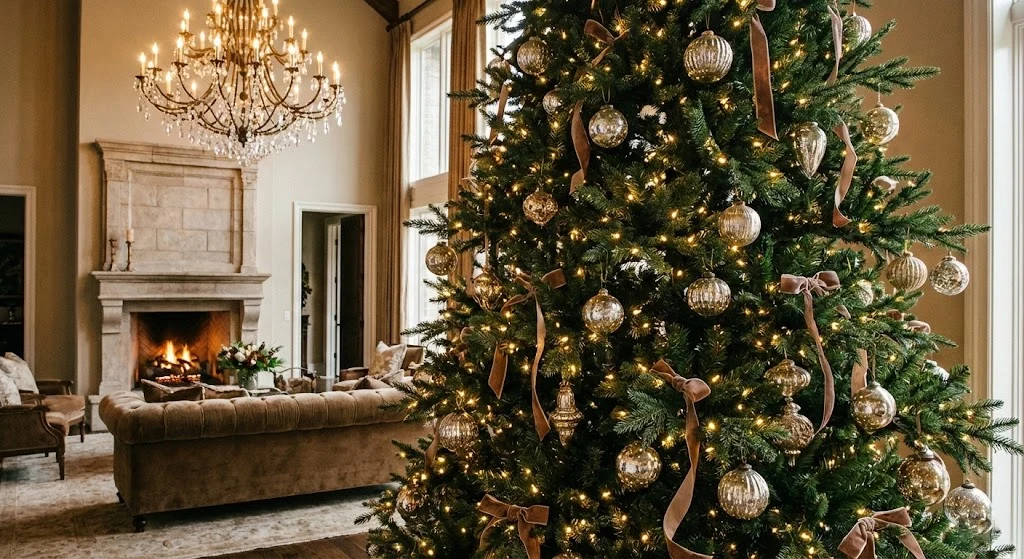
When people talk about premium artificial trees, Balsam Hill’s name comes up constantly. Their Fraser Fir is basically the gold standard—the tree that makes other fake trees jealous. Yes, it costs more than budget options, but there’s a reason it tops so many “best of” lists.
Balsam Hill uses their True Needle technology, which takes realism to another level. They create the needles using molds from actual Fraser fir branches, capturing every little detail. The result is a tree with forty different tip variations—that’s more variety than almost any other artificial tree on the market. Real trees in nature have branches that vary slightly, and Balsam Hill recreates that natural irregularity. It’s these small details that trick your eye into thinking you’re looking at something straight from a Christmas tree farm.
The tree comes in sizes ranging from five and a half feet all the way up to twelve feet, so whether you have a cozy apartment or a grand living room with vaulted ceilings, there’s an option for you. The width ranges from about four feet to six feet depending on which size you choose.
Setup is surprisingly painless thanks to their Easy Plug system. All the lights connect through the center pole, so you’re not hunting around in the branches trying to find plugs and cords. You basically stack the sections, plug one cord into your wall outlet, and boom—the whole tree lights up. Many models come with a foot pedal that lets you turn the lights on and off without bending down to reach an outlet.
The branch tips feel incredibly realistic when you touch them, and the tree holds its shape beautifully year after year. People who own these trees often mention that even after five or six years, they look just as good as the day they bought them. That durability matters when you’re making this kind of investment.
The main drawback is obvious—these trees aren’t cheap. A seven-and-a-half-foot Fraser Fir typically runs several hundred dollars. But when you break that down over ten or fifteen years of use, the cost per season becomes pretty reasonable. Plus, you’re avoiding the annual expense and hassle of buying a real tree.
Best Choice Products Premium Spruce
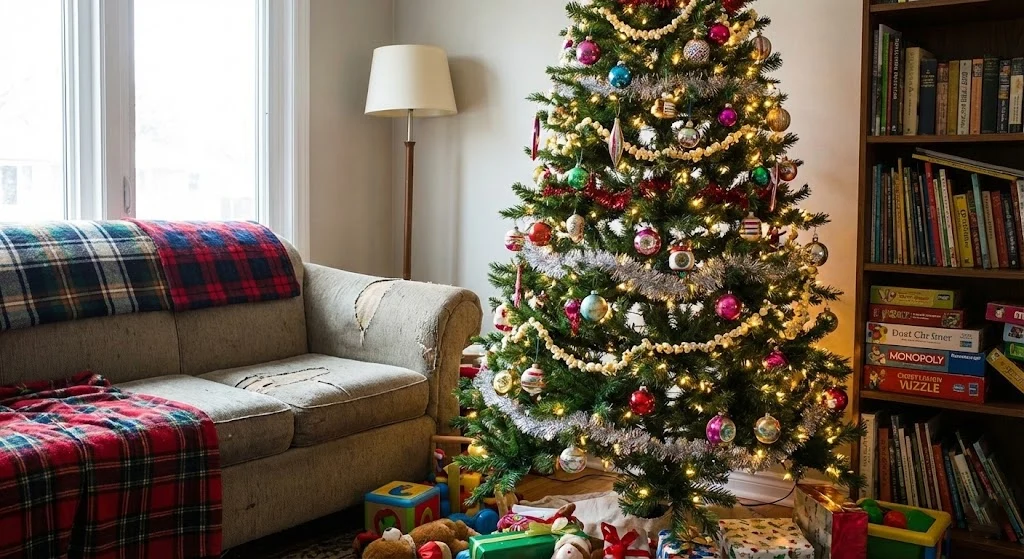
Sometimes you just need a solid tree that looks good, goes up easy, and doesn’t drain your bank account. That’s exactly what the Best Choice Products Premium Spruce delivers. This is the tree that proves you don’t have to spend a fortune to get something that looks nice in your living room.
The spruce design features dense PVC needles that recreate that classic Christmas tree silhouette—full at the bottom, gradually tapering toward the top. The color is a rich, authentic green that doesn’t look plasticky or fake. Depending on which size you pick, you’re looking at anywhere from a few hundred to over four thousand branch tips on the largest models.
Assembly is genuinely straightforward. You unfold the metal stand, stack the sections from largest to smallest, and start fluffing the branches. The whole process takes maybe thirty to sixty minutes depending on how particular you are about shaping. The hinged branch construction means you’re not fighting with individual branches that need to be inserted one by one—everything’s already attached and just needs to be spread out.
This tree comes in both pre-lit and unlit versions. The pre-lit option has warm white lights already in place, which saves you the headache of stringing your own. The unlit version costs a bit less and gives you complete control over how you want to light it up. Some people prefer to use their own special lights or have specific color schemes in mind, so having that choice is nice.
The tree includes a sturdy metal stand that keeps everything stable, even when you load it up with ornaments. The flame-retardant needles add a safety element that matters, especially if you have curious kids or pets around. And when Christmas is over, the sections fold back up and fit into storage without taking up your entire garage.
The price point on these trees is hard to beat. You can usually find a six-foot tree for well under a hundred dollars, and even the larger sizes stay relatively affordable. Sure, it won’t have quite the same ultra-realistic details as a premium Balsam Hill tree, but for most people, it looks plenty good once you’ve got lights, ornaments, and garland on it.
King of Christmas Prince Flock
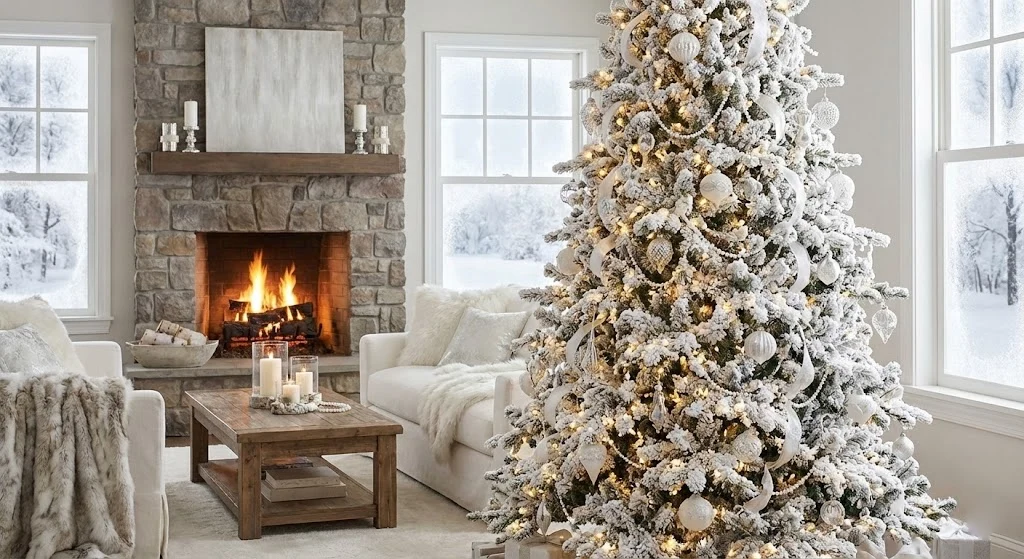
Want to create a winter wonderland right in your living room? The Prince Flock tree delivers that magical, snowy Christmas card scene without you having to live somewhere it actually snows. This heavily flocked tree looks like it just came in from a gentle snowstorm.
The flocking—that white, powdery coating on the branches—is applied generously, giving the tree a thick, snow-covered appearance. Unlike some cheaper flocked trees that shed white dust all over your floor for weeks, King of Christmas uses a flocking that stays put. You’ll get a little bit of powder during initial setup as you fluff the branches, but after that, it holds surprisingly well.
The tree underneath all that snow is well-constructed with sturdy branches that spread out nicely. Many flocked trees can look a bit sparse because the white coating makes it harder to hide gaps, but this one has enough branch density to maintain a full appearance. The pre-lit versions come with warm white lights that create a beautiful glow through the snowy branches—it really does look like a tree covered in fresh snow with lights shining through.
Setting up a flocked tree requires a bit more patience than a regular green tree. You’re still looking at twenty to forty minutes for assembly, but you need to be gentle with the branches as you shape them to avoid knocking off the flocking. Wear the gloves that come with it (or use your own) to keep your hands clean during setup.
This tree works beautifully if you’re going for a specific aesthetic. The white branches make colored ornaments absolutely pop—red, blue, gold, or silver decorations look stunning against the snowy background. It’s also perfect if you’re decorating in neutral tones or going for that elegant, all-white Christmas theme.
The Prince Flock sits in the mid-range price category, typically costing less than the premium King Flock model but more than basic green trees. For many people, it’s the sweet spot between quality and affordability. The tree comes with a storage bag and usually includes extras like a remote for the lights.
One thing to keep in mind—flocked trees create a specific look that you’re committing to. If you like to change up your Christmas decorating style every year, a green tree might give you more versatility. But if you love that snowy, winter wonderland vibe and want it every December, this tree delivers it beautifully.
What to Look for When Shopping
Now that you’ve seen five solid options, let’s talk about what actually matters when you’re choosing an artificial Christmas tree. Understanding these details helps you make a smart decision instead of just clicking on whatever looks pretty in a photo.
Branch tip count makes a huge difference in how full your tree looks. Generally speaking, more tips mean a denser, more realistic tree. For a seven-and-a-half-foot tree, you want at least fifteen hundred tips. High-end trees often have four thousand to seven thousand tips, which creates that lush, natural appearance. But don’t let a high tip count be your only deciding factor—the quality of those tips matters just as much as the quantity.
Look at whether the needles are made from PVC, PE (polyethylene), or a mix of both. PVC needles are the most common and budget-friendly. They’re durable and work fine, though they can look a bit plasticky up close. PE needles are molded from real branches and look incredibly realistic, but they cost more. Many premium trees use a combination—PE for the outer branches where you see them up close, and PVC for the inner branches where nobody’s really looking anyway.
Pre-lit versus unlit is a personal choice that depends on your situation. Pre-lit trees save you hours of work and frustration. You’re not untangling string lights, testing bulbs, or trying to wrap them evenly around the tree. Everything’s already done, and modern pre-lit trees use LED lights that last for years and barely use any electricity. The downside is that if a light strand eventually fails, you’re stuck with a section of dead lights. With an unlit tree, you have complete control over your lighting, you can change it up every year, and replacing lights is easy.
Assembly method matters more than most people realize. Hinged branches are your friend—they’re already attached to the center pole and just fold out into position. This beats the old-style trees where you had to insert individual branch pieces into color-coded holes. Look for trees that have sections that easily stack and connect, with lights that plug together through the trunk rather than having multiple cords to deal with.
Storage considerations should factor into your decision. A tree needs somewhere to live for eleven months of the year. Most quality trees come with a storage bag or at least recommend one. Check the dimensions of the tree when it’s packed up and make sure you’ve got space in your attic, basement, or garage. Some newer trees have clever designs that fold up more compactly than traditional styles.
Making Your Tree Look Its Best
You’ve bought a great tree, now let’s make sure it looks amazing. Even the most expensive tree can look mediocre if you don’t set it up properly, and even a budget tree can look fantastic with the right care.
Take your time with fluffing. Seriously—this step makes or breaks how your tree looks. When your tree arrives, those branches are compressed from shipping and storage. You need to separate and spread out each individual branch tip to create fullness. Start from the bottom and work your way up, section by section. Bend the branches slightly upward to give them a natural curve. This process takes time, but it’s absolutely worth it. The difference between a properly fluffed tree and one that’s just been pulled out and plugged in is dramatic.
Think about placement before you commit. Your tree should be away from heating vents, fireplaces, and radiators. Even though it’s not a real tree that could dry out and become a fire hazard, the heat can damage the needles over time. Make sure there’s clearance around the tree so branches aren’t squished against walls or furniture. And consider the view from different angles—you want it to look good from wherever people will see it most.
Lighting matters even if your tree is pre-lit. Many people add extra string lights to their pre-lit trees for more sparkle. Battery-operated clip-on candles or tiny battery lights tucked deep in the branches create extra depth and glow. If you have an unlit tree, plan on at least one hundred lights per foot of tree height—so for a six-foot tree, you’d want six hundred lights minimum for a nice, bright look.
Don’t skimp on a good tree stand or collar. If your tree didn’t come with a solid stand, invest in one. A wobbly tree is frustrating and potentially dangerous if it tips over. Tree collars or skirts hide the stand and give your tree a finished, polished look. They also hide presents beautifully until it’s time to open them.
Add depth with your decorations. Start with larger ornaments placed deeper in the tree, then add medium-sized ones toward the middle and outer branches, finishing with smaller ornaments on the tips. This layering creates visual interest and makes the tree look fuller. Ribbon or garland woven through the branches instead of just wrapped around fills in any bare spots you might have missed during fluffing.
The Bottom Line on Your Christmas Tree Investment
Choosing the right artificial Christmas tree comes down to balancing what matters most to you—realism, convenience, budget, or style. The trees we’ve covered hit different sweet spots depending on your priorities.
If you want absolute top-tier realism and you’re willing to pay for it, the Balsam Hill Fraser Fir is tough to beat. It’s the tree that makes guests wonder if it’s real, and it’ll look great for years to come. The King of Christmas options give you premium quality at a better price point—the Noble Fir if you want something modern and different, or the Prince Flock if you’re dreaming of a white Christmas vibe.
For folks who want something solid and realistic without breaking the bank, the National Tree Company Douglas Fir hits that middle ground beautifully. And if you’re shopping on a budget or just want a nice-looking tree without overthinking it, the Best Choice Products Spruce gets the job done and then some.
Remember that any of these trees will last you years—probably a decade or more with proper care. That initial investment pays for itself pretty quickly when you consider what you’d spend on real trees year after year. Plus, you’re saving time, avoiding mess, and eliminating the hassle of tree shopping, disposal, and cleanup.
The best artificial Christmas tree is ultimately the one that makes you happy when you walk into your living room each December. Whether that’s a ultra-realistic premium option or a budget-friendly tree that you decorate to perfection, what matters is that it creates that magical Christmas feeling in your home. Take your time choosing, set it up with care, and you’ll have a beautiful centerpiece for your holiday celebrations for many years to come.