

Hangar roof construction in NYC demands specialized engineering to handle extreme weather, strict building codes, and limited space. Steel-based systems typically cost $25-35 per square foot and can last 40-50 years with proper maintenance and design considerations.
Understanding Hangar Roof Construction in New York City
Building a hangar roof in New York City isn’t like throwing up a simple structure in the countryside. You’re dealing with one of the most demanding construction environments in the country. The city throws everything at your roof—freezing winters, hot summers, heavy snow, driving rain, and wind that can rip through the streets like a freight train.
Properly constructed roofs using steel panels can last 40 to 50 years, depending on maintenance and material quality. That’s a solid return on your investment if you build it right from the start.
When you’re planning hangar roof construction in NYC, you’re building a shelter that needs to protect valuable aircraft worth hundreds of thousands or even millions of dollars. There’s no room for cutting corners. The roof needs to stand up to nature’s worst while meeting some of the toughest building codes in the nation.
Why NYC Weather Makes Hangar Roofs So Challenging
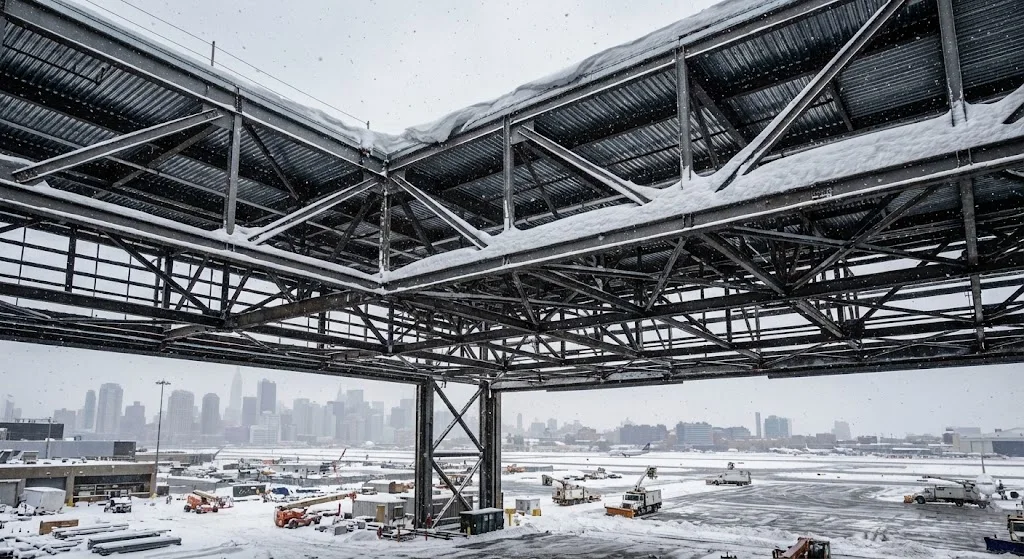
New York City weather puts roofs through the wringer. Winters bring heavy snowfall that piles up fast. Ground snow loads vary across the state, with design requirements accounting for drift surcharge loads when combined loads exceed 20 pounds per square foot. Your hangar roof needs to handle this weight without buckling or collapsing.
But snow isn’t the only concern. Summer heat and humidity test your materials in different ways. Metal expands and contracts with temperature changes. Without proper design, you’ll see warping, leaks, and structural stress that shortens your roof’s life.
Wind is another beast entirely. Flat roof snow loads exceeding 30 pounds per square foot must combine 20 percent with seismic loads during design calculations. Your roof design needs to account for wind uplift forces that try to rip the whole structure off its supports during storms.
Rain comes hard and fast in NYC. Your drainage system can’t afford to fail. Water pooling on a flat roof adds massive weight—think about hundreds or thousands of gallons sitting on your structure. That’s why proper slope and drainage design matters so much.
Steel Dominates Hangar Roof Construction Materials
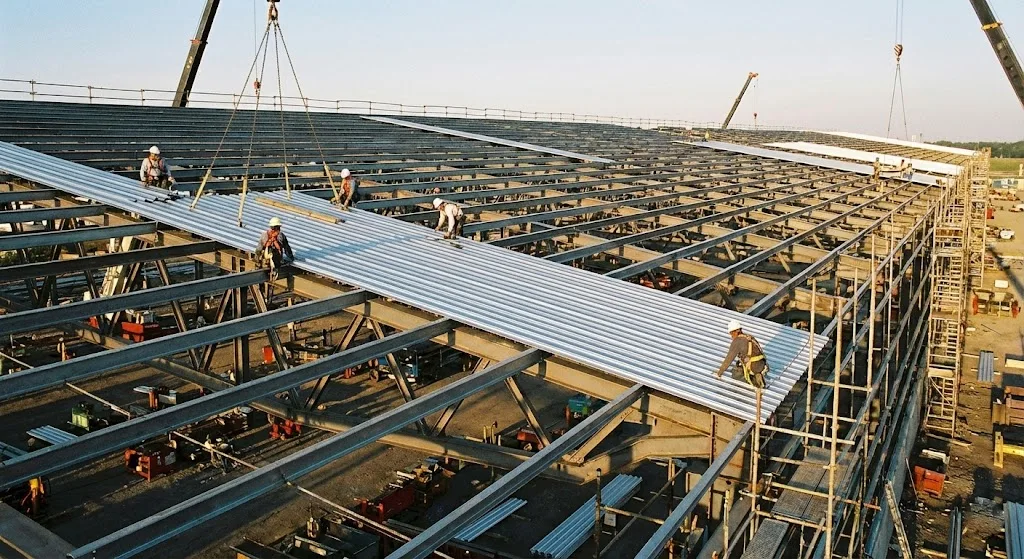
Walk into any serious hangar construction discussion in NYC, and steel will come up first. There’s good reason for this dominance. Steel is strong, lightweight, and cost-effective, more corrosion-resistant than other metals and provides better insulation, making it ideal for aircraft hangar construction.
Steel roofing systems give you the strength to span large open areas without interior columns blocking aircraft movement. You get clear-span construction that maximizes usable space inside your hangar. This matters when you’re maneuvering planes that cost more than most houses.
The material resists fire better than wood or other alternatives. In a hangar storing aircraft fuel and expensive equipment, fire resistance isn’t optional—it’s critical for insurance and safety compliance.
Steel roofing in New York typically ranges from $7,650 to $28,900 for average projects, offering exceptional durability and weather resistance. While that seems steep compared to residential roofing, you’re building a specialized structure that needs to last decades.
Aluminum offers another option worth considering. Aluminum is lighter and more cost-effective than steel, and it’s extremely corrosion-resistant, remaining durable even after prolonged exposure to the elements. This makes it attractive for locations near water or in areas with high humidity. NYC’s coastal proximity means corrosion resistance matters.
What Hangar Roof Construction Actually Costs in NYC
Money talks, so let’s talk real numbers. Pre-engineered steel hangars typically cost between $25 to $35 per square foot, which is more affordable than traditional construction methods. For a medium-sized hangar around 5,000 square feet, you’re looking at $125,000 to $175,000 just for the roof system.
But that’s just the starting point. NYC construction comes with extra costs that other cities don’t face. Labor runs higher because the cost of living is steep. An average of $4,600 goes toward labor when installing a metal roof in New York City, as the cost of living is over 75% higher than the national average.
Material transportation adds another layer of expense. Getting steel beams and panels into tight NYC locations costs more than delivering to a sprawling rural airport. You’re paying for specialized trucking, possible crane rentals, and dealing with city traffic that slows everything down.
Permits and inspections add to your budget too. The City of New York charges a flat rate of $95 for general building permits for jobs costing less than $25,000. Larger hangar projects require more extensive permitting with higher fees.
Don’t forget about site preparation. If you’re building on an existing site, you might need demolition and removal. Soil testing and foundation work can add tens of thousands to your project depending on ground conditions.
NYC Building Codes Demand Serious Attention
New York City building codes don’t mess around. The building height of one-story aircraft hangars shall not be limited where the building is provided with an automatic sprinkler system and is entirely surrounded by public ways or yards. This gives you flexibility on height, but you must install proper fire suppression systems.
Fire resistance requirements are strict for hangars. You’ll need fire-rated construction materials and proper separation from other structures. The codes exist for good reasons—aircraft hangars store fuel, expensive equipment, and valuable planes that represent huge investments.
Structural design requirements go deep into the details. Your engineers need to calculate snow loads, wind loads, and seismic considerations even though earthquakes aren’t common in NYC. The building department wants to see all the math before they approve your plans.
Zoning regulations can trip you up if you’re not careful. Not every location in NYC allows hangar construction. You need to verify that your site is zoned appropriately for aircraft storage and maintenance activities.
Working with contractors who know NYC building codes saves you headaches. They understand the inspection process, know which officials to contact, and can navigate the bureaucracy faster than someone learning as they go.
Design Options That Make Sense for NYC Hangars
Curved roofs work better than flat designs for NYC weather. Curved designs often work better for hangars since they allow snow and rain to slide off more easily. This reduces the load on your structure and prevents water pooling that leads to leaks.
Standing seam metal roofs offer superior weather protection. The raised seams interlock and create a weather-tight barrier that holds up better in driving rain and prevents water infiltration at the joints. Yes, they cost more upfront, but the long-term performance justifies the investment.
Insulation makes a huge difference in NYC’s extreme temperatures. Modern hangar roofs use materials that help with insulation, keeping hangars cooler in summer and warmer in winter without huge energy bills. You’ll save money on heating and cooling for decades.
Ventilation design matters more than most people realize. Aircraft maintenance produces fumes and heat. Your roof system needs to include proper ventilation that exhausts contaminated air while maintaining comfortable temperatures for workers.
Skylights or translucent panels can reduce electricity costs during daylight hours. Natural light helps mechanics see what they’re doing without constantly relying on artificial lighting. Just make sure any openings maintain your roof’s structural integrity and weather resistance.
Energy Efficiency Saves Money Long-Term
NYC electricity costs hurt. Electricity is roughly 40% more expensive in New York than throughout the rest of the country. Energy-efficient roof design pays for itself through lower utility bills over the years.
Reflective coatings on metal roofs bounce sunlight away instead of absorbing heat. This keeps your hangar cooler in summer, reducing air conditioning demand. The coating adds minimal cost during installation but delivers savings every hot month.
Proper insulation between roof panels and the interior creates a thermal barrier. Installing insulation under your metal roof will add between $1,000 and $1,500 to your total but can help regulate indoor temperatures in cold winters and hot summers.
Some hangar owners install solar panels on their roofs to offset electricity costs. The large, unshaded surface area makes hangars perfect for solar arrays. You generate power during the day when electricity rates peak, and any excess goes back to the grid for credits.
Maintenance Keeps Your Investment Protected
Even the best-built roof needs regular attention. Schedule annual inspections to catch small problems before they become expensive disasters. Arrange regular professional evaluations to assess structural components shaped by NYC’s climate over the years.
Look for rust spots on steel components. Catch them early and you can treat the area with protective coatings. Ignore them and you’re looking at structural replacement down the road.
Keep drainage systems clear of debris. Leaves, dirt, and trash block water flow and create pooling. In winter, that pooling becomes ice that adds weight and prevents proper drainage when temperatures rise.
Check seals and fasteners regularly. Wind and thermal expansion can loosen connections over time. Tightening a few bolts costs almost nothing. Replacing damaged panels after they blow off in a storm costs thousands.
Clean your roof surface periodically. Accumulated dirt and organic material holds moisture against the metal and accelerates corrosion. A simple pressure washing once or twice a year extends your roof’s life.
Choosing the Right Contractor Makes All the Difference
Not every contractor understands hangar construction. You need someone with specific experience in aircraft facilities who knows the unique requirements. Ask to see their portfolio of completed hangar projects.
Check their licensing and insurance carefully. NYC requires specific credentials for construction work. Don’t assume someone is properly licensed just because they have a website and business cards.
Get multiple quotes but don’t automatically pick the lowest bid. Cheap bids often mean cut corners, inferior materials, or inexperienced crews. The middle bid from a qualified contractor usually offers the best value.
Ask about warranties on both materials and workmanship. Quality contractors stand behind their work with solid guarantees. If someone won’t warranty their installation, that’s a red flag.
Talk to past clients if possible. Did the contractor finish on schedule? Did they handle problems professionally? Would the client hire them again? These answers tell you more than any sales pitch.
The Bottom Line on NYC Hangar Roof Construction
Building a hangar roof in New York City requires careful planning, proper materials, and experienced contractors. You’re investing significant money, but you’re getting a structure that protects valuable aircraft for decades.
Steel construction offers the best balance of strength, durability, and cost for most hangar applications. While aluminum works in specific situations, steel’s performance and value make it the default choice for serious construction.
Factor in all costs from the beginning—materials, labor, permits, site prep, and ongoing maintenance. Accurate budgeting prevents surprises that can derail your project or force compromises that hurt long-term performance.
Work with professionals who know NYC building codes inside and out. Their experience navigating the approval process saves you time and prevents costly mistakes that delay your project.
Proper design that accounts for NYC’s weather extremes pays dividends through lower maintenance costs and longer roof life. Spend a bit more upfront on quality materials and installation, and you’ll save substantially over the decades.
Your hangar roof represents a major investment in your aviation operation. Build it right, maintain it properly, and it will protect your aircraft and support your business for generations to come.