

Decorarán is the future tense form of the Spanish verb “decorar,” meaning “they will decorate” or “you all will decorate.” This regular -ar verb follows predictable conjugation patterns and commonly appears in conversations about planning decorations for events, holidays, and home projects.
What Does Decorarán Actually Mean?

Decorarán is the third-person plural future tense conjugation of the verb “decorar”, which translates to “they will decorate” or “you all will decorate” in English. Think of it as the Spanish way to talk about multiple people decorating something in the future.
When you hear someone say “decorarán,” they’re talking about what a group of people plans to do later. Maybe your friends will decorate the party room next weekend. Perhaps your neighbors will decorate their house for Christmas next month. That’s decorarán in action.
The verb decorar can also mean “to recite” in some contexts, but you’ll mostly encounter it in its primary meaning related to decoration and adorning spaces.
Understanding the Root Verb: Decorar
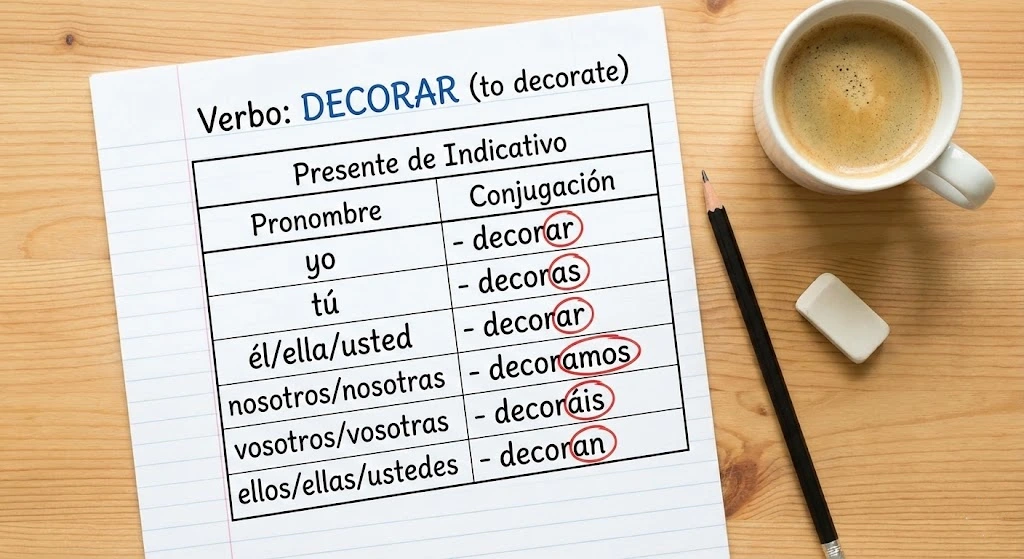
Before you can master decorarán, you need to understand where it comes from. Decorar is a regular -ar verb, which makes your life easier. Regular verbs follow predictable patterns, so once you learn the rules, you can apply them confidently.
The verb decorar means “to decorate” or “to adorn”. You use it when talking about making spaces look better, adding ornaments, hanging pictures, or arranging furniture. It’s the same action you take when you prepare for holidays, birthdays, or when you want to freshen up your living space.
In some formal contexts, decorar can also mean “to award” or “to honor with a medal,” but this usage is less common in everyday conversation.
How Decorarán Fits Into Spanish Grammar
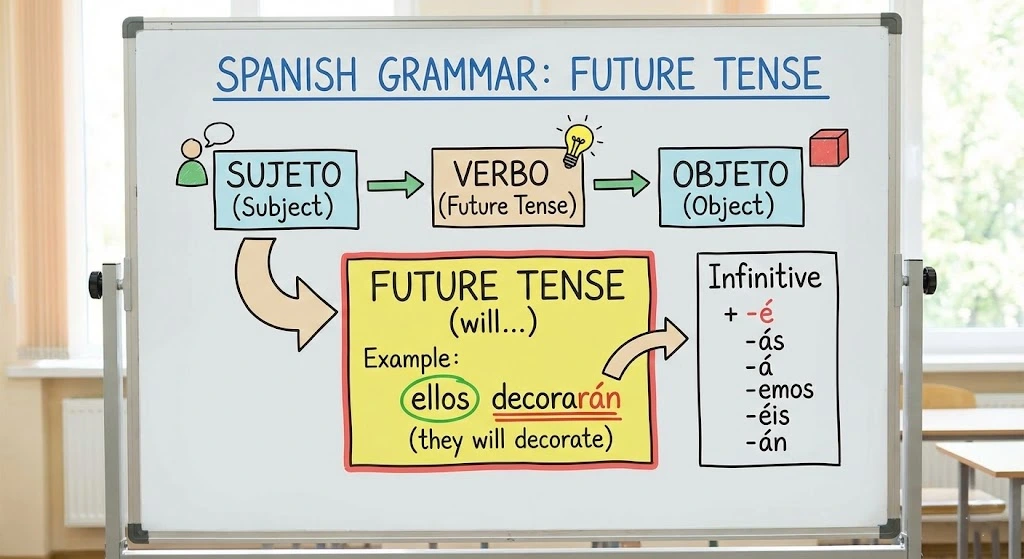
Spanish verbs change their endings based on who’s doing the action and when they’re doing it. This concept might seem strange if you only speak English, but it becomes natural with practice.
The future tense in Spanish tells you what will happen later. When you add the ending “-án” to the stem “decorar,” you create decorarán. This ending specifically indicates that multiple people (they) or a formal group (you all) will perform the action in the future.
The future tense replaces the English modal verb “will”, so decorarán literally means “will decorate” when translated word-for-word.
Who Uses Decorarán?
You’ll use decorarán when talking about third-person plural subjects. This covers several situations. When discussing what “they” will do, you use decorarán. If you’re speaking formally to a group using “ustedes” (the formal “you all”), decorarán fits perfectly.
In Spain, people use “vosotros” for informal groups, which takes a different form (decoraréis). But in Latin America, ustedes covers both formal and informal groups, so decorarán works in both contexts.
Here’s the breakdown: “Ellos decorarán” means “they will decorate” when talking about a masculine or mixed group. “Ellas decorarán” means “they will decorate” when referring to an all-female group. “Ustedes decorarán” means “you all will decorate” when addressing multiple people formally.
Practical Examples You’ll Actually Use
Let’s look at real sentences you might hear or say in daily life.
“Estamos decorando la sala de conferencias” means “We are decorating the conference room,” but if you want to talk about the future, you’d say “Decorarán la sala de conferencias mañana” (They will decorate the conference room tomorrow).
When planning holiday celebrations, you might say “Mis padres decorarán la casa para Navidad” (My parents will decorate the house for Christmas). This sentence structure works for any holiday or event.
“Decoramos el árbol de Navidad con luces” tells you “We decorated the Christmas tree with lights” in the past. To make it future tense, you’d say “Decorarán el árbol de Navidad con luces” (They will decorate the Christmas tree with lights).
For party planning, you could say “Los chicos decorarán el salón para la fiesta” (The kids will decorate the room for the party). This works for birthday parties, graduations, or any celebration.
Common Mistakes to Avoid
New Spanish learners often confuse decorarán with other tenses. Don’t mix it up with “decoran” (they decorate), which describes current or habitual actions. Decorarán specifically points to future actions.
Another common error involves the accent mark. You must write decorarán with an accent on the final “a.” Without it, you’re writing a different word entirely. The accent matters in Spanish pronunciation and meaning.
Some learners try to use decorarán for singular subjects. Remember, this form only works for plural subjects. If you’re talking about one person, you need “decorará” instead (he/she/you formal will decorate).
Don’t forget the context either. Spanish speakers frequently use “ir + a + infinitivo” to talk about the future, so you might hear “van a decorar” (they are going to decorate) more often than decorarán in casual conversation.
Building Your Confidence with Decorarán
Start by recognizing decorarán when you hear it in conversations, songs, or movies. Pay attention to the context and who’s performing the action. This passive recognition builds your understanding before you actively use the word.
Next, practice creating simple sentences. Begin with basic subjects like “ellos” (they) or “ustedes” (you all), then add decorarán, and finish with what they’ll decorate. Keep it simple: subject + decorarán + object.
Once you feel comfortable with basic sentences, add details about time, place, or method. Instead of just “Decorarán la casa,” try “Decorarán la casa el próximo fin de semana” (They will decorate the house next weekend) or “Decorarán la casa con flores y globos” (They will decorate the house with flowers and balloons).
Connecting Decorarán to Other Verb Forms
Understanding how decorarán relates to other conjugations helps you speak more naturally. The present tense “decoran” (they decorate) describes current actions or habits. The past tense “decoraron” (they decorated) tells you about completed actions.
The pretérito perfecto form “han decorado” means “they have decorated”, which connects past actions to the present. This differs from decorarán, which purely focuses on future actions.
When you want to express possibility or doubt, you might use the subjunctive mood: “que decoren” (that they decorate). This mood handles hypothetical situations differently from the straightforward future tense of decorarán.
Real-World Situations for Using Decorarán
Event planning provides perfect opportunities to use decorarán. When organizing a wedding, you might discuss how “Los floristas decorarán la iglesia” (The florists will decorate the church). For corporate events, “El equipo decorarán la oficina para la celebración” works perfectly.
Holiday preparations naturally include decorarán. Whether discussing “Decorarán las calles para el desfile” (They will decorate the streets for the parade) or “Los vecinos decorarán sus casas para Halloween” (The neighbors will decorate their houses for Halloween), you’ll find countless uses.
Public art projects might involve statements like “se decorarán muros y paredes” (walls and surfaces will be decorated), showing how decorarán appears in community planning discussions.
Home improvement conversations often feature decorarán too. You might hear “Los diseñadores decorarán el apartamento nuevo” (The designers will decorate the new apartment) or “Mis hermanos decorarán su primera casa juntos” (My siblings will decorate their first house together).
Tips for Remembering Decorarán
Create mental associations between decorarán and specific future events. When you think about upcoming parties or holidays, practice mentally saying “decorarán” along with details about the event. This connects the word to real experiences.
Write example sentences in a notebook or phone app. Include sentences about your own life and future plans. Personal connections make vocabulary stick better than random examples from textbooks.
Listen to Spanish conversations about event planning. Podcasts, YouTube videos, and Spanish TV shows often discuss upcoming celebrations where you’ll hear decorarán naturally used. The more you hear it in context, the more natural it becomes.
Practice with friends learning Spanish or native speakers who can correct your pronunciation and usage. Getting immediate feedback accelerates your learning and builds confidence.
Moving Beyond Basic Usage
Once you’re comfortable with simple decorarán sentences, start adding complexity. Use it in questions: “¿Cuándo decorarán la casa?” (When will they decorate the house?). Try negative statements: “No decorarán hasta el viernes” (They won’t decorate until Friday).
Combine decorarán with other verbs to create more sophisticated sentences. For example, “Después de que limpien, decorarán” (After they clean, they will decorate) or “Si tienen tiempo, decorarán el jardín también” (If they have time, they will decorate the garden too).
Express conditions using decorarán: “Decorarán la casa si encuentran las decoraciones” (They will decorate the house if they find the decorations). This shows cause and effect while using the future tense naturally.
Your Next Steps with Spanish Verbs
Decorarán gives you a solid foundation for understanding Spanish future tense verbs. The same pattern applies to thousands of regular -ar verbs. Once you master this conjugation, you can apply it to verbs like comprar (to buy), hablar (to speak), and trabajar (to work).
Focus on regular verbs first because they follow predictable patterns. After you feel confident with regular conjugations, you can tackle irregular verbs that change more dramatically in different tenses.
Keep practicing in real situations rather than just memorizing rules. Use decorarán when making plans with Spanish-speaking friends, discussing holiday preparations, or talking about home improvements. Real-world use cements the knowledge far better than textbook exercises alone.
The journey to Spanish fluency happens one verb at a time. Decorarán might seem small, but mastering it gives you the tools to discuss future plans, make predictions, and communicate effectively about countless topics. Each verb form you learn opens new conversations and deeper connections with Spanish speakers around the world.