

Winter is here, and with it comes cold weather and higher heating bills. But don’t worry! You don’t need to spend a lot of money to keep your home warm. With simple steps, smart planning, and a few upgrades, you can stay cozy and save money at the same time. Here are 13 easy ways to keep your house warm in winter.
Why Your Home Loses Heat
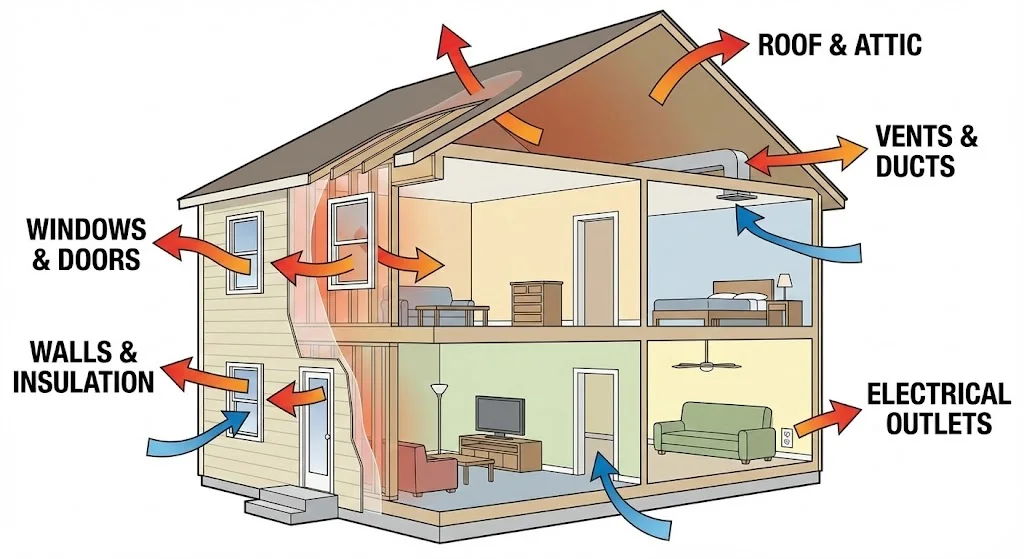
Before you can fix the problem, you need to know where heat is escaping. Cold air can sneak into your home through small cracks, gaps, and weak spots in walls, floors, ceilings, windows, and doors.
Common areas of heat loss:
- Poorly insulated walls, ceilings, and floors
- Windows and doors
- Air ducts and vents
- Chimneys and fireplaces
- Plumbing or wiring holes
- Electrical outlets and switches
Even small gaps around windows or doors can make your heating system work harder, which increases bills.
How to Find Drafts and Leaks
Here are some easy ways to check for air leaks:
- Look carefully: Check windows, doors, and walls for cracks.
- Hand test: On a windy day, move your hand near gaps to feel cold air. Wet hands feel the draft better.
- Candle test: Light a candle and move it near windows and doors. If the flame flickers, there is a draft.
Once you know where heat is escaping, you can start fixing it.
1. Seal Windows and Doors
One of the fastest ways to stop heat loss is to seal gaps around windows and doors. You can:
- Apply weatherstripping around door and window frames
- Install door sweeps at the bottom of exterior doors
- Use window film to reduce heat loss and UV light
- Caulk cracks around windows and doors
Even small fixes can save a lot of energy over time.
2. Make Your Heating System Efficient
Your furnace or heater may waste energy if it turns on and off too quickly, called rapid cycling.
How to prevent it:
- Check your thermostat settings and set it properly
- Keep your heating system clean and maintained
- Avoid setting the temperature too high or too low
This keeps your home warm and saves money.
3. Use Sunlight for Free Heat
The sun is a natural heater! You can use sunlight to warm your home:
- Open curtains and blinds during sunny days
- Close them at night to keep heat in
- Trim trees or bushes blocking sunlight
- Use reflective window film to bounce sunlight into rooms
This simple step reduces your heater’s workload.
4. Use Ceiling Fans in Winter
Ceiling fans aren’t just for summer. They can help push warm air down from the ceiling.
- Switch the fan to clockwise at low speed
- Make sure blades are angled properly (about 12 degrees)
- Turn off when leaving the room to save electricity
This can make a room feel warmer without raising the thermostat.
5. Install a Programmable Thermostat
A smart or programmable thermostat can help save money and energy:
- Set it to lower temperatures when you’re away
- Raise it only when you are home
- Some smart thermostats learn your schedule and adjust automatically
Tip: Keep your home at about 68°F (20°C) when awake and 60–65°F (15–18°C) while sleeping or away.
6. Upgrade Insulation Yourself
You don’t need a professional for every insulation project. Some easy DIY ideas:
- Thermal curtains or blinds for windows
- Pipe insulation to reduce heat loss from hot water pipes
- Foam outlet gaskets behind switches and plugs
- Attic insulation if your attic is unfinished
- Replace old recessed lights with airtight fixtures
Even small improvements make your home warmer and reduce energy bills.
7. Call a Professional for Insulation
Sometimes, DIY isn’t enough. A professional can:
- Add blown-in wall insulation
- Use spray foam to seal gaps
- Improve overall energy efficiency
Though it costs more upfront, it saves money over time.
8. Consider a Heat Pump
A heat pump is an energy-efficient way to heat your home. Unlike furnaces that create heat, heat pumps move heat from outside to inside.
Benefits of heat pumps:
- More energy-efficient than traditional furnaces
- Can work in colder climates with modern technology
- Lower operating costs in the long run
If replacing your furnace, a heat pump is a good investment.
9. Add Supplemental Heating
You don’t always need a new furnace. Small heaters can help:
- Space heaters or electric blankets in rooms you use most
- Wood or pellet stoves for localized heating
- Radiant floor heating for cozy warmth under your feet
Always follow safety instructions with any heating device.
10. Dress Warmly Indoors
Sometimes, you don’t need gadgets. Just wear warm clothes inside:
- Sweaters, socks, and slippers
- Layer clothing for extra warmth
- Use blankets while sitting or sleeping
This allows you to keep the thermostat lower and save money.
11. Heat Only the Rooms You Use
If your home is large, you don’t need to heat every room the same way:
- Close doors and vents in unused rooms
- Use zone heating if possible
- Spend more time in naturally warmer rooms
- Keep furniture away from vents to allow airflow
This focuses heat where it’s needed.
12. Maintain Your HVAC System
Even efficient systems need care. Regular maintenance keeps your home warm and saves money:
- Change filters monthly during winter
- Clean vents and ducts
- Check dampers for proper airflow
- Lubricate moving parts according to the manufacturer
Some tasks can be DIY, others may need a professional.
13. Know When to Call a Professional
Certain problems require trained technicians:
- Strange noises or smells from your heating system
- Uneven heating or cold spots
- Frequent on/off cycling
- Sudden spikes in heating bills
A professional can inspect and fix issues safely.
Bonus Tips: Government Programs & Energy Savings
- Tax credits: Some countries offer incentives for energy-efficient upgrades, like new windows, doors, insulation, or heat pumps.
- Local programs: Many governments and utilities provide energy audits, rebates, or assistance to lower heating bills.
Always check what programs are available in your area.
Long-Term Strategies for a Warm Home
For lasting comfort and savings:
- Professional Energy Audits: Identify heat leaks and efficiency improvements.
- Renewable Energy: Solar panels, geothermal systems, or biomass heaters reduce energy costs and environmental impact.
- Regular Maintenance: Keep your system running efficiently to avoid breakdowns and high bills.
Small changes plus long-term planning make a big difference.
Conclusion
Keeping your home warm in winter doesn’t have to be expensive. By combining simple fixes like sealing drafts and wearing warm clothes with long-term solutions like insulation and smart thermostats, you can stay cozy and save money. Start with the easiest steps, then gradually upgrade your home for maximum comfort and efficiency.
Remember: Winter doesn’t have to mean freezing rooms or high bills. With these 13 tips, you can enjoy a warm, comfortable home all season long.