

Last updated: October 21, 2026 — You do not need a renovation, a designer, or a four-figure budget to make your home feel new again. The secret most decorators will not tell you is simple: a room rarely needs new furniture. It needs a handful of affordable pieces, placed with intention, to refresh the decor you already own.
In this fully updated 2026 guide, you will find 15 affordable pieces to refresh your decor, with realistic prices, the order to buy them in, and a room-by-room budget plan. Every idea here costs under $100, most cost under $50, and several cost nothing at all.
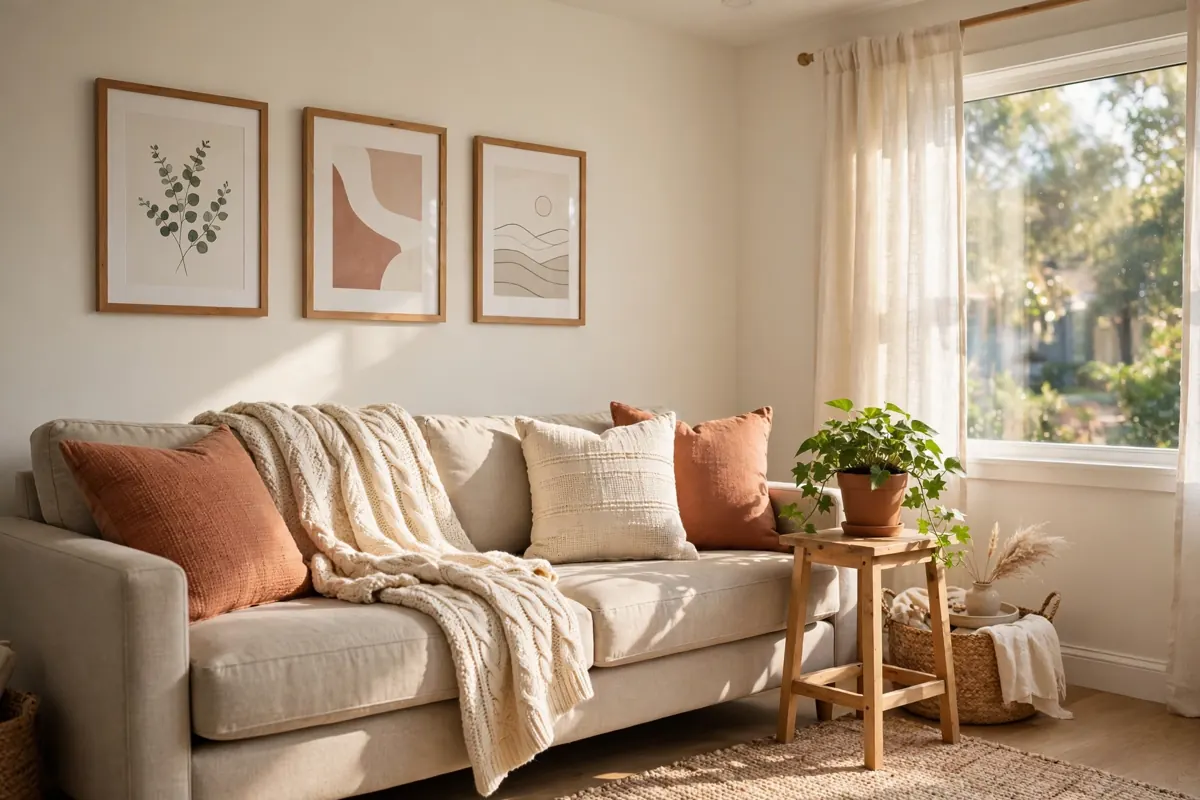
Key Takeaways: Refreshing Your Decor on a Budget
- Start free: decluttering and rearranging furniture you already own is the highest-impact “purchase” on this list — and it costs $0.
- Textiles first: cushion covers, a throw and curtains change how a room looks and feels faster than any other affordable piece.
- Light changes everything: warm LED bulbs and one extra lamp fix rooms that feel dull, even with old furniture.
- Paint is the budget superpower: one tin of paint refreshes walls, furniture and even tired picture frames.
- Work to a plan: a simple $150 room-by-room budget prevents impulse buys and half-finished rooms.
Step 1: Start With What You Already Own (Free)
Before you buy a single piece, shop your own home. Move a lamp from the bedroom to the living room. Swap artwork between rooms. Pull that woven basket out of the closet and use it for throws. Rooms often look tired not because the pieces are wrong, but because they have sat in the same arrangement for years.
Decluttering comes next, and it is not optional. A refreshed room buried under clutter will never look refreshed. Work through surfaces first — coffee tables, counters, shelves — and remove anything that has no home. Our guide to decluttering tips to keep your home tidy walks through the process room by room, and it pairs perfectly with the updates below.
Step 2: Textiles — The Fastest Affordable Refresh
If you only buy three things, buy textiles. They cover worn surfaces, add color and texture, and can be changed with the seasons for very little money.
1. Cushion Covers (Not New Cushions)
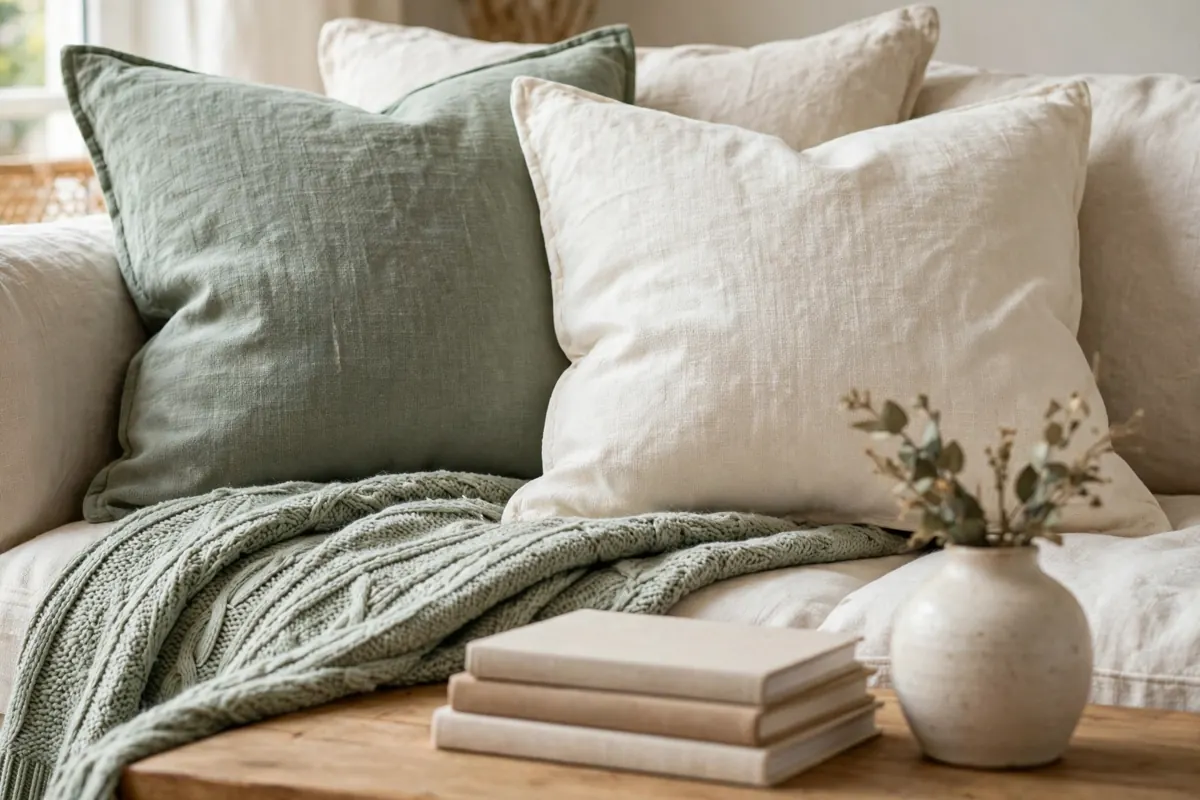
A set of four cushion covers typically costs $15–$30 in 2026 — roughly the price of one new cushion. Choose two colors from the same family (for example, cream and terracotta, or sage and oatmeal) and mix one textured fabric, such as boucle or linen-look, for depth.
2. One Good Throw Blanket
A knitted or woven throw ($15–$35) draped over a sofa arm instantly softens a room and hides a worn seat edge. It is also the easiest seasonal refresh there is: light cotton in summer, chunky knit in winter.
3. Curtains Hung High and Wide
Linen-look curtain panels start around $12 per pair. The decorator trick is placement, not price: hang the rod 4–6 inches above the window frame and wider than the frame, so the curtains frame the window instead of covering it. The ceiling looks higher and the room looks bigger — for free. For more low-cost styling ideas like this, see our budget-friendly decorating solutions you’ll love.
4. A Small Rug or a Rug Layer
You do not need a $300 rug. A washable flatweave rug in a 5×7 size runs $40–$80, and layering a small patterned rug over a plain one you already own gives the same designed look for half the price.
Step 3: Lighting That Makes Old Rooms Look New
Most rooms feel dated because of one harsh ceiling light. Designers use three layers of light — ambient, task and accent — and you can copy that on a budget.
5. Warm LED Bulbs (2700K–3000K)
Swapping cold blue-white bulbs for warm 2700K–3000K LEDs costs about $2–$4 per bulb and takes ten minutes. It is the single cheapest transformation on this entire list.
6. A Secondhand or Budget Table Lamp
Thrift stores and marketplace listings are full of solid lamps for $10–$25; a new shade ($8–$15) makes them look designer. Put lamps at eye level when seated, and never rely on overhead light alone in the evening.
7. LED Strip or Plug-In Sconces
Battery or plug-in wall sconces ($20–$40 a pair) add hotel-style accent light with no electrician and no rewiring — ideal for renters and older houses alike.
Step 4: Wall Decor That Fills the Blank Spaces
Blank walls are why refreshed rooms still feel unfinished. You do not need original art — you need scale and arrangement.
8. A Gallery Wall of Affordable Prints
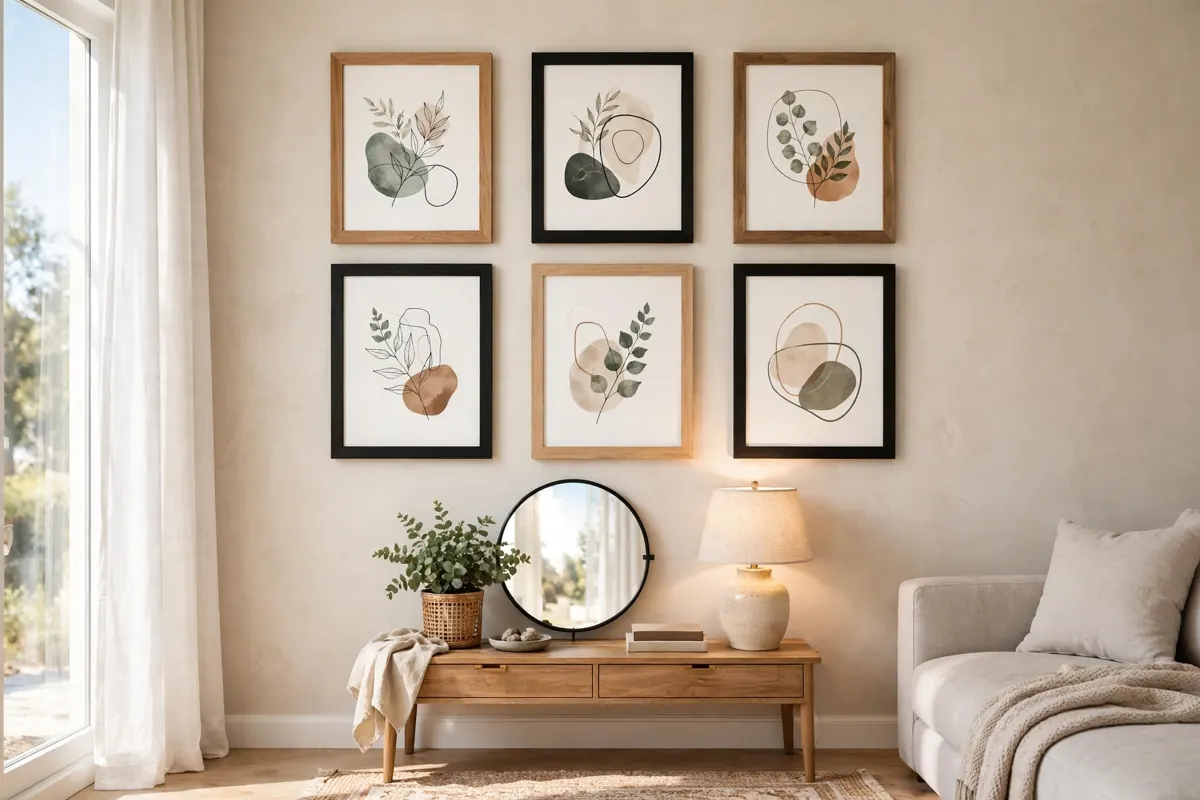
Downloadable art prints ($5–$15 for a set), printed at a local shop and placed in thrifted or budget frames, create a gallery wall for $30–$60 total. Lay the arrangement on the floor first, photograph it, then hang — you will save your walls a lot of stray nail holes. For a bolder wall treatment, our guide to living room wallpaper decor shows how one accent wall changes a whole room.
9. One Large Mirror
A mirror opposite a window doubles the light in a room and makes small spaces feel larger. Large mirrors regularly appear secondhand for $25–$50 — check the edges for damage and hang them with proper wall anchors.
10. Peel-and-Stick Options for Renters
Removable wallpaper, wall decals and picture ledges (from $15) refresh walls without paint or deposits at risk. Picture ledges have a bonus: you can rotate art and photos whenever you like, so the room keeps evolving for free.
Step 5: Small Furniture and Painted Makeovers
Big furniture is expensive. Small furniture — and paint — is not.
11. One Accent Piece: Side Table, Stool or Ottoman
A single new or secondhand accent piece ($25–$75) gives a room a focal point and breaks up a matching furniture set that makes the space feel dated. A woven stool, a small drinks table or a storage ottoman all work in almost any room.
12. Paint One Piece of Furniture
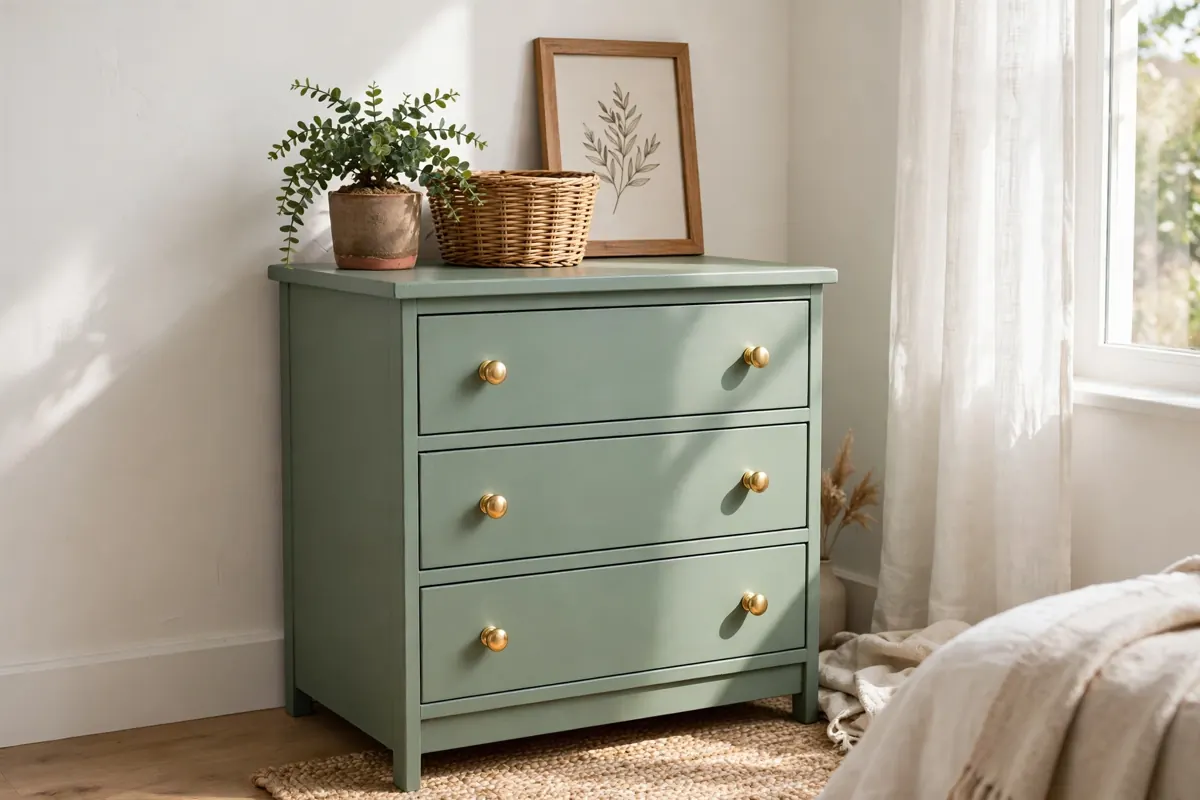
A tired dresser, sideboard or bookshelf plus one tin of furniture paint ($15–$25) and new knobs ($2–$5 each) becomes a statement piece for under $40. Sage green, warm navy and matte black remain the most forgiving colors for beginners in 2026. Start with our step-by-step guide to refreshing furniture makeovers with paint, and if you catch the bug, these easy DIY furniture makeover ideas take the same skills further.
13. New Hardware Everywhere
Cabinet handles, drawer knobs and even door handles in one consistent finish (brushed brass and matte black are the 2026 favorites) make kitchens, bathrooms and furniture feel coordinated. A full kitchen swap can cost as little as $30–$60.
Step 6: Plants and Natural Texture
14. Real (or Realistic) Greenery
One trailing pothos on a shelf and one larger plant in an empty corner will make any room feel alive. Starter plants cost $8–$20, and cuttings from friends cost nothing. Group plants in threes at different heights, and put them in baskets or ceramic pots rather than the plastic nursery pot they came in.
15. Baskets, Trays and Natural Materials
Woven baskets ($8–$20) hide clutter beautifully, a wooden tray ($10–$18) turns random objects on a coffee table into a “styled moment,” and natural fibers — jute, rattan, linen — add the warmth that makes budget rooms feel expensive. You will find more combinations in our round-up of affordable decor ideas to transform your home on a budget.
Room-by-Room Budget Plan (Under $150 Per Room)
Here is a realistic 2026 budget that refreshes one room at a time, so the cost never lands all at once:
| Room | Buy First | Estimated Cost |
|---|---|---|
| Living room | Cushion covers, throw, warm bulbs, one plant | $60–$110 |
| Bedroom | New bedding set, two lamps or bulbs, one framed print | $70–$130 |
| Kitchen | New handles, a runner rug, a tray + herb plant | $50–$95 |
| Bathroom | New shower curtain, towels, a small stool or basket | $40–$80 |
| Entryway | Mirror, hooks or a small bench, a washable mat | $55–$100 |
Working on the bedroom next? These budget-friendly bedroom decor ideas follow the same under-$150 approach. And for a full-space project, plan your refresh alongside our living room makeover guide so colors and finishes stay consistent from room to room.
5 Budget Decor Mistakes to Avoid in 2026
- Buying everything at once. Live with each change for a week. Your eye resets, and the next purchase becomes obvious — and cheaper.
- Matching sets everywhere. A room where everything matches looks like a showroom, not a home. Mix two metals, two woods and several textures instead.
- Ignoring scale. Tiny art on a big wall and tiny rugs under big sofas are the most common budget-room mistakes. Go one size up.
- Cold light bulbs. No decor survives blue-white light. Check every bulb is 2700K–3000K before blaming the furniture.
- Skipping the free steps. If you buy before you declutter and rearrange, you will buy pieces to fix problems that rearranging would have solved for $0.
Frequently Asked Questions
What is the cheapest way to refresh a room?
Declutter, rearrange the furniture, and swap in warm light bulbs. All three together cost under $15 and change a room in a single afternoon. After that, cushion covers and a throw give the biggest visible change per dollar.
How can I make my home look expensive on a budget?
Use fewer, larger pieces instead of many small ones; stick to a repeatable color palette of two or three colors; add texture (linen, wool, wood, rattan); and keep surfaces mostly clear. Restraint, not price, is what makes rooms look expensive.
How often should you refresh your home decor?
A light refresh every season — textiles, a plant swap, rotating art — keeps a home feeling current without any big spend. A fuller room-by-room refresh every 2–3 years, following a plan like the one above, is enough for most homes.
What should I buy first with a $50 budget?
Spend it on textiles and light: a set of cushion covers (about $20), warm LED bulbs for the main room (about $10), and one plant in a decent pot (about $15–$20). That combination touches how the room looks, feels and photographs.
Conclusion: Small Pieces, Big Difference
Refreshing your decor is not about replacing everything you own. It is about choosing a few affordable pieces — textiles, warm light, wall decor, one painted piece of furniture and something green — and placing them with a plan. Start free, work room by room, and let each small change earn the next one.
Pick one room this weekend, set your $150 limit, and start with Step 1. By Sunday evening, it will feel like a new space — and your bank account will barely notice.