
Bathroom design trends move in a clear direction for 2026: warmer, calmer and more personal. The cold white-and-chrome box is out; in its place are spa wet rooms, warm wood, honest stone, deep color used with confidence, and technology that hides until you need it. This guide breaks down the 15 bathroom design trends that matter this year — what they are, what they cost, and which ones are worth your money even if you are only doing a weekend refresh. For an even wider tour of what is new, see our companion roundup of the latest bathroom trends.
Last updated: October 23, 2026.
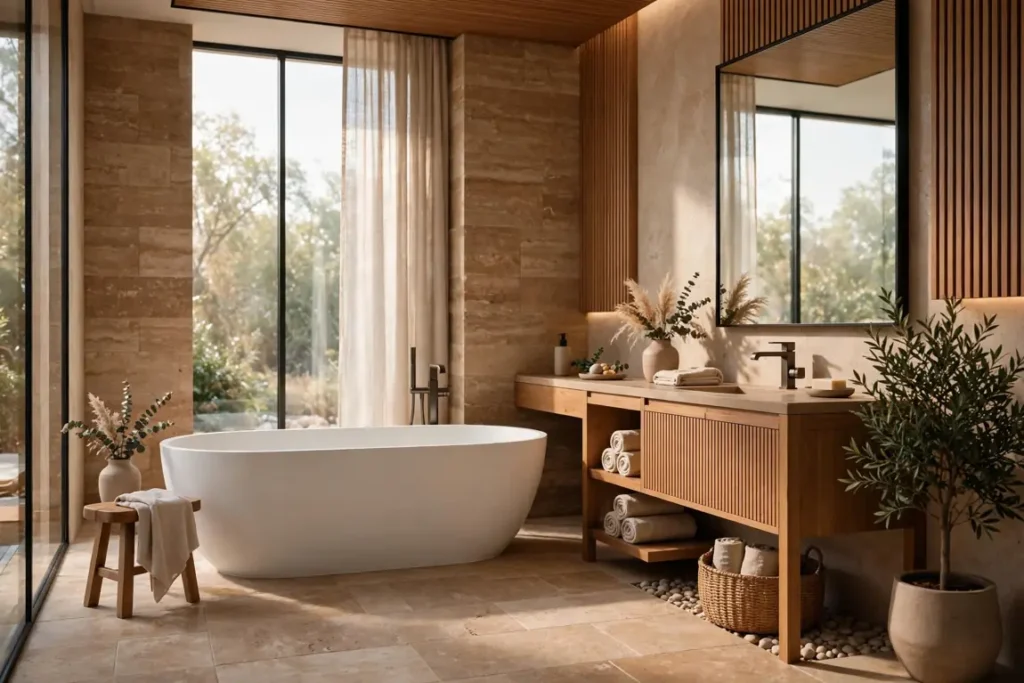
The Big Shift Behind 2026’s Bathroom Design Trends
Three forces explain almost every trend below. First, the bathroom has become a wellness room, not just a washing room — soaking, steam and soft light are design briefs now. Second, homeowners are renovating for the long term: curbless showers, better lighting and durable natural materials suit every age. Third, warmth is back — after a decade of grey and white, wood tones, warm metals and earthy color read as luxury. Keep those three in mind and the individual trends stop looking like a list and start looking like a plan.
1–3: The Spa Core — Wet Rooms, Soaking Tubs, Steam
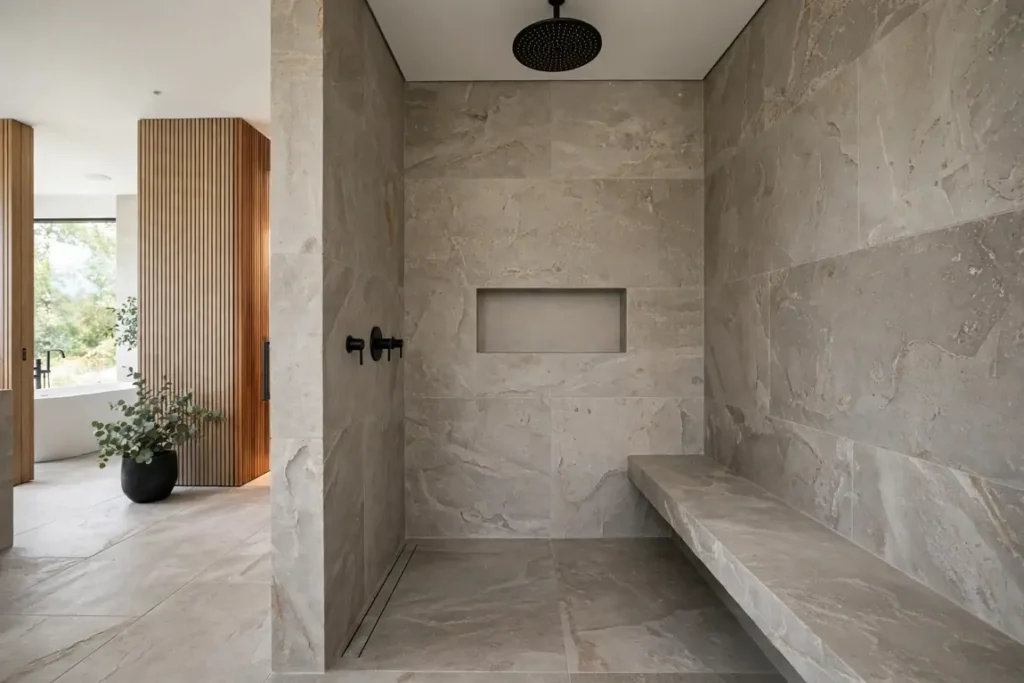
1. Curbless wet rooms. The whole shower zone becomes one waterproofed floor with a linear drain: no curb to step over, no glass box to clean, and small bathrooms gain visual space. It is the single most requested layout change of 2026. 2. Freestanding soaking tubs — deeper, shorter and more sculptural than the old built-ins, placed where they can be seen, not hidden. 3. Steam and body sprays are moving down-market: a steam generator added to an existing shower enclosure now starts in the low thousands installed, and it turns a Tuesday shower into the spa day.
4–6: Warm Materials — Wood, Stone, Texture
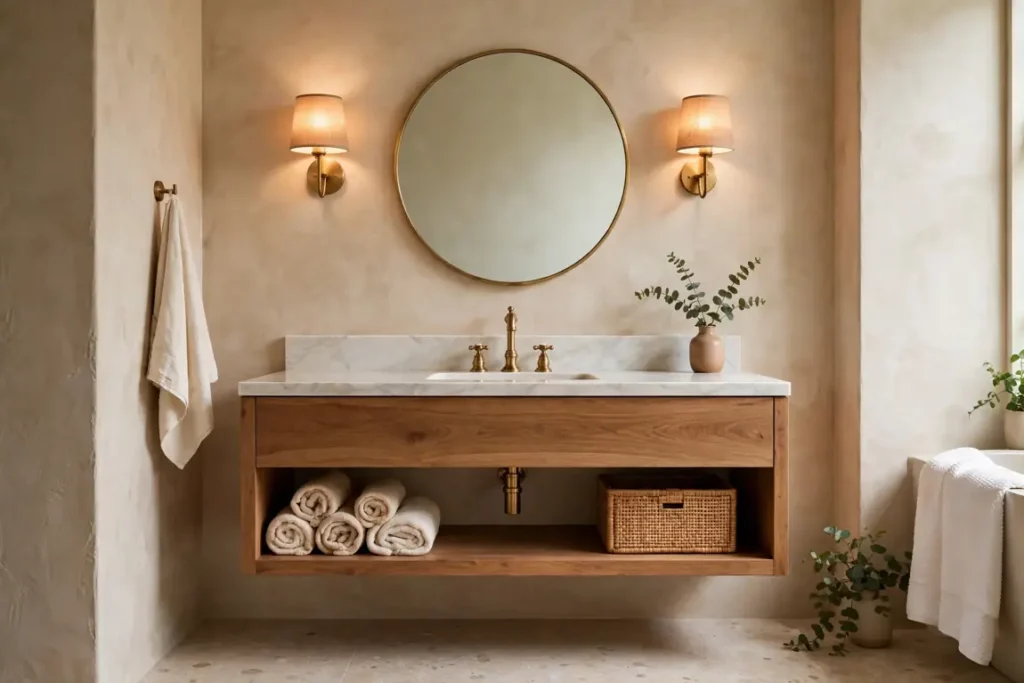
4. Warm wood vanities in white oak, walnut and teak — floating, with integrated handles — are the era’s signature furniture piece. 5. Real and real-looking stone: large-format porcelain slabs that mimic marble without the sealing, plus honed (matte) finishes instead of polished shine. 6. Texture everywhere: fluted wood, ribbed glass, zellige-style uneven tile and limewash walls. Flat and glossy is what dates a bathroom now; touchable surfaces are the luxury signal.
7–9: Color Confidence — Green, Earth Tones, Dark Accents
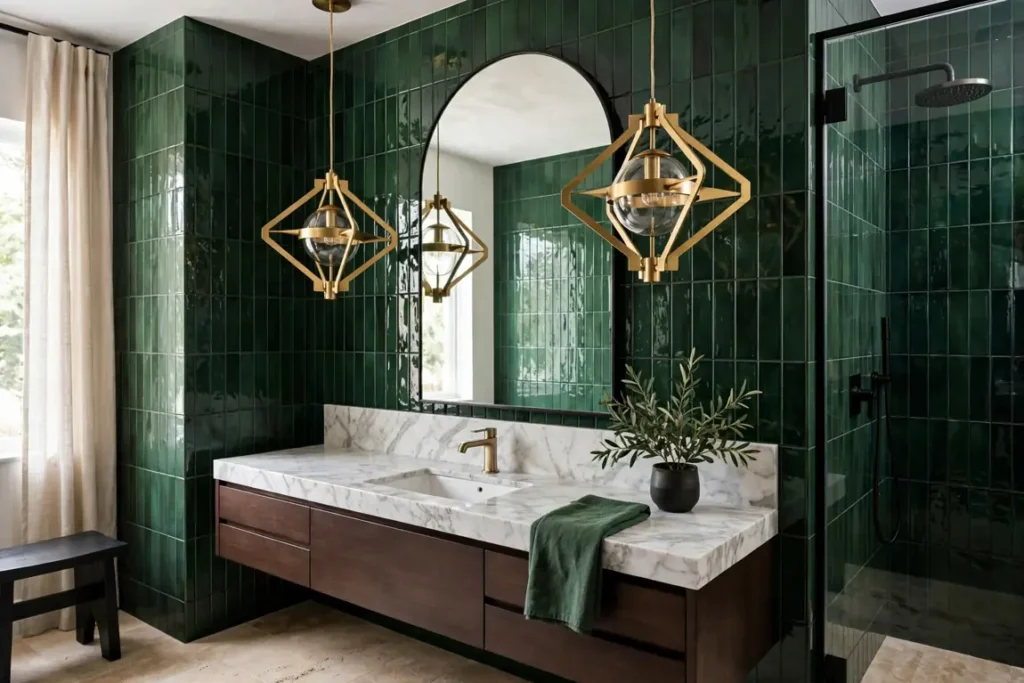
7. Deep green — forest, olive and eucalyptus — is 2026’s statement color, in tile, cabinetry or a single wall. 8. Warm neutrals replaced stark white: bone, sand, clay and warm greige keep rooms bright without the clinic feel. 9. Dark accents — a charcoal vanity, black-framed mirror, near-black tub exterior — ground the softness and keep pastel schemes from floating away. The working rule: one strong color move per room, everything else quiet.
10–12: Light and Technology That Disappears
10. Layered lighting: sconces at face height beside the mirror (not a bar above it), a dimmable ceiling layer, and low night lighting — the difference between a bathroom that flatters and one that accuses. 11. Smart showers and mirrors with presets, anti-fog and integrated light temperature control; the winning products hide the tech behind one button. 12. Heated floors — the most loved upgrade per dollar in cold climates, now a standard line item in mid-range remodels at roughly $10–$20 per square foot installed over the mat system.
13–15: Layout and Storage Moves
13. The water closet stays — a separate WC compartment remains the most requested primary-bath feature for couples. 14. Storage that looks like furniture: tall linen towers, vanity drawers (not doors) and medicine cabinets recessed flush so walls stay clean. 15. Aging-in-place, designed invisibly: grab bars that match the towel bars, comfort-height fixtures and blocking in the walls for future rails — decisions that cost almost nothing during a remodel and everything later. If you are working with a period home, our guide to renovating a 1950s cottage bathroom shows how these trends translate into a small vintage footprint.
What the Trends Cost in 2026
| Scope | Typical 2026 Cost | Trends It Buys |
|---|---|---|
| Weekend refresh | $300–$1,500 | Warm-neutral paint, new mirror/lighting layer, hardware and textile swap |
| Surface remodel | $5,000–$15,000 | New vanity + fixtures, tile refresh, heated floor in a small bath |
| Full remodel | $25,000–$60,000+ | Wet room conversion, soaking tub, steam, stone slabs, layout changes |
Wherever plumbing moves, costs jump — keeping fixtures in place is the classic budget saver, and our guide to common plumbing problems covers the pipe issues worth fixing while the walls are open.
Frequently Asked Questions
What is the biggest bathroom trend in 2026?
The spa wet room: a curbless, fully waterproofed shower zone, usually paired with a freestanding soaking tub. It leads because it solves three things at once — a calmer daily ritual, easier cleaning, and a layout that works at every age.
Are white bathrooms out of style?
Stark, all-white bathrooms are fading; warm white is not. Bone and sand tones, warm wood and one confident color keep the brightness people love without the cold, clinical feel that defined the 2010s.
Which trend gives the best value for money?
Layered lighting and heated floors. Both are felt every single day, both are mid-priced, and lighting in particular can transform a bathroom without touching tile or plumbing.
Do these trends work in a small bathroom?
Yes — several were made for small rooms. Curbless showers, large-format tile (fewer grout lines, bigger feel), floating vanities and recessed storage all make compact bathrooms live larger.
Conclusion: Warm, Calm, Built to Last
The through-line of 2026 is a bathroom that lowers your heart rate: warm wood instead of cold chrome, stone and texture instead of gloss, one confident color, light that flatters, and water — soaking, steaming, falling — treated as the luxury it is. Pick the two or three trends your budget honestly supports, execute them well, and skip the rest without regret. A calm room done properly beats a trendy room done thinly, every single morning.