
Creating a minimalist bedroom on a budget does not start with shopping. It starts with taking things out. The calm look people want comes from clear surfaces, a short colour palette and furniture that earns its place, and most of that costs nothing at all.
This guide works through the job in a sensible order. You will clear the room first, then fix the walls, the bed, the lighting and the storage, and only then add finishing touches. Each step uses what you already own wherever possible.
What a minimalist bedroom on a budget actually needs
Six principles do most of the work. Keep them in mind and the room stays calm even when money is tight.
Declutter first. Remove everything that does not help you sleep, dress or read in bed. Donate, sell or store it elsewhere. A room with less in it looks minimalist before you spend a single dollar.
Use a neutral palette. Warm white, soft grey, beige and pale wood tones work together easily. When walls, bedding and curtains sit in the same family, the room feels planned rather than patched together.
Choose low-profile furniture. A simple frame that sits low, with clean lines and no heavy headboard, makes ceilings feel higher. It also leaves more visual space around the bed.
Layer simple bedding. Plain sheets, one duvet and a single folded throw give the bed texture without pattern or clutter. Two sleeping pillows per person is plenty.
Pick one focal point. Let one thing lead, usually the bed wall. One larger picture, a plain headboard or a painted shape behind the bed is enough. Everything else stays quiet.
Hide the storage. Closed boxes, lidded baskets and drawers keep daily items out of sight. A minimalist bedroom on a budget stays tidy because clutter has somewhere hidden to go, not because there is less of it.
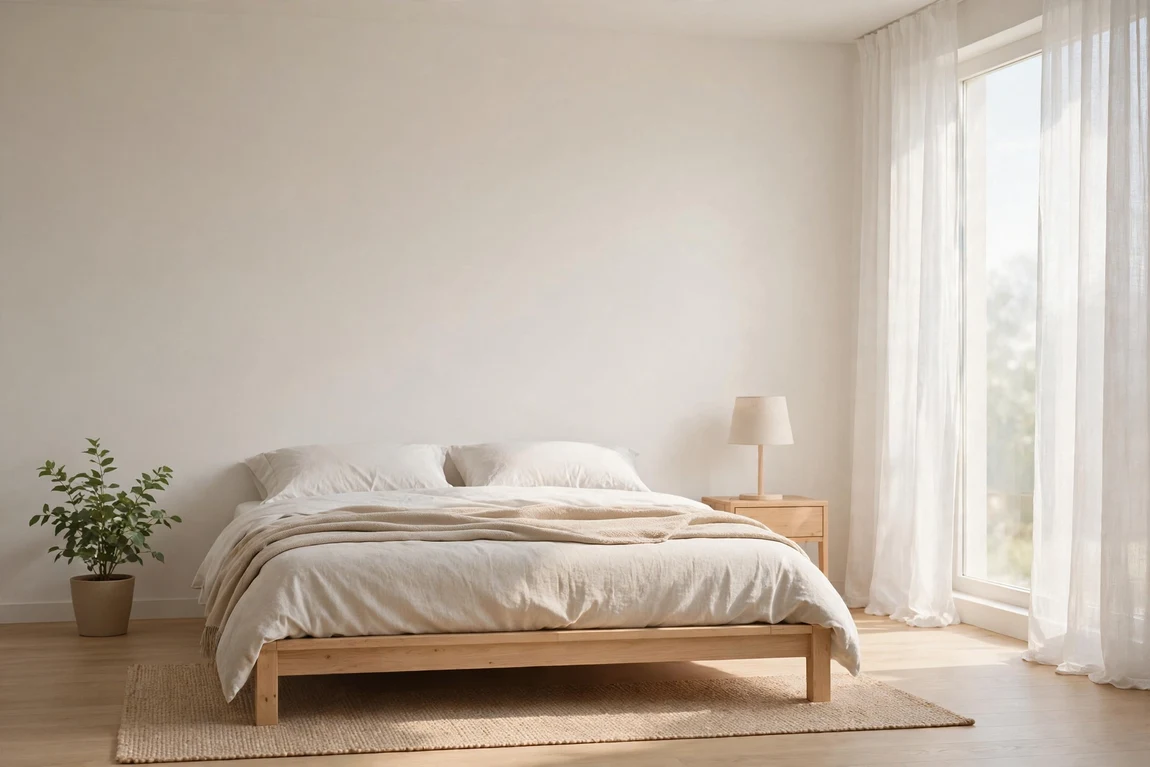
Illustrative image: a low bed, neutral bedding and clear surfaces do most of the work before anything new is bought.
The step-by-step plan, in the right order
Working in order saves money, because each step shows you what the next one really needs. Follow the sequence below and you will buy less, and buy it once.
Step 1: Clear out completely
Take everything off the surfaces and out from under the bed. Sort it into keep, move elsewhere, donate and recycle piles. Only the keep pile comes back in.
Be strict with the nightstand and the chair in the corner. Both collect clothes, chargers and paperwork quickly. Give each surface a short list of allowed items and stick to it.
Step 2: Paint, or refresh what is there
One coat of warm white or pale greige paint is the cheapest big change in any bedroom. It covers marks, brightens the room and gives plain bedding and old furniture a cleaner backdrop.
Wash the walls and fill small holes first, so you need less paint. If the walls are already a calm colour, skip this step and keep the money for bedding instead.
Step 3: Sort the bed and bedding
The bed fills most of the room, so it sets the tone. Keep your existing frame if it is sound. A simple throw or a plain duvet cover can calm down a frame or bedding set that feels busy.
If sleep feels poor, a mattress topper is usually a smarter first buy than a new mattress. Then add one cotton bedding set in white or oatmeal, washed and simply folded.
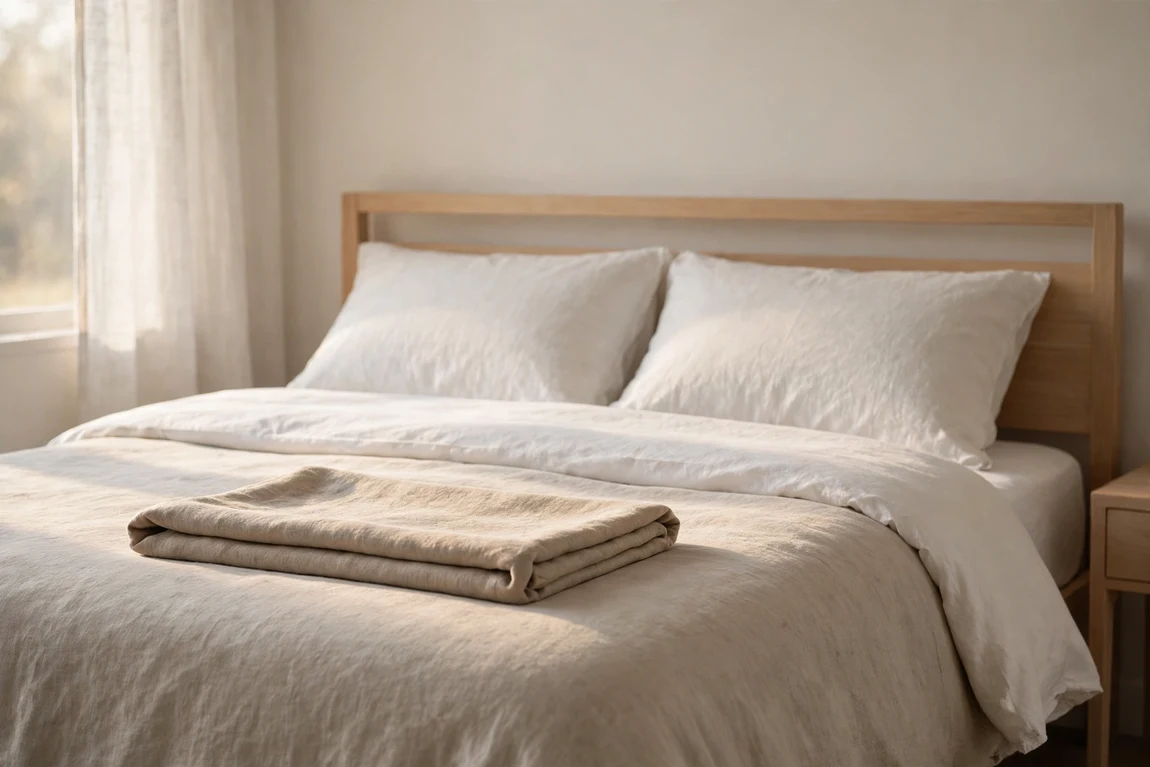
Illustrative image: plain bedding in two neutral tones, layered once, looks calm without extra cushions or patterns.
Step 4: Fix the lighting
Swap harsh white bulbs for warm ones, and use a bedside lamp instead of the ceiling light in the evening. One lamp you already own, moved from another room, costs nothing.
Keep window coverings simple so daylight does the work. Plain curtains hung a little higher than the frame also make the wall feel taller.
Step 5: Add hidden storage
Measure under the bed before buying anything. Low boxes or soft bags there hold spare bedding, out-of-season clothes and shoes where nobody sees them.
Use lidded baskets inside open shelves and drawers. Matching containers in one neutral colour look deliberate, while mixed bright boxes look like clutter even when tidy.
Step 6: Add finishing touches last
Only now add one or two personal items: a plant, a single picture, or a book on the nightstand. Apartment Therapy’s budget bedroom ideas make the same point in several ways, from using pieces you already own to painting a simple headboard shape instead of buying one.
Stop earlier than feels natural. A minimalist bedroom on a budget looks finished when there is still empty space left, not when every corner holds something.
What the key buys typically cost
Most rooms need only two or three items from this list, not all of them. Use the table to plan a minimalist bedroom on a budget without guessing, and buy in the order of the steps above.
The figures below are typical US price ranges for basic, widely available versions of each item. They are planning ranges only, not quotes, and prices vary by store, size and region.
| Item | Typical US price range | Budget note |
|---|---|---|
| Mattress topper | $30–$90 | Improves an older mattress for far less than replacing it |
| Basic low-profile bed frame | $80–$250 | Only needed if your current frame is broken or too bulky |
| Cotton bedding set | $25–$70 | One plain set in white or oatmeal is enough to start |
| Blackout curtains, one pair | $20–$60 | Plain panels; hang them high to make windows look larger |
| Bedside lamp | $15–$45 | Moving a lamp you already own costs nothing |
| Storage boxes or baskets, set | $15–$40 | Lidded and neutral, sized to fit under the bed |
| Paint, one room, walls only | $30–$70 | One gallon plus basic supplies usually covers a small room |
Secondhand frames, lamps and baskets are easy to find. Check measurements before you buy, and keep receipts until each piece is in place.
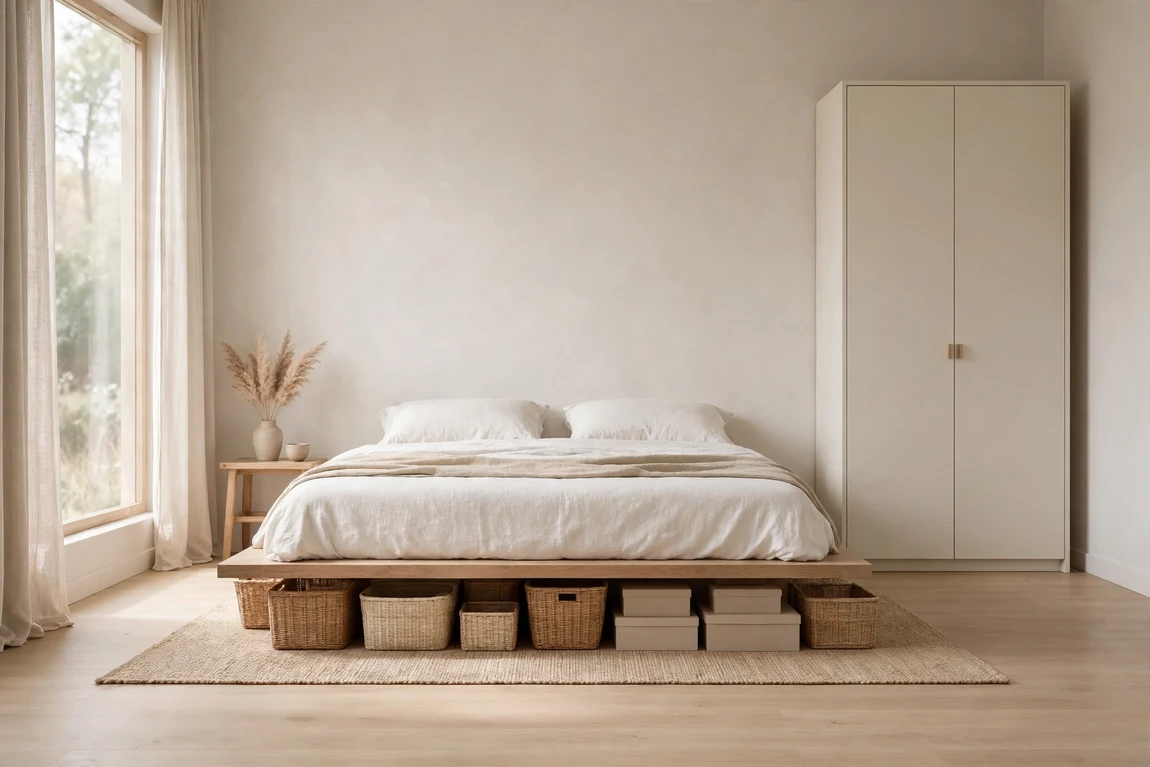
Illustrative image: under-bed boxes keep spare bedding and clothes hidden, so open floor space stays clear.
Making it work in a small room
A small room is an advantage here, because there is less space to fill and less to buy. Keep the floor as clear as you can, since visible floor makes a room feel bigger.
Push the bed against one wall if that frees a clear walking line. In a narrow room, turning the bed sideways like a daybed can work better, and it costs nothing to try.
Choose one nightstand instead of two if space is tight. A small stool, a wall-mounted shelf or a stack of books can hold a lamp and a phone just as well.
Light colours matter more in a small room. Keep the biggest items, the bedding, curtains and rug, in the palest tones you have, and let one darker piece add contrast.
That discipline is what makes a small minimalist bedroom on a budget feel open rather than empty. Few pieces, each with a job, and nothing stored on display.
Rental-friendly swaps, with no paint and no drilling
Renters can do almost all of this without touching the walls. Start with the clear-out, the bedding and the lamp swap, none of which need permission.
For a focal point, lean a larger framed print on a dresser instead of hanging it, or hang light frames with removable adhesive strips rated for their weight. Both come off cleanly when you leave.
If you cannot paint, wash the walls and let plain bedding and curtains set the palette instead. A painted headboard is out, but a plain throw hung over the frame, or the bed pushed to the plainest wall, does a similar job.
For storage, choose freestanding pieces only: under-bed bags, an over-door hook rail, and baskets that sit on top of the wardrobe. Avoid fitted units and anything that needs screws into the wall or ceiling.
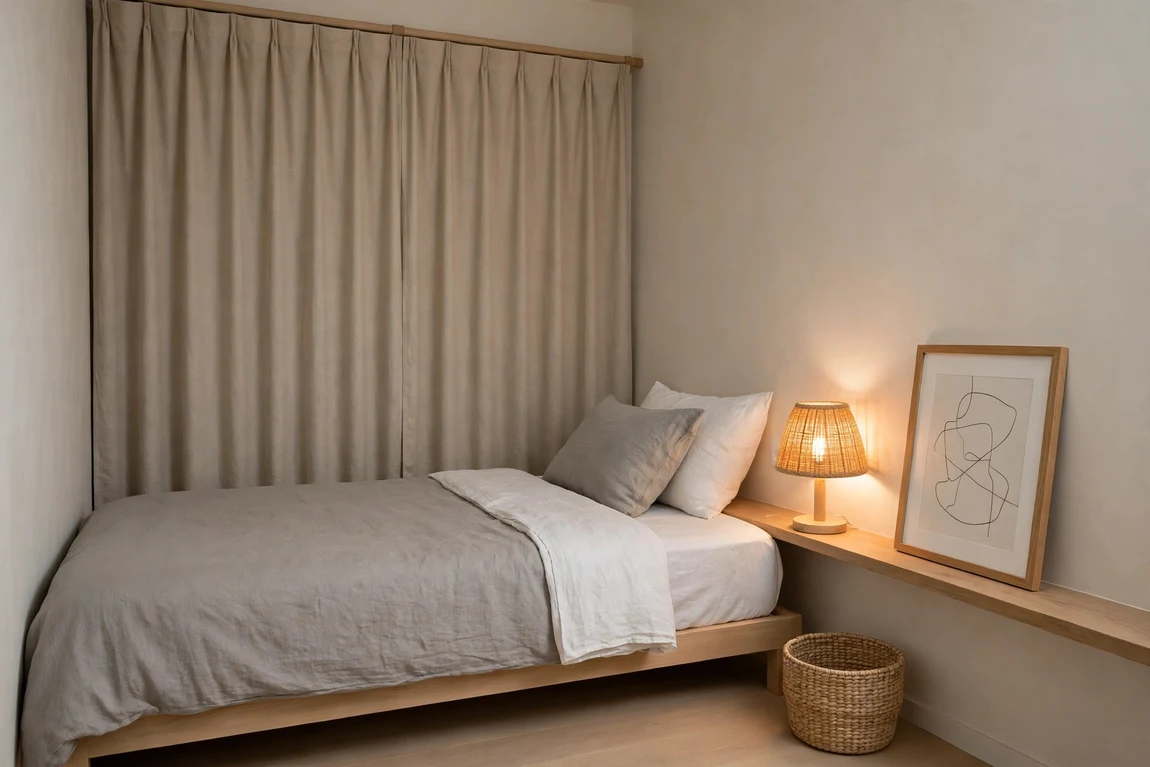
Illustrative image: a small rental room using leaning art, plain curtains and a single lamp, with no paint and no new holes.
Keeping it calm without spending more
The look lasts if the habits last. Put things back in their hidden storage each night, keep surfaces to their short list, and run a quick ten-minute reset once a week.
When something new comes in, let something else leave. That one rule protects both the calm and the budget better than any storage purchase.
A finished minimalist bedroom on a budget is not an empty room. It is a room where the bed is comfortable, the light is warm, the floor is clear and every item you kept has a reason to be there.