

The optimal size for a kitchen window is typically 24 to 36 inches wide and 36 to 48 inches tall. For a window above the sink, the sill should sit 40 to 44 inches from the floor. The right size depends on your kitchen layout, window type, and how much light you want.
You probably don’t think much about your kitchen window — until it’s the wrong size. Too small, and the room feels dark and stuffy. Too large, and you lose cabinet space you really needed. Getting the size right changes how the whole kitchen feels to live in.
The good news? There’s a clear range that works for most kitchens. And once you understand the basics, picking the right size becomes a lot easier.
What Is the Standard Kitchen Window Size?
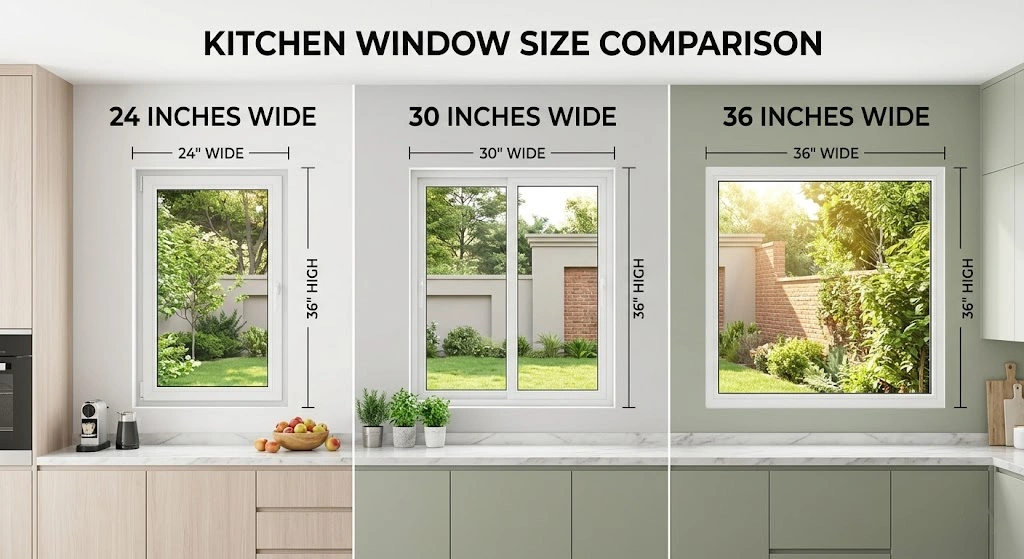
Kitchen windows range from 24 to 48 inches wide and 36 to 72 inches tall. The most common dimensions land at 24, 30, or 36 inches wide and 48, 60, or 72 inches tall. Those numbers cover the majority of homes built in the last few decades.
That said, there’s no single “official” standard. Most homeowners today prefer customized windows, which is why manufacturers don’t stick to one fixed set of dimensions. The size that works best for your kitchen depends on the layout of your walls, the style of window you choose, and how much natural light you want to bring in.
If you’re replacing an existing window, sticking close to these common sizes saves you money. You avoid costly wall modifications and can usually find a replacement window quickly. If you’re building new or doing a full renovation, you have more freedom — but the ranges above are still a smart starting point.
The Best Size for a Kitchen Window Above the Sink
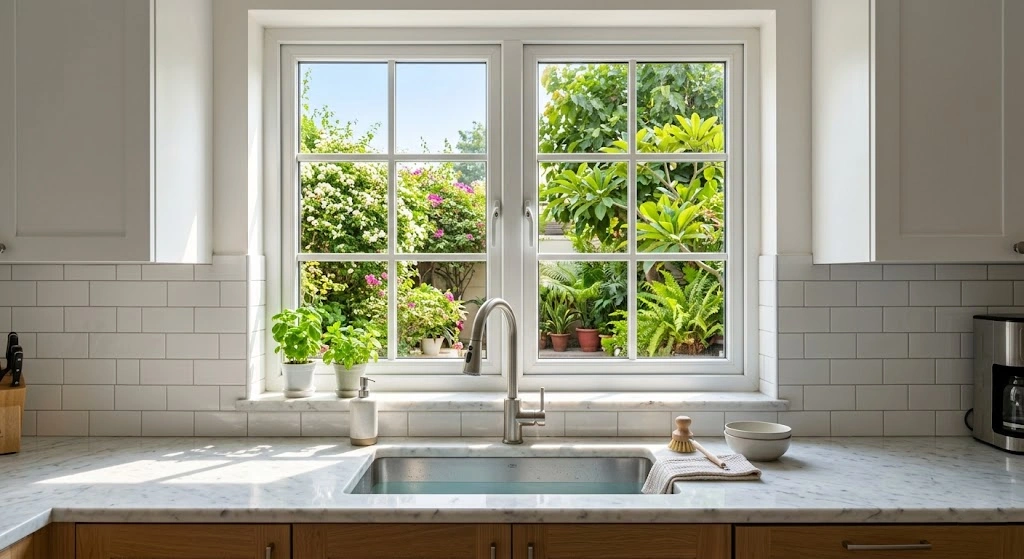
The sink window is the most important window in any kitchen. You spend a lot of time standing there, so what you see — and how much fresh air you get — matters.
The standard kitchen sink window size typically ranges from 24 to 36 inches wide and 24 to 48 inches high. This size provides enough natural light and ventilation while fitting comfortably above the sink area.
A 30 × 36-inch window is one of the most popular choices for above the sink. It’s wide enough to give you a decent view outside, tall enough to let in solid daylight, and it doesn’t eat up so much wall space that you lose storage on either side. If your kitchen has more room and you want a bigger, more dramatic look, a 36 × 48-inch window above the sink gives you that without going overboard.
A window above a kitchen sink is usually bigger than windows in other parts of the kitchen, because it gives you a view while working. That makes sense. If you’re going to spend 20 minutes washing dishes, you’d rather look out at your backyard than at a blank wall.
How High Should a Kitchen Window Sit from the Floor?
Size and placement work together. Even a perfectly sized window looks wrong — and functions poorly — if it’s installed at the wrong height.
In kitchens with a standard 36-inch counter height, the windowsill should sit approximately 40 to 44 inches from the finished floor above sinks, and at 48 to 54 inches where there are tall backsplashes or base cabinetry. This keeps water splashes away from the window frame and trim while still giving you a clear sightline outside.
The bottom of the window usually sits between 40 and 42 inches above the floor and between 4 and 6 inches above the counter. The top edge can extend up to 72 inches, depending on your wall height, creating a beautiful open space.
Think about it practically. If the sill sits too low — right at counter height — you’re constantly getting water, grease, and cleaning spray on the window trim. Push it up a few inches, and those problems go away. You still get the light and the view, but the window stays cleaner and lasts longer.
For windows that don’t sit above a counter — say, in a kitchen dining nook or along a wall with no cabinets — you can drop the sill lower, around 28 to 32 inches from the floor. That gives you a more comfortable view from a seated position.
Kitchen Window Sizes by Window Type
Different window styles come in different size ranges, and that affects which one fits your kitchen best.
Casement windows are a top pick for kitchens. They are hinged on one side and open outward like a door, and they’re often installed above kitchen sinks to allow for easy ventilation. Common sizes run from 14 to 35.5 inches wide and 17 to 73 inches tall. Their crank mechanism makes them easy to open even when you’re reaching over a sink full of dishes.
Double-hung windows are another popular choice. Double-hung window sizes typically range from 24 to 48 inches wide and 36 to 72 inches tall. These dimensions work well for most kitchen layouts and offer great ventilation. You can open the top sash, the bottom sash, or both — which gives you good control over airflow.
Sliding windows work well in kitchens with wider wall openings. They open horizontally and are great for letting in fresh air. Common sizes range from 36 to 84 inches wide and 24 to 60 inches tall. They’re easy to operate and don’t swing outward, so they work well above counters with limited overhead clearance.
Awning windows are a smart pick for smaller kitchens or spaces where you want ventilation even during light rain. Common awning window sizes range from 16 to 48 inches wide and 24 to 84 inches tall. Since they’re hinged at the top and open outward from the bottom, rain doesn’t pour straight in when they’re open.
Picture windows are fixed — they don’t open — but they maximize light and give you an unobstructed view. Picture window sizes for kitchens typically range from 24 to 96 inches wide and tall, providing ample natural light. They work best when paired with a smaller operable window nearby for ventilation.
How Much of Your Wall Should a Window Cover?
This is a question most people don’t think to ask, but it matters a lot for how balanced your kitchen looks and feels.
A good guideline is to keep your window’s total area equal to about 20 to 25% of the wall it sits on. So if your kitchen wall is 10 feet wide and 8 feet tall — that’s 80 square feet of wall — your windows on that wall should cover roughly 16 to 20 square feet total.
This rule keeps the room bright without making it feel exposed or creating excessive heat gain in summer. Kitchens with large south-facing windows can become uncomfortably hot in the afternoon sun, so size and orientation go hand in hand.
If your kitchen faces east or north, you can go a bit larger without dealing with harsh glare. West-facing kitchens get intense late-afternoon sun, so you may want to size down or plan for good window treatments.
When to Go Custom Instead of Standard
Standard window sizes cover most situations, but sometimes they don’t fit your kitchen. Custom kitchen windows make sense when you have an unusual wall opening left from a previous remodel, want a window that matches your exact design style, or hope to highlight a special view or bring in more natural light than a standard window allows.
Custom windows cost more and take longer to deliver, but they’re worth it in the right situations. An older home with non-standard wall openings often needs a custom fit. A kitchen with a stunning garden view might justify a larger-than-standard picture window. These are judgment calls based on your budget and what matters most to you in the space.
If you go custom, always work with a professional to measure the rough opening carefully. A mistake at that stage is expensive to fix after the window arrives.
How to Choose the Right Size for Your Kitchen
Start with the location. A window above the sink can handle a larger size — 30 to 36 inches wide — because it’s the focal point of the kitchen and benefits most from light and airflow. Windows along a side wall or above a countertop with upper cabinets nearby need to be sized more carefully to avoid blocking storage.
Next, think about your countertop height. The minimum recommended size for a kitchen window is 24 × 36 inches, and the height from the floor to the bottom of the window should account for the standard counter height of 36 inches plus space for the backsplash.
Then consider your window style. Casement and awning windows give you the best ventilation for their size, so you don’t need to go as large to get good airflow. Sliding and double-hung windows are more forgiving in tight spaces.
Finally, think about the view. A well-placed, properly sized kitchen window isn’t just functional — it makes everyday tasks more pleasant. Whether you’re looking out at a garden, a backyard, or just an open sky, that view adds real value to the time you spend in the kitchen.
The best kitchen window size balances light, air, storage, and proportion. Most kitchens land comfortably between 24 and 36 inches wide and 36 to 48 inches tall. Nail the placement height, match the size to your window type, and you’ll have a kitchen that feels brighter and more comfortable every single day.