

Jackson Furniture is a smaller, American-made brand from Tennessee specializing in stationary sofas and Catnapper recliners at mid-range prices. Ashley Furniture is the largest furniture retailer in the US, offering a wider selection at budget-friendly prices. Ashley wins on variety; Jackson has an edge in domestic manufacturing.
Shopping for furniture can feel overwhelming, especially when you’re comparing brands that look similar on the surface. Jackson Furniture and Ashley Furniture both show up in showrooms and online searches all the time, and both target buyers who want decent quality without spending a fortune. But dig a little deeper and you’ll find they’re pretty different companies with different strengths, weaknesses, and reputations.
This article breaks down everything you need to know — from price and quality to customer service and style — so you can walk into a store with a clear head and the right expectations.
What Is Jackson Furniture?
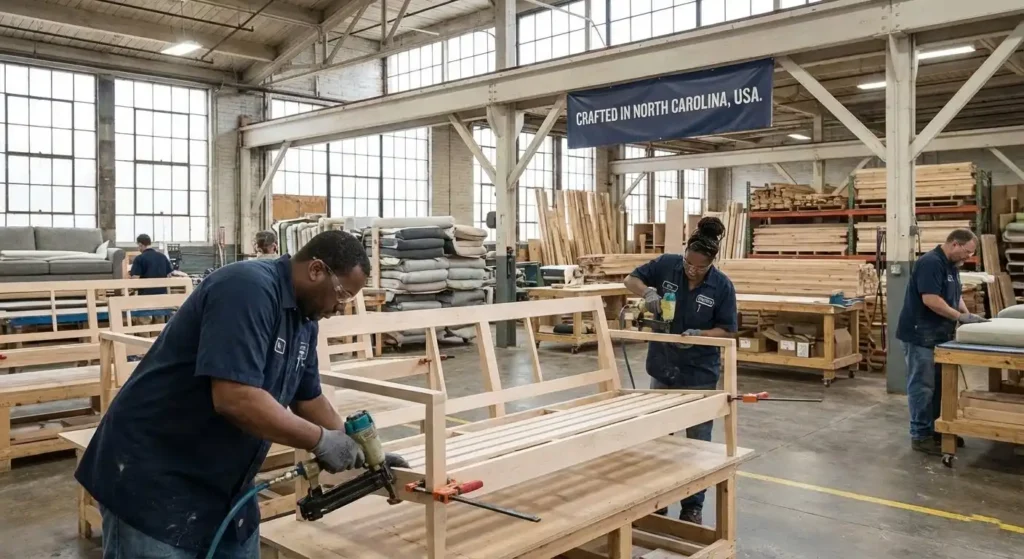
Jackson Furniture Industries has been around since 1933, making it one of the older furniture manufacturers in the country. The company is family-owned and based in Cleveland, Tennessee. All of their furniture is made right here in the United States, across factories in Tennessee, Mississippi, Texas, and Florida. That American-made angle is a big part of how Jackson markets itself, and for many buyers, it’s a genuine selling point.
Jackson also runs a sister brand called Catnapper, which focuses specifically on motion furniture — power recliners, lift chairs, and reclining sofas. You’ll often see both brands displayed together in local showrooms. Jackson handles the stationary pieces like sofas and chairs, while Catnapper takes care of anything with a reclining mechanism.
The brand positions itself at the entry-level to mid-range part of the market. Their sofas use Steel Tech frame reinforcement, Comfort Coil seat cushions with over 50 coils per seat, and gel-infused memory foam on select models. For a family room or casual living space, the furniture is designed with daily use in mind. It’s not luxury furniture — and Jackson doesn’t pretend it is — but it does try to offer more than the bargain-bin alternatives.
What Is Ashley Furniture?

Ashley Furniture operates at a completely different scale. Founded in 1945 by Carlyle Weinberger in Chicago, the company started as a small sales agency for wooden occasional furniture. Today, it is the largest furniture manufacturer and retailer in the United States. Ashley brings in roughly $4.2 billion in annual revenue, employs over 35,000 people, and runs more than 1,100 HomeStore locations across 70 countries. It became the top furniture retailer in the US back in 2007, and it has held that position ever since.
One reason Ashley grew so fast is that it adopted a business model similar to Walmart’s in the early 1980s — controlling its own supply chain from design through distribution. That meant building factories overseas in places like China and Vietnam, while also investing heavily in domestic US manufacturing. The result is an enormous product catalog at highly competitive prices.
Ashley covers nearly every room in the house. Living room sets, bedroom furniture, dining tables, home office pieces, outdoor furniture, and mattresses — it’s all there. If you want to furnish an entire home in one visit, Ashley makes that easy in a way that Jackson simply cannot.
Price Comparison: Who Offers Better Value?
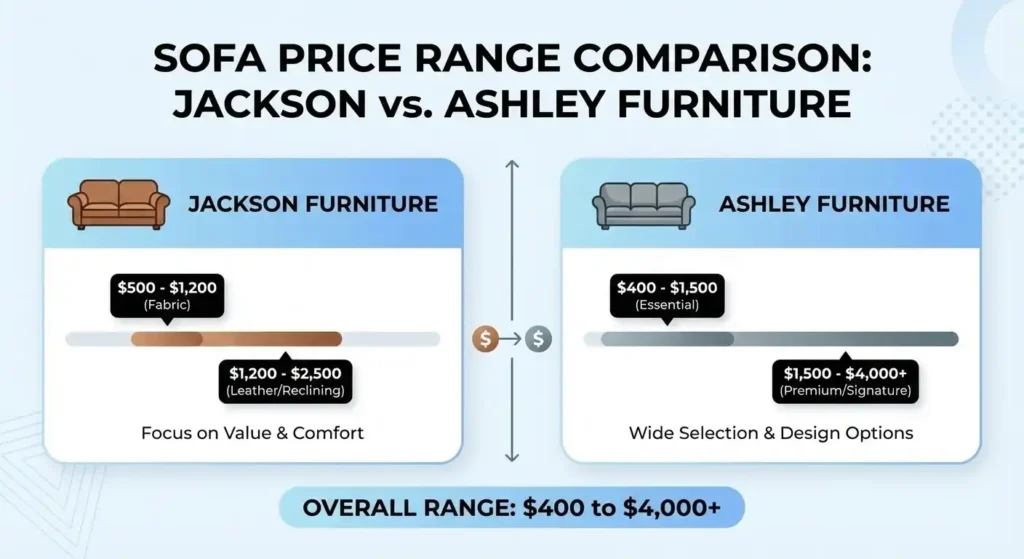
Both brands target the budget-to-mid-range shopper, but the pricing works out differently depending on what you’re buying.
Jackson Furniture sits in the mid-range. A standard Jackson sofa runs roughly $700 to $1,500 depending on fabric and configuration. Catnapper recliners and power lift chairs can push higher, especially with upgraded cushions or power mechanisms. Because everything is made in the US, you’re paying a modest premium over fully imported alternatives. Whether that premium is worth it depends on how much domestic manufacturing matters to you.
Ashley has one of the widest price spreads in the industry. You can find accent chairs for under $200 or full sectionals stretching into the thousands. The Walmart-style supply chain Ashley built over decades keeps costs very competitive at every level. For buyers on a tighter budget, Ashley almost always wins on sticker price. And because their sale sections are almost always stocked, there’s usually a deal to find if you’re patient.
Build Quality: How Do These Brands Hold Up Over Time?
This is where the comparison gets honest and a little complicated.
Jackson Furniture does use real construction techniques that set it apart at the mid-range price point. Steel-reinforced frames, high-coil seat cushions, and gel memory foam are genuine features — not just marketing language. For stationary sofas and chairs used by regular adults in a typical home, Jackson furniture holds up reasonably well. Most buyers who stick to stationary pieces report satisfactory results for several years.
The story changes with Catnapper’s motion furniture. Power recliners and motorized sectionals from the Jackson/Catnapper family have accumulated a notable number of complaints across consumer review platforms including ConsumerAffairs and PissedConsumer. Common issues include motors failing within months of purchase, mechanical problems appearing within the warranty period, fabric pilling on soft materials, and seams separating earlier than expected. The pattern is consistent enough that it’s worth taking seriously before you buy a power recliner from this brand.
Ashley’s quality is mixed in a different way. Because the brand sources from both domestic and overseas factories, quality can vary significantly from one product to the next. A sofa built in an Ashley US plant may feel and last very differently from one assembled overseas. Reviewers report everything from solid multi-year satisfaction to cushions losing shape within a year. The sheer size of the company means not every product gets the same level of quality control. Buying a specific, well-reviewed piece from Ashley is a smarter approach than assuming the brand overall is consistent.
Neither brand is built for the ages. Both target everyday buyers and price accordingly. Go in expecting 7 to 10 years of solid use from a well-chosen piece, and you’ll likely have a good experience with either company.
Style and Selection: Which Brand Gives You More Options?
Ashley wins this category without much contest.
Ashley’s catalog covers virtually every style, from rustic farmhouse and traditional to clean modern and transitional. They update collections frequently, and you can browse thousands of options both in-store and online. Whether you’re decorating a first apartment or a large family home, the variety at Ashley is genuinely impressive.
Jackson Furniture keeps a much tighter focus. They make stationary sofas, loveseats, sectionals, and chairs — all in a casual, comfortable style that works well in family rooms and dens. They don’t make dining furniture, bedroom sets, or home office pieces. Their aesthetic leans warm and relaxed, which is exactly right for some buyers and far too limited for others.
If you’re shopping for one comfortable living room set and want American-made goods, Jackson’s range is workable. If you need to furnish multiple rooms or want to mix styles, Ashley is the far more practical destination.
Customer Service: Where Both Brands Struggle
Honest answer: neither brand has a stellar customer service reputation, and it’s worth knowing that going in.
Jackson Furniture operates through a dealer network, which creates a multi-party chain between you, the store, the manufacturer, and often a third-party repair company. When something goes wrong, getting resolution requires coordination across all of those parties — and that process is slow. Multiple customers report unanswered emails, unreturned calls, and warranty repairs that either take months or never happen at all. Jackson’s BBB page in Cleveland, Tennessee reflects a consistent pattern of complaints around post-sale support.
Ashley’s customer service varies widely depending on whether your store is corporate-owned or independently licensed. Some locations have attentive, responsive staff who handle problems quickly. Others leave customers chasing deliveries for months or dealing with warranty claims that go nowhere. Because Ashley has over 1,100 stores with different operators, your experience really does depend on who runs your local store.
The practical advice for both brands is the same: ask your local retailer — not the brand — what their own service process looks like before you buy. A good local dealer who stands behind their products is worth more than any manufacturer’s warranty on paper.
Jackson Furniture vs Ashley Furniture: The Final Verdict
There’s no single winner here — the right choice really does come down to what you need and what matters most to you.
Choose Jackson Furniture if you specifically want American-made stationary seating and are willing to pay a modest premium for it. Stick to their sofas and chairs rather than the Catnapper power pieces, buy from a local dealer who has a strong reputation for service, and you’re likely to walk away happy. Jackson is a solid mid-range brand for buyers who want something built domestically and don’t need a massive catalog to choose from.
Choose Ashley Furniture if you want the widest selection, the most competitive prices, and the ability to shop everything in one place. Go in with specific product research done in advance — read reviews for the individual piece you’re considering rather than trusting the brand overall. And choose your store carefully, because the local retailer’s service makes a huge difference.
If you’re specifically shopping for a power recliner or lift chair, it may be worth looking beyond both brands. Companies like La-Z-Boy have a stronger long-term track record for motion furniture and tend to handle warranty work more reliably. That comparison is worth doing before you commit to a motorized piece from either Jackson or Ashley.
Bottom line: both brands can work. Go in with the right expectations, do your homework on the specific product, and pick a local dealer you trust.