

Pyntekvister, or decorative branches, offer a versatile way to refresh home interiors year-round. By swapping accents like blossoms for pinecones, you create effortless seasonal transitions.
The word pyntekvister comes from Scandinavian languages, roughly translating to “decorative twigs” or “branches used for decoration.” At first glance, it sounds almost too simple. But that simplicity is precisely its power. In modern home decor, pyntekvister have become increasingly popular because they fit perfectly with minimalist, rustic, and Scandinavian-inspired interiors. Whether placed in a vase on a dining table or used as part of seasonal decoration, they add texture, height, and natural beauty without overwhelming the space.
This guide walks you through everything — from what pyntekvister actually are, to room-by-room styling ideas, seasonal swaps, and DIY projects you can start today.
What Are Pyntekvister and Why Do They Work So Well?
The word pyntekvister may not yet be part of global home decor vocabulary, but in Scandinavia — and increasingly beyond — it’s gaining popularity as a charming and versatile design element.
These decorative branches have evolved from simple seasonal accents into year-round staples for modern interior design. They provide a sculptural quality that traditional flowers often lack, offering height, texture, and a sense of permanence that lasts far longer than a fresh bouquet.
There are several distinct types of pyntekvister available, each suited to different interiors and moods:
| Type | Description | Best For |
|---|---|---|
| Natural birch / willow | Real dried branches, often left untreated | Rustic, farmhouse, Scandinavian styles |
| Blossoming branches | Cherry, apple, or magnolia twigs with soft florals | Spring decor, dining tables, entryways |
| Painted branches | White, gold, black, or pastel-toned stems | Festive, modern, or minimalist setups |
| Artificial / synthetic | Realistic-looking faux branches, low maintenance | Offices, spaces without natural light |
| LED-lit branches | Twigs with built-in fairy lights | Cozy corners, Christmas, ambient styling |
The appeal is broad. Whether your home is modern, rustic, bohemian, or Scandinavian, pyntekvister fit effortlessly. Using dried or naturally fallen branches supports sustainable decorating practices. They break the monotony of flat surfaces and bring visual interest into simple spaces.
Home Decor Ideas You Can Try Today
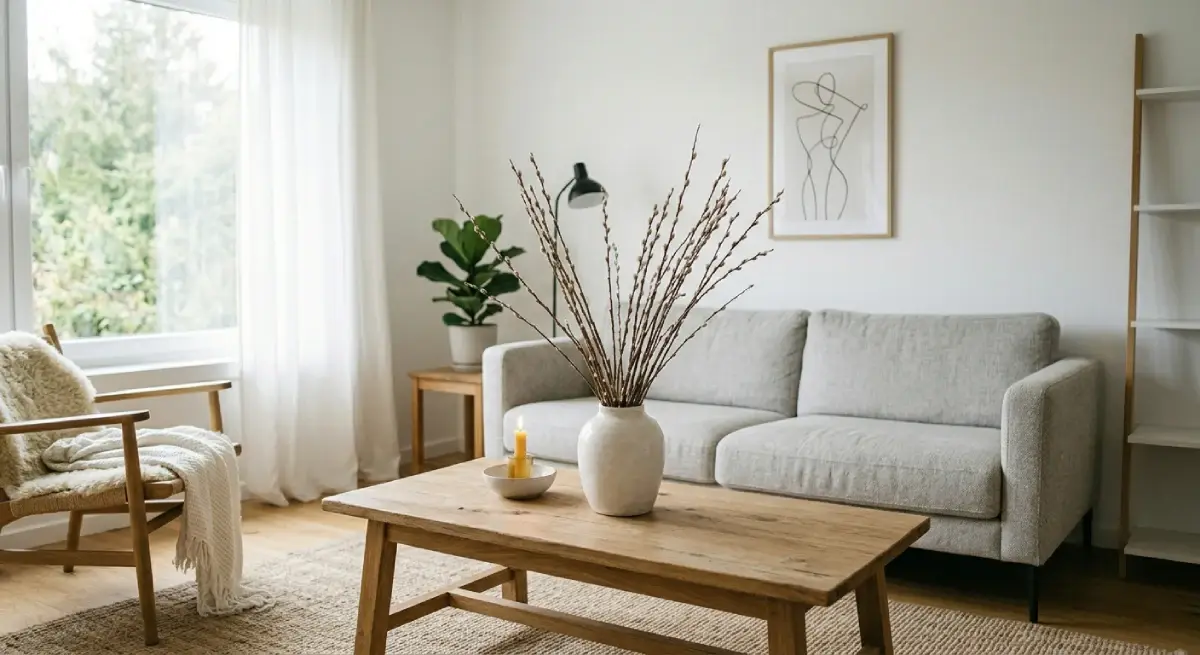
You don’t need to redecorate an entire room. A few well-chosen branches can shift the entire energy of a space. Here are some quick-win ideas to start with:
- Vase centrepiece: Place 3–5 tall branches in a ceramic or glass vase on your coffee table or console. Mix branch heights for natural-looking depth.
- Entryway welcome: Place taller pyntekvister near mirrors for added depth and visual interest in entryways — they bring life without overwhelming the area.
- Tiered tray styling: Lay a shorter bundle of branches across a decorative tray alongside candles and a small bowl for an effortless tabletop moment.
- Shelf filler: Use a single branch to break up the rigidity of books and framed photos on a bookshelf.
- Dining table runner: A bundle of decorative branches can be laid across a dining table runner or arranged in a narrow vase for an organic centrepiece.
Each of these works across different rooms and requires very little investment — just intention.
Interior Styling Tips for Beginners
If you’re new to styling with natural elements, a few core principles go a long way.
The Rule of Three: Always group objects in odd numbers. A branch, a candle, and a small vase together look curated. Two items can feel awkward; four feels cluttered.
Height variation matters: Taller branches anchor a composition. Shorter accessories fill in around them. Taller branches work best for floor vases or large entry spaces, while smaller pyntekvister are ideal for table decorations.
Colour works with you: Natural wood tones create a warm atmosphere, while painted branches provide a more modern aesthetic. Texture also plays a role — branches with unique shapes or small buds can add visual interest to the arrangement.
Quick styling checklist:
- ✅ Add one vertical element (tall branch or stem)
- ✅ Add one soft texture (linen cloth, dried flower, woven basket)
- ✅ Add one grounding object (stone, wooden bowl, ceramic)
- ✅ Remove anything that doesn’t serve the arrangement
Cozy Home Decor: How to Add Warmth with Pyntekvister
Pyntekvister and cozy decor go together naturally — and not just aesthetically. Scandinavian lifestyle concepts like hygge (coziness) and lagom (balance) are often reflected in home design, and pyntekvister embody both.
To create a genuinely warm corner using decorative branches:
- Choose muted, earthy tones — unbleached linen, warm beige, terracotta
- Pair your branch arrangement with a low-watt candle or a small lamp nearby
- Use woven baskets or wooden trays as the base for your vase
- Place decorative twigs near soft lighting or add LED string lights for a cozy atmosphere
The goal isn’t a perfectly styled Instagram corner — it’s a space that genuinely feels restful. Pyntekvister, because they’re organic and imperfect, actually help you achieve that faster than any highly polished decor piece could.
Seasonal Decorations: Easy Swaps All Year Round
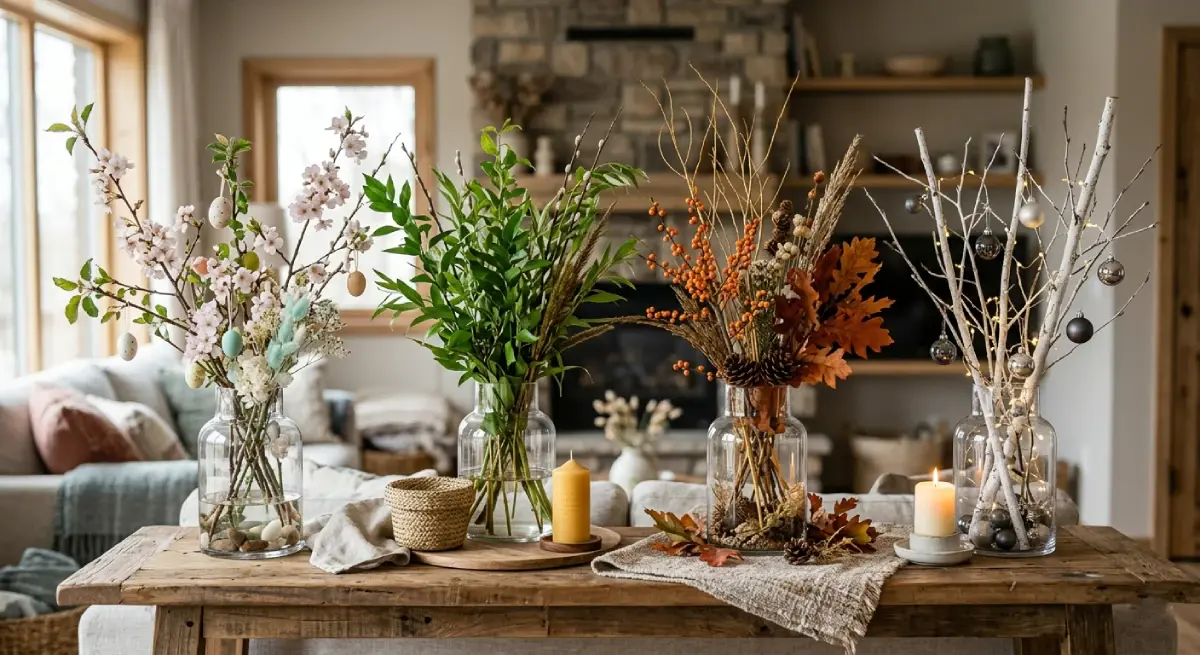
One of the best things about pyntekvister is that you can swap your arrangements with the seasons without spending a fortune. Here’s a simple seasonal guide:
| Season | Branch Type | Colour Palette | Accent Pairings |
|---|---|---|---|
| Spring | Cherry blossom, apple twigs | Blush, mint, soft white | Pastel eggs, small florals |
| Summer | Leafy green branches, willow | Warm green, natural brown | Linen, seagrass, light candles |
| Autumn | Dried golden twigs, berry branches | Rust, amber, deep terracotta | Pinecones, dried botanicals |
| Winter | White-painted or bare birch branches | White, silver, charcoal | Fairy lights, ornaments, candles |
Seasonal decorating is one of the most popular uses for pyntekvister, as they offer a simple way to transform a room for holidays and special events. During Christmas, branches adorned with ornaments, baubles, or subtle lights can create a festive atmosphere without requiring a full-sized tree. For Easter, pyntekvister decorated with colourful eggs or small figurines add a cheerful springtime feeling to the home.
Wall Decor Ideas for More Visual Interest
Most people only think of placing pyntekvister in vases — but walls are an underused canvas.
Attach branches horizontally on a wall with twine or hooks to create a rustic focal point. Wall-mounted pyntekvister create a subtle, earthy texture in minimalist rooms.
A few wall styling ideas worth trying:
- Tuck a few branches behind a framed print to add an organic layer without nails or tools
- Create a simple DIY dreamcatcher-style hanger using a central branch, thread, and dried flowers
- Use a shadow box frame to display a flat branch with pressed flowers for a nature-inspired art piece
- For a whimsical look, hang smaller branches from the ceiling or wall-mounted hooks. Add fairy lights to enhance the ambiance during evenings.
The trick with wall decor is keeping it intentional. One statement arrangement is always more powerful than several smaller ones competing for attention.
Rustic Home Decor Meets Natural Elements
If your home leans farmhouse, cabin-core, or just generally warm and earthy, pyntekvister will feel right at home. If you prefer a more rustic or farmhouse aesthetic, a galvanised metal bucket or a wooden crate can work wonders as a vessel.
Pair your branches with:
- Woven baskets — use them as the vase itself for a fully natural look
- Wood bowls and slabs — arrange short branches laying flat across them
- Ceramic pots in earthy tones — terracotta and matte sage work especially well
- Dried botanicals — lavender, pampas grass, or eucalyptus layered alongside branches
The texture layering in rustic spaces is what makes them feel so rich and lived-in. Pyntekvister contribute bark texture and organic shape, which plays beautifully against softer textiles and rougher wood finishes.
Scandinavian Decor: Light, Clean, and Simple
In Scandinavian design, every object earns its place. Minimalist décor focuses on clean lines, neutral colours, and functional spaces, making pyntekvister an ideal accent that complements these characteristics. They work well in monochrome, industrial, and contemporary environments, adding a natural softness that balances harder design elements like metal or concrete.
For a true Nordic feel:
- Stick to a palette of white, warm beige, and soft grey
- Choose a single, clean-lined ceramic vase — matte white is a classic
- Use one or two bare birch branches rather than a full arrangement
- Leave space around the arrangement; breathing room is part of the aesthetic
For a modern, minimalist look, try using a matte black or white ceramic vase. These neutral colours allow the natural wood tones of the pyntekvister to pop. Less really is more here. One good branch in the right vessel does more than a dozen thrown together carelessly.
Tabletop Decor and Shelving: High-Impact, Low-Effort
Coffee tables, console tables, and bookshelves are the highest-visibility surfaces in most homes — and they’re exactly where pyntekvister deliver the most impact.
For coffee tables: Work in threes. One tall branch in a vase, one low-profile book or tray, and one small decorative object (a stone, a candle, a ceramic figurine). Keep the arrangement off-centre so the table still feels usable.
For shelves: Another creative option is to mount decorative branches directly on walls, or use single branches to break up rigid lines on shelves or mantels. A single branch leaning casually against a stack of books reads as effortlessly styled without any real effort at all.
For console tables: Go tall. A floor-height arrangement in a statement vase turns a console table from functional furniture into an interior styling moment.
DIY Home Styling Projects with Pyntekvister
The beauty of pyntekvister is that the most impressive results often come from the simplest projects. Here are three easy builds:
1. The Mixed-Length Vase Arrangement Collect 5–7 branches of varying heights from your garden or a local florist. Trim at angles at the base. Place in a glass or ceramic vase with a handful of decorative stones to hold them upright. Done in under five minutes.
2. The Wall-Mounted Branch Hanger Use driftwood or a central branch and hang smaller twigs, feathers, or decorative items using thread for a wonderful, reusable alternative to synthetic decor.
3. The Seasonal Centrepiece Wrapping fairy lights around branches adds a warm glow perfect for cosy indoor spaces. Attaching dried flowers or handmade ornaments transforms ordinary twigs into artful décor elements. Swap the accent pieces with the seasons to keep the same base fresh all year.
How to Maintain and Store Your Pyntekvister
Pyntekvister are practically zero-maintenance, but a little care goes a long way.
- Dusting: Use a soft dry cloth or a light brush every few weeks to prevent dust build-up on natural branches
- Sunlight: Keep arrangements out of direct sun to prevent bleaching or brittleness
- Moisture: Natural and dried branches should be kept away from moisture to prevent mould or decay
- Longevity tip: Use matte clear spray to prevent shedding on natural branches, and air-dry fresh-cut stems before arranging
- Storage: Wrap dried arrangements loosely in tissue and store upright in a tall box — they’ll be ready for next season
Final Thoughts
Pyntekvister proves something designers have known for years: the most impactful home upgrades don’t require large budgets or complete renovations. Pyntekvister is more than just decorative branches — it’s a design philosophy rooted in simplicity, nature, and intentional living.
Whether you’re drawn to the clean lines of Scandinavian decor, the warmth of rustic home styling, or just want one easy change that makes your living room feel more considered — a well-placed arrangement of decorative branches is one of the fastest routes there.
Pick one room. Pick one corner. Start with three branches and a vase you already own. You’ll be surprised how much that small, intentional choice changes the feel of the whole space.
Have you tried pyntekvister styling in your home? Share your before-and-after setup — we’d love to see how you made it your own.