

When the power goes out for hours, or even days, a whole-home standby generator keeps your lights, heating, cooling, and refrigerator running automatically. Before you book an installer, it helps to understand the generator installation cost for your home, because the unit price you see online is only part of the final bill.
A standby system is permanently installed outside your home. It connects to your electrical panel through an automatic transfer switch, and it runs on natural gas or propane. When utility power fails, the switch senses the outage and starts the generator within seconds.
This guide breaks down typical 2026 prices by size, explains what installation includes, and shows where quotes rise or fall, so you can compare bids fairly and budget for fuel and maintenance afterwards.
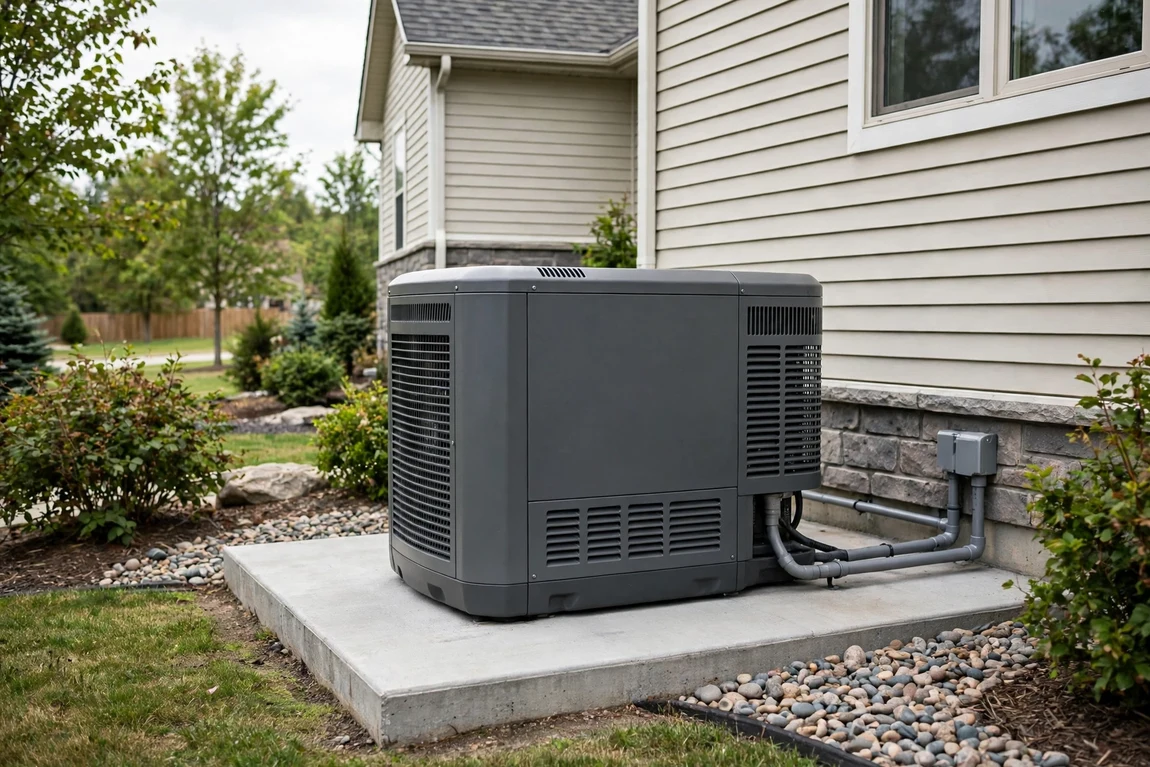
generator installation cost by size and type
Angi’s 2026 data puts the national average for a whole-house generator at $5,154, with most homeowners paying between $1,509 and $8,799. That average blends smaller partial-home projects with larger whole-home systems, so your own quote may sit above it.
Whole-house units in the 22kW to 48kW range are listed by Angi at $5,000 to $18,000 for the generator type alone in 2026. Installation then adds permits, placement, wiring, a concrete pad, and the transfer switch on top of the equipment price.
For current national figures, see Angi’s whole-house generator cost guide, which is based on verified project data. Compare any local quote against that range, then check exactly which line items your quote includes or leaves out.
| Generator size | Typical coverage | Unit price range (Angi, 2026) | What else to budget |
|---|---|---|---|
| 7.5kW to 10kW | Essential appliances, well pump, furnace fan, lighting | $2,000 to $3,500 | Transfer switch, pad, permits, labor |
| 14kW to 18kW | Essentials plus air conditioning and water heater | $4,000 to $5,500 | Transfer switch, pad, permits, labor |
| 20kW to 24kW | Most or all of a typical home, including multiple AC units | $5,000 to $6,500 | Transfer switch, pad, permits, labor |
| 26kW to 32kW | Large homes with bigger HVAC systems | $6,500 to $15,000 | Possible panel upgrade and longer fuel run |
| 36kW to 48kW | Very large homes and heavy electrical loads | $14,000 to $21,000 | Possible panel upgrade and longer fuel run |
| Installation labor | Placement, wiring, fuel connection, and startup | $1,500 to $5,000 (Angi, 2026) | |
When you compare bids, ask each installer to itemise equipment and installation separately. A low price sometimes covers the unit only, while a higher bid may include the switch, pad, permits, and startup.
Angi puts a standby installation itself at an average of $4,520, covering permits, assembly, placement, and wiring. That figure explains why a generator advertised at a modest unit price can still produce a much larger installed total.
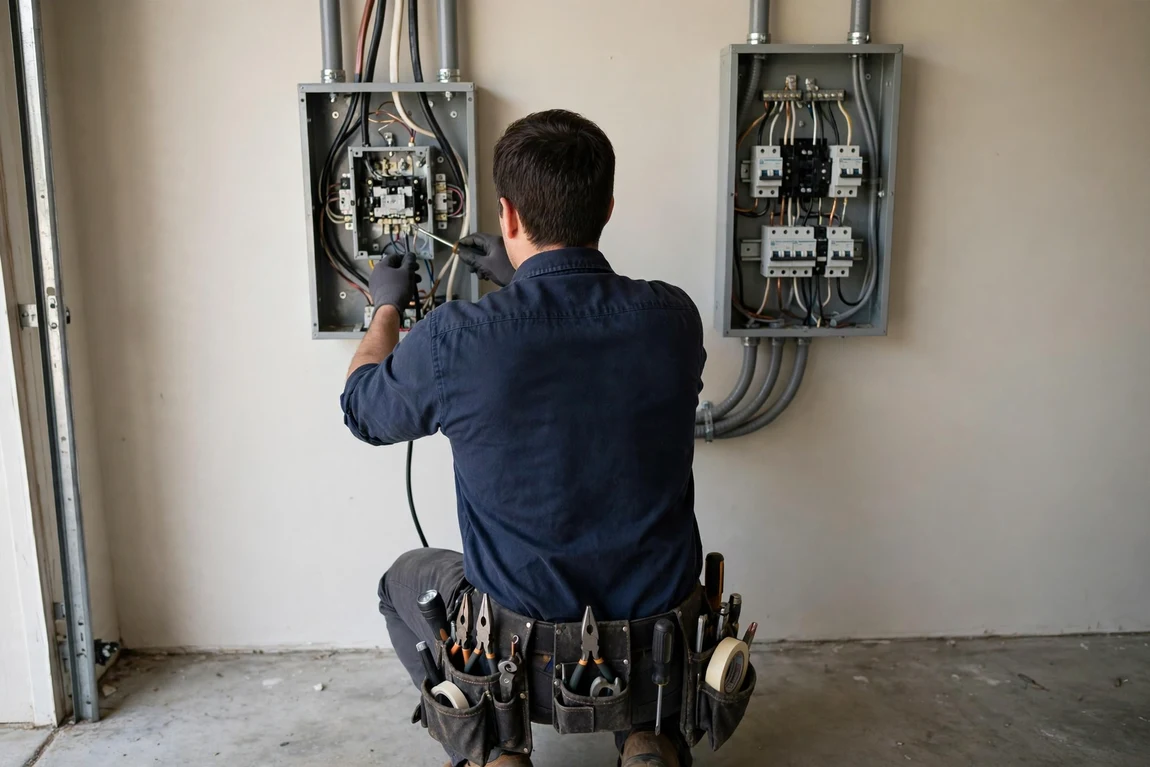
Factors that affect cost
Several site and system choices move a generator installation cost up or down, even for homes on the same street. The biggest drivers are size, fuel, distance, and the condition of your existing electrical panel.
Generator size in kilowatts
Size is the clearest price driver. A small unit that covers only essential circuits costs far less than a large liquid-cooled system that runs two air conditioners, an electric range, and a well pump at the same time.
List the appliances you truly need during an outage before you shop. Refrigeration, heating, water, lighting, medical equipment, and internet usually come first, while luxury loads can often wait or be managed automatically.
Fuel type and fuel run
Most standby systems run on natural gas or liquid propane. Natural gas avoids refuelling, but it needs an available gas service and enough capacity for the generator as well as your furnace and water heater.
Propane needs a tank, and a larger tank costs more upfront. In both cases, a long distance between the generator, the gas meter or tank, and the electrical panel adds pipe, trenching, and labor to the job.
Transfer switch and panel work
Angi notes that about $1,200 of a typical installation goes toward the transfer switch wiring. If your main panel is full, outdated, or poorly located, the installer may also recommend a subpanel upgrade, which Angi lists at $500 to $2,000.
Smart load management can sometimes avoid a panel upgrade. It pauses heavy loads, such as a second air conditioner, for a few minutes so a smaller generator can handle the rest of the house safely.
Pad, permits, and placement
A standby generator needs a level, stable base. Angi lists concrete site preparation at $50 to $75 per square foot, and about $1,000 for a standard 3-foot by 6-foot pad. A pre-cast pad can cost less on a simple, level site.
Permits typically add $50 to $200, according to Angi. Placement rules, noise limits, clearance from windows, and homeowners association approval can also affect where the unit sits, and a longer run from that spot raises the price.
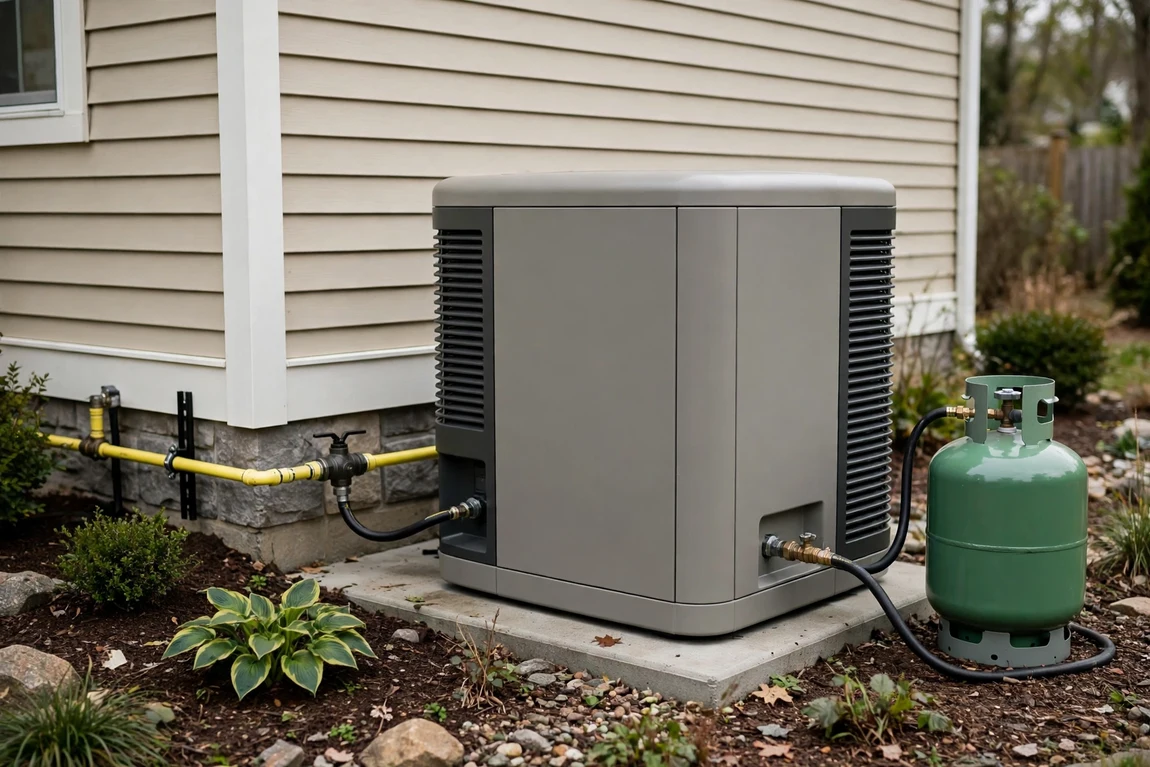
What a professional installation usually includes
A complete quote should cover delivery and placement, the pad, the transfer switch, and the panel connection. It should also cover the fuel connection, permits, inspection, startup, and a system demonstration.
Ask who pulls the permits and who schedules the inspection. Ask, too, whether the first maintenance visit, a monitoring service, and the manufacturer’s warranty registration are included, because those details differ between installers.
If your home also needs broader electrical work, compare this project with our guide to electrical panel upgrade costs before you sign, so panel work is priced once and not duplicated across two separate jobs.
DIY vs professional installation
Installing a whole-home standby generator is not a sensible DIY project. The work combines high-voltage electrical connections, a gas or propane fuel line, heavy equipment placement, and local code requirements, and a mistake can create fire, shock, or carbon monoxide risks.
For that reason, most homeowners should treat the generator installation cost as a professional job from the start. A licensed installer can size the system, pull permits, connect the transfer switch correctly, and protect the equipment warranty.
You can still save money on safe preparatory tasks. Clear the installation area, trim planting around the site, confirm any homeowners association rules, and decide in advance which circuits matter most during an outage.
Some manufacturers also require authorised startup for the full warranty to apply. Confirm that before buying a discounted unit online, because the saving can disappear quickly.
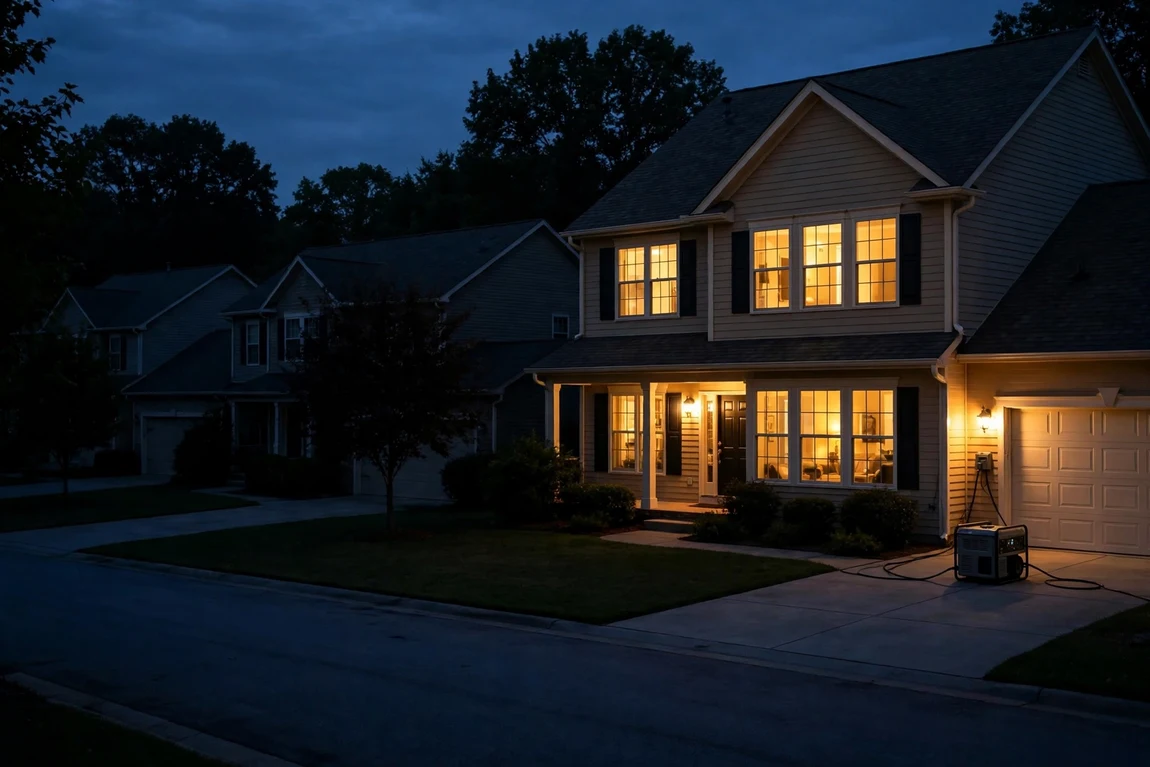
Running and maintenance costs to plan for
Budget beyond installation day. Angi lists routine maintenance at $80 to $300, and optional extras such as wireless monitoring at $200 to $400 and smart load management at $150 to $300. Fuel use during a long outage adds further cost.
Standby generators also run a short self-test each week. That exercise cycle uses a little fuel and keeps the engine lubricated, and it is one reason an annual service visit matters even in a year with no real outage. Keep the area around the unit clear and check the status light after storms.
Ways to keep the budget under control
Right-size the system first. Covering essential circuits with load management often delivers the protection you need at a lower price than sizing for every appliance in the house running at once.
Get at least three itemised quotes and compare the same scope. Check the generator size, switch type, pad, fuel work, permits, panel work, and warranty in each bid, not just the total. A like-for-like generator installation cost comparison is the fastest way to spot a bid that quietly leaves items out.
Finally, place the generator as close as safely possible to both the panel and the fuel source. Shorter runs are one of the simplest ways to trim labor.
Frequently asked questions
What is the average generator installation cost in 2026?
Angi reports a national average of $5,154 for a whole-house generator in 2026, with most homeowners paying between $1,509 and $8,799. Larger whole-home systems, panel upgrades, and long fuel runs can push a project well above that typical range.
How long does installation take?
The physical installation often takes one to two days once permits are ready and the equipment is on site. Scheduling, permit approval, utility coordination, and inspection can add days or weeks before and after that hands-on work.
Do I need a transfer switch?
Yes, for a permanently installed standby system. The switch isolates your home from the grid while the generator runs, which prevents dangerous back-feeding, and it starts and stops the transfer of power automatically during an outage.
Can a standby generator run my whole house?
It can, if it is sized for that job. Smaller units cover essential circuits only, while larger 20kW to 24kW and above systems can run most or all of a typical home, especially when paired with smart load management.
How often does a standby generator need servicing?
Follow the manufacturer’s schedule, which usually means at least an annual service with oil, filter, and inspection checks. Units that run through long outages may need service sooner, based on the engine hours they have accumulated.