

Hiring a pro to hang your holiday lights saves you the ladder work, but quotes for the same house can vary by hundreds of dollars. Understanding Christmas light installation cost before you book helps you compare those quotes fairly. For the 2026–27 season, most homeowners pay between $220 and $683 for professional installation, with a national average of about $445, according to Angi data based on more than 2,200 verified projects.
This guide breaks down pricing per linear foot and per home, explains renting lights versus buying your own, and covers the removal and storage charges that often appear as separate line items.
What the Average Job Costs in 2026
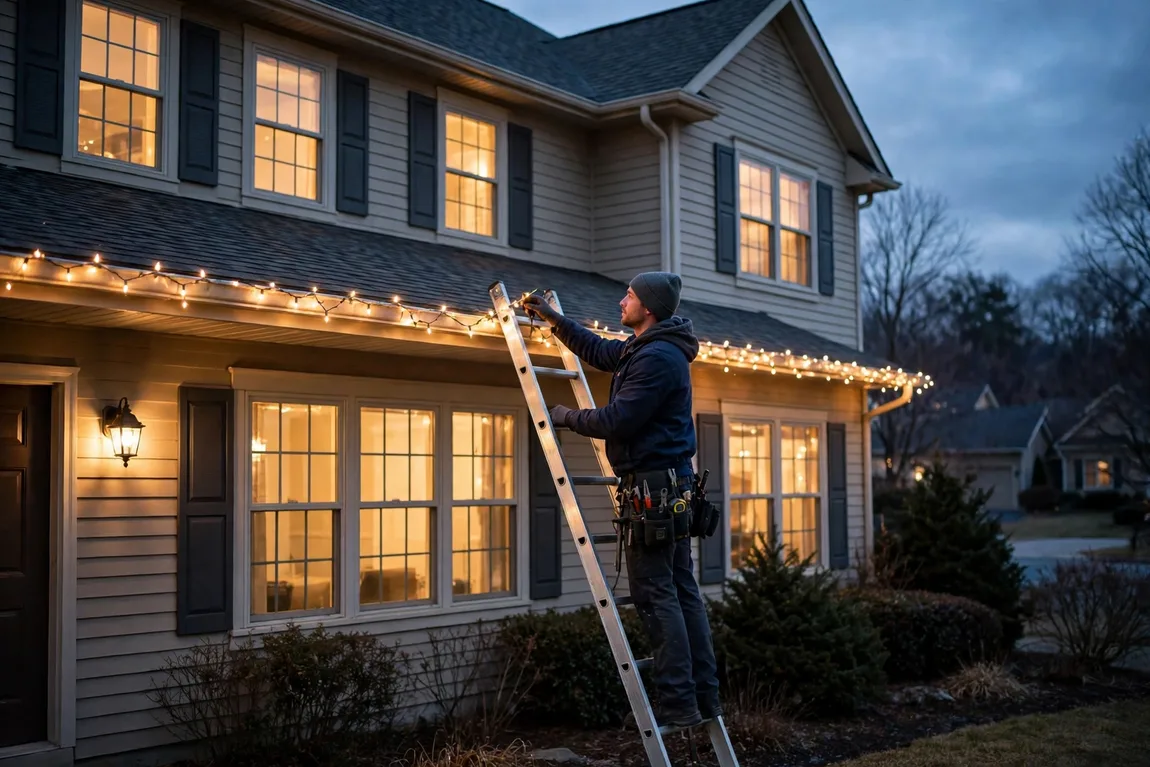
Angi puts the typical professional job at $220 to $683, and the final figure depends mostly on home size, display scope, and how hard your roof is to reach. A simple roofline on a one-story ranch sits at the low end. A three-story home with peaks, trees, and walkway lighting sits far above it.
By home size, Angi reports a small one-story home using 100 to 150 linear feet of lights averaging about $250, with a range of $200 to $450. A medium two-story home using 150 to 250 feet averages about $450, ranging from $350 to $800.
Large three-story homes using 250 to 400 feet average about $900, with a range of $700 to $1,500. Estate homes and fully custom displays using more than 400 feet average about $1,200 and can reach $2,500 or more.
Display type matters just as much. Roofline-only work runs $250 to $1,500, while full packages that add windows, doors, and landscaping run $750 to $5,000. Custom animated or music-synchronized displays can reach $1,000 to $8,000, according to the Angi guide to professional Christmas light installation pricing.
Christmas Light Installation Cost Per Linear Foot
Most installers price labor in one of three ways. The most common is a per-linear-foot rate of $2 to $5, which rises with roof height, pitch, and complexity. The second is an hourly rate of $60 to $100. The third is a flat minimum fee of $150 to $300 per job, which protects the crew on small projects.
Per-foot quotes are the easiest to compare, but only if every quote counts the same footage. Ask each company to state the linear feet in writing. One company may measure only the front roofline, while another includes side eaves, dormers, and the garage.
Also ask what the per-foot rate includes. A labor-only rate assumes you supply the lights, clips, timers, and extension cords. A full-service rate includes commercial-grade lights cut to fit your roofline, plus maintenance calls if a section goes out mid-season.
Full-service packages commonly land higher per foot than labor-only work because the company is supplying and warranting the product. When you compare a $3-per-foot labor quote with a $9-per-foot full-service quote, you are not comparing the same job.
Renting Lights vs. Buying Your Own
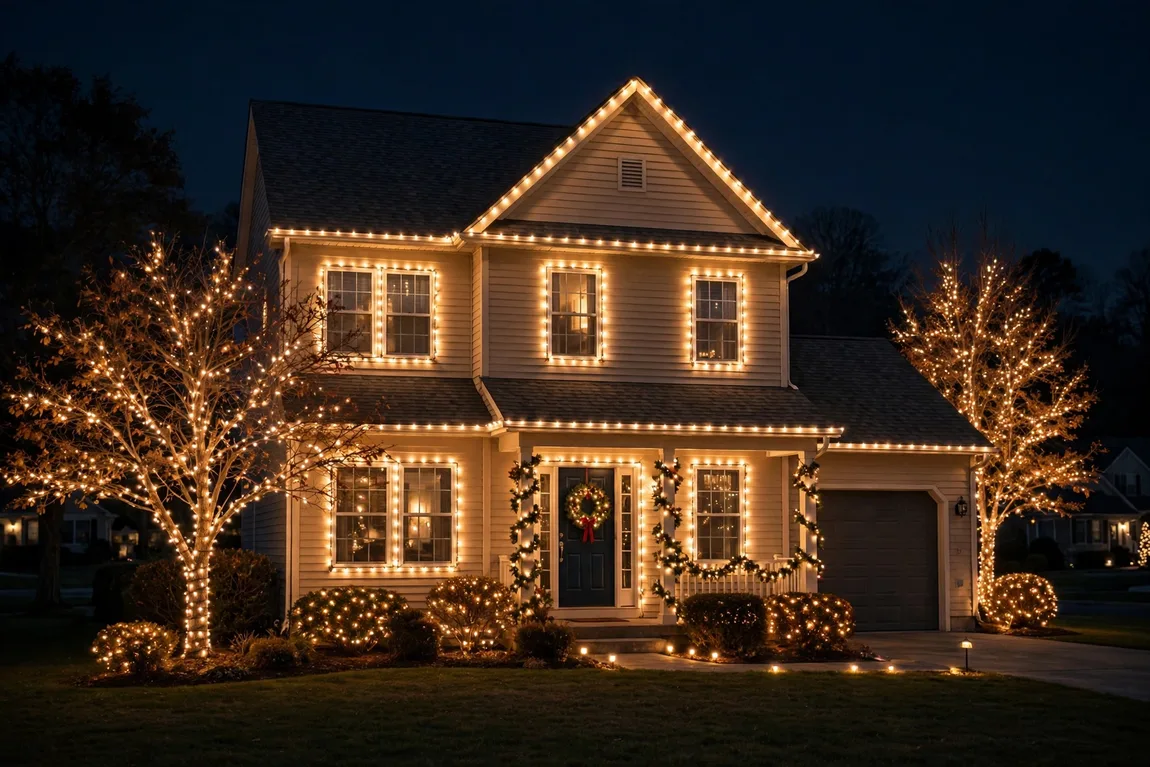
Many full-service companies work on a rental model, even when they never use that word. The company owns commercial-grade lights, cuts them to fit your home, installs them, services them during the season, then removes and stores them. You pay one seasonal price and own nothing at the end.
Rental suits homeowners who want a polished display with zero storage bins in the garage. It also means the design can change each year. The trade-off is that you pay again every season, and the lights leave with the crew in January.
The purchase model works differently. You buy the lights, either through the installer or at retail, and pay mainly for labor. Your first year costs more because it includes the product, but later years should drop to installation, removal, and any replacement strands.
Retail strands are cheaper upfront but fail sooner, and mixed lengths rarely fit a roofline cleanly. Commercial-grade C9 bulbs on custom-cut wire look sharper and last longer, so buying through the installer often wins over several seasons.
Whichever model you choose, get the ownership terms in writing. Ask who replaces a failed strand, who stores the lights, and what happens if you skip a year. Those answers matter as much as the headline Christmas light installation cost itself.
Removal, Storage, and Other Add-Ons
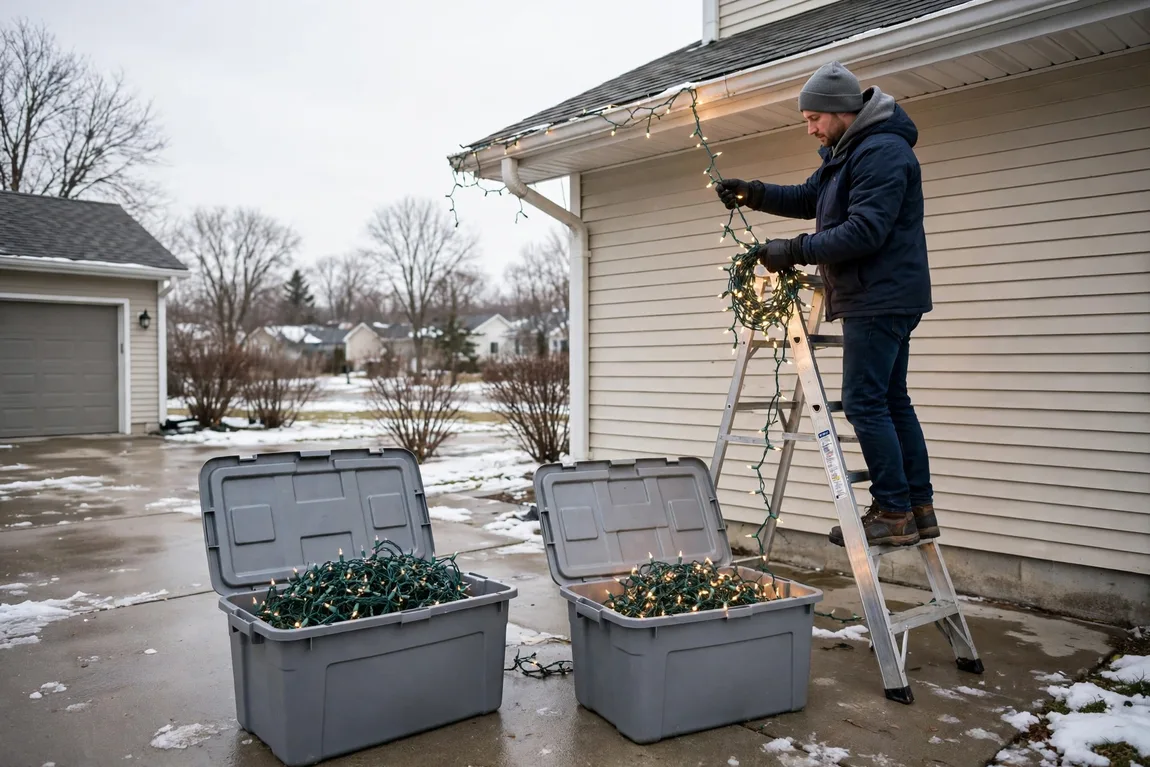
Installation is only part of the seasonal bill. Many companies include January removal in the package, but others price it separately, so confirm before you sign. Professional removal protects the lights and your gutters, and it keeps you off an icy ladder in the coldest month.
Off-season storage is another common add-on. Angi notes that removal and storage are typically priced separately when they are not bundled, and bundling them with installation can earn a discount. Stored lights also come back tested and untangled the next season.
Extras add up too. Timers, smart controls, wreaths, tree wrapping, and replacement strands all raise the total. Running the display costs money too: Angi estimates a large LED display adds about $5 to $20 to a monthly electric bill, while a comparable incandescent display can add $30 to $75.
If you are decorating indoors as well, our guide to the best artificial Christmas trees can help you match the tree to the outdoor display. And if the crew will be on the roof anyway, fall is a smart time to handle the jobs in our guide to winterizing your home.
What Raises or Lowers the Price
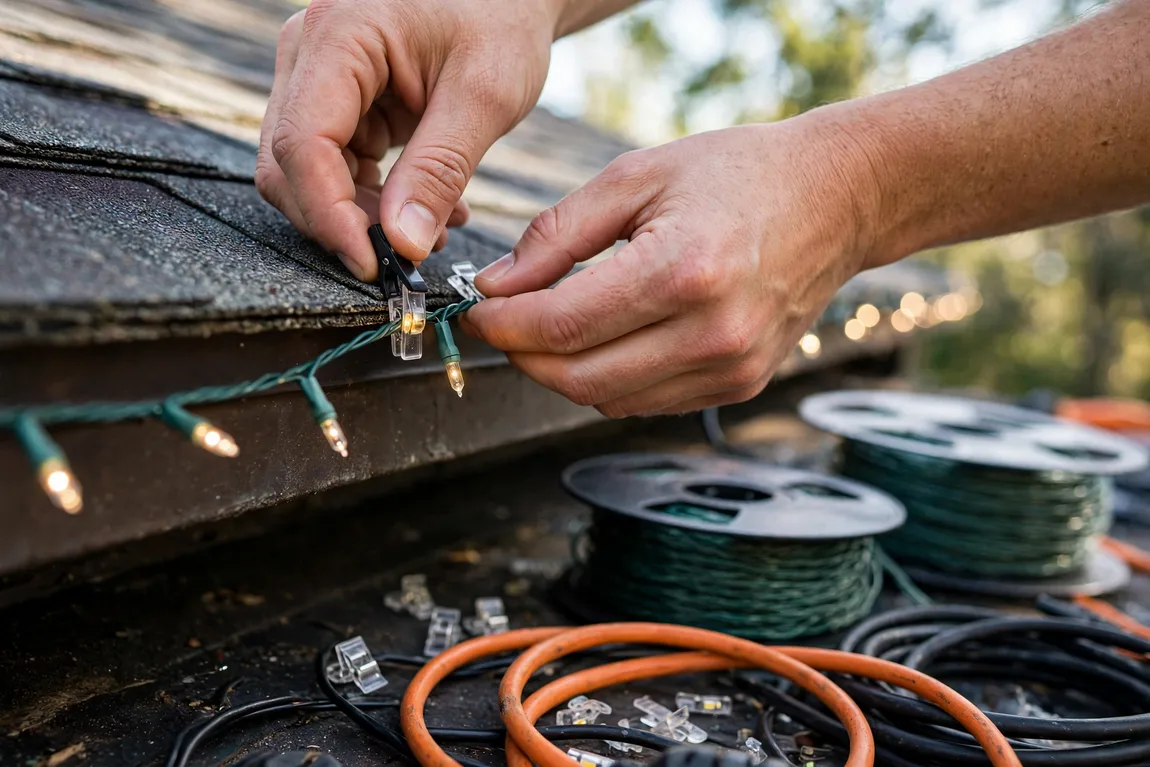
Roof height and pitch are the biggest labor drivers. A walkable one-story roofline is fast work. A steep, three-story roof needs taller ladders, more safety gear, and a bigger crew, so the per-foot rate climbs.
Timing matters too. Demand peaks in late November, and Angi notes that urban areas and high-demand regions charge more. Booking in October often secures a better rate and a better installation date than calling after the first frost.
Your electrical setup can add cost. Pros may need outdoor-rated extension cords, GFCI-protected outlets, or a timer rated for the load. Ask each bidder to itemize the Christmas light installation cost into labor, materials, and extras, so you can see where a high quote is really coming from.
You can lower the bill by simplifying the design. A clean roofline with one accent tree usually looks better than a crowded yard anyway. Reusing lights you own, choosing LEDs, and bundling removal at booking all trim the total.
DIY vs. Hiring a Pro
DIY is cheapest in cash terms. You buy the lights, clips, cords, and timer once, and your only recurring cost is your time. For a one-story home with a simple roofline, a careful homeowner can finish in an afternoon.
The risks are real, though. Falls from ladders, overloaded circuits, and damaged shingles are the common failure points, and they grow with roof height. Pros carry insurance, use commercial-grade materials, and fix mid-season outages as part of many packages.
A practical middle path is to hire out the high roofline and do the ground-level work yourself. You handle shrubs, walkway stakes, and the tree, while the crew handles everything that needs a tall ladder. That split keeps the Christmas light installation cost down without giving up the polished roofline.
How to Compare Quotes Fairly
Get at least three written quotes, and insist each one lists the same details: linear feet, who supplies the lights, whether removal and storage are included, and the mid-season service policy. A low quote that excludes removal is not really the low quote.
Confirm the company carries liability insurance, especially for multi-story work. Ask how they attach lights, since clips should grip the shingle or gutter edge without staples through roofing material.
Finally, ask about scheduling. A slightly higher quote with a guaranteed November date may be worth more than a discount slot in mid-December.
Frequently Asked Questions
How much does it cost to have Christmas lights installed on a two-story house?
Angi reports a medium two-story home using 150 to 250 linear feet averages about $450, with most jobs ranging from $350 to $800. Steep roofs, custom designs, and full-service light rental push the price toward the top of that range.
Is it cheaper to rent lights from the installer or buy my own?
Renting costs less in the first year because the product is included in one seasonal price, and the company handles repairs and storage. Buying costs more upfront but can be cheaper over several seasons, since later years are mostly labor, removal, and occasional replacements.
Does the price include taking the lights down?
Often, but not always. Some companies bundle January removal and storage into the package, while others charge separately. Because removal affects the true Christmas light installation cost for the season, confirm it in writing before you book.
When should I book installation for the 2026–27 season?
Book in October or early November if you can. Demand peaks in late November, prices and wait times rise, and the best crews fill their calendars first. Early booking also leaves time to repair outlets or trim branches before installation day.
Do LED lights really lower the total cost?
Yes, mainly through electricity and lifespan. Angi estimates a large LED display adds roughly $5 to $20 a month to run, versus $30 to $75 for incandescent. LEDs also survive more seasons, which matters most when you own the lights yourself.