

A pergola gives a backyard a defined outdoor room without the cost of a full roofed extension, but pergola cost varies far more than most homeowners expect. As a planning estimate for 2026, a typical US project can range from about $1,500 for a small do-it-yourself kit to $15,000 or more for a large custom-built or motorised design. Most homeowners planning a mid-size pergola installed by a professional can budget roughly $3,000 to $8,000, driven mainly by size, material, and groundwork. All prices here are typical US planning ranges for 2026, not quotes, so get local estimates before you commit.
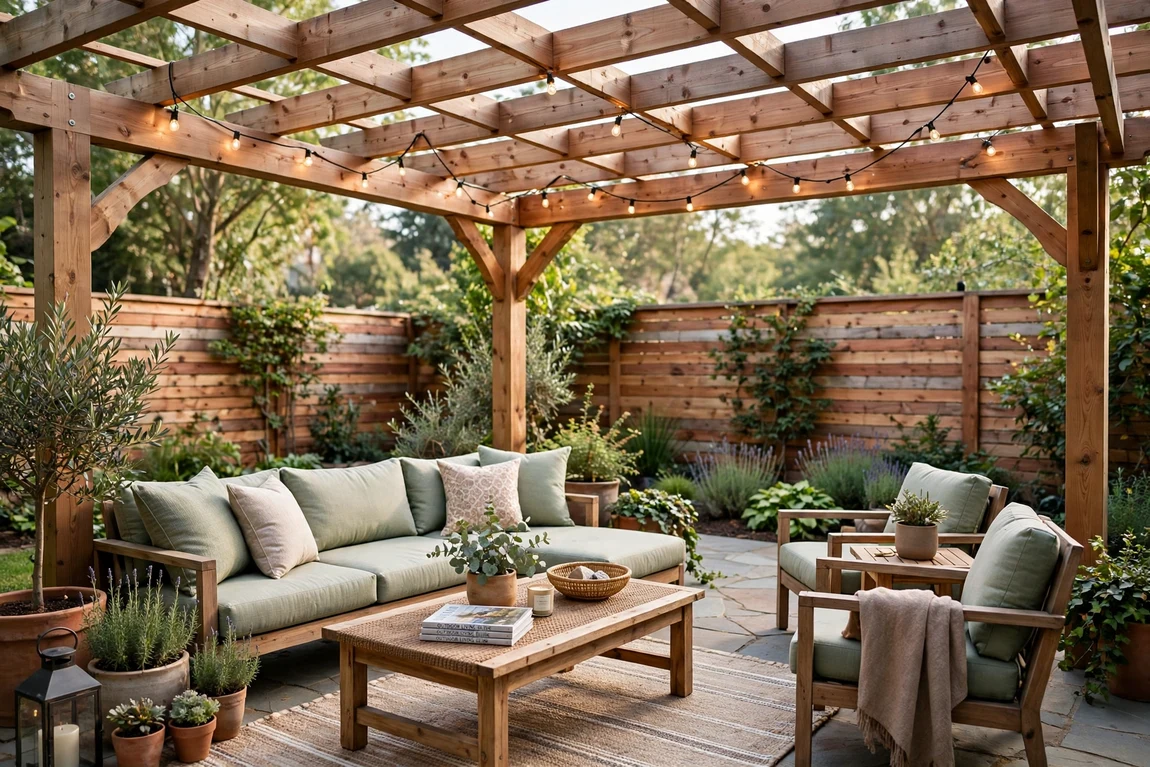
A cedar pergola over a backyard patio with seating. (Illustrative image)
What a Pergola Is: Attached vs Freestanding
A pergola is an open outdoor structure made of posts and a slatted or louvered top. The open top lets in light and air while giving partial shade, making it a popular cover for patios, decks, and outdoor dining spaces. It does not enclose a space or count as indoor living area, so it is a much simpler project than a room addition.
An attached pergola is fixed to the house on one edge and supported by posts on the other, which suits a patio or deck outside a back door, and it may need fewer posts and footings. A freestanding pergola stands on its own posts anywhere in the yard, for example over a seating area or near a pool. It offers more placement freedom, but every post needs a proper footing. If a pergola will sit on or beside a deck, plan both together: our guide to deck building cost shows what the platform underneath may add.
pergola cost by Size and Material
Size and material are the two biggest price drivers: bigger pergolas need longer beams, more posts, more footings, and more labour. The table below gives typical planning ranges for a professionally installed pergola in the US in 2026.
| Size | Pressure-treated wood | Cedar | Vinyl | Aluminium |
|---|---|---|---|---|
| 10×10 ft | $2,000-$4,000 | $3,000-$5,500 | $2,500-$5,000 | $3,500-$6,500 |
| 10×12 ft | $2,500-$5,000 | $3,500-$6,500 | $3,000-$6,000 | $4,000-$7,500 |
| 12×16 ft | $4,000-$7,500 | $5,500-$10,000 | $5,000-$9,000 | $6,500-$12,000 |
Pressure-treated wood is usually the lowest-cost material, though it needs regular sealing or staining. Cedar costs more, looks warmer, and resists insects and rot better, but still needs periodic care. Vinyl needs very little maintenance beyond washing, although style choices are limited. Aluminium is at the higher end, is light and durable, will not rot, and is most often used for modern louvered roofs. As planning ranges, a kit in these sizes might cost roughly $1,500 to $6,000 for materials alone, while a custom-built design in premium materials, especially with a motorised louvered roof, can reach $10,000 to $25,000 or more.
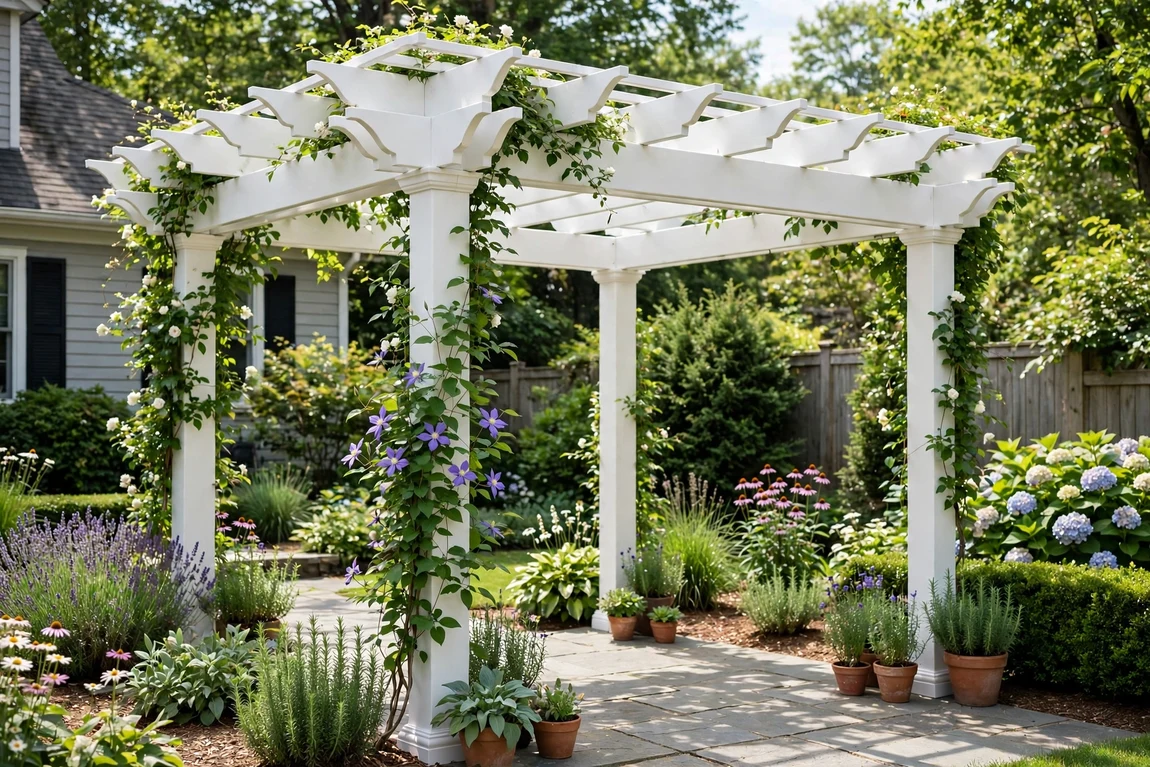
A white vinyl pergola in a garden setting. (Illustrative image)
Kit vs Custom-Built Pergolas
A pergola kit arrives with pre-cut, pre-drilled parts and fixings, ready to assemble on a prepared base. Kits are the cheapest route because you are buying materials and instructions rather than design and labour, and standard sizes such as 10×10 and 10×12 are widely stocked. The trade-offs are fixed sizes, limited finishes, and thinner materials than a carpenter might specify.
A custom-built pergola is designed for your exact space by a carpenter or outdoor living contractor. It suits odd-shaped patios, sloped ground, attached designs that must match house trim, and features such as a louvered roof, and usually fits better and lasts longer. Either way, plan it alongside the wider yard so planting, paths, and boundaries work together, as set out in our guide to landscaping cost.
What Installation Involves
Installation is more than standing four posts upright. A typical professional build involves the following steps:
- Marking out the position and checking for underground services before digging.
- Digging footing holes and setting posts in concrete footings, or fixing post bases to an existing slab or deck.
- Levelling and bracing the posts, then fitting the main beams and cross rafters or louvered roof panels.
- Adding any shade canopy, screens, lighting, or electrical work, which may need a licensed electrician.
- Applying stain, sealant, or paint to timber, and clearing away packaging and offcuts.
On permits, the position varies. Many areas treat a small freestanding pergola as a minor garden structure, while larger or attached pergolas, especially with a solid or louvered roof, wiring, or footings near a boundary, may need a permit or setback approval. Rules differ by city, county, and sometimes homeowners association, so check with your local building department first. Similar boundary questions come up with fences, which our guide to fence installation cost covers from the pricing side.
Factors That Change the Price
- Material: aluminium and cedar generally cost more than pressure-treated wood, while vinyl sits in the middle to upper range.
- Size and height: every extra foot adds material, footings, and labour, and taller posts need stronger footings.
- Louvered or motorised roofs: adjustable louvres that tilt for shade and rain cover are a major upgrade and can add several thousand dollars.
- Shade canopy: a simple fabric canopy is a low-cost addition, while retractable canopies cost more.
- Lighting and power: string lights are inexpensive, but wired lighting, fans, or heaters need electrical work.
- Groundwork: levelling a slope, removing an old structure, or pouring a new slab can add as much as the structure itself.
- Site access: narrow side gates and carrying materials by hand slow the job and can raise labour costs.
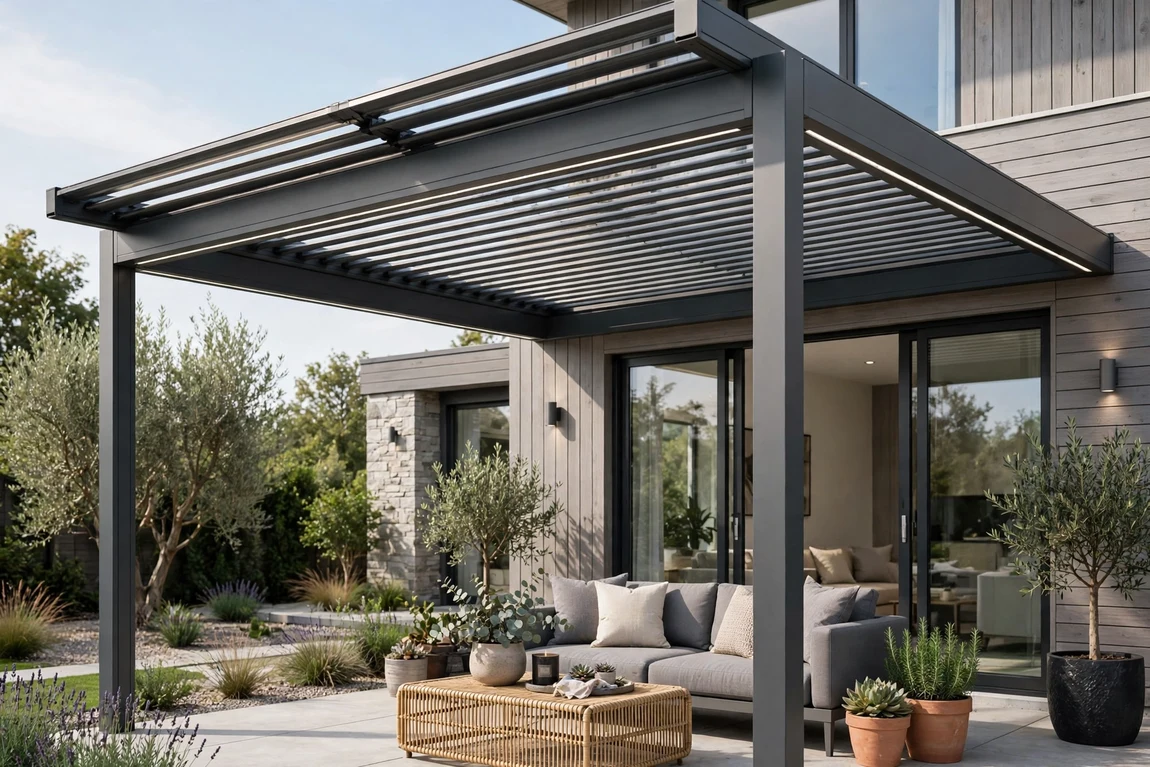
A modern aluminium pergola with a louvered roof. (Illustrative image)
DIY Kit vs Professional Build
Assembling a kit yourself is the main way to cut labour from the budget. A straightforward kit on a flat, existing patio might be a weekend project for two people with basic tools, and the typical planning saving is the installation labour portion, often roughly $1,000 to $3,500 on a mid-size pergola. The risks are real, though: footings still need to be set correctly, beams are heavy, and levelling mistakes show up in a twisted frame. Electrical work should be left to a licensed electrician. A professional build costs more but usually includes correct footings, a level structure, safe fixings to the house on attached designs, and a workmanship warranty. For large, attached, or louvered pergolas, the professional route is usually the safer value.
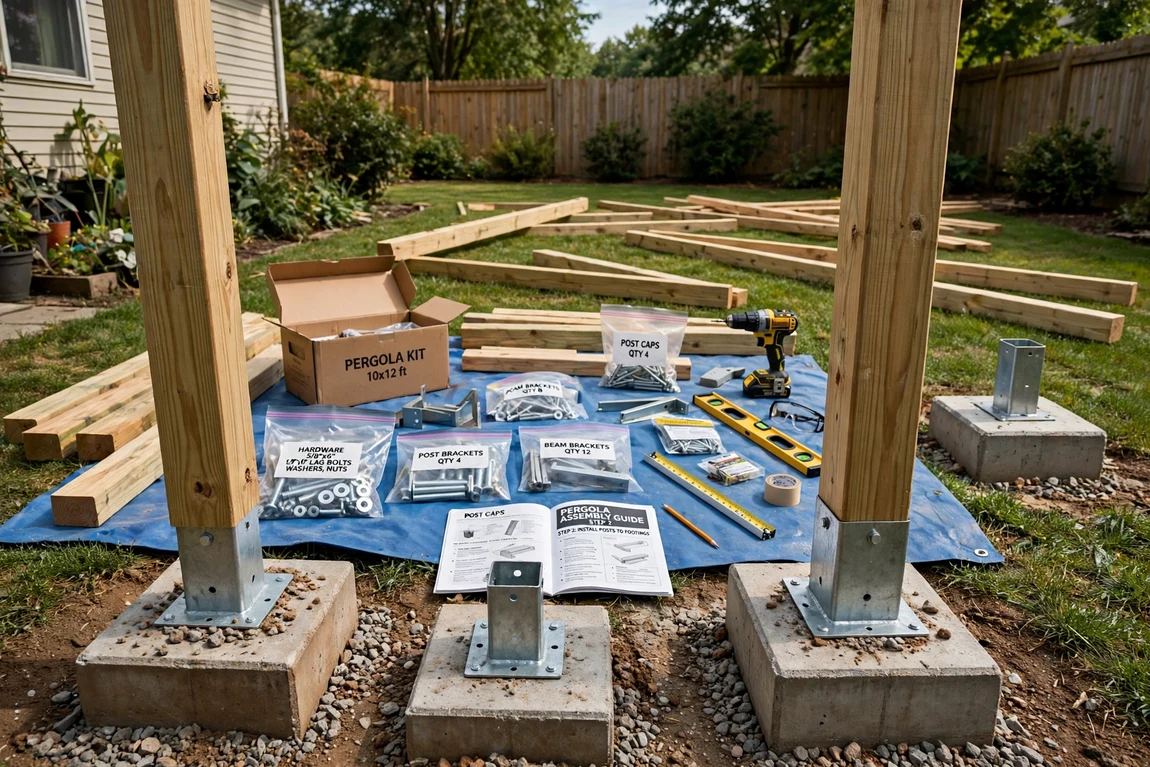
Pergola kit posts being set on concrete footings during installation. (Illustrative image)
How to Save Money on a Pergola
- Choose a standard kit size such as 10×10 or 10×12 instead of a custom dimension.
- Pick pressure-treated wood or vinyl rather than premium cedar or aluminium if the budget is tight.
- Build on an existing patio or slab so no new base or major groundwork is needed.
- Keep the roof simple: fixed slats or a fabric canopy instead of a motorised louvered system.
- Do straightforward preparation yourself, such as clearing the site, and leave structural work to the builder.
- Get two or three itemised quotes so you can compare materials, footings, and finishes like for like.
Maintenance by Material
Maintenance differs by material and affects the true long-term cost. Pressure-treated wood should be cleaned and sealed or stained every one to two years as a general guide, and checked for splits. Cedar also benefits from periodic sealing to hold its colour, though many owners let it weather grey. Vinyl needs little more than washing and a check of its fixings. Aluminium needs the least care: wash it occasionally and keep louver mechanisms clear of debris. Whichever material you choose, check post bases and fixings once a year, trim climbing plants back from joints, and clear leaves from the top.
In short, set your budget around size and material first, decide honestly whether a kit suits the project, and leave room for footings and groundwork. A pergola is one of the simplest ways to add a usable, shaded outdoor room to a home.