

A stained, chipped or dated tub can make an otherwise good bathroom look tired, but tearing it out is rarely the cheapest fix. Understanding the real bathtub refinishing cost in 2026 helps you decide whether a one-day refinish, a liner or a full replacement makes sense. For most standard tubs, professional refinishing — also called reglazing or resurfacing — runs about $335 to $630, according to cost data published by Angi and HomeAdvisor-style cost guides. This guide breaks down prices by material and compares refinishing with liners and replacement.
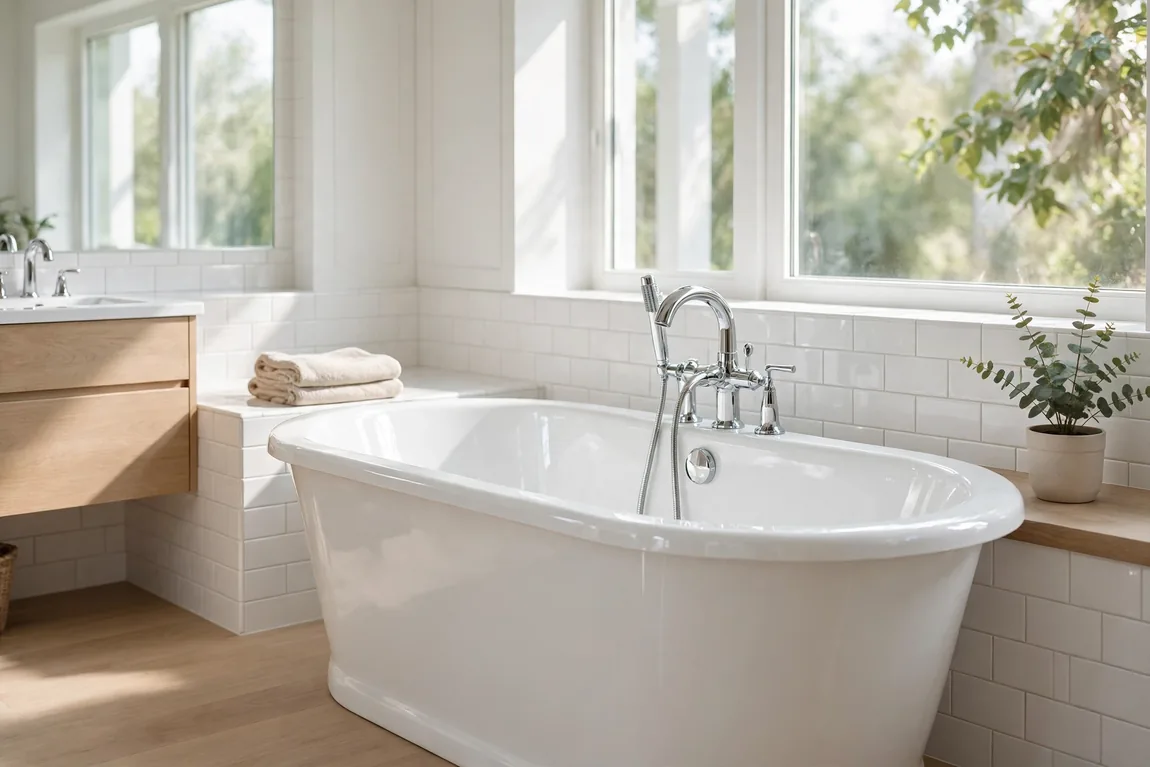
A freshly refinished tub in a bright, updated bathroom. (Illustrative image)
What the bathtub refinishing cost includes in 2026
A professional quote covers far more than a coat of paint. The technician deep-cleans and etches the surface, strips any failing old coating, fills chips, masks the room, applies a bonding agent and primer, then sprays several topcoats. The work usually takes about three to five hours.
Most homeowners pay between $335 and $630, with a national average close to $480 in published 2026 cost data. Simple jobs can start around $250 to $300, while large, damaged or previously refinished tubs can reach $800 to $1,000 or more. Treat these as attributed ranges, not fixed quotes.
Bathtub refinishing cost by tub material
Material is the biggest price driver. Hard, stable surfaces bond well and prep quickly; flexible surfaces need more care, and rust on metal tubs adds labor.
| Tub material | Typical 2026 refinishing cost | Notes |
|---|---|---|
| Porcelain (over steel or cast iron) | $350 – $600 | Most common; durable, predictable results |
| Fiberglass | $300 – $1,000 | Flex and worn gelcoat can add repair work |
| Acrylic | $250 – $500 | Often lowest; needs flexible coatings |
| Cast iron | $300 – $650 | Rust removal can push prep costs up |
| Chip and crack repair (add-on) | $50 – $200 | Per repair area, on top of refinishing |
| Stripping a failed previous coating | $400 – $800 total | Re-refinishing costs more than a first job |
| Tub and tile surround together | $800 – $1,200 | More surface area and masking time |
Porcelain and cast iron
Porcelain-enamel tubs, over steel or cast iron, are the classic candidates: the surface is rigid, the coating bonds well, and a good job lasts 10 to 15 years. Cast iron costs more when rust must be ground back, but these heavy tubs are worth saving. Antique and clawfoot tubs cost more again, because inside and outside both need finishing.
Fiberglass and acrylic
Fiberglass is the least predictable. A sound unit refinishes at the lower end, but soft spots, cracks and worn gelcoat can push the bill toward $1,000 — and a weak tub may not be worth coating. Acrylic runs about $250 to $500, with a coating made for surfaces that flex slightly.
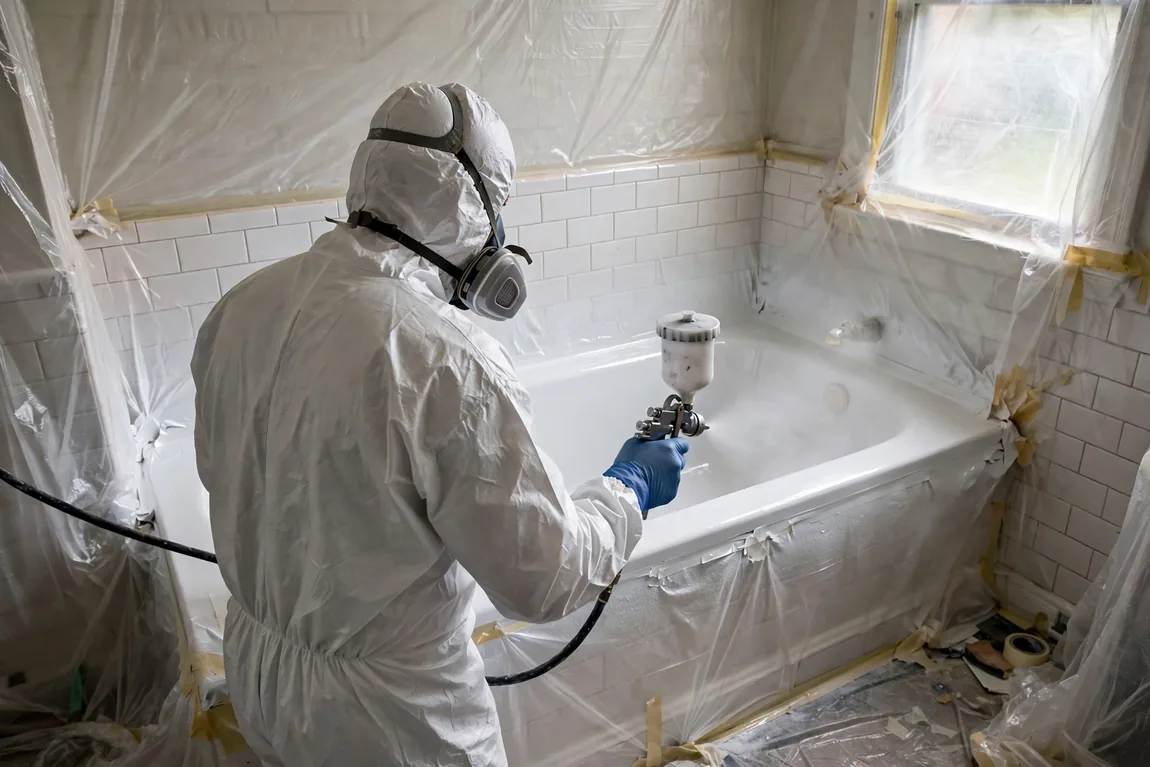
A pro sprays the new topcoat after cleaning, etching and masking. (Illustrative image)
Refinishing vs. a liner vs. full replacement
Refinishing is only one way to deal with an ugly tub. Here is how the options compare, using ranges reported by Angi and other national cost guides.
| Option | Typical 2026 cost | Time | Typical lifespan |
|---|---|---|---|
| Professional refinishing / reglazing | $335 – $630 | 3–5 hours, use after 24–48 hours | 10–15 years |
| DIY refinishing kit | $30 – $150 for the kit | 4–8 hours, longer cure | About 2–5 years |
| Acrylic tub liner | $2,500 – $10,000 installed | Fitted in about a day | 10–20 years if sealed correctly |
| Full tub replacement | $2,000 – $9,400 installed | 2–5 days or more | 25–50 years |
A liner covers the old tub with a molded acrylic shell. It avoids demolition, but costs several times more than refinishing and can trap moisture if the seal fails. Replacement is the only real fix for a cracked-through, leaking or flexing tub — and the most expensive route. If the tub is part of a bigger project, compare it with our guide to how much a bathroom remodel costs.
Factors that affect the price
- Size and type: a standard alcove tub is cheapest; soaking, freestanding and clawfoot tubs have more surface to coat.
- Condition: rust, deep chips, cracks and peeling coatings add repair time.
- Previous refinishing: a failed coating must usually be stripped completely.
- Color change: white is normally included; custom colors can cost extra.
- Extras: refinishing the surround, non-slip texture and new caulk add to the bill.
- Location: labor rates vary widely by market.
Chip repair and other add-ons
Small chips do not always need a full refinish. Pros commonly charge about $50 to $200 to fill, blend and spot-coat a chip or small crack as an add-on. An inlay that reinforces a weak tub floor typically runs about $150 to $300 in published ranges. Ask whether minor chip filling is already included — many companies include the first few repairs and charge only for larger damage.
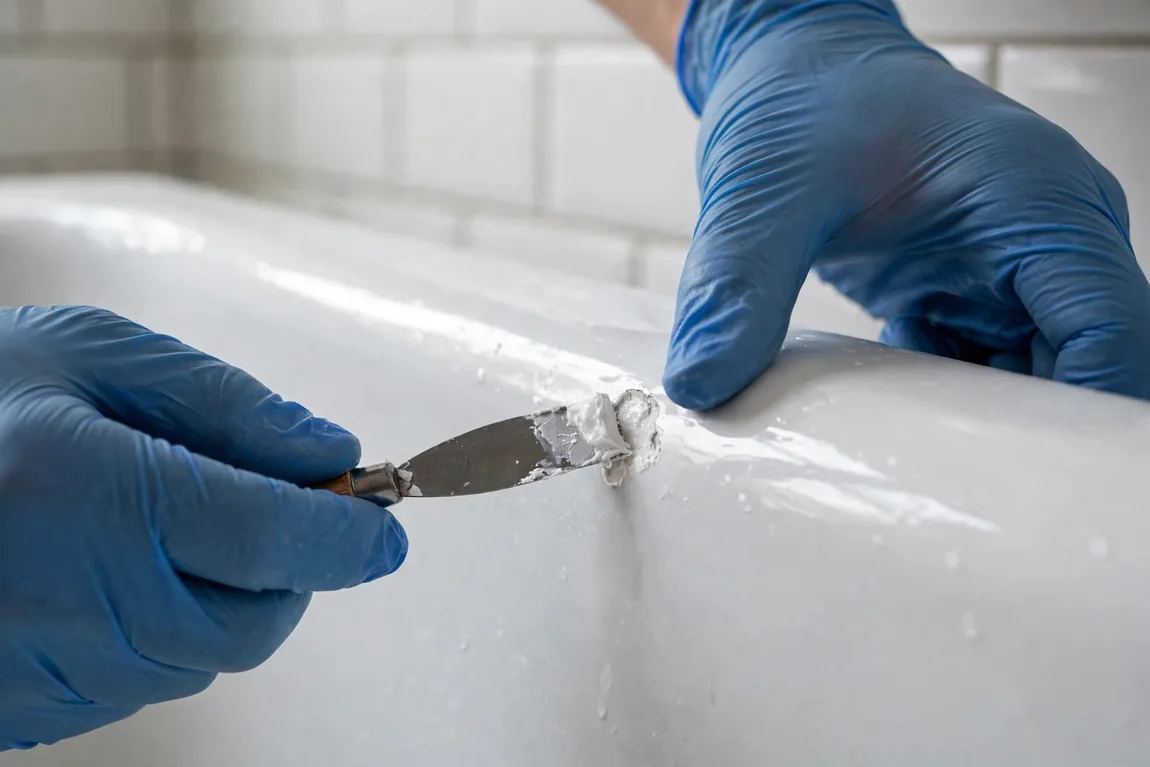
Chips and small cracks are filled before coating, so the finish wears evenly. (Illustrative image)
How long it lasts, and curing time
A professional refinish prepped properly and cleaned gently should last about 10 to 15 years. Longevity depends more on preparation and care than on the coating brand: avoid abrasive powders, scouring pads, bleach-heavy cleaners and suction-cup mats, and use a mild liquid cleaner with a soft cloth.
Most pro coatings allow light use after about 24 hours and normal bathing after 48 hours, with full hardness developing over the following days. Follow your refinisher’s exact instructions — using the tub too early is a common cause of a finish that dulls or peels.
DIY kits vs. professional refinishing
DIY kits sell for roughly $30 to $150, so the saving over a $335 to $630 professional job is real. What you give up is durability and finish quality. Kit coatings are brushed or rolled rather than sprayed, show marks more easily, and typically last two to five years instead of 10 to 15. The chemicals demand serious ventilation, a respirator, gloves and eye protection.
DIY can make sense for a guest bathroom, a rental touch-up or a tub you plan to replace soon. For the main family bathroom — or a cast iron tub worth keeping — a pro’s preparation, sprayed finish and written warranty, commonly three to five years or longer, is usually worth the difference. The current bathroom design trends show the impact a clean, white tub has on the whole room.
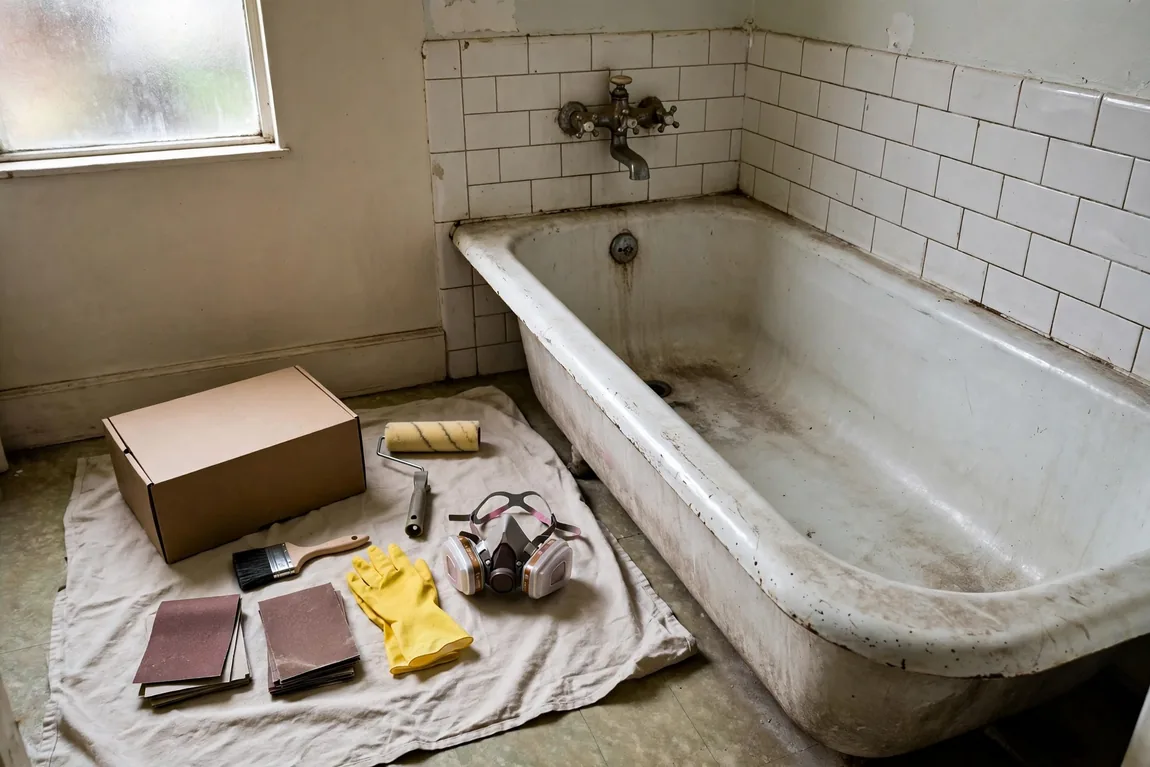
A DIY kit costs far less up front, but typically lasts two to five years. (Illustrative image)
How to save money
- Get at least three quotes, and ask what preparation, chip filling and warranty each includes.
- Clear the room yourself — toiletries, shower curtain and bath mats — before the technician arrives.
- Refinish the tub only, and clean or paint the surround yourself if it is in decent shape.
- Combine jobs: a tub, sink and tile done in one visit usually costs less per piece.
- Choose standard white and skip optional finishes you do not need.
- Protect the result: gentle cleaning from day one avoids paying for a second refinish early.
The same logic applies in our kitchen remodel cost guide: separate cosmetic fixes from structural work.
Frequently asked questions
How much does it cost to refinish a bathtub in 2026?
Most homeowners pay about $335 to $630, with an average close to $480 in published Angi and HomeAdvisor-style data. Acrylic can start at $250, while damaged or previously refinished tubs can reach $800 to $1,000 or more.
Is refinishing cheaper than replacing a tub?
Yes, by a wide margin. Refinishing costs a few hundred dollars; full replacement commonly runs $2,000 to $9,400 installed. Refinishing only makes sense, though, if the tub is structurally sound.
How soon can I use the tub after refinishing?
Most pro finishes allow light use after about 24 hours and normal use after 48 hours. DIY kits often need 48 to 72 hours. Always follow the instructions for your job.
Can a tub be refinished more than once?
Yes, as long as the underlying material is still sound. Expect to pay more than a first-time job, because the old coating must be stripped.
When is refinishing not worth it?
Skip it if the tub flexes underfoot, has cracks through the material, leaks, or has widespread rust. Coating cannot fix structural failure — put the money toward a liner or replacement instead.
Ranges are drawn from 2026 national cost data published by Angi, HomeAdvisor-style estimators and This Old House. Prices vary by region and condition, so get local quotes before budgeting.