

Cooking outside is one of the best parts of a warm evening, and a built-in kitchen turns a basic grill corner into a real living space. The first step is a clear picture of outdoor kitchen cost in 2026, because a compact grill island and a full kitchen with a fridge, sink and bar seating sit at very different budgets.
This guide uses the latest ranges published by Angi to break the project down by size and component. It also covers the factors that move a quote, the honest DIY trade-offs, and the questions to ask before you sign. Treat the figures as planning ranges, not quotes for your yard.
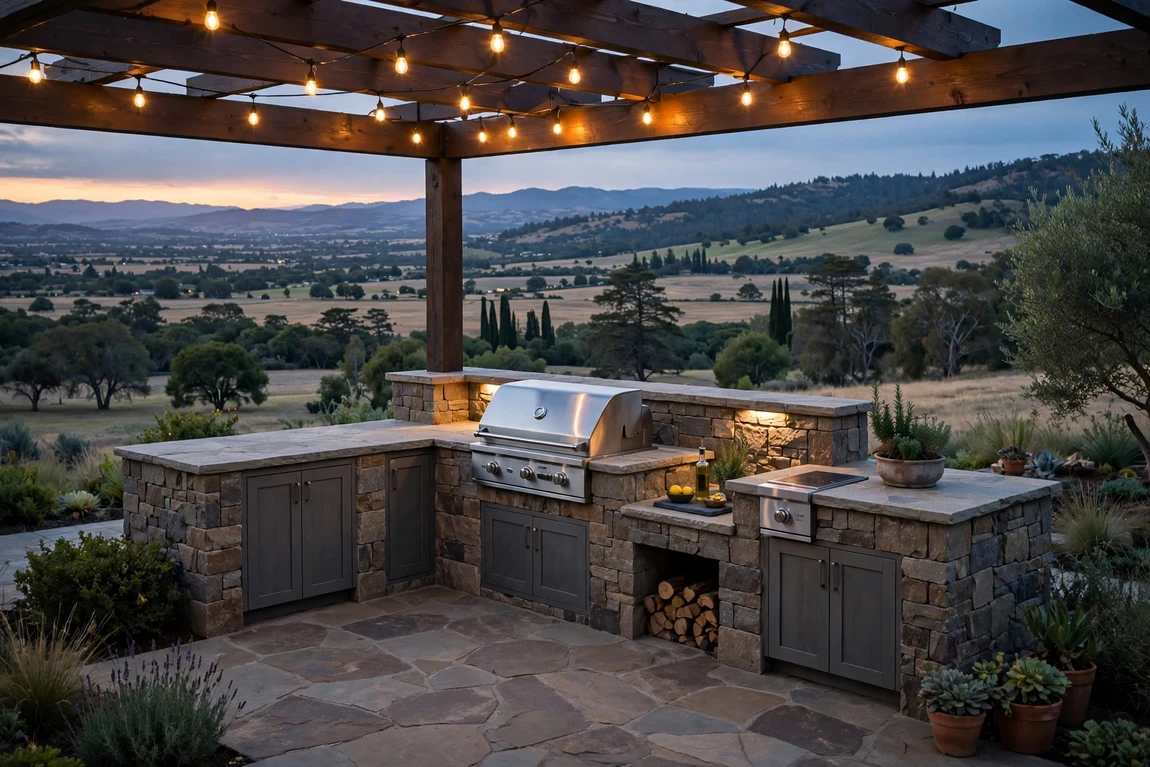
How Much Does Outdoor Kitchen Cost on Average?
According to Angi’s 2026 outdoor kitchen cost data, the national average is about $16,587, based on 287 verified projects. Most homeowners spend between $6,269 and $27,122.
The extremes are wider. Angi notes that a basic setup can start at around $1,000, while a luxury build can climb to about $60,000. Labour typically runs about $50 to $150 per hour, depending on the trade and your region.
Per square foot, expect roughly $200 to $600 once materials, labour and utilities are included. That is why layout discipline matters: a shorter, well-planned run of cabinets and counter usually serves a family better than a long, thin design.
Outdoor Kitchen Prices by Size and Component
Size and appliance choices do most of the damage to a budget. The table below combines Angi’s size tiers with its component ranges, so you can see both views at once.
| Item | Typical cost in 2026 | Notes |
|---|---|---|
| Small kitchen / grill island | $4,000 to $10,000 | Grill, short counter, minimal storage |
| Medium kitchen | $10,000 to $20,000 | Grill, prep space, storage, 1 to 2 appliances |
| Large kitchen | $20,000 to $50,000+ | Multiple appliances, bar and seating |
| Built-in grill | $1,500 to $7,500 | The main cooking appliance |
| Cabinets | $2,000 to $8,000 | Weather-rated outdoor storage |
| Countertops | $1,000 to $5,000 | Stone, concrete or tile tops |
| Extra appliances | $1,500 to $10,000 | Fridge, sink, side burner and more |
| Labour | $3,000 to $10,000 | Installation and construction |
A prefab kit is the more affordable starting point, because the island arrives in sections. A custom design gives you full control over layout and finishes, but it needs more specialised labour and usually higher-end materials.
If the kitchen is part of a bigger backyard plan, compare these figures with our guide to swimming pool installation cost and our concrete patio cost breakdown, since the patio base and any pool work often share the same budget.
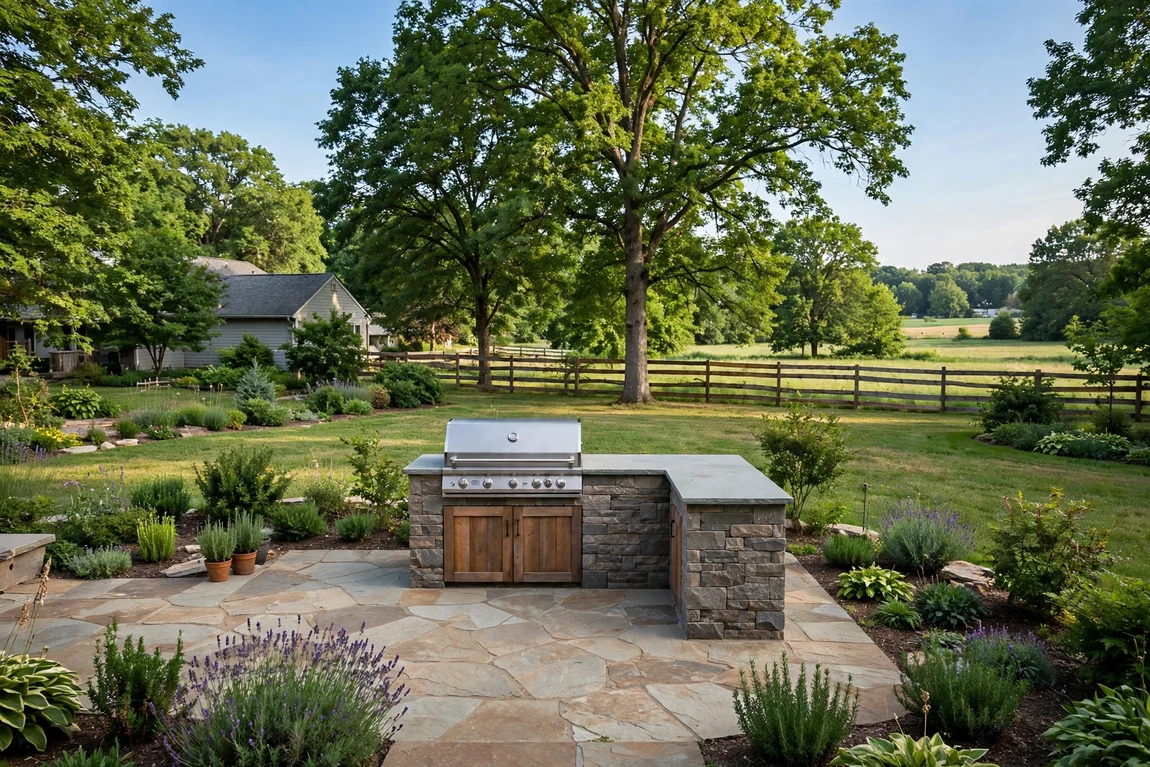
Factors That Affect Cost
Where your outdoor kitchen cost finally lands depends on a handful of repeatable factors. Work through them in order and your quotes will be much easier to compare.
Size, layout and utilities
Every extra linear foot adds framing, cabinets, counter material and finishing labour. Layout matters just as much: keeping the kitchen close to the house usually shortens gas, water and electrical runs, which are some of the most expensive lines on the quote.
Angi puts plumbing, covering water and gas lines, at about $500 to $2,500. Electrical work for wiring, outlets and lighting runs about $800 to $3,000. Long trenches across a finished yard push both figures upward.
Appliances and materials
The grill is the headline appliance, at about $1,500 to $7,500 in Angi’s data. Adding a refrigerator, sink, side burner, warming drawer or pizza oven moves you from a grill island toward a full kitchen, and the appliance budget can reach $10,000.
Materials need to survive weather. Stainless steel cabinets, stone counters and masonry finishes cost more upfront than basic options, but they handle heat, rain and freeze-thaw cycles better in most climates.
Site prep, permits and design
If you need a new base, budget for it separately. Angi lists demolition and site preparation at about $500 to $3,000, and a professional design at about $500 to $3,000. A kitchen built on an existing sound patio avoids much of that early spend.
Permits for building, electrical, plumbing and gas work typically run about $200 to $2,000, according to Angi. Skipping them risks fines and problems at resale, so treat permit fees as a fixed part of the project, not an optional extra.
Labour and location
Angi estimates professional labour at roughly 30% to 50% of the total project price. A general contractor may charge about 10% to 20% of the project cost, or $50 to $150 per hour, while masons and appliance installers charge similar hourly rates for specialist work.
Urban and high-cost regions pay more for the same kitchen. Harsh climates also add cost, because materials and weatherproofing need to be tougher to last.
DIY vs Hiring a Pro
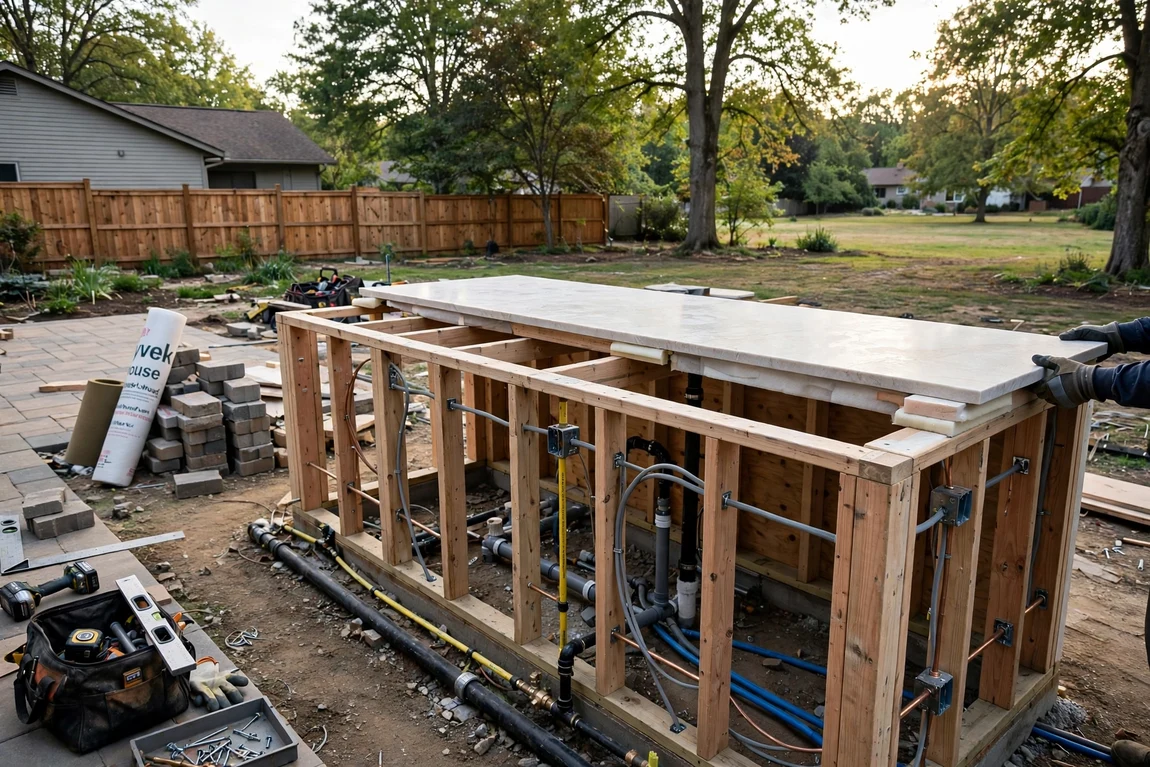
Angi puts DIY materials and basic appliances at roughly $4,000 to $10,000, and its local guide data suggests a DIY build can save about $1,500 to $6,000 compared with professional installation. That saving is real, but it buys a lot of responsibility.
Gas lines, electrical circuits and plumbing are licensed, inspected work in most areas. A mistake with a gas connection or drainage is not a cosmetic problem, and DIY errors can affect safety, code compliance and appliance warranties.
A practical middle route is to hire pros for utilities, masonry and appliance installation, then handle painting, sealing, landscaping and furniture yourself. You keep control of the outdoor kitchen cost without taking on the regulated parts of the build.
Prefab island kits also suit confident DIYers, because the structure is pre-engineered. Even then, plan for level footings, safe clearances from combustibles, and a proper shut-off for any gas supply.
Ways to Save Without Spoiling the Kitchen
Reuse what you already have. Building on an existing patio or deck removes base work from the budget, and placing the kitchen near existing utility connections shortens expensive pipe and cable runs.
Choose prefab components over full custom masonry where you can. Limit the appliance list to what you will use weekly: for most households that is a good grill, worktop space and storage, with a fridge added only if entertaining is frequent.
Think about cover and storage at the planning stage too. A simple cover, a weatherproof storage box and counters pitched to shed water all cost little during the build, yet they protect cabinets and appliances through winter and cut your replacement costs later.
Shop off-season deals on appliances, keep the layout simple, and get several quotes on the same specification. Small design changes after work starts are a classic way for a controlled budget to drift upward.
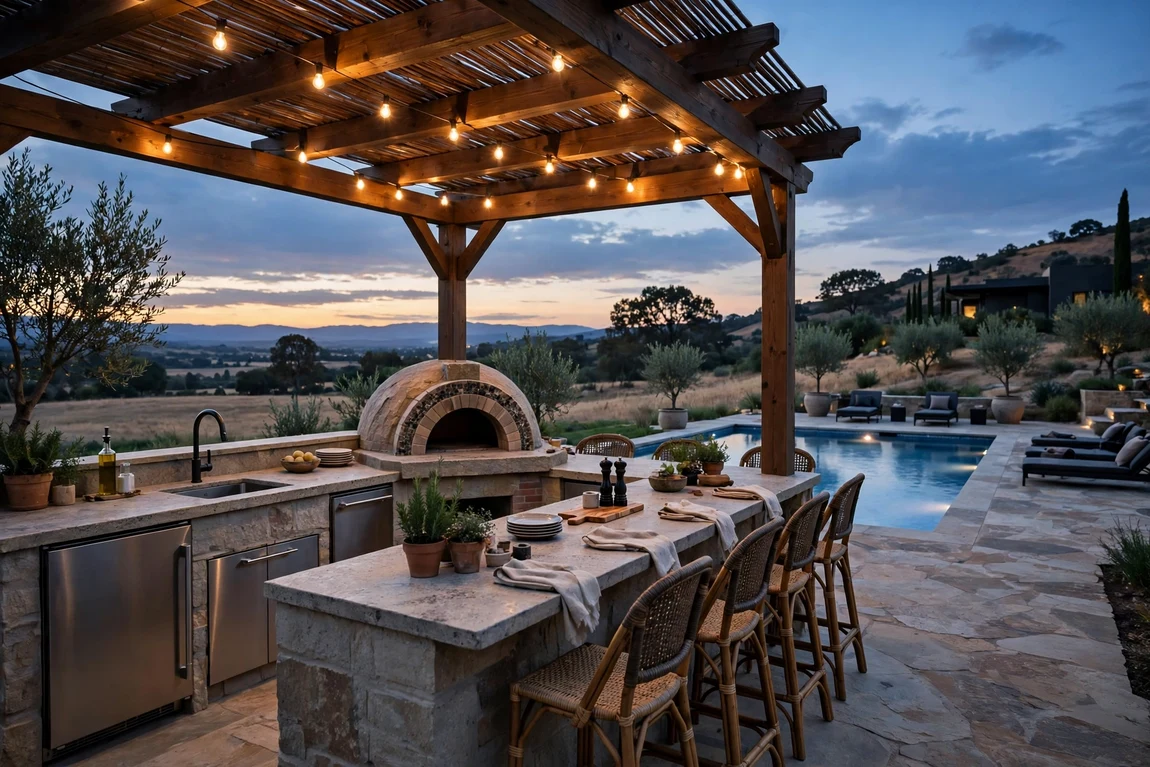
Does an Outdoor Kitchen Add Home Value?
Angi puts the return on investment for an outdoor kitchen at roughly 55% to 80%, depending on quality, design and local demand. Warm-climate markets where outdoor living runs most of the year tend to reward the project most.
As with any upgrade, the enjoyment value matters too. A kitchen that hosts family dinners all summer delivers a return that a resale percentage does not capture. Build to a level your street can support, and avoid luxury specifications that neighbouring homes do not match.
Frequently Asked Questions
How much does a basic grill island cost?
Angi’s size data puts a small kitchen or compact grill island at about $4,000 to $10,000. That usually covers a built-in grill, a short counter run and basic storage, assuming an existing patio and a short utility connection.
Do I need permits for an outdoor kitchen?
Usually, yes, where gas, plumbing or electrical work is involved. Angi puts permit costs at about $200 to $2,000 depending on project size and location. A simple freestanding grill with no utility connections is a different case, so check your local rules.
What is the cheapest way to lower outdoor kitchen cost?
Build on an existing patio, choose a prefab island, keep the layout close to the house utilities, and limit appliances to the essentials. Doing your own finishing and landscaping, while leaving gas and electrical work to licensed pros, trims the bill further.
How long does an outdoor kitchen take to build?
A prefab island on an existing patio can be ready far faster than a custom masonry kitchen. Custom builds add design, permits, utility trenches and inspections, so allow several weeks and confirm a written schedule with your contractor before work begins.
Decide the layout and appliance list first, price them against the ranges above, and compare itemised bids. That sequence keeps the project enjoyable instead of letting the budget surprise you halfway through.