

A cold bedroom or a chilly home office does not always need the whole heating system turned up. Choosing the best space heaters for one room is mostly about matching the heating type to how you live in that room, then checking the safety features before the price. This guide does not claim hands-on testing and does not name a single winner for everyone. Instead, it explains the four main types, names widely sold example models with typical prices, and sets out the safety rules that matter most.
One fact helps every comparison. Almost all plug-in heaters are capped at 1,500 watts, and 1,500 watts of electric resistance heat produces the same amount of heat whatever the cabinet looks like. What changes is delivery: how fast you feel it, how evenly the room warms, and how much noise it makes.
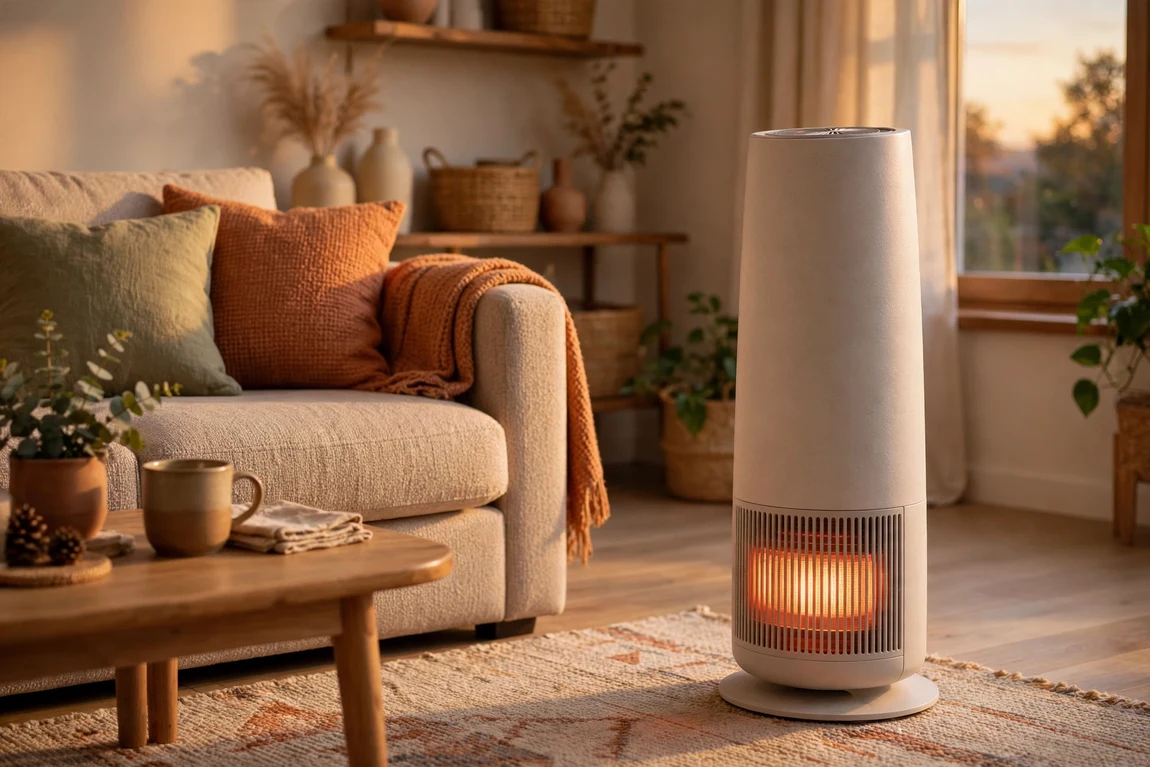
What to Look for in the Best Space Heaters
Start with the room, not the product page. A small office you sit in for two hours needs fast, directed heat. A bedroom used all night needs quiet, steady warmth instead. A large, drafty living room needs a heater that warms people and furniture, not just the air near the ceiling.
Next, check the thermostat. An adjustable thermostat that cycles the heater on and off holds a steadier temperature and usually lowers running costs. A timer helps too, because a heater that switches itself off cannot be forgotten.
Then look at noise. Fan models are never silent, whatever the marketing says. Oil-filled and micathermic models have no fan at all, which is why they suit bedrooms. Finally, confirm the safety list below before you compare prices. If a model cannot name its tip-over and overheat protection, skip it.
The Four Main Types Compared
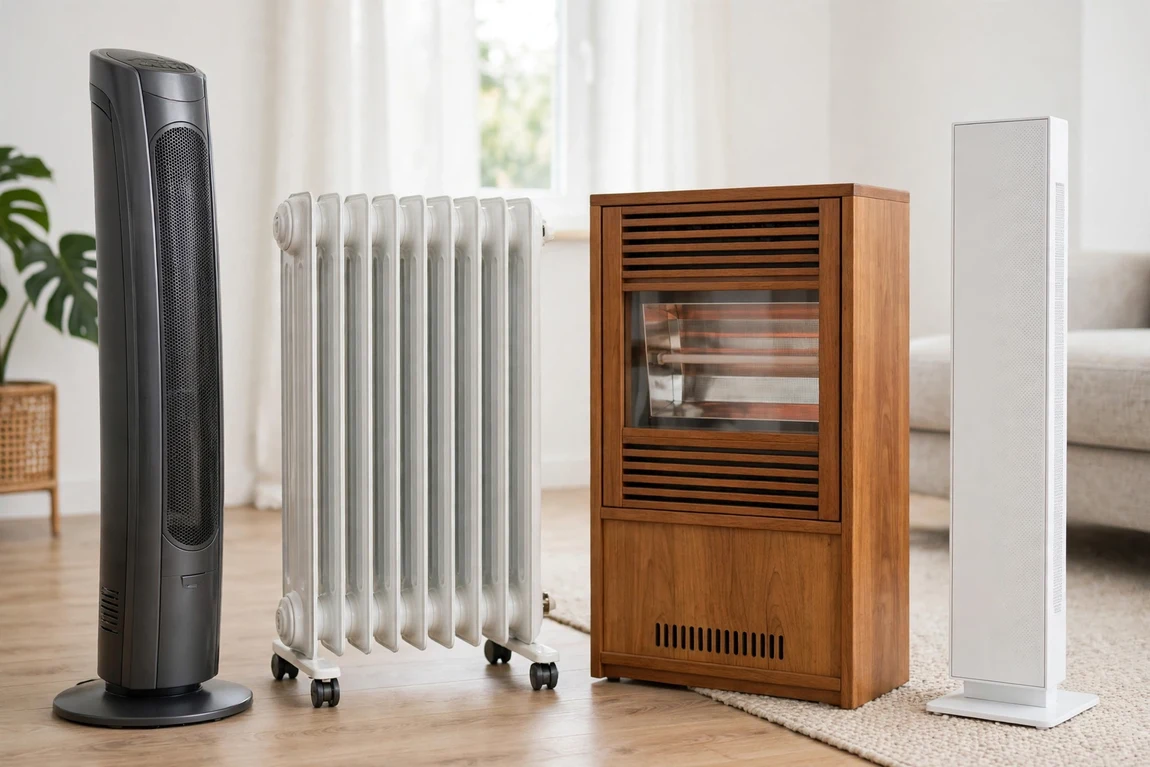
The table below compares the four types most buyers choose between, using widely sold example models. Prices are typical US street prices seen in October 2026 buying-guide research, and they change often, so check the current price before you buy.
| Type and example model | Best for | How it heats | Noise | Typical price |
|---|---|---|---|---|
| Ceramic tower — Lasko Ellipse CT18950 | Fast heat in an office or small room | Fan pushes air across a ceramic element, with oscillation | Fan noise | About $85 |
| Oil-filled radiator — De’Longhi Dragon 4 TRD40615T | Bedrooms and steady, all-evening warmth | Sealed oil radiates heat slowly and keeps releasing it after cycling off | Silent, no fan | $159.95 list |
| Infrared cabinet — Dr Infrared Heater DR-968 | Larger and drafty living spaces | Infrared quartz plus a PTC element warms people and objects in its path | Fan noise | About $93–$113 |
| Micathermic panel — De’Longhi HMP1500 | Tight spaces and wall mounting | Slim fanless panel radiates from both faces | Silent, no fan | About $88–$130 |
Versions and bundles change. Treat the models above as examples of each type, and confirm the wattage, thermostat and safety features on the exact listing you are considering.
Ceramic Towers: Fast, Directed Heat
A ceramic tower is the quick-heat option. The fan delivers warmth you can feel within minutes, and oscillation spreads it across a desk or seating area. That makes this type a natural fit for a home office, a workshop corner, or a cold room you only use for part of the day.
The trade-offs are noise and staying power. With no thermal mass, the warmth fades soon after the thermostat cycles off. Fan noise and a bright display can bother light sleepers, so a tower is rarely the best bedroom choice.
Oil-Filled Radiators: Slow, Silent and Steady
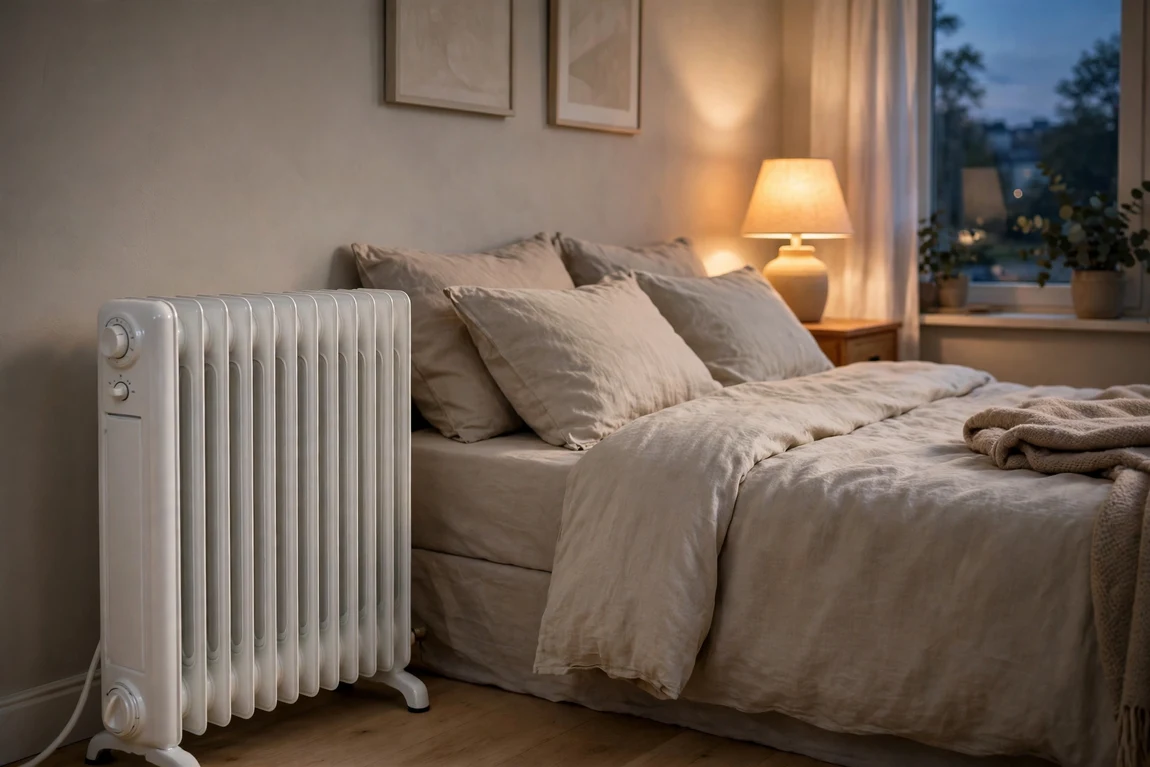
An oil-filled radiator works the opposite way. It is slow to warm a cold room, often needing 20 to 30 minutes, but the heated oil keeps releasing warmth between cycles. The result is a steadier temperature with fewer hot and cold swings, and complete silence while it runs.
That profile suits bedrooms and any room heated for long stretches. The drawbacks are weight and hot surfaces: the fins get hot to the touch, so silent does not mean safe for a toddler to grab.
Infrared and Micathermic: Two Different Kinds of Radiant Heat
Infrared cabinets warm what is in front of them first, a little like sunlight through a window. In a large or drafty room, that direct warmth can feel better than slowly heating all the air. Cabinet models usually add a fan and a thermostat, and are often styled like furniture.
Micathermic panels are the space-saving option. The panel is only a few inches thick, can stand on feet or mount on a wall, and makes no noise at all. The limit is range: a slim, fanless panel is a near-field heater. Sit or sleep near it and it works well; expect it to heat a big room from across the floor and you will be disappointed.
Running Costs: What 1,500 Watts Really Means
Running cost is simple maths once you know your electricity rate. A heater on full power uses 1.5 kilowatt-hours per hour. At a rate of 17 cents per kilowatt-hour, that is about 26 cents an hour, or roughly $2 for an eight-hour day on full power.
A thermostat lowers that figure, because the heater cycles off once the room reaches the set temperature. Sealing the room helps just as much: the checks in our guide to how to winterize your home cut the drafts that make any heater work harder.
If one room stays cold while the rest of the house is comfortable, the cause may be the heating system. Our furnace replacement cost guide explains when replacement makes more sense than years of portable heating.
Safety: The Section to Read Before You Buy
Safety is not a feature list here; it is the deciding factor. The U.S. Consumer Product Safety Commission estimates that portable heaters, including electric models, are involved in an average of 1,600 fires per year, with an average of 70 deaths and 150 injuries annually from 2020 to 2022, according to the CPSC winter heating safety guidance.
Look for these protections on any model you shortlist for the best space heaters list in your home. Tip-over protection cuts power if the unit is knocked over. Overheat protection, sometimes called a thermal cut-off, shuts the heater down before internal parts get dangerously hot. A recognised safety certification mark from a testing laboratory should appear on the unit itself.
Placement rules matter as much as the product. Keep the heater at least three feet away from drapes, furniture, bedding and anything else that can burn, as the CPSC advises. Set it on a flat, hard, level floor, out of walkways.
Plug the heater directly into a wall outlet, never into an extension cord or power strip. Extension cords are a recurring cause of heater fires because they are not rated for a sustained 1,500-watt load. Turn the heater off when you sleep and when you leave the room, and never run one unattended in a bathroom unless the manufacturer approves that exact model for damp locations.
How to Choose Your Shortlist
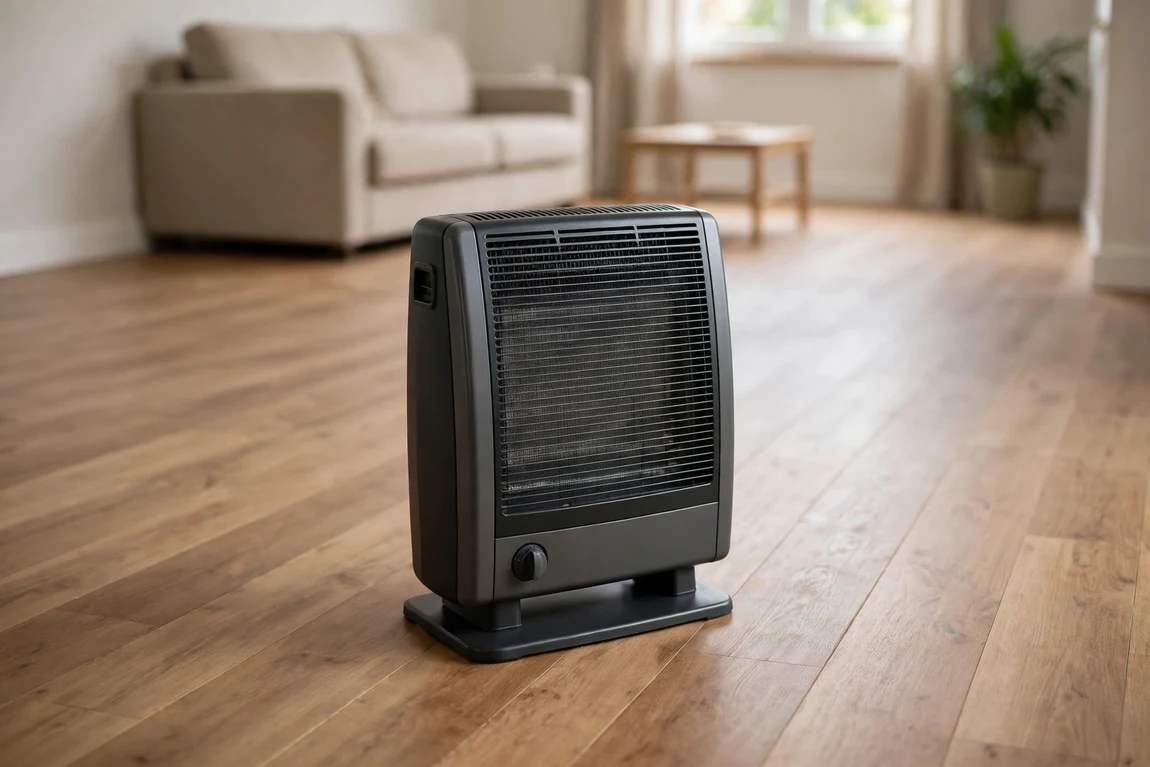
Work through the decision in order. Pick the type that matches the room first: tower for speed, oil-filled for silence, infrared for direct warmth in a big space, micathermic for a slim wall-mounted fit. Then check the thermostat, timer and safety list. Only then compare prices.
That order is what makes a list of the best space heaters useful rather than random. Two heaters at the same price can suit completely different rooms, and the cheaper one is poor value if its noise keeps you awake or its heat never reaches your desk.
Frequently Asked Questions
What size space heater do I need for a bedroom?
A common rule of thumb is about 10 watts per square foot, so a 1,500-watt heater suits a room of roughly 150 square feet as a main heat source. Insulation and drafts change the answer, which is why sealing the room matters.
Are oil-filled heaters cheaper to run than ceramic heaters?
No. At the same wattage, both convert the same electricity into the same heat. An oil-filled model may feel cheaper because its thermostat cycles more smoothly and it keeps radiating after switch-off, but the meter cannot tell the two types apart at equal settings.
Can I leave a space heater on overnight?
Safety agencies advise against it. The CPSC says to turn heaters off when sleeping. If a bedroom is too cold to sleep in, fix the draft or the heating system rather than relying on an unattended heater.
Why should I never use an extension cord with a space heater?
A heater draws a heavy, continuous load that many cords and power strips cannot carry safely. The cord can overheat even when the heater itself is working normally. That is why guidance on the best space heaters always starts with plugging directly into the wall.
Which type is quietest?
Oil-filled radiators and micathermic panels are silent because they have no fan. Ceramic towers and most infrared cabinets use a fan, so expect some noise. For a bedroom, silence is usually worth more than fast heat.
The right heater is the one that matches your room, carries tip-over and overheat protection, and gets switched off when you leave. Choose the type first, and the best space heaters for your home will be a short, sensible list.