

Buying a snow blower in the wrong size is an expensive mistake that sits in the garage for a decade. Choosing the best snow blowers for your home for the 2026–27 season starts with your driveway and your snowfall, not with a brand name. This guide claims no hands-on testing. It explains the single-stage, two-stage, three-stage and cordless types, names widely sold example models with typical prices from November 2026 research, and shows which type suits which property.
Two questions decide almost everything. How much snow do you honestly get in a typical storm, and what surface are you clearing? A machine that is perfect for eight inches of powder on a short paved drive will struggle badly in eighteen inches of wet snow on gravel, and the reverse is also true.
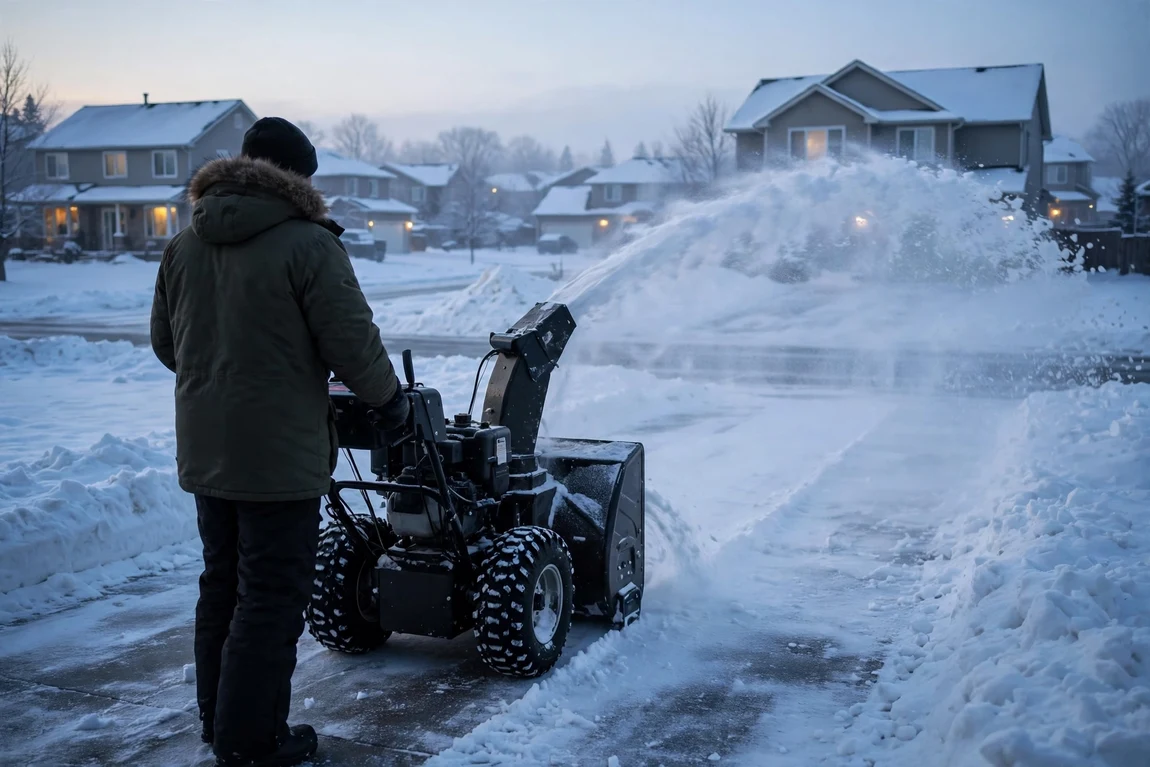
What to Look for in the Best Snow Blowers
Start with clearing width and intake height. Width sets how many passes a driveway takes. Intake height sets how deep a drift the machine can take in one pass. A 21-inch single-stage suits walks and small drives. A 24- to 28-inch two-stage suits most full-size driveways in snow country.
Next, match the stage to the surface. Single-stage augers touch the ground, so they clear paved surfaces cleanly but can pick up gravel and damage themselves on unpaved drives. Two-stage machines keep the auger off the surface and use a separate impeller to throw snow, which makes them the safe choice for gravel and deep snow.
Then weigh power source honestly. Gas brings fuel, oil, pull or electric starting and annual maintenance, but runs as long as you feed it. Cordless brings push-button starting, no fumes and far less upkeep, but runtime falls in deep, wet snow and very cold weather. Your storage space and your tolerance for engine care should settle that choice.
The Main Types and Models Compared
The table below compares four widely sold models that represent the main types, using typical US prices seen in November 2026 buying-guide research. Prices and kit contents change, and battery kits differ by bundle, so check exactly what is included before you buy.
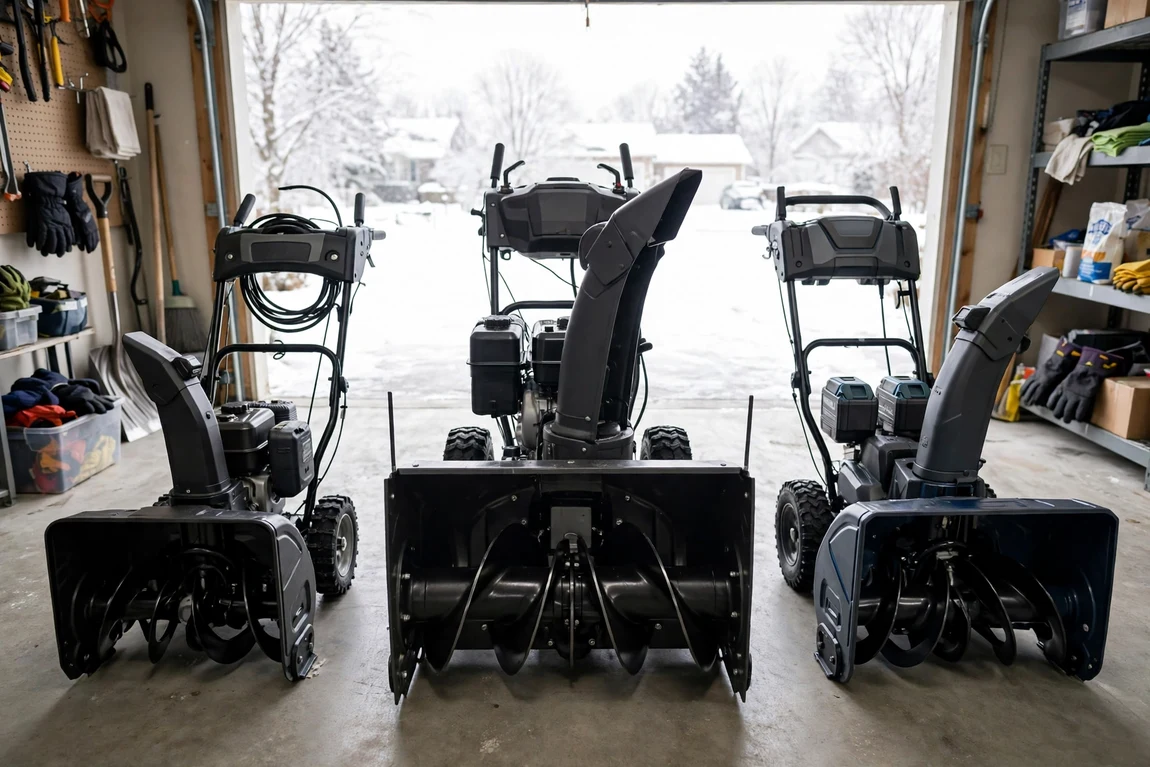
| Model and type | Best for | Clearing width | Power | Typical price |
|---|---|---|---|---|
| EGO Power+ SNT2122 — single-stage cordless | Paved driveways with snow usually under 8 inches | 21 inches | 56V battery, two 4.0Ah packs included | About $699 |
| Snow Joe 24V-X2-SB18 — single-stage cordless | Walks, decks, steps and very small drives | 18 inches | 48V battery, two 24V packs included | About $330 |
| EGO Power+ SNT2424 — two-stage cordless | Most driveways, deep and wet snow without gas | 24 inches | 56V battery, two 6.0Ah packs included | About $1,499 |
| Toro Power Max 824 OE — two-stage gas | Heavy, wet snow and gravel driveways | 24 inches | 252cc 4-cycle gas engine | About $1,399 |
Three-stage models, such as the Cub Cadet 3X range at roughly $1,799 and up in retailer listings, add an accelerator that feeds snow into the impeller faster. They earn their price on very deep, heavy snow and long drives. For most homes they are more machine, weight and cost than the snowfall justifies.
Single-Stage: Light, Simple and Paved Surfaces Only
A single-stage blower uses one auger to scoop snow and throw it in a single motion. The auger paddles touch the pavement, which leaves a cleaner finish than a two-stage and also helps pull the machine forward. These are the lightest and cheapest full-width machines, and the easiest to store.
The limits are firm. Single-stage models suit light to moderate snow, roughly up to 8 or 10 inches depending on how wet it is. They are not self-propelled in the true sense, they clog sooner in slush, and they must stay off gravel. For a small paved drive in a moderate-snow area, those limits may never matter, which is why this type anchors many lists of the best snow blowers for suburban homes.
Two-Stage: The Default for Real Snow Country
A two-stage machine separates the jobs. A slow, powerful auger gathers snow, and a high-speed impeller throws it, often 40 feet or more. The auger rides above the surface on adjustable skid shoes, so gravel drives are safe, and self-propelled drive wheels do the pushing in deep snow.
This is the type to buy for long driveways, drifts, and the dense ridge the street plow leaves at the end of the drive. That plow ridge is the real test of any machine, and it is where single-stage models most often stall. Two-stage machines cost more, weigh far more, and need more storage room, but they are built for many winters of heavy use.
Brands with long dealer networks, such as Toro and Ariens, add a practical advantage here: local servicing and parts. A blower that a nearby dealer will assemble, adjust and repair is often a better buy than a slightly cheaper machine with no service route. Our guide to how to winterize your home covers the rest of the pre-season checks that go with putting a machine into service.
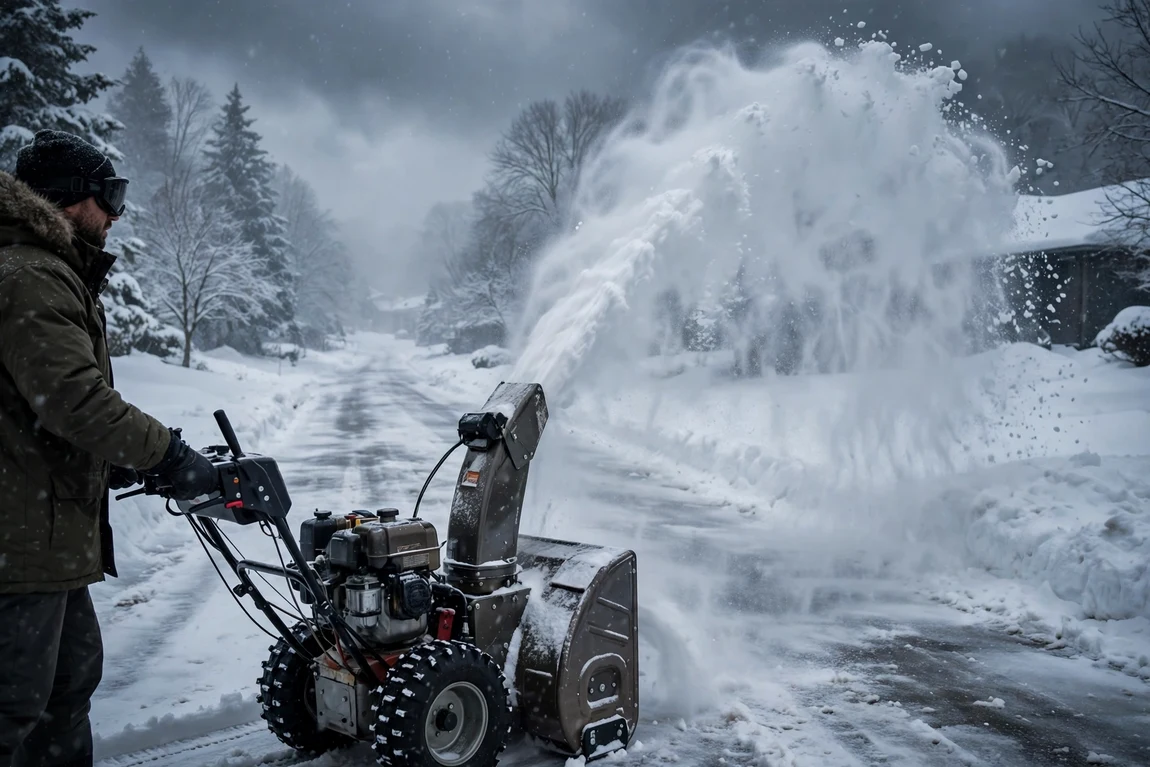
Three-Stage and Cordless: The Two Ends of the Market
Three-stage designs add a central accelerator that chops and feeds snow to the impeller. Makers position them for the deepest, heaviest snow and the fastest clearing of large areas. The honest case for one is narrow: frequent deep storms, a long or wide drive, and a budget well above a good two-stage. Everyone else pays for capacity they rarely use.
Cordless has changed the other end of the market. Modern 56V and 60V two-stage cordless models now match gas clearing width and throw distance on paper, start instantly, and skip fuel storage and engine servicing entirely. Independent roundups such as the Pixxie guide to the best snow blowers of 2026 now place a cordless two-stage at the top for most driveways, while still recommending gas for the heaviest snow and gravel.
The cordless cautions are runtime and spares. Deep, wet snow drains packs far faster than light powder, and a second set of batteries is a significant extra cost. Keep packs stored indoors, and size the kit to your worst normal storm rather than your average one. If a storm knocks out power, the outage kit in our generator installation cost guide is worth planning before winter, not during it.
Ownership Costs Beyond the Sticker Price
Gas ownership adds fuel, oil, spark plugs, stabiliser and an annual service, plus the storage rules that come with petrol. Cordless ownership adds the eventual cost of replacement packs, offset by almost no routine servicing. Either way, budget for a cover, shear pins where the design uses them, and a scraper and chute-cleaning tool.
Buy before the season if you can. Popular widths sell out after the first big storm, and the model you researched disappears first. Whatever you choose from the best snow blowers on sale this season, confirm the kit: bare-tool cordless prices exclude the batteries and charger that make the machine work.
Frequently Asked Questions
Is a single-stage or two-stage blower better?
Neither is better in general. Single-stage suits paved surfaces and lighter snow, and clears closer to the pavement. Two-stage suits deeper snow, gravel and long driveways, and handles the plow ridge at the end of the drive. Match the stage to your surface and your worst typical storm.
Can a cordless blower really replace a gas one?
For most paved driveways, yes, based on current two-stage cordless models with 24-inch widths and throws of up to about 50 feet in maker figures. Keep a realistic view of runtime in wet snow, and consider a second battery set for long drives. Gas still suits the heaviest snow, gravel and very long clearing sessions best.
What size blower do I need for a two-car driveway?
A 24-inch two-stage is the common answer in snow country, finishing a two-car drive in a sensible number of passes. In lighter-snow areas, a 21-inch single-stage, gas or cordless, is usually enough and far easier to store and move.
When should I buy for the 2026–27 season?
Autumn is the practical window, while full ranges and battery kits are in stock. Waiting for the first storm usually means choosing from what is left. That timing advice applies to every model among the best snow blowers this year, because the popular widths go first.
Do I need heated grips and power steering?
They help on long sessions and heavy machines, and matter more as driveway size and storm length grow. On a short drive they are comfort extras rather than necessities. Spend first on the right stage, width and power source, then on comfort features with what is left.
Measure your driveway, be honest about your snow, and buy the stage that matches both. Do that, and the best snow blowers for your home will be obvious — and still earning their keep many winters from now.