

A walk-in tub can turn bath time from a risky chore into a safe, relaxing habit. If stepping over a high tub wall feels harder every year, this guide is for you.
After comparing the leading brands on safety, comfort, price, and warranty, Ella’s Bubbles lands at the top of our list. It offers a wide range of tubs, strong safety features, and fair pricing. Other brands shine in areas like accessibility, massage therapy, and customization.
Below, you’ll find our ranked picks, a full cost breakdown, money-saving tips, and answers to the most common questions. Let’s get started.
Quick Summary: Best Walk-In Tubs at a Glance
- Best overall: Ella’s Bubbles, for its huge selection and fair prices
- Best for accessibility: Leaf Home Safety Solutions
- Best for service and experience: American Standard
- Best for massage therapy: Hydro Dimensions
- Best for customization: Kohler
- Average installation cost: About $4,632, depending on size, materials, and brand
Best Walk-In Tub Brands Compared
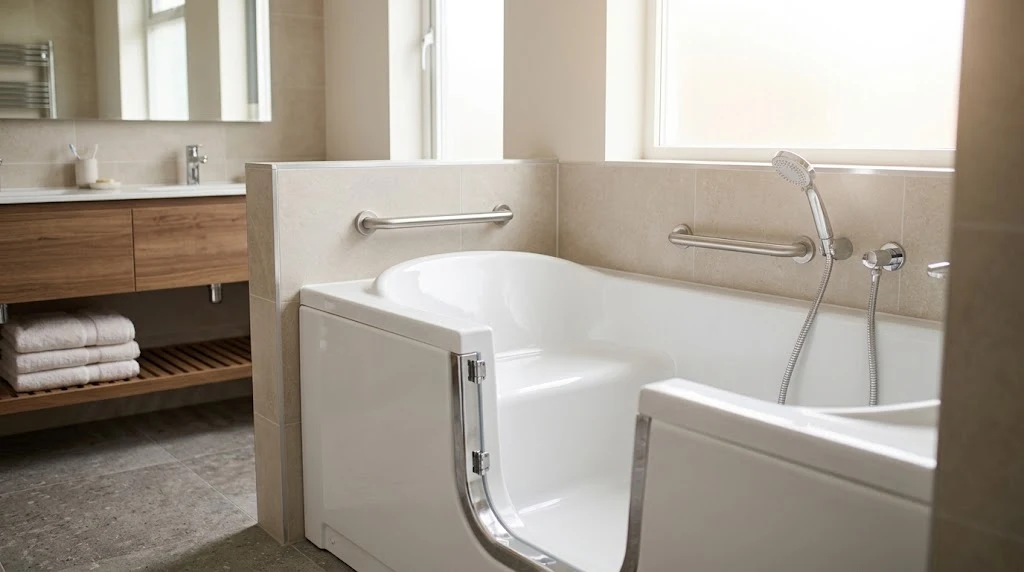
Most top brands look alike on paper. They all offer a limited lifetime warranty, and their prices overlap. The small details are what set them apart.
| Brand | Best For | Typical Cost | Warranty |
|---|---|---|---|
| Ella’s Bubbles | Overall value | $2,521–$12,696 | Limited lifetime |
| Leaf Home Safety Solutions | Accessibility | Quote required | Limited lifetime |
| American Standard | Service and experience | $3,951–$9,423 | Limited lifetime |
| Hydro Dimensions | Massage therapy | $5,000–$8,764 | Limited lifetime |
| Kohler | Customization | $3,000–$10,000 | Limited lifetime |
Prices are estimates. Most brands only give exact pricing after a home visit.
Our Reviews of the Best Walk-In Tubs
1. Ella’s Bubbles: Best Overall
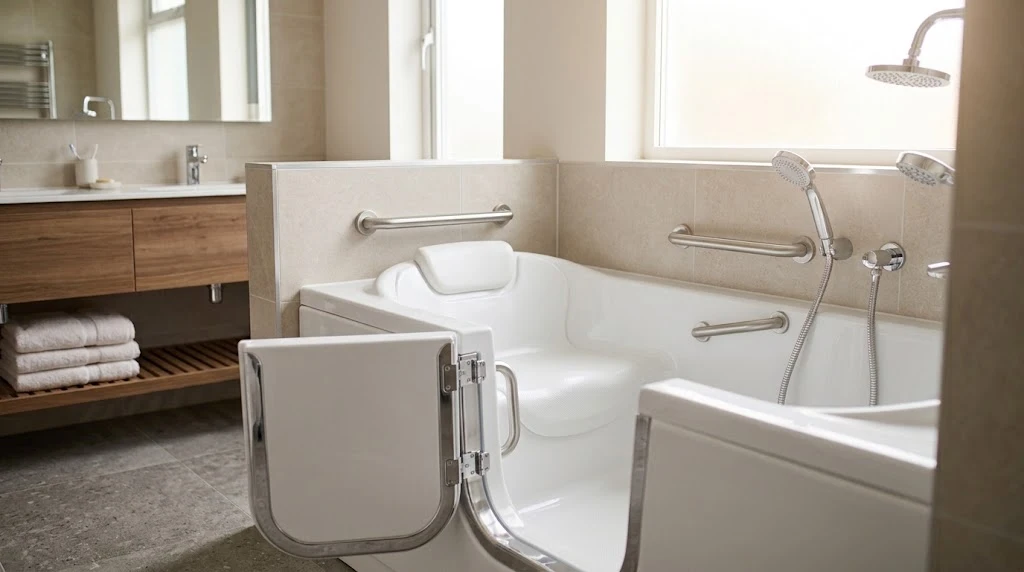
Ella’s Bubbles wins the top spot because it covers almost every need. You can choose from safety-first models and full luxury tubs. It also makes wheelchair-accessible and two-person options, which many rivals skip.
Cost: $2,521–$12,696 (labor is not included) Warranty: Limited lifetime on the tub, plus five years on parts
What we like:
- A very large range of tubs for both safety and luxury
- Wheelchair-accessible and two-person models
- A strong warranty on both the tub and its parts
What to watch for:
- The listed prices leave out installation labor
- A few customers say the seats feel hard
Pro tip: check the drain speed. A slow drain means you sit in cooling water before you can safely open the door. That’s uncomfortable, and it can be risky in cold months. Ella’s Bubbles uses a dual 2-inch gravity-driven drain with four outlets. It’s built to empty much faster than the single-drain setups on many other tubs.
2. Leaf Home Safety Solutions: Best for Accessibility
Leaf Home Safety Solutions is a great pick if you want a tub built around your exact needs. You can shape the design, parts, and features to fit your body and your bathroom.
Cost: Quote required Warranty: Limited lifetime
What we like:
- Fully customizable design, components, and features
- Wheelchair-accessible models
- Calf-massaging jets in every model (other brands sell these as add-ons)
What to watch for:
- No public pricing, since quotes need a home inspection
- Not available in every ZIP code
3. American Standard: Best for Service and Experience
American Standard has more than 150 years in the bathroom business. That history shows in its careful process. A specialist visits your home to plan a tub that fits your space and needs.
Cost: $3,951–$9,423 Warranty: Limited lifetime
What we like:
- Over 150 years of industry experience
- In-home evaluations to design the right tub
- Custom design options
What to watch for:
- Some online reviews mention slow warranty claims
- Lifetime warranty terms differ between acrylic and gelcoat tubs
4. Hydro Dimensions: Best for Massage Therapy
If you want your tub to feel like a spa, Hydro Dimensions is worth a look. It offers a long list of massage add-ons. You can also add ultraviolet (UV) or ozone sanitation to keep the tub clean.
Cost: $5,000–$8,764 Warranty: Limited lifetime on the tub, system, and faucet
What we like:
- Wide range of hydrotherapy and massage add-ons
- Optional UV or ozone cleaning systems
- Lifetime coverage on the tub, system, and faucet
What to watch for:
- Only one year of coverage on parts and labor
- Model availability changes by local dealer
5. Kohler: Best for Customization
Kohler gives you the most ways to make a tub your own. Its website is simple to use, and the installation process is clear from start to finish.
Cost: $3,000–$10,000 Warranty: Limited lifetime on material defects and workmanship
What we like:
- Many customization options
- A transparent, easy-to-follow installation process
- A low three-inch step threshold
What to watch for:
- An agent must visit your home for accurate pricing
- Door options are narrower than those from several rivals
How Much Do Walk-In Tubs Cost?
Three things drive the price of a walk-in tub: the material, the type of tub, and the brand. Labor matters too. Installers often need special skills for plumbing and electrical work.
The table below shows the cost of each part for a large tub, which usually measures 60 by 32 inches. The numbers come from Homewyse pricing data.
| Item | Labor | Materials | Total |
|---|---|---|---|
| Door | $130 | $630 | $760 |
| Drain | $96 | $152 | $248 |
| Faucet | $148 | $217 | $365 |
| Liner | $218 | $1,467 | $1,685 |
| Overflow | $96 | $15 | $111 |
| Spout | $20 | $52 | $72 |
| Surround | $127 | $34 | $161 |
| Tile | $105 | $76 | $181 |
| Tub | $265 | $784 | $1,049 |
| Total | $1,205 | $3,427 | $4,632 |
As you can see, the liner and tub take up the biggest share. The door is the next big cost, and it’s also the part that matters most for safety.
How to Save Money on a Walk-In Tub
A new tub is a big spend, but you can trim the bill without losing safety. Try these ideas:
- Keep it simple. Extras like color-therapy lights and air jets add up fast. Pick only what you’ll really use.
- Install in the same spot. Keeping the tub where your old one sits cuts plumbing and labor costs.
- Ask about payment plans. Many sellers let you pay in installments. Some offer interest-free periods.
- Get three or more quotes. Most prices come by quote only, so comparing offers is the best way to find a deal.
- Buy materials yourself. Tiles and surrounds are often cheaper when you shop for them directly.
- Look for grants. Many areas offer home-modification help for older adults and people with disabilities. In England, for example, a Disabled Facilities Grant may help. Check with your local council or aging agency for what’s available near you.
Before You Buy: Talk to the Experts
A walk-in tub is a big purchase, and the choice can feel overwhelming. Before you commit, speak with your doctor and an occupational therapist. They can tell you whether this type of tub suits your health and mobility.
Then request quotes from at least three brands. This helps you match the tub to your needs, your budget, and the comfort features you want.
Pro tip: read the warranty closely. Most top brands offer a “limited lifetime” warranty, but the fine print varies. Check whether the door seal, motor, and jets are covered on their own. These parts are the most likely to need repairs. A warranty that covers the whole tub, including moving parts, can save you a lot later.
Walk-In Tub Buying Guide
How Do Walk-In Tubs Work?
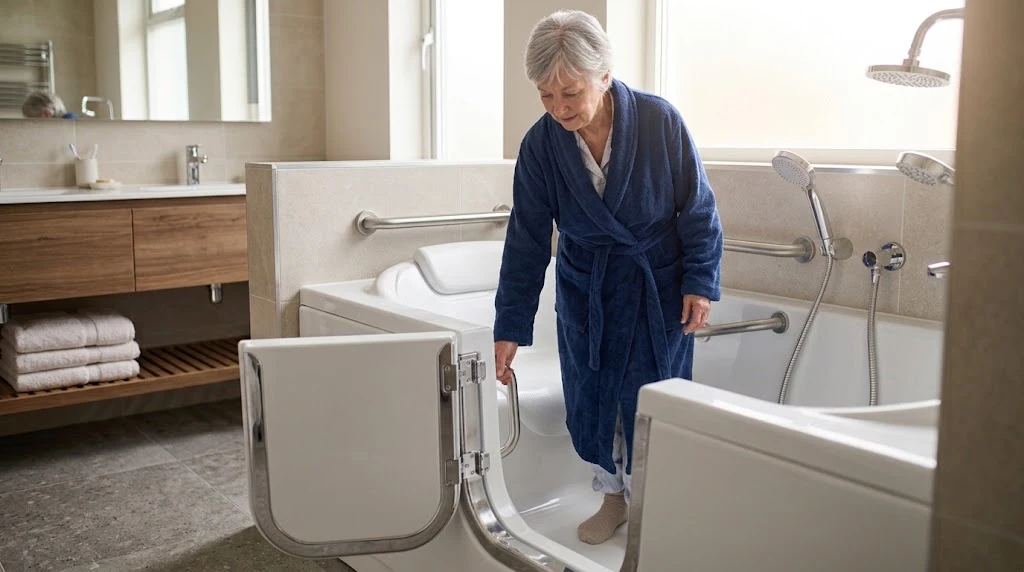
Using a basic soaker walk-in tub is simple:
- Step in. You enter through a low step and a door.
- Seal the door. Doors are made to close with little strength, which helps people with arthritis. A sealed door keeps water off your bathroom floor.
- Fill the tub. A thermostatic mixer tap and an easy control panel set the water. Fill time depends on your home’s water pressure. Your installer will check if you need an extra pump.
- Relax. Enjoy the bath and any comfort features.
- Drain first, then exit. Let the tub empty fully before you open the door.
Types of Walk-In Tubs
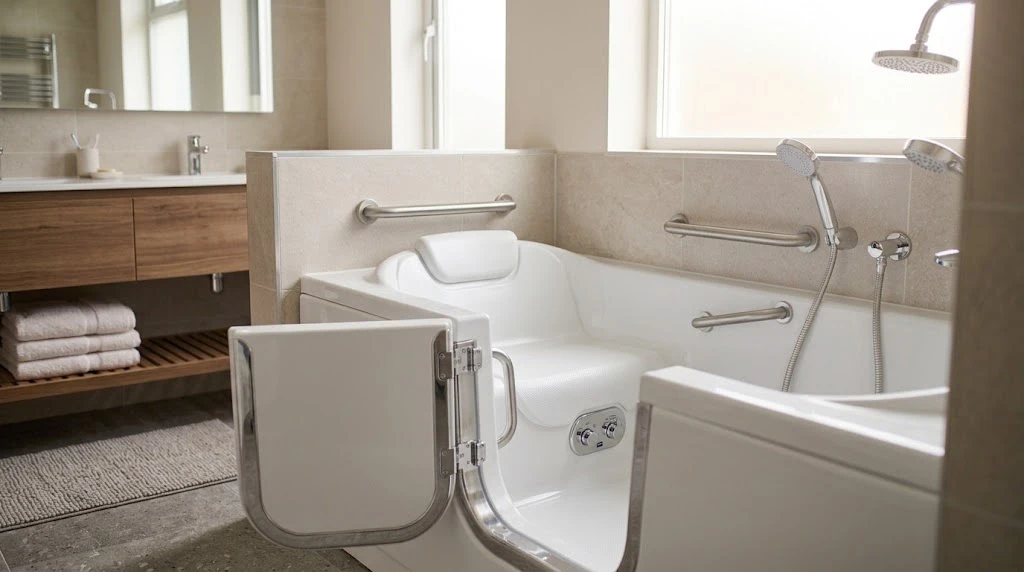
Each type meets a different need:
- Soaking tubs: Deep, simple tubs for a relaxing soak
- Hydrotherapy tubs: Water and air jets for massage and muscle relief
- Wheelchair-accessible tubs: Roomier designs with extra handrails and space
- Bariatric tubs: Stronger seats and wider frames. Standard tubs hold up to about 300 pounds, while bariatric tubs can hold up to 600 pounds
- Two-person tubs: Built for couples or for a bather and a caregiver
Features to Look For
Walk-in tub features fall into two groups: safety and comfort. Safety features are essential for many bathers. Comfort features make the bath feel therapeutic.
- Handrails and grab bars: Standard on walk-in tubs. Ask if they can be moved to suit you.
- Non-slip surface: Textured floors grip better than smooth ones. You can add a mat or traction strips for extra safety.
- Step threshold: This is the raised edge that keeps water in. Kohler’s is three inches, while others reach seven.
- Quick drain: Fast systems empty the tub in four minutes or less. Standard drains take 6 to 15 minutes.
- Self-cleaning: Some tubs use antibacterial jets, UV light, or ozone-enriched water to kill germs.
- In-line water heater: Keeps water hot without needing a large tank.
- Aromatherapy: Uses plant extracts to help you unwind.
- Chromotherapy: Uses colored lights to boost mood when paired with hydrotherapy.
- Pillows and headrests: Some even include heat.
- Handheld showerhead: Makes rinsing, washing hair, and cleaning the tub much easier.
Are Walk-In Tubs ADA Compliant?
An ADA-compliant tub meets the U.S. Americans with Disabilities Act accessibility standards for bathtubs. Not every walk-in tub does, so ask the maker before you buy.
Key requirements include:
- Grab bars: Bars and handrails for balance and stability
- Floor space: A clear floor area at least 30 inches wide and 60 inches long
- Seat: A sturdy, stable seat with handholds
- Showerhead: A handheld unit with a hose at least 59 inches (about 60 inches) long, placed away from grab bars
Does Insurance or Medicare Cover Walk-In Tubs?
Usually not, but there are exceptions. Most Medicare plans don’t treat walk-in tubs as durable medical equipment (DME). Original Medicare Part A won’t pay for one.
Part B may cover up to 80% of the cost in rare cases, if you can show:
- A doctor’s letter saying the tub is medically necessary
- Proof that you bought it from a DME provider
Medicare Advantage (Part C) plans may also help, since some count a tub as an aging-in-place upgrade. If you qualify for Medicaid, your state may offer aid too. Always confirm with your plan before you buy.
Are Walk-In Tubs Worth It?
For many people, yes. A walk-in tub lowers the risk of slips and makes bathing easier on stiff joints. It can also help you stay in your home longer.
Still, it’s a major decision. Here’s how to make it wisely:
- Ask your doctor how a walk-in tub could help your health
- Review your budget, or speak with a financial planner
- Compare financing options
- Ask your local aging agency about Medicaid or Veterans Affairs (VA) help
- Meet with an occupational therapist, who can guide home changes and train you to use them safely
In the U.S., you can reach out to the American Occupational Therapy Association or your state’s association to find one.
Walk-In Tub FAQs
What is the best walk-in tub brand?
Ella’s Bubbles is our top pick. It offers fair pricing and a broad range of soaker and hydrotherapy tubs. The best tub for you still depends on your health needs and budget.
What is the average price of a walk-in tub?
The average is about $4,600, based on Homewyse contractor pricing. Your cost can be higher or lower based on size, brand, and features.
What is the best material for a walk-in tub?
Acrylic is the top choice for luxury tubs. It’s light, strong, and can last over 30 years. Fiberglass with a gel coat is more common because it costs less. It typically lasts 10 to 15 years.
What is the best walk-in tub for limited mobility?
Look for a wheelchair-accessible model with extra handrails and a roomy design. Leaf Home Safety Solutions is a strong choice for accessibility, and Meditub is another brand known for wheelchair-friendly tubs.
What is the difference between a walk-in tub and a regular bathtub?
A walk-in tub has a lower entry, taller walls, a built-in seat, and a watertight door. A standard tub has none of these, so you must climb over the side.
How We Ranked the Best Walk-In Tubs
We compared each brand across six areas and weighted them by how much they affect real-world safety and comfort:
- Tub types (10 points): Brands that offer more types, such as bariatric, hydrotherapy, soaker, and wheelchair-accessible tubs, score higher.
- Safety features (25 points): We look for ADA-compliant models, handrails, non-slip floors, quick drains, and anti-scald technology.
- Ergonomics (15 points): Easy-lock handles, outward-swinging doors, pillows, and three-inch thresholds earn extra credit.
- Warranty (20 points): Full coverage of the whole tub beats a short or partial warranty.
- Average cost (15 points): Lower typical prices score higher.
- Extra features (15 points): Handheld showerheads, extra jets, aromatherapy, and chromotherapy all count.
Final Thoughts: Which Walk-In Tub Is Right for You?
The best walk-in tub is the one that fits your body, your bathroom, and your budget. Ella’s Bubbles is a smart starting point thanks to its range and value. Leaf Home Safety Solutions, American Standard, Hydro Dimensions, and Kohler each excel in their own way.
Before you decide, get at least three quotes, read the warranty details, and talk to your doctor or an occupational therapist. A little planning now leads to years of safer, more comfortable baths.