

If your kitchen layout works but the cabinets look tired, refacing can give you a near-new look without tearing the room apart. Understanding the typical cabinet refacing cost helps you decide whether this middle option makes sense for your home. In 2026, most homeowners should plan on typical US ranges of about $4,500 to $15,000 for a professional job, with the final price shaped by kitchen size, door style, and veneer choice. All prices in this guide are planning estimates and ranges for 2026, not quotes, so use them to budget and compare bids rather than as fixed prices.
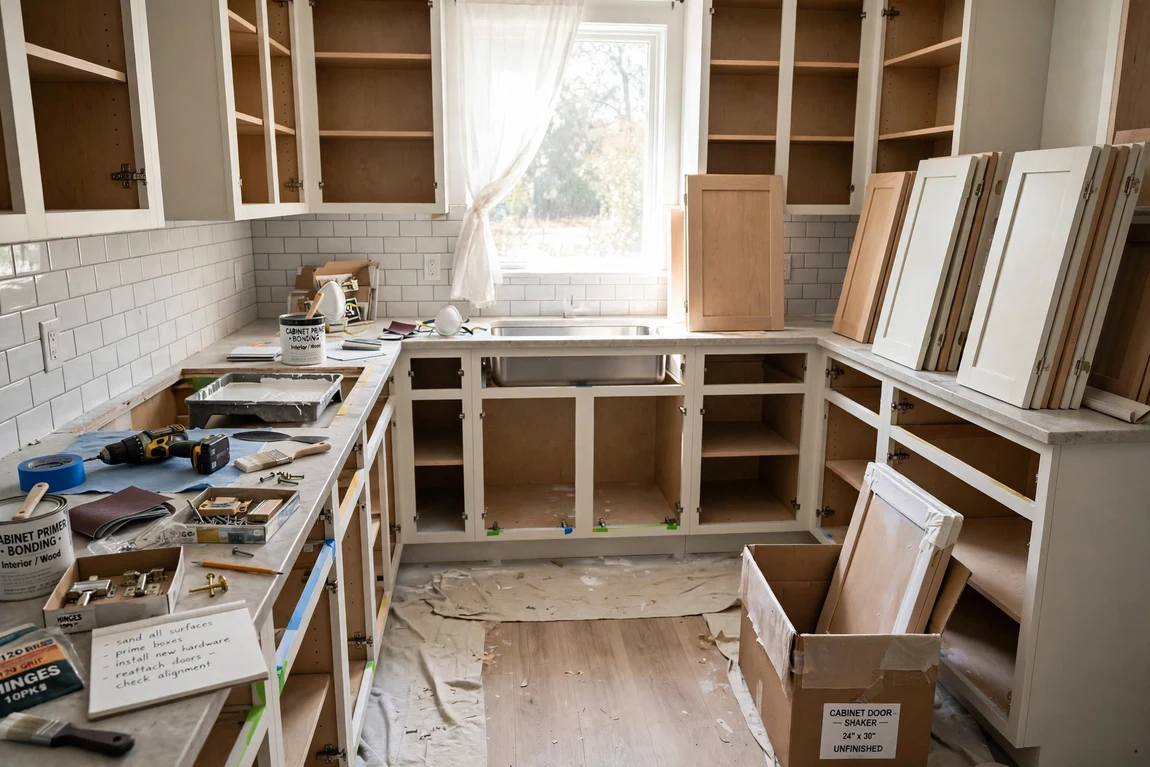
Cabinet boxes stay in place while doors and drawer fronts are removed for refacing. (Illustrative image)
What cabinet refacing is
Cabinet refacing keeps your existing cabinet boxes and layout. A contractor removes the old doors and drawer fronts, applies a new veneer or laminate skin to the visible parts of the boxes, and then installs brand-new doors, drawer fronts, hinges, and usually new handles or knobs. The interiors, shelves, and basic structure stay where they are, which is why refacing is faster and less disruptive than a full tear-out.
Refacing works best when the boxes are sturdy, square, and free of water damage, the layout already suits how you cook, and you mainly want a new colour, finish, or door style. It is also a sensible step inside a wider refresh, and our guide to kitchen remodel cost shows where cabinet work fits in a full project budget.
Refacing does not work well when boxes are warped, rotting, or badly built, when you want to move appliances or change the layout, or when you need more storage than the current footprint allows. In those cases, covering old problems with new doors wastes money, and replacement is the honest fix.
What the job involves and how long it takes
A typical professional job follows a clear sequence:
- Measuring every door and drawer front, then ordering new ones to fit
- Removing doors, drawer fronts, and old hardware
- Cleaning, sanding, and repairing the box faces and side panels
- Applying veneer or laminate to the boxes and finishing the edges
- Hanging the new doors and drawer fronts and fitting soft-close hinges
- Installing new handles, adjusting alignment, and doing a final clean-up
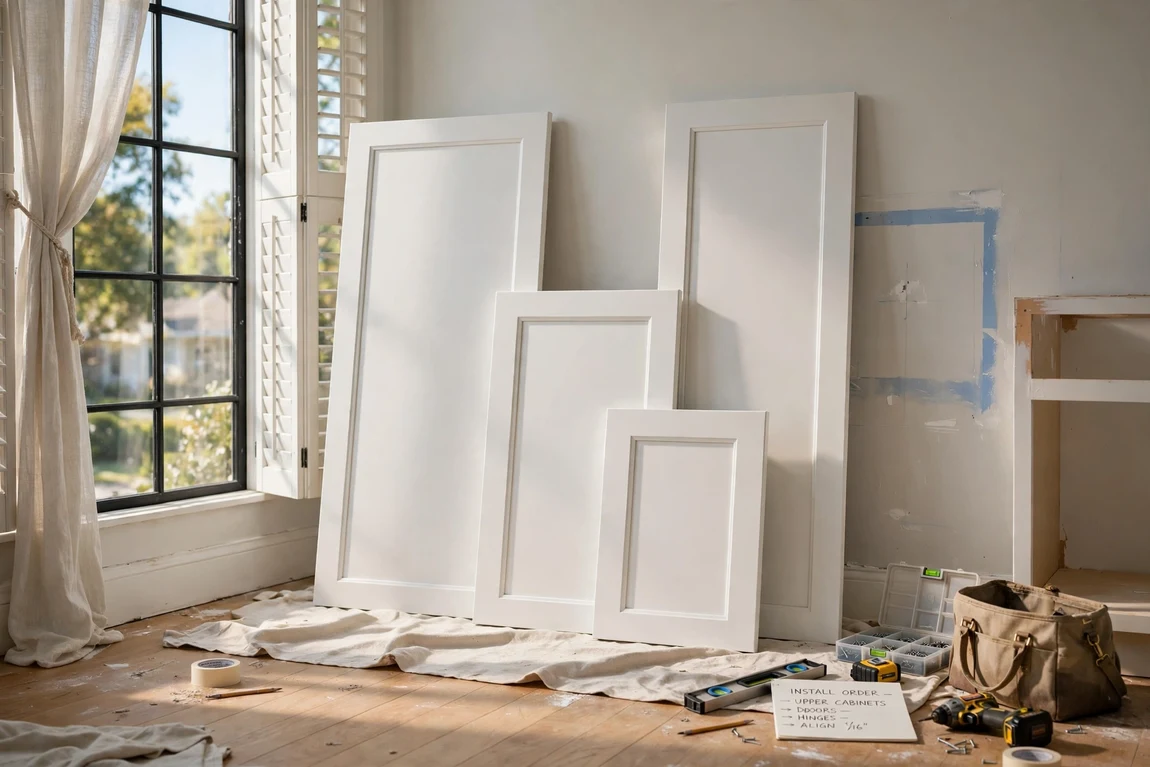
New shaker-style doors made to measure, ready to hang on the refaced boxes. (Illustrative image)
Most kitchens take about three to five days on site once materials arrive, although ordering and making the new doors can add two to four weeks before work starts. You can usually keep using parts of the kitchen during the job, but expect dust, noise, and limited access to cupboards while veneer and doors are being fitted.
cabinet refacing cost breakdown by kitchen size and veneer
The table below shows typical US planning ranges for 2026 for a complete professional job, including labour. Small kitchens are roughly 10 linear feet of cabinets, medium kitchens about 15 to 20 linear feet, and large kitchens 25 linear feet or more. Your local labour rates and door count will move your quote within, or sometimes outside, these ranges.
| Kitchen size | Laminate veneer | Real wood veneer | Solid new doors (premium) |
| Small | $3,800 – $6,500 | $5,500 – $9,000 | $7,000 – $11,000 |
| Medium | $6,000 – $10,500 | $8,500 – $14,000 | $11,000 – $17,000 |
| Large | $9,500 – $15,000 | $13,000 – $20,000 | $16,000 – $24,000 |
Laminate veneer is usually the lowest-cost finish and is hard-wearing and easy to clean. Real wood veneer costs more but can be stained to match a natural timber look. The premium column reflects solid wood or high-end painted doors paired with matching veneer work, detailed mouldings, and upgraded hardware. Optional extras such as glass-front doors, new drawer boxes, pull-out shelves, under-cabinet lighting, and a matching island panel are normally priced on top of these ranges.
Refacing vs painting vs full replacement
Painting is the cheapest route, often a few hundred dollars in materials for a DIY job or roughly $1,500 to $5,000 for a professional spray finish as a planning range. It changes colour only, keeps the same door style, and the finish can chip on heavily used kitchens. If you like the idea of a painted finish, the techniques in our guide to refreshing furniture makeovers with paint cover preparation and finishes that also apply to cabinet work.
Refacing sits in the middle. It costs more than painting but changes the door style as well as the finish, and the new doors and veneer usually look and feel closer to new cabinetry. Full replacement costs the most, often starting where refacing ends and rising well beyond it, but it is the only option that fixes layout, storage, and damaged boxes. Our comparison of custom cabinets vs prefab explains the replacement choices if your boxes are beyond saving.
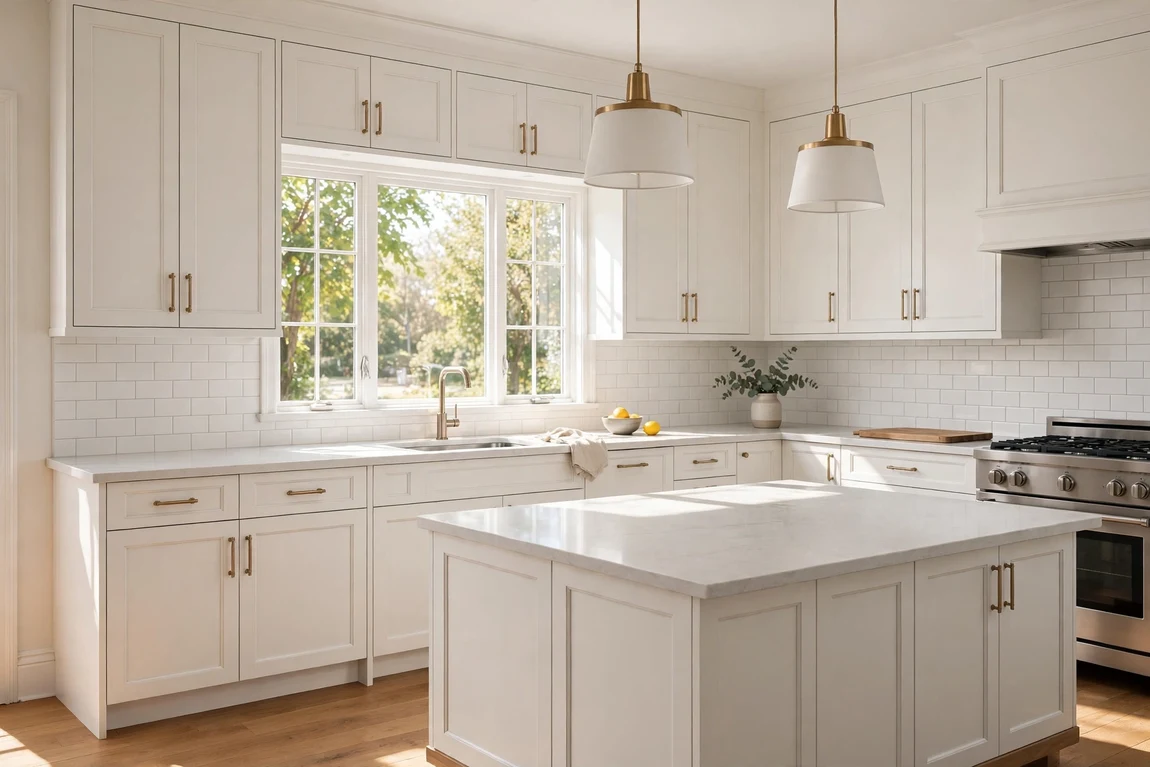
A finished kitchen with refaced white cabinets, new hardware, and the original layout kept. (Illustrative image)
Factors that change the price
- Number of doors and drawers, since each one is made, finished, and hung individually
- Door style, with flat panels cheapest and raised-panel or glazed designs costing more
- Veneer type and whether side panels, crown moulding, and the island are included
- Condition of the boxes, because repairs before veneering add labour
- Hardware upgrades such as soft-close hinges, new drawer boxes, and pull-out storage
- Your location and the contractor’s workload, which affect labour rates
DIY vs hiring a professional
Confident DIYers can buy veneer, doors, and hardware themselves and may spend roughly $2,000 to $6,000 on materials for a typical kitchen as a planning estimate, saving the labour share of a professional quote. The trade-off is precision: veneer must be trimmed cleanly with no bubbles or lifting edges, and doors must hang perfectly square. Mistakes are very visible on large flat surfaces. Many homeowners take a hybrid route, paying a pro for the veneering and hanging while handling removal, painting interiors, and hardware fitting themselves.
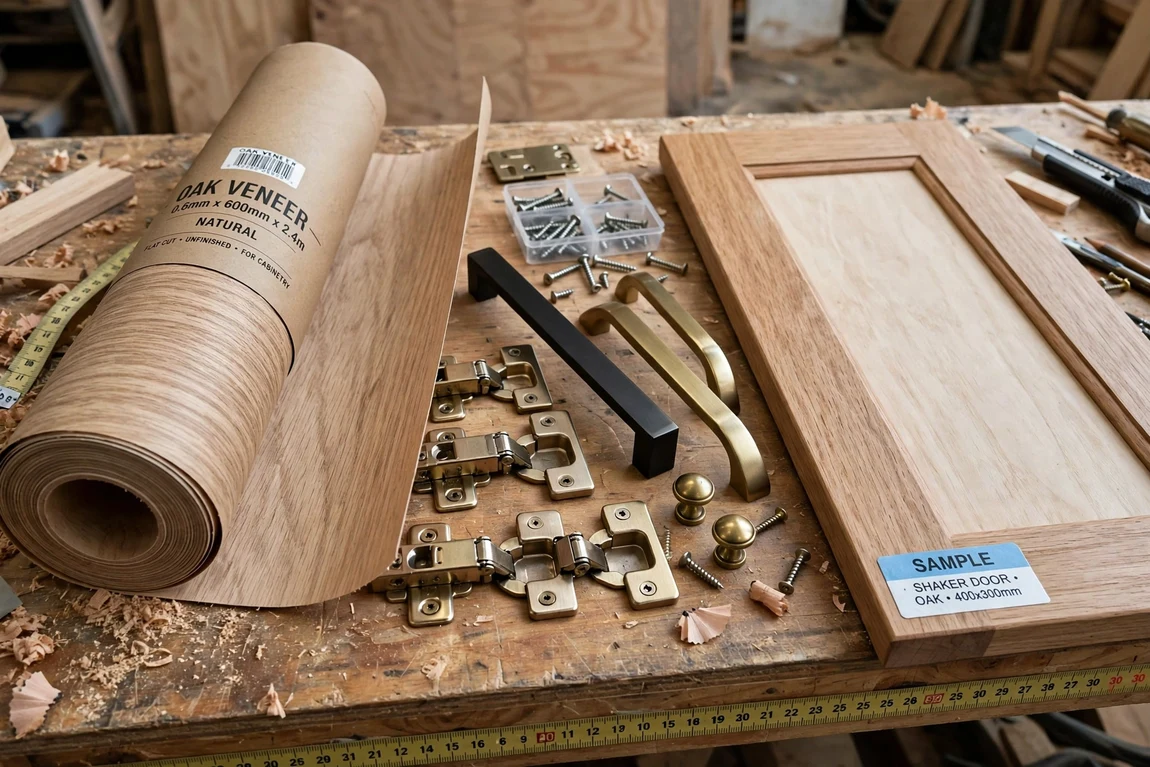
Veneer, hinges, and handles are the core materials that drive the material share of the price. (Illustrative image)
How to save on refacing
- Get at least three itemised quotes so you can compare door, veneer, and labour costs line by line
- Choose a simple door style and a standard colour instead of custom glazing or distressing
- Keep your existing layout and avoid adding new cabinets, which pushes the job toward replacement pricing
- Reuse sound drawer boxes and upgrade only worn runners and fronts
- Do the clearing, removal of old doors, and final clean-up yourself if your contractor agrees
- Ask whether mid-range laminate or thermofoil doors meet your needs before paying for solid wood
Refacing is not the right answer for every kitchen, but when the boxes are sound and the layout works, it delivers the biggest visual change per dollar short of a full remodel. Budget using the ranges above, confirm what each quote includes, and you will know before signing whether the price in front of you is fair for your kitchen.