

Understanding foundation repair cost before you call a contractor helps you spot a fair quote, avoid unnecessary work, and plan for the repairs your home actually needs. Prices vary widely because a simple sealed crack and a house that needs a row of steel piers are completely different jobs. This guide explains the warning signs, the causes, what each repair method involves, and what typical US homeowners can expect to pay in 2026. All prices below are planning estimates and typical ranges, not quotes — your final price will depend on your soil, your home, and local labour rates.
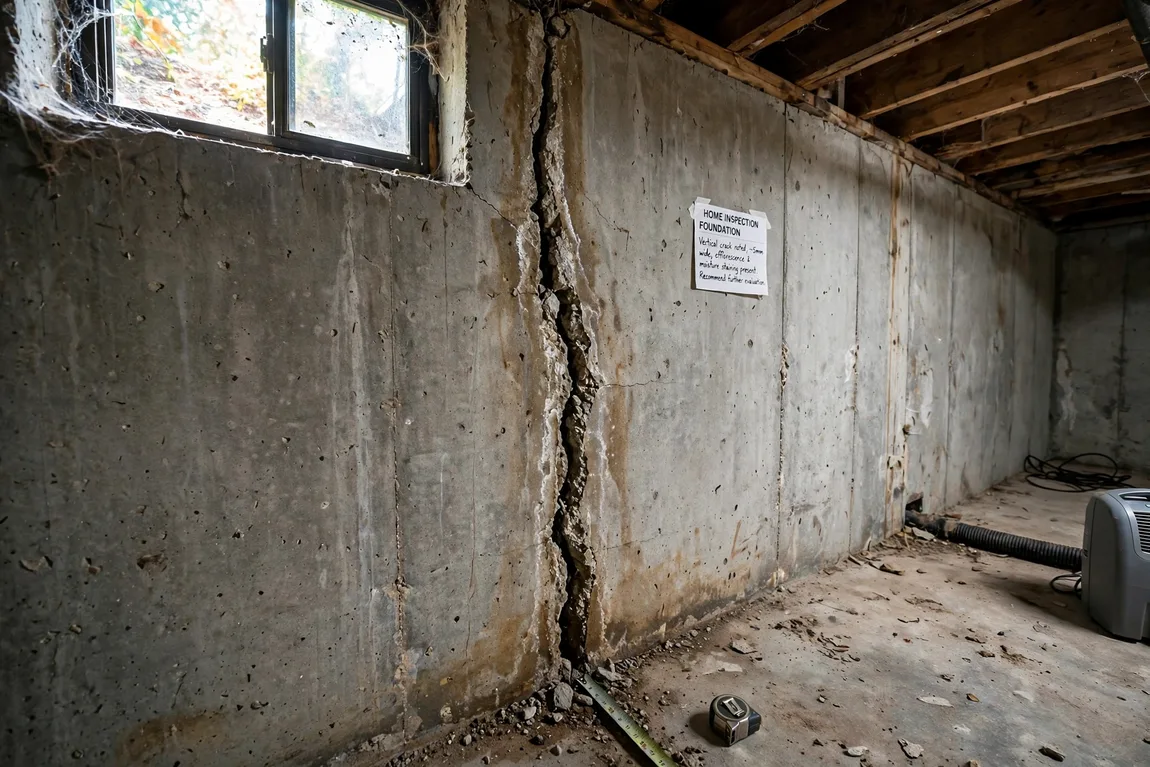
A visible crack in a basement foundation wall is often the first sign homeowners notice. (Illustrative image)
Warning signs your foundation may need attention
Not every crack is an emergency. Hairline cracks from normal concrete curing are common, but certain patterns deserve a closer look. Watch for cracks that are wide, growing, horizontal, or stair-stepping through block or brick. Doors and windows that suddenly stick, gaps opening around frames, sloping or uneven floors, and walls pulling away from ceilings are also worth investigating. Water is another clue: repeated basement damp after rain can point to drainage and foundation issues working together. If moisture is part of the picture, damp can also lead to mould growth, so it is worth understanding our mold remediation cost guide as well, so you understand which problem you are really paying to fix.
What causes foundation problems?
Most foundation movement starts with soil and water. Expansive clay soils swell when wet and shrink when dry, pushing and then releasing pressure on walls and footings. Poor drainage lets water collect against the foundation, which adds pressure and softens supporting soil — the same problem covered in our guide to water in your crawl space. Tree roots can draw moisture from under one corner of a house, causing uneven settlement. Plumbing leaks under a slab, frost heave in cold climates, and poorly compacted fill from original construction can all contribute. The cause matters because a repair that only treats the symptom — for example, filling a crack without fixing drainage — may not last.
What each repair method involves
Crack repair is the smallest job. A technician typically injects epoxy or polyurethane into a non-structural crack, or seals it from the surface, to stop water entry. Interior piers are installed from inside the basement or crawl space when access outside is limited. Exterior piers are driven or drilled from outside the home down to more stable soil or bedrock, then attached to the footing to support or lift the settled section. Slab leveling raises a sunken concrete slab by pumping material underneath it until it sits level again. Wall anchors are plates and rods installed through a bowing basement wall and anchored in soil away from the house, used to stabilise the wall and, in some cases, gradually straighten it.
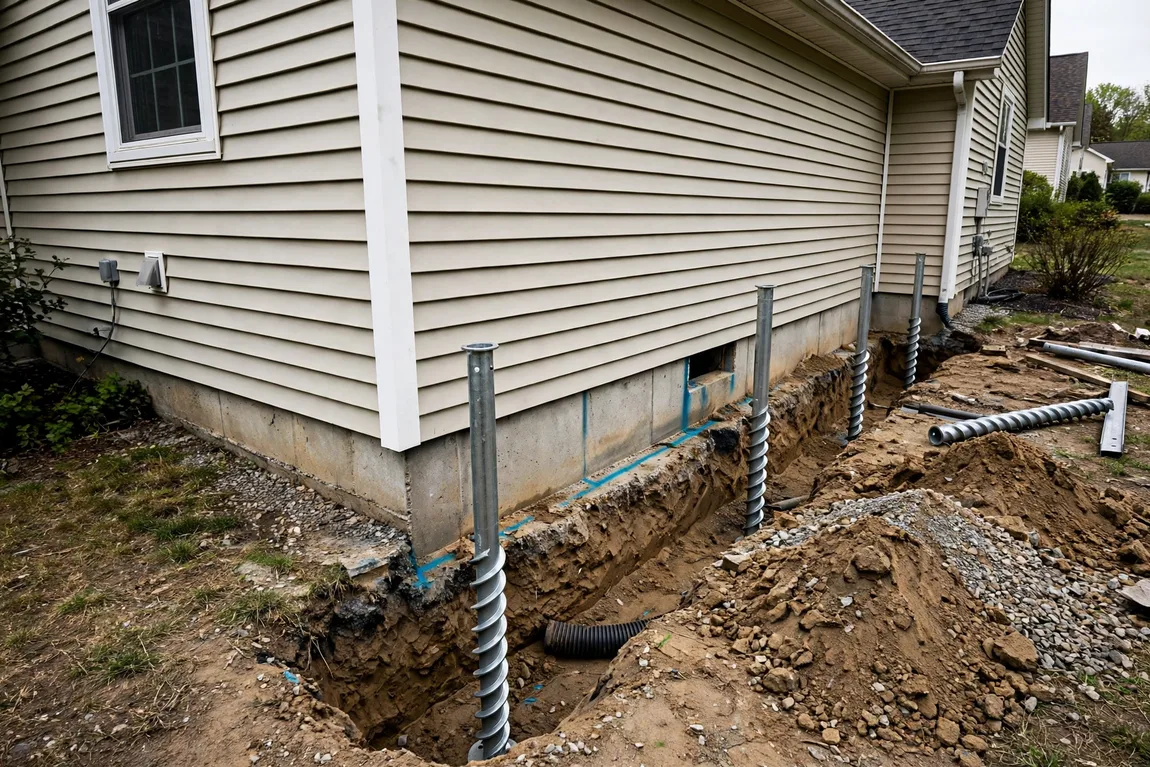
Steel piers are driven to stable soil to support a settled foundation. (Illustrative image)
foundation repair cost breakdown by method
The table below gives typical US price ranges for 2026 as planning estimates. Use them to sense-check quotes, not as a promise of what your job will cost. Small, accessible jobs usually land near the low end; deep piers, difficult access, permits, and engineering reports push prices higher.
| Repair method | Typical US range (2026 planning estimate) | Notes |
| Crack repair (injection or sealing) | $250–$800 per crack | Best for non-structural, leaking cracks |
| Interior piers | $1,000–$2,500 per pier | Less excavation, may disturb interior floors |
| Exterior piers | $1,300–$3,000 per pier | Excavation outside; landscaping may need restoring |
| Slab leveling | $500–$1,500 for a small slab; $3–$8 per sq ft as a general range | Depends on how far the slab has sunk and access |
| Wall anchors | $400–$900 per anchor | Several anchors are usually spaced along one wall |
| Full project, typical single-family home | $2,000–$15,000+ as a broad planning range | Whole-house piering can exceed this range |
Because piers are priced per pier, the total depends heavily on how many the engineer or contractor says you need and how they are spaced. Always ask for the pier count, the depth assumption, and what happens to the price if crews hit rock or need to go deeper than expected. That one question prevents many mid-job surprises.
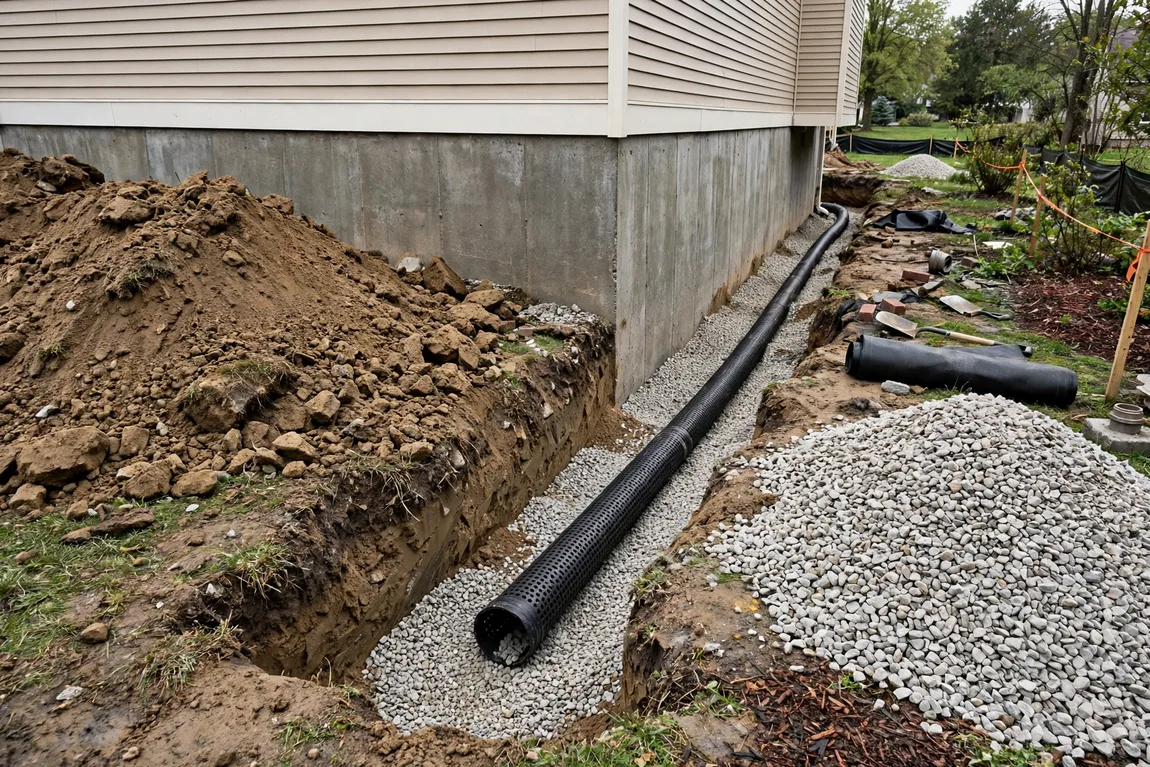
Exterior repairs often require excavation down to the footing. (Illustrative image)
Factors that change the price
- Extent of damage: one crack costs far less than settlement on two sides of a house.
- Number and depth of piers: deeper stable soil means more material and labour.
- Access: tight side yards, decks, porches, and finished basements all slow the work.
- Soil and water conditions: drainage fixes, such as a new drain or a pump, may be recommended alongside structural work. See our sump pump installation cost guide if a pump is quoted.
- Permits and engineering: some areas require permits or an engineer report before piering.
- Restoration: excavation can mean replacing landscaping, concrete, or interior flooring afterwards.
- Region: labour rates and code requirements differ across the US.
Structural engineer vs contractor: who to call first?
A foundation contractor both diagnoses the problem and sells the repair, which creates an obvious conflict of interest. An independent structural engineer, hired by you, has nothing to sell beyond the assessment. Paying for an engineer report first can be money well spent on larger jobs: you get a written diagnosis, a recommended repair plan, and a document you can hand to several contractors for like-for-like quotes. For a single leaking hairline crack, calling a contractor directly is usually reasonable. For sloping floors, wide cracks, bowing walls, or any quote involving many piers, get the engineer first. If you are buying or selling, our home inspection cost guide explains where a general inspection ends and a specialist evaluation begins.
How to save money and avoid upsells
Get at least three written quotes based on the same repair plan, and ask each company to separate essential structural work from optional extras. Fix drainage first where it is cheap and effective: extend downspouts, correct soil grading away from the house, and keep gutters clear. Ask whether a partial repair — stabilising only the settled section — is safe, instead of piering the entire perimeter by default. Check what warranty is actually covered, whether it is transferable to a future buyer, and who honours it if the company closes. Finally, ask for references from jobs at least a few years old, not just recent ones.
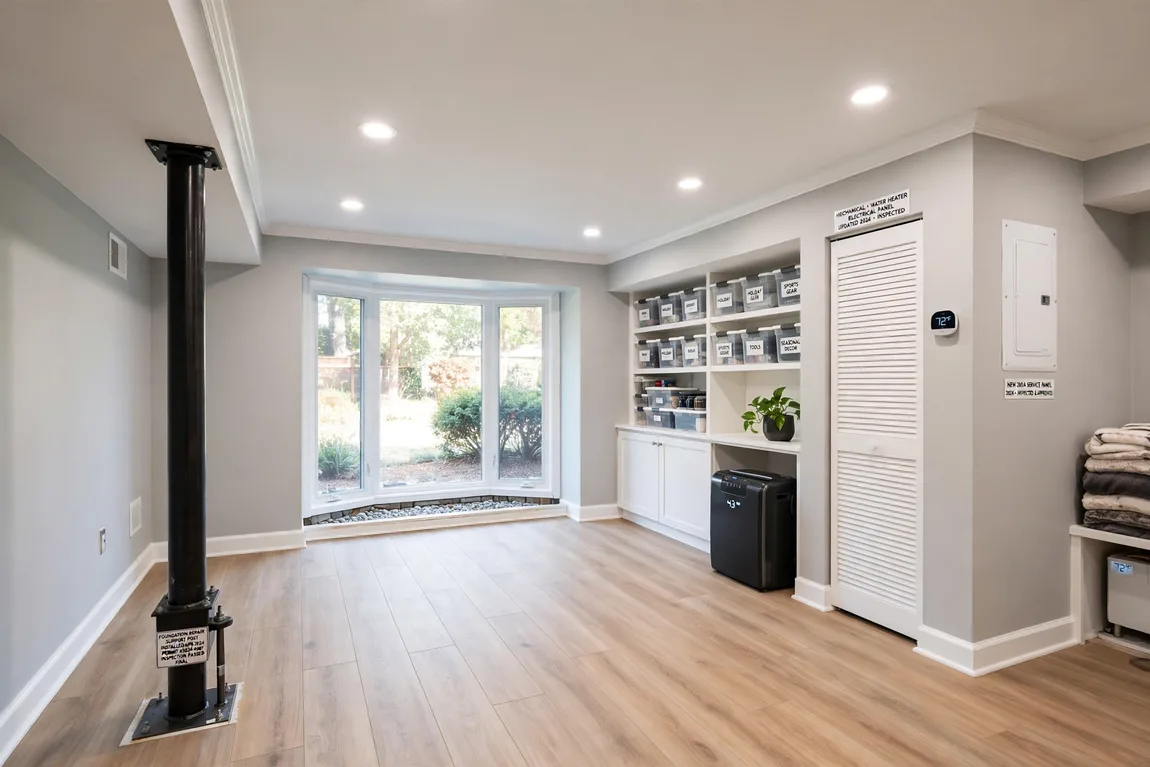
A dry, level finished basement is the goal of a well-planned repair. (Illustrative image)
Red flags to watch for
- Pressure to sign the same day, or a discount that expires today.
- A quote with no pier count, no depth information, and no written scope.
- Insistence that the whole house needs piers after only a brief look.
- No mention of permits, engineering, or local code requirements.
- Large deposits demanded before any work or materials arrive.
- Refusal to put warranty terms in writing.
Foundation work is expensive, disruptive, and hard to undo, so it rewards patience. Start with the signs you can see, understand the likely cause, get an independent opinion on bigger jobs, and compare quotes against the typical ranges above. Treated as a planned project rather than a panic purchase, foundation repair becomes a manageable — and much safer — investment in your home.