

Finding mold behind a wall, under a floor or in the attic usually raises two questions: how bad is it, and what will it cost to fix properly? Understanding mold remediation cost before you call a contractor helps you read a quote with confidence. For most homes in 2026, professional remediation runs about $1,223 to $3,758 for a typical job, according to Angi and HomeAdvisor data, with an average close to $2,368. Small, contained jobs cost less; whole-house and HVAC work costs far more. This guide breaks down the ranges by square foot and by area, explains what a quote includes, and shows where you can safely save money — and where you should not try.
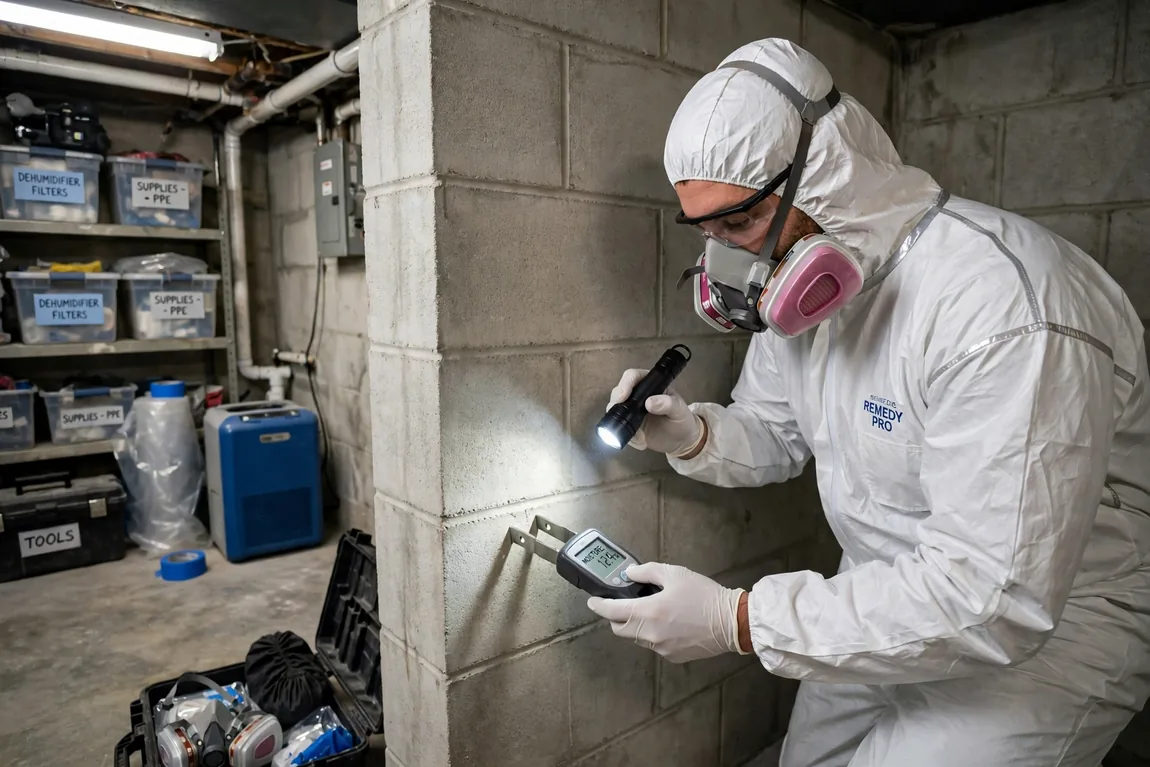
A technician checks moisture and affected materials before pricing the job. (Illustrative image)
Mold Remediation Cost at a Glance: Average Prices in 2026
Most companies price remediation by the size of the affected area, not the visible stain. Angi and HomeAdvisor put standard remediation at roughly $10 to $25 per square foot; some guides, including HomeGuide, list $15 to $30 for poor access or heavy contamination. So 100 square feet typically works out to about $1,000 to $2,500, and 500 square feet to $5,000 to $12,500. These are national ranges, not quotes — labour alone is commonly listed at $75 to $120 per hour.
| Area or Scenario | Typical 2026 Cost | Notes |
|---|---|---|
| Per square foot | $10 – $25 per sq ft | Up to $30 for heavy contamination |
| Typical professional job | $1,223 – $3,758 | Average around $2,368 |
| Small area (10–100 sq ft) | $500 – $1,500 | One wall section, simple containment |
| Bathroom | $500 – $1,000 | More if growth is behind fixtures |
| Basement (partial) | $500 – $3,000 | Full basements cost more |
| Crawl space | $500 – $2,000 | Vapour barrier may be extra |
| Attic | $1,000 – $4,000 | Insulation replacement adds cost |
| Inside walls / drywall | $1,000 – $20,000 | Patch versus whole walls |
| HVAC system and ducts | $3,000 – $10,000 | Cleaning plus component replacement |
| Whole house | $10,000 – $30,000 | Usually after flooding or hidden leaks |
| Mold inspection | $303 – $1,075 | Average around $657–$689 |
| Mold testing | $250 – $800 | Basic to comprehensive lab work |
Ranges attributed to Angi, HomeAdvisor and HomeGuide 2026 data. Local quotes vary with region, access and material removal.
Cost by Area: From a Small Patch to a Whole House
Small areas and whole rooms
A small, contained patch — one wall section, a closet corner, under a sink — sits at the low end: containment is simple and little material comes out. A whole room needs a larger sealed zone, more air-scrubbing, disposal and rebuilding, so the price climbs quickly.
Attic and crawl space
Attics typically run $1,000 to $4,000 in the Angi and HomeAdvisor ranges, crawl spaces about $500 to $2,000. Both cost more per square foot than open rooms: crews work in respirators in cramped conditions. Attic jobs often include removing contaminated insulation; crawl space jobs often add a vapour barrier.
Whole house and HVAC involvement
Whole-house remediation, usually after flooding or a long-hidden leak, is the most expensive scenario at roughly $10,000 to $30,000, and higher with rebuilding. HVAC involvement is the other big driver, at about $3,000 to $10,000: components must be cleaned, uncleanable porous duct material replaced, and the system shut down.
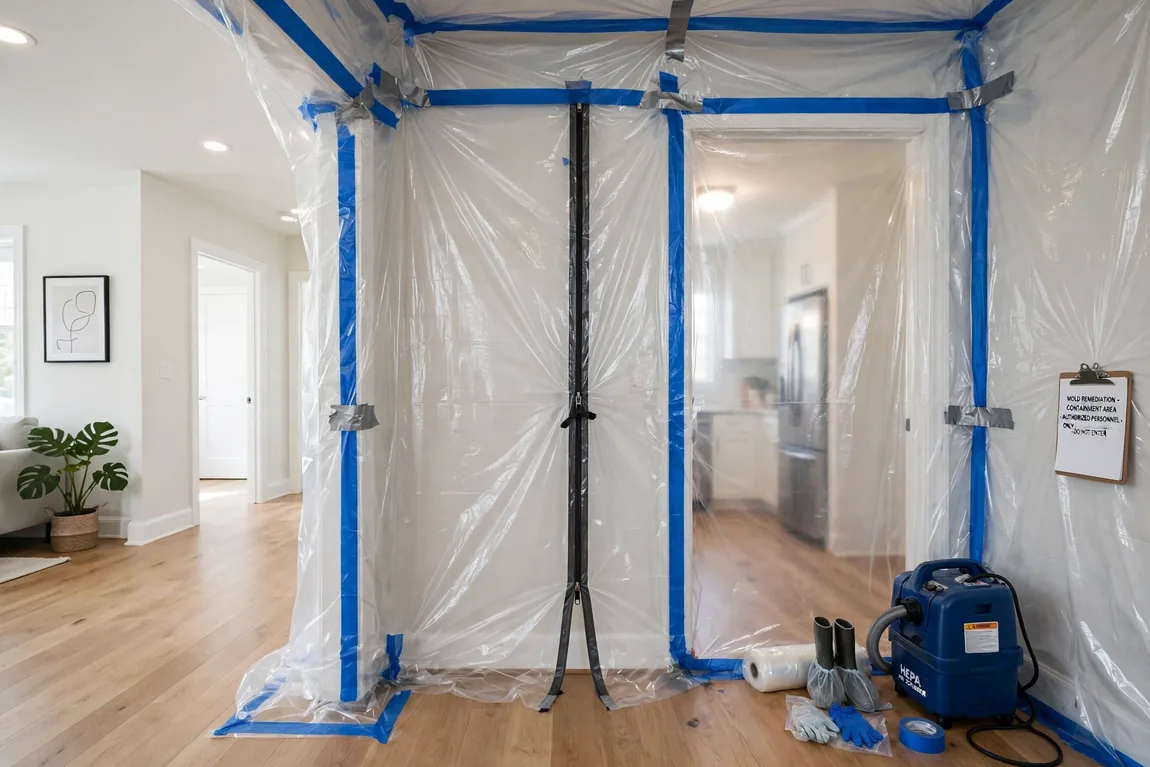
Plastic containment with a zipper entry seals the work area off from the rest of the home. (Illustrative image)
Mold Testing and Inspection Fees
Pricing starts with finding how far the problem extends. Angi puts a professional mold inspection at roughly $303 to $1,075, averaging around $657 to $689; smaller homes often fall near $300 to $400, larger homes $700 to $1,000. Lab testing sits alongside it: basic testing runs $250 to $350, comprehensive sampling with lab analysis $450 to $800.
Testing earns its fee when growth is hidden, a musty smell has no visible source, or you need documentation for a sale or claim. A post-remediation clearance test is priced separately — and an inspector independent of the remediation company avoids a conflict of interest.
What Does a mold remediation cost Quote Include?
A professional quote is not just a price for scrubbing a stain. Proper remediation includes containment — plastic sheeting sealed around the work area, often with negative air pressure — so spores are not spread while material is opened up. It also includes HEPA-filtered air scrubbers, HEPA vacuuming, and safe disposal of material that cannot be cleaned.
Removing affected material is a major part of the bill. Porous materials such as moldy drywall, insulation and carpet backing usually have to be cut out and discarded, so ask for rebuilding — new drywall, insulation and paint — priced as a separate line. For small growth on solid wood, cleaning may work instead; see our guide on how to remove mold from wood.
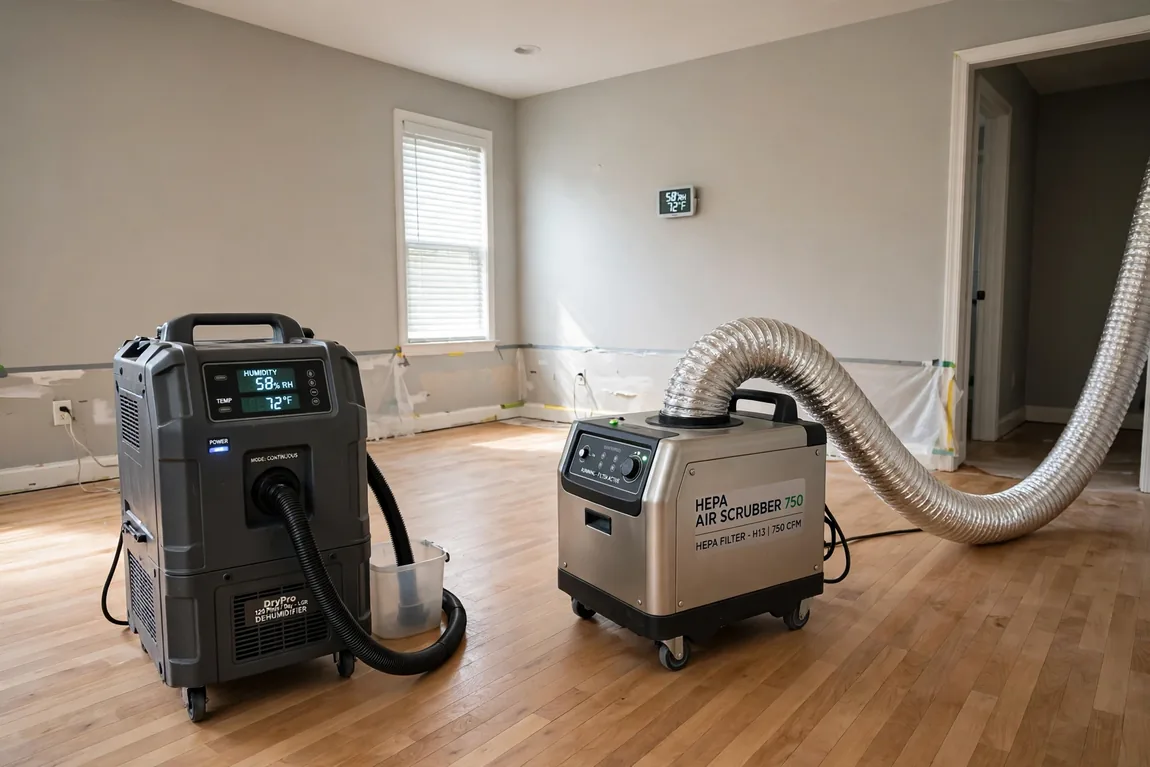
Dehumidifiers and HEPA air scrubbers dry the space and capture airborne particles during work. (Illustrative image)
Factors That Affect the Final Price
- Size of the affected area: the biggest driver — labour, disposal and equipment all scale with it.
- Location and access: attics, crawl spaces and inside-wall growth cost more.
- Material removal: cleaning a hard surface is cheap; replacing drywall or flooring is not.
- HVAC involvement: contaminated ducts and air handlers need specialised cleaning or replacement.
- Testing and clearance: inspection, lab samples and verification are usually separate fees.
- Region and timing: labour rates vary, and demand jumps after flooding.
- The moisture source: fixing the leak behind the growth is essential — see common plumbing problems — and normally extra.
DIY vs Professional Remediation: Know the Limits
The US Environmental Protection Agency (EPA) gives a practical rule: if the moldy area is less than about 10 square feet — roughly a 3 ft by 3 ft patch — you can usually handle it yourself on hard surfaces, with detergent and water, ventilation and basic protection such as gloves, eye protection and a respirator. Fix the moisture problem first, dry everything completely, and never paint over mold.
Beyond that limit, call a professional: when growth is inside walls, an attic, a crawl space or the HVAC system, when the source is sewage or flood water, or when structural material is involved. Disturbing a large area without containment can spread spores and turn a contained job into a whole-house one.
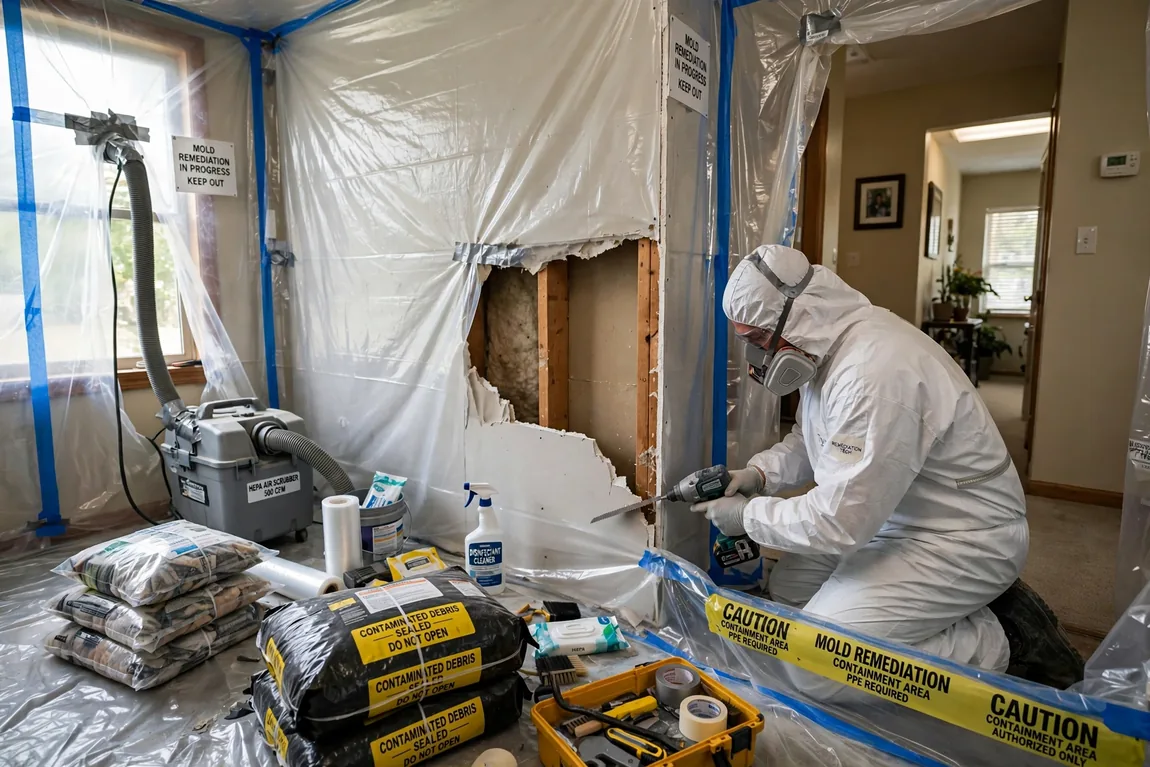
Affected drywall is cut out, bagged and removed rather than cleaned in place. (Illustrative image)
How to Save Money and Prevent Recurrence
The cheapest remediation is the one you pay for once. Get two or three written, itemised quotes covering the same scope — testing, containment, removal, disposal and rebuilding listed separately. Fix the water source during remediation, not after: a repaired roof leak, sealed foundation crack or vented bathroom fan stops the same bill returning. Seasonal checks help too — the habits in our guide to how to winterize your home reduce leaks and condensation.
Prevention is mostly moisture control: keep indoor humidity below about 50 percent, run exhaust fans, clean gutters, slope soil away from the foundation, and dry water damage within 24 to 48 hours. Catching a patch early keeps you in the lowest bracket above.
Frequently Asked Questions
How much does mold remediation cost per square foot?
About $10 to $25 per square foot of affected area, per Angi and HomeAdvisor — some guides list $15 to $30 for heavy contamination or poor access.
Does homeowners insurance cover mold remediation?
Sometimes. Mold from a sudden covered event such as a burst pipe may be covered up to a policy limit; mold from long-term leaks is commonly excluded. Check your policy first.
How long does professional remediation take?
Most jobs take one to five days, depending on size, material removal, drying and clearance testing.
Can I just use bleach on mold?
Bleach can clean small areas of hard surfaces, but not growth inside porous drywall — and it does not fix the moisture problem. The EPA approach is detergent and water, thorough drying, and removing uncleanable material.
Is mold testing always necessary?
No. If growth is visible and the source is known, testing may add cost without changing the plan. It earns its fee when growth is hidden or documentation is needed.
Mold pricing rewards early action: a small patch handled now is a few hundred dollars of work, while the same leak left for a season can become a five-figure job. Fix the source, get itemised quotes, and judge yours against the ranges above.