

Perfectly round holes in a deck rail, sawdust on the porch, and a large bee hovering at eye level usually mean one thing. Learning how to get rid of carpenter bees is not about swatting the bee you see today. It is about treating the tunnel, plugging it at the right time, and making the wood far less inviting next spring.
This guide follows University of Georgia Extension guidance, including Circular 1342 on carpenter bees in the landscape. It covers identification, why bare softwood is targeted, traps, tunnel treatment, plugging, and paint-based prevention, with pollinator care kept in view.
How to Get Rid of Carpenter Bees, Step by Step
Work in the right order. Treating, waiting, and only then plugging is the sequence extension experts repeat, because plugging too soon stops bees from contacting the treatment inside the tunnel.
Step 1: Confirm the holes are active. Look for fresh, light-colored sawdust below a round entrance, a hovering male nearby, or a faint boring sound in the wood. Old, dark holes with no sawdust may be inactive and may only need plugging and painting.
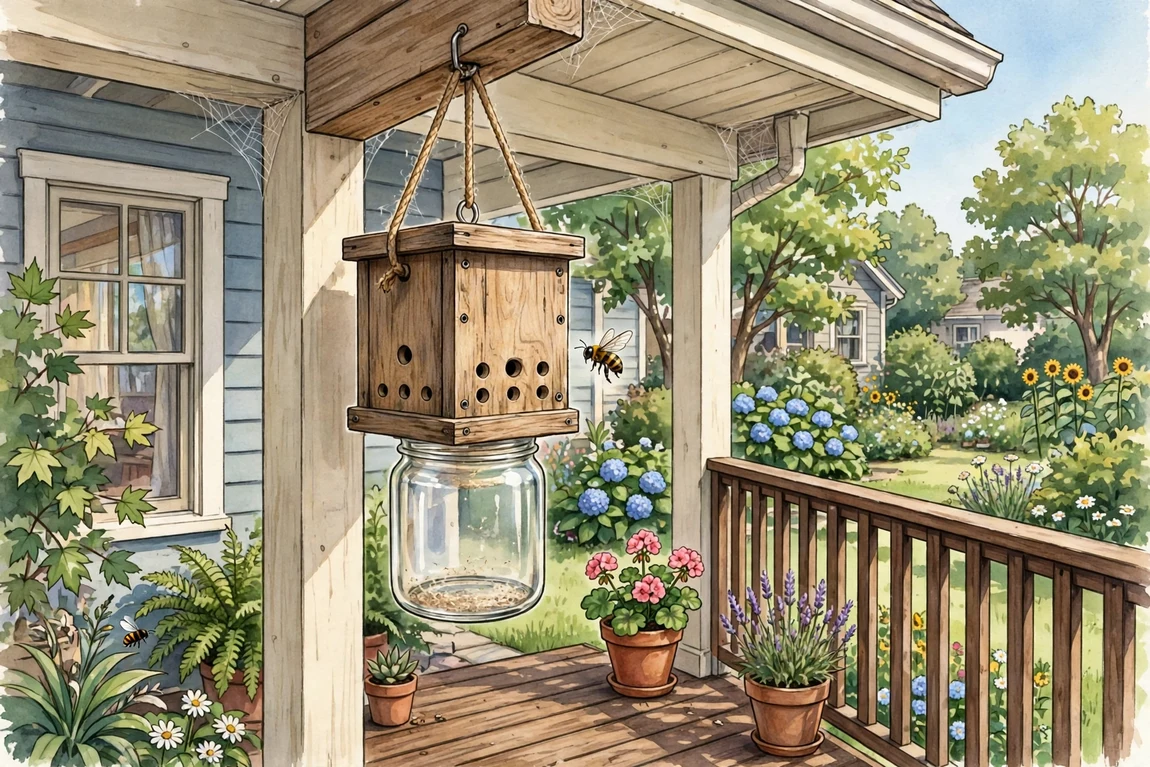
Step 2: Set traps early in spring. Install carpenter bee traps close to activity, near patios, porches, decks, sheds, and eaves, on the sunny side where possible. UGA Extension notes traps use the female’s habit of exploring existing holes, and once inside a bottle or box trap, she cannot bore her way out through plastic, metal, or glass.
Step 3: Treat active tunnels in the evening. When bees are less active, apply a product labeled for carpenter bees directly into the entrance, exactly as the label directs. UGA guidance notes pyrethroid sprays and dust formulations can be effective, and bees spread residue inside as they move in and out.
Step 4: Leave the hole open for a day or two. Do not plug at once. UGA Circular 1342 advises leaving the tunnel open for a couple of days after application to increase effectiveness. The Glynn and McIntosh UGA Extension guide gives the same advice: leave holes open for a few days, then seal.
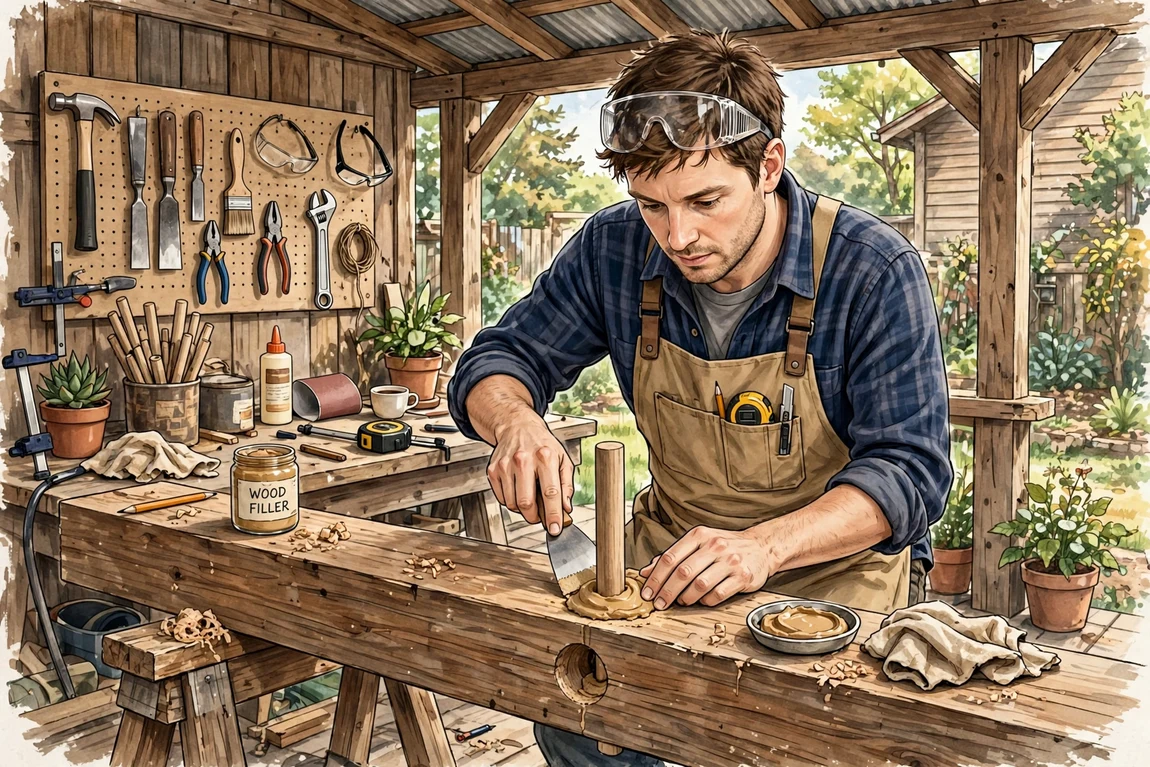
Step 5: Plug, seal, and paint. Hammer in a wooden dowel coated with glue, or fill with wood putty or filler, then paint over the repair. Plugging reduces reuse of old tunnels, which matters because females often return to existing galleries year after year.
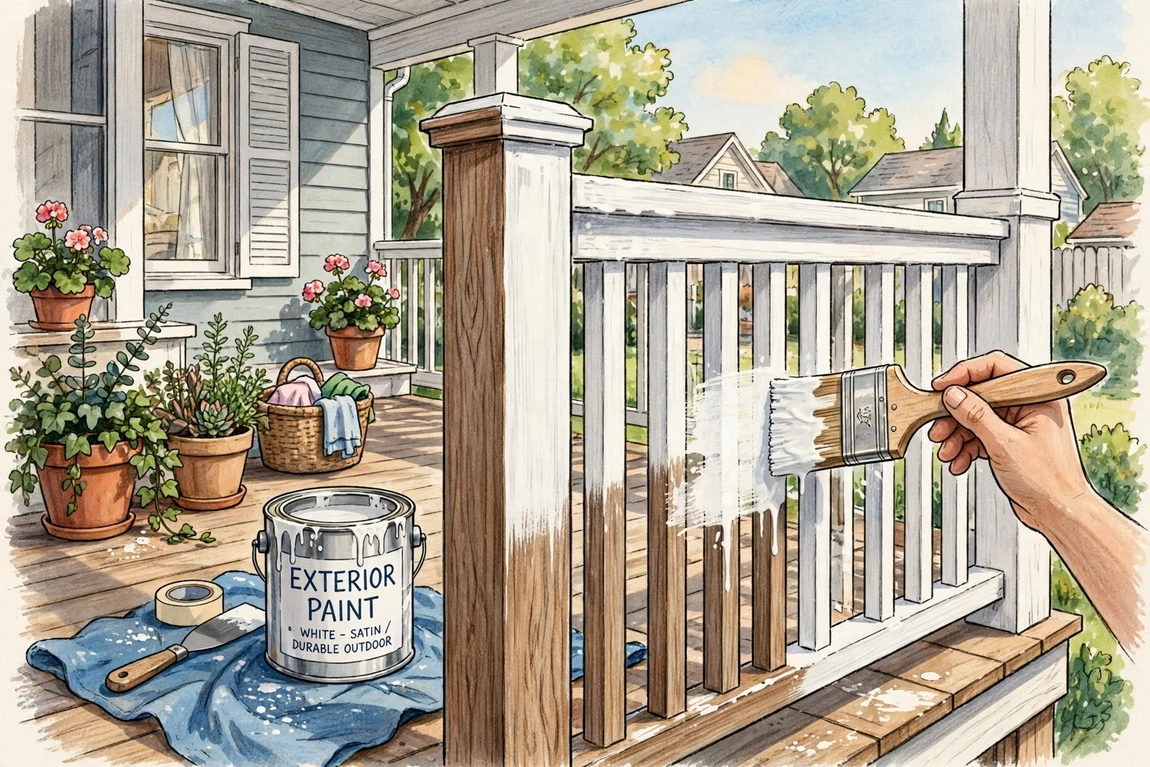
Step 6: Protect the rest of the wood. Paint bare areas, especially fascia, railings, and the undersides of decks. Replace severely damaged boards, particularly if the wood supports a structure and repeated tunneling has weakened it.
How to Identify Carpenter Bees and Their Damage
The large carpenter bee, Xylocopa virginica, is the most common species in Georgia and much of the East, according to UGA Extension. Adults have a metallic black body with a glossy, hairless abdomen. That shiny abdomen is the quickest field mark.
Bumble bees look similar at a glance, but their abdomens are hairy with yellow and black stripes, and they nest in the ground in old rodent burrows, not in wood. Honey bees are smaller and live in colonies. If the bee is drilling wood, it is not a honey bee.
The damage is distinctive too. Females bore round entry holes about 1 cm, or 0.39 inch, in diameter, push sawdust out near the hole, and do not eat the wood, UGA Extension notes. After a short entrance, the tunnel turns and runs along the grain, with separate cells for eggs, each provisioned with a pollen ball.
Males hover and dart at people near the nest, which feels aggressive, but males have no stinger. Females can sting, yet they rarely do unless handled. For readers comparing other home pests, our guide on wasp control around the home helps separate bees from wasps before you choose a treatment.
Why Carpenter Bees Target Your Wood
They prefer softwoods and bare surfaces. UGA Extension notes carpenter bees are more attracted to redwood, cedar, cypress, and pine, especially when old and unpainted. Eaves, fascia, siding, decks, fences, and outdoor furniture are common targets for the same reason: dry, weathered, and easy to bore.
They are solitary, not social. One female bores and provisions her own tunnel, unlike honey bees with a queen and workers. Adults overwinter in old tunnels, emerge in late winter and spring to mate, and females then bore new tunnels or reuse old ones.
A single season rarely destroys a board. The risk builds when the same wood is reused and extended for many years, which can compromise integrity. Woodpeckers add a second problem, because they peck into wood to reach larvae, causing larger, ragged damage on top of the neat bee holes.
Prevention That Stops New Holes
Paint is your strongest prevention. Anecdotal and extension observations reported by UGA indicate carpenter bees avoid wood painted with oil-based paint, and a heavy coat of paint or varnish discourages nesting. Stain alone gives much less protection, so do not rely on a light stain for a board with a history of attack.
Keep up a spring inspection. Walk eaves, railings, and deck undersides in early spring, before boring peaks. Fill old holes, touch up peeling paint, and hang traps before females settle. Bring movable wooden furniture inside or under cover where you can, and keep outside doors shut in early spring, as UGA suggests.
Done consistently, this routine is the long-term answer to how to get rid of carpenter bees without yearly spraying. You are removing the exact conditions, bare softwood and open old tunnels, that bring females back.
DIY vs. Calling a Professional
For homeowners asking how to get rid of carpenter bees on a budget, most single-story, reachable damage is a DIY job. Traps, evening tunnel treatment, plugging after the waiting period, and painting are all within a careful homeowner’s reach. A ladder, eye protection, and strict label use are the main requirements.
Call a professional when holes are high on a two-story fascia, inside structural members, or spread across many boards. UGA Extension notes pest control companies are equipped to reach damaged areas that are out of sight or hard to access. A pro can also judge whether a board needs replacement, not just treatment.
Get an inspection if woodpecker damage is extensive or if a beam sounds hollow. Repeated tunneling plus woodpecker excavation can weaken a support faster than either pest alone. In that case, repair and material choice matter more than another spray round.
Safety and Pollinator Notes
Always follow the pesticide label. Wear the personal protective equipment the label recommends, such as gloves and long sleeves, watch wind direction to avoid drift onto yourself and flowering plants, and keep children and pets away as directed. Never spray open blooms where pollinators are feeding.
Treat tunnels in the evening when bees are in or returning and other pollinators are less active. Avoid broad spraying of whole walls when a targeted tunnel treatment will do. UGA notes pyrethroid residue loses activity within about four weeks, so repeat work, if the label allows it, is about timing, not stronger mixing.
Use the least disruptive option that solves your damage. If bees are using an old fence far from the house, leaving them may be the best choice for pollinators and for your budget. Knowing how to get rid of carpenter bees also means knowing which holes truly need action.
For full detail, see the University of Georgia Extension guide to carpenter bees. It covers biology, traps, plugging, and chemical control with photos of each damage type.
Frequently Asked Questions
Do carpenter bees sting?
Males cannot sting, even though they hover and dive near people guarding a nest. Females can sting but rarely do, unless handled or trapped against skin. Most control work can be done calmly in the evening without provoking them.
Do carpenter bees eat wood like termites?
No. They excavate wood to make a nursery and push the sawdust out. They feed on pollen and nectar from flowers. That is why you see coarse sawdust below the hole, rather than the mud tubes or hollow, eaten galleries linked to termites.
When is the best time to treat tunnels?
In spring, as activity starts, and in the evening on the treatment day. Treat, leave the entrance open for one to two days so bees contact the residue, then plug and paint. Fall plugging of empty holes also helps before overwintering adults settle in.
Will plugging holes alone solve the problem?
Plugging helps, and it blocks reuse, but females trapped inside will not bore a new exit, while new females outside may simply start a fresh hole nearby. Combine plugging with trapping, treatment of active tunnels where needed, and paint for a complete result.
Should I worry about one or two holes?
One or two holes in a non-structural board are mostly cosmetic in the first year. Act anyway by plugging and painting, because reuse is what turns a small issue into real damage. That simple step is central to how to get rid of carpenter bees before a colony of tunnels builds up.