

House flies land on food, buzz around trash, and seem to reappear no matter how many you swat. Learning how to get rid of house flies starts with one simple idea from university extension experts: remove what they breed in, and the adults will have nowhere to come from. Spraying alone rarely solves the problem for long.
This guide walks through identification, breeding sites, step-by-step removal, and prevention. It follows sanitation-first guidance from the University of Minnesota Extension and the University of Maryland Extension, so you can fix the source instead of chasing flies all summer.
How to Get Rid of House Flies, Step by Step
Start outside, then work indoors. Adults you see are only part of the problem. Eggs and larvae are hidden in warm, moist, decaying material nearby, and new adults can emerge in as little as seven to fourteen days, according to UMN Extension.
Step 1: Find the breeding site. Check garbage cans, recycling, compost, pet waste, rotting mulch, lawn clippings, and spilled food. Look under appliances and around drains as well. If flies keep appearing in one room, the source is usually close to that room.
Step 2: Remove the source completely. Bag waste tightly, scrub cans with hot soapy water, and let them dry. Pick up pet waste daily. Remove dead animals or birds from yards, chimneys, and wall voids if you find them, using gloves and local guidance.
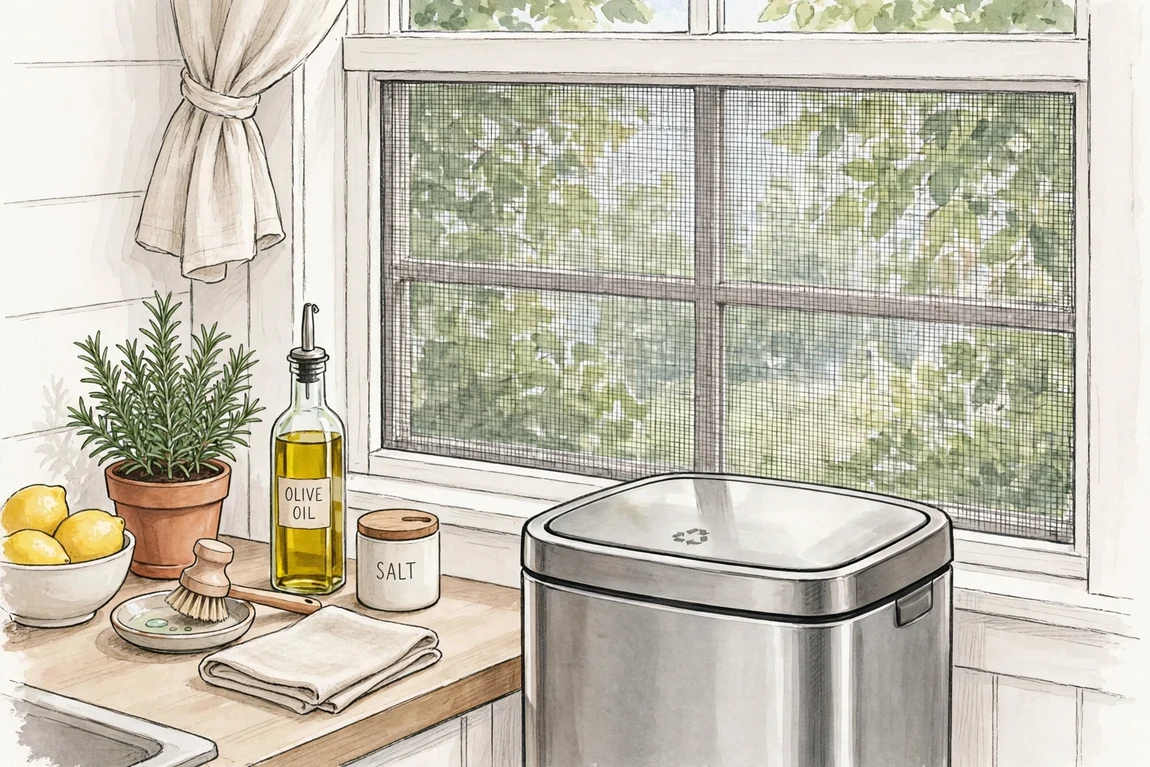
Step 3: Clean the kitchen reset. Wipe counters, sweep under tables, rinse recycling, and store fruit in the refrigerator or a sealed container. Empty small indoor bins daily during an outbreak. A clean, dry bin is far less attractive than a damp one.
As you work through these steps, remember that how to get rid of house flies is mainly about timing. Clean first, trap second, and spray last, if at all.
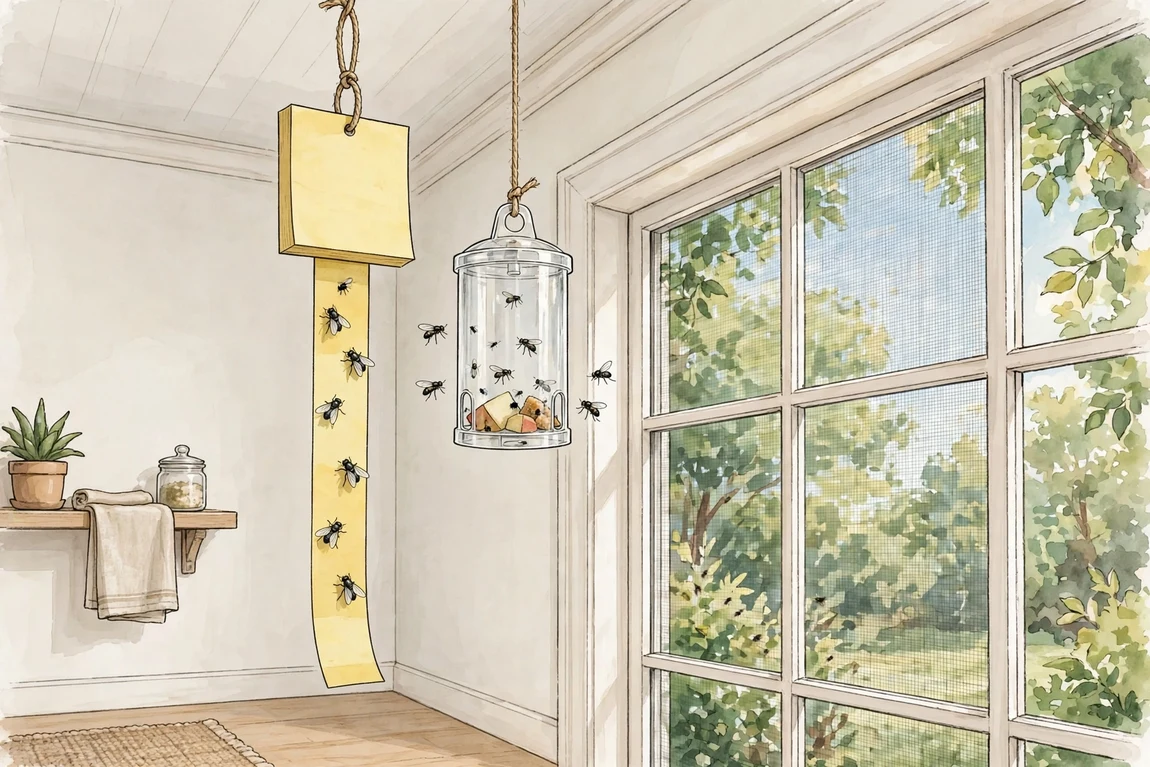
Step 4: Trap and remove the adults left. A flyswatter or vacuum works well for small numbers. Sticky fly tape and baited traps can help, hung out of reach of children and pets, as UMN Extension advises. Place outdoor bait traps away from doors and seating, so you draw flies away from the house.
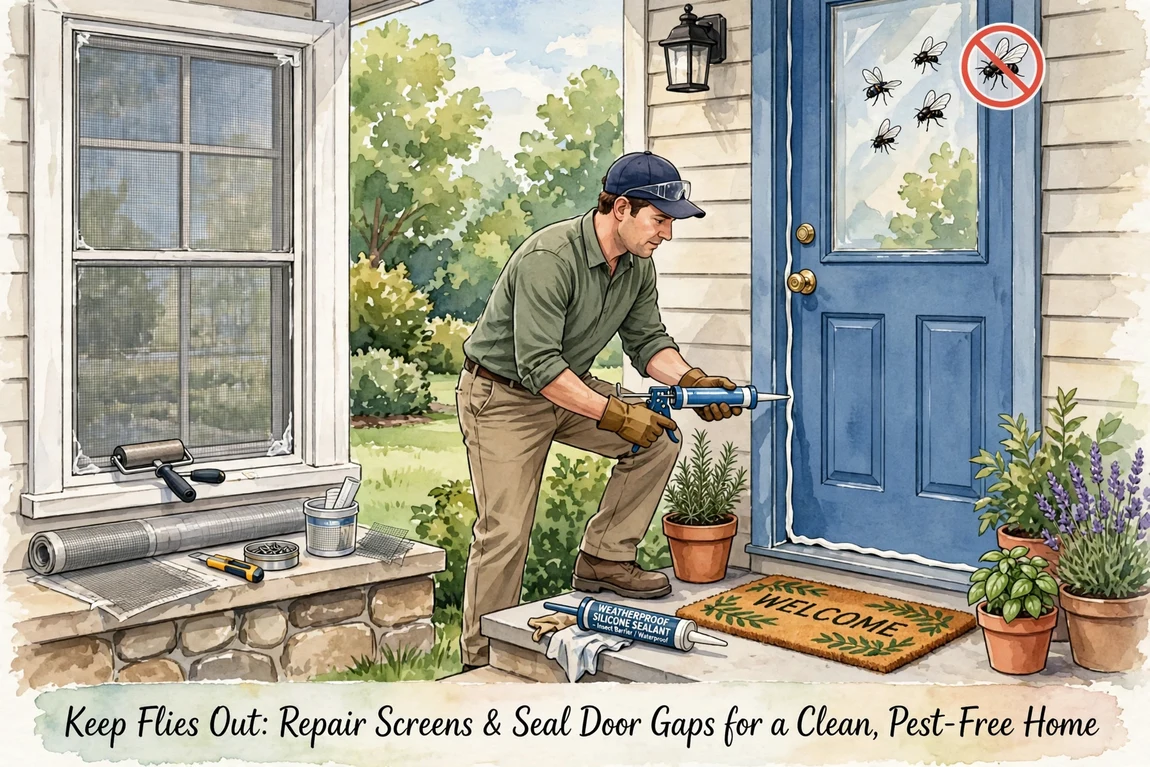
Step 5: Block entry. Repair torn screens, seal gaps around windows and doors, and check vents. UMN Extension recommends 14- to 16-mesh screen on doors and windows. Keep doors closed during peak activity, especially near trash storage.
Step 6: Use insecticide only as a short-term help. Extension guidance is clear that insecticides do not give long-term control on their own. If you use one, choose a product labeled for flies and for the exact site, and follow the label directions exactly. Never spray near food, dishes, or children’s items unless the label allows it.

How to Tell a House Fly From Other Flies
The house fly, Musca domestica, is dull gray, about 1/6 to 1/4 inch long, with four dark stripes on the thorax, according to UMN Extension. The University of Maryland Extension describes adults as about 1/4 inch long and dull gray. They have sponging, non-biting mouthparts, so they do not bite like stable flies.
That detail matters. A biting fly around ankles is likely a stable fly, which looks similar but has bayonet-like mouthparts. A metallic blue or green fly is usually a blow fly, often linked to garbage with meat scraps or a dead animal nearby. Tiny flies over fruit are a different problem again, and our guide to fruit fly control in the kitchen covers that case.
House flies leave small dark specks where they walk and feed. When feeding, they regurgitate liquid to dissolve food, then sponge it up. That habit is why extension experts treat them as more than a nuisance, because they can move germs from waste to food surfaces.
Females lay batches of 75 to 100 small white eggs in garbage, manure, and decaying vegetation, UMN Extension notes. One overlooked bin can therefore produce many adults quickly in warm weather. Breaking that cycle is the heart of lasting control.
Why Flies Keep Coming Into Your Home
Flies follow odor, warmth, moisture, and food. Open trash, pet waste, compost, ripe fruit, and dirty drains all send a strong signal. A can without a tight lid, placed right beside a back door, is an open invitation.
Prevention That Keeps Flies Away
Good prevention is a routine, not a product. Tie plastic garbage bags tightly to reduce odor, clean garbage cans regularly, and use cans with tight-fitting lids placed as far from the house as practical, as UMN Extension recommends. Keep cans as dry and clean as possible, a point the University of Maryland Extension also stresses.
In the yard, remove animal manure, rotting mulch, and lawn clippings promptly. Cover compost piles, and do not let fallen fruit rot under trees. If you feed pets outdoors, pick up leftover food right after feeding instead of leaving it out all day.
Inside, store food in sealed containers, rinse cans and bottles before recycling, and wipe spills at once. Take kitchen trash out before it smells, not after. For a wider routine, see our insect home-proofing checklist for sealing and screening jobs that help with many pests.
Finally, maintain your barriers. Replace damaged screens, seal holes and cracks, and make sure vents stay tightly screened. When you think about how to get rid of house flies for good, this mix of sanitation and exclusion is what extension programs put first, ahead of any spray.
DIY vs. Calling a Professional
For most readers asking how to get rid of house flies without a recurring bill, the DIY route is enough. Most home cases are DIY-friendly. If you can find and remove the breeding material, clean the area, and fix screens, numbers usually fall within one life cycle. Traps and a swatter then handle the remaining adults while no new flies replace them.
Call a licensed pest control operator when the source is hidden or the infestation is heavy. UMN Extension notes that hiring a professional may be the best approach for heavy infestations, and that some insecticides are available only to licensed operators. A pro can also check wall voids, attics, and commercial-style waste areas safely.
Seek help sooner if flies appear suddenly in large numbers indoors in winter or after a smell in a wall. That pattern can point to a dead animal in a chimney, attic, or void. Removing that source, not spraying the room, is the fix, and it may need specialist access.
Safety Notes for Sprays and Traps
Always read and follow the pesticide label. The label tells you where a product may be used, how much to apply, and what protective steps to take. Keep children and pets away until sprays have dried, unless the label says otherwise.
UMN Extension notes that a residual outdoor spray, such as a product containing permethrin or bifenthrin, must be labeled for the site you intend to treat. Spot treatments indoors with an aerosol labeled for flying insects give only short-term relief. The University of Maryland Extension adds that insecticide spraying is generally not effective or recommended inside the home.
Use traps carefully too. Hang sticky tape where hair, curtains, and pets will not touch it. Keep bait traps away from play areas and food preparation surfaces. Wash hands after handling traps, waste, or any pesticide container.
For detailed, source-backed steps, see the UMN Extension guide to flies in the home. It confirms the sanitation, screening, and trapping approach used in this article.
Frequently Asked Questions
What is the fastest way to clear flies indoors?
Remove the breeding source first, then vacuum or swat the adults you see. Sticky tape near a bright window can catch many of the rest. Without source removal, new adults will keep emerging for days.
Why do I still have flies after spraying?
Sprays kill exposed adults but do not remove eggs and larvae in garbage or decaying material. Extension guidance describes indoor spraying as short-term only. Clean the source, dry the area, and seal entry points for a lasting result.
Do house flies bite?
No. House flies have sponging mouthparts and do not bite. If a similar-looking fly is biting ankles or legs, it is more likely a stable fly. Correct identification helps you choose the right breeding site to clean.
How long does it take for numbers to drop?
Once the source is gone, adult numbers usually fall as trapped and swatted flies are not replaced. Because development can take seven to fourteen days, give the routine a full two weeks. Keep cleaning during that period so no new site starts.
When should I call a professional?
Call when you cannot find the source, when numbers stay high after two weeks of sanitation, or when you suspect a dead animal in a wall or attic. Learning how to get rid of house flies is mostly sanitation, but hidden sources are a valid reason to get expert help.