

When your air conditioner stops cooling in the middle of summer, the first question is usually what it will cost to fix. Knowing the typical AC repair cost for common problems helps you judge a quote on the spot, decide whether a repair is worth it, and avoid paying emergency prices for a minor fault.
Most faults are single-component failures. A capacitor, contactor, fan motor, or clogged drain line can shut a system down while the rest of the equipment is still sound, which is why so many repairs land in a fairly narrow price band.
This guide sets out 2026 prices by repair and by replacement part, using published national data. It also explains what pushes a bill higher, which small jobs you can do yourself, and when replacing the system beats repairing it again.
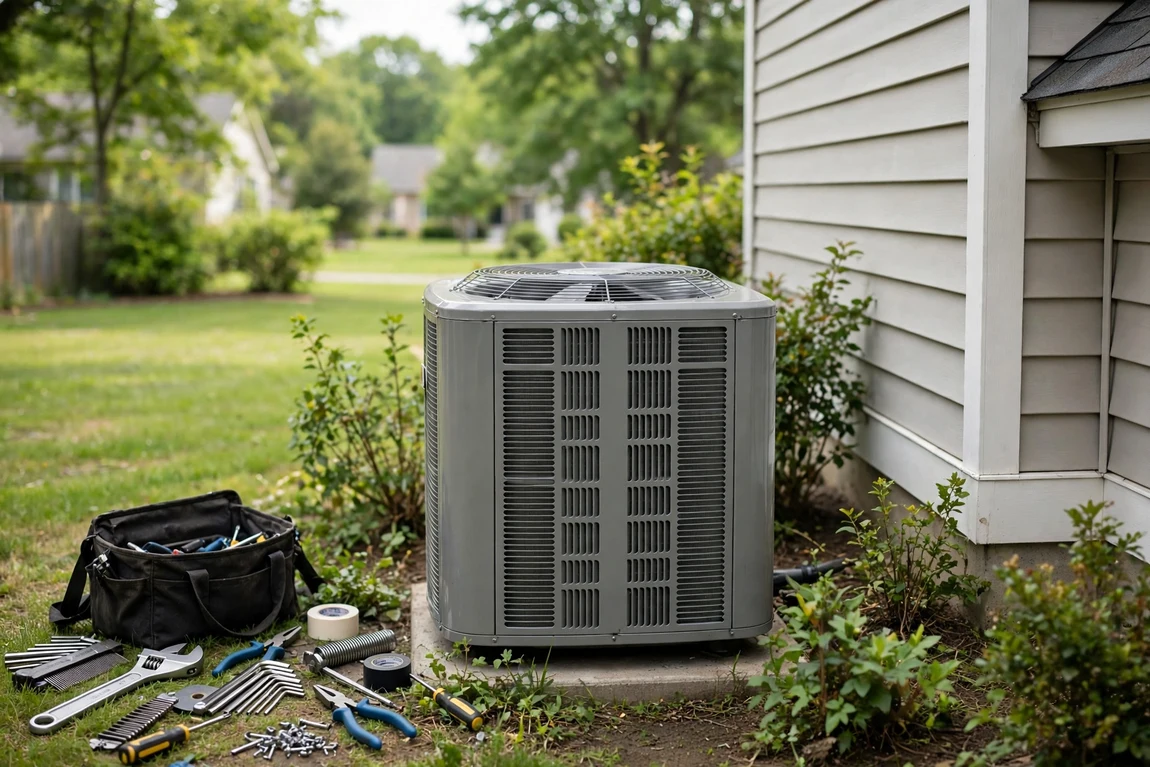
AC repair cost by problem and replacement part
Fixr puts the average repair at $375, with most projects between $250 and $700. You will pay a minimum of about $75 in most cases for a service call fee, and prices can climb as high as $3,000 for a major component such as a compressor.
That spread is normal. A drain line clear-out sits near the bottom of the range, a refrigerant leak sits in the middle, and a compressor or coil replacement sits at the top, close to the point where replacement deserves a serious look.
For the underlying national data, see Fixr’s air conditioner repair cost guide. Compare your quote line by line against its part ranges, and ask the technician to separate the diagnostic fee, parts, and labour on the invoice.
| Repair or replacement part | Typical cost range (Fixr, 2026) | Notes |
|---|---|---|
| Service call / diagnostic fee | From $75 | Minimum charge in most cases; sometimes credited toward the repair |
| Clogged condensate line | $75 to $250 | Common cause of water leaks and shutdowns |
| Capacitor replacement | $100 to $400 | Common cause of a unit that hums but will not start |
| Thermostat replacement | $150 to $500 | Depends on basic versus smart thermostat |
| Refrigerant recharge | $100 to $600 | Only after any leak has been found and fixed |
| Refrigerant leak repair | $200 to $1,500 | Average around $800, including refilling the lines |
| Blower motor replacement | $300 to $2,000 | Range reflects motor type and system size |
| Evaporator coil replacement | $400 to $2,700 | Major job; compare against system replacement |
| Compressor replacement | $600 to $3,000 | Most expensive common repair; warranty status matters |
| Central AC repair overall | $150 to $2,000 | Most common repairs fall between $250 and $700 |
Ask for the failed part by name before you approve work. A quote that simply says the unit needs repair, without naming the component, its price, and the labour involved, is hard to compare and hard to challenge later.
Warranty status can change these figures a lot. Many systems carry five to ten years of basic parts cover, and some carry longer extended cover, so a part that lists at several hundred dollars may cost you only the labour to fit it.
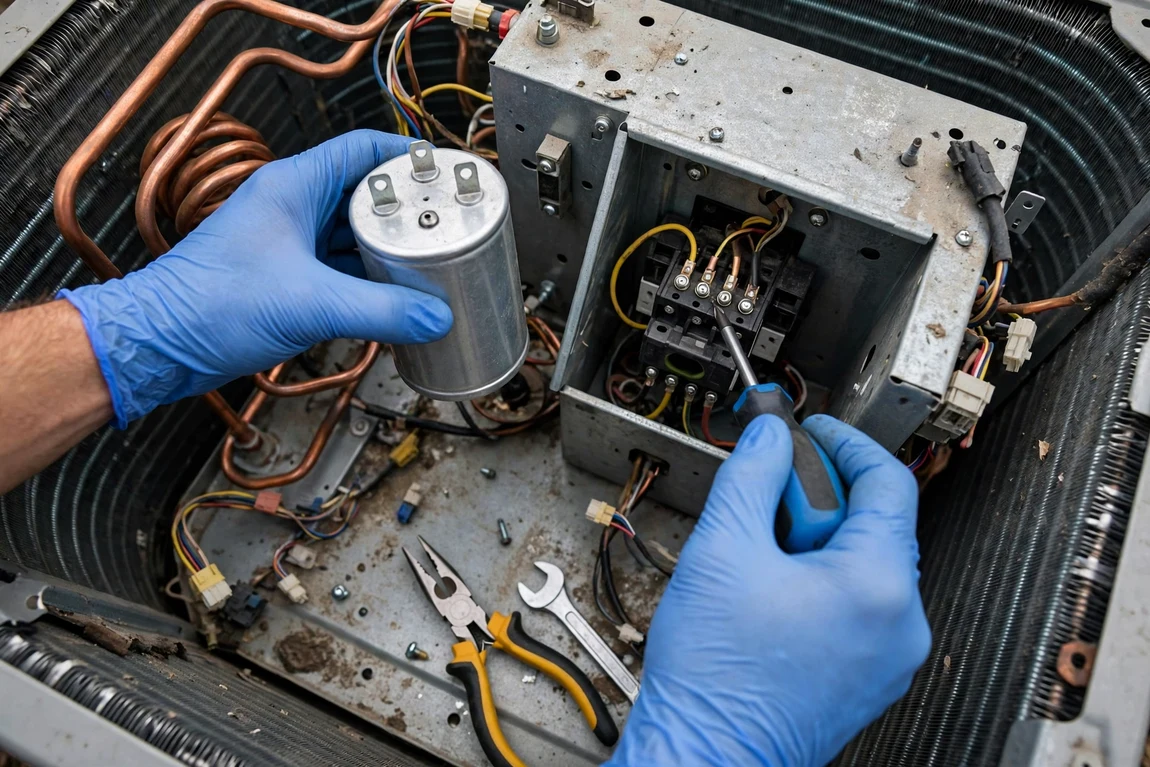
Factors that affect cost
The same fault can produce very different bills in different homes. An AC repair cost depends on the system’s age, type, and accessibility, on your local labour rates, and on whether you need help during normal hours or in an emergency.
The failed component
The part itself is the biggest driver. Small electrical parts such as fuses, relay switches, and capacitors cost $75 to $400 fitted, while circuit boards run $100 to $700 and compressors and coils run into the thousands.
Labour follows the same pattern. A capacitor swap is quick, while a coil or compressor change involves recovering refrigerant, brazing, vacuuming the lines, and recharging, which takes hours and specialist equipment.
Labour, timing, and emergency call-outs
Fixr lists typical HVAC labour at $75 to $175 per hour. Emergency work, especially on weekends, holidays, or during a heatwave, can run two to three times the normal rate, at $150 to $300 per hour.
If the house is safe and the weather is bearable, waiting for a standard weekday slot can save a significant sum. If indoor heat is a health risk for anyone in the home, treat the call as urgent and say so when you book.
Age, refrigerant, and system type
Older systems need major repairs more often, and their parts can be harder to source. Refrigerant type matters too, because a system that has leaked must be repaired and recharged by a certified technician, never simply topped up repeatedly.
System type sets the baseline. Fixr lists window units at $75 to $350 to repair, ductless mini-splits at $300 to $1,000, and central systems at $150 to $2,000, reflecting how many components each design has. If you are weighing a heat pump instead, our guide to heat pump installation costs covers the replacement side of that decision.
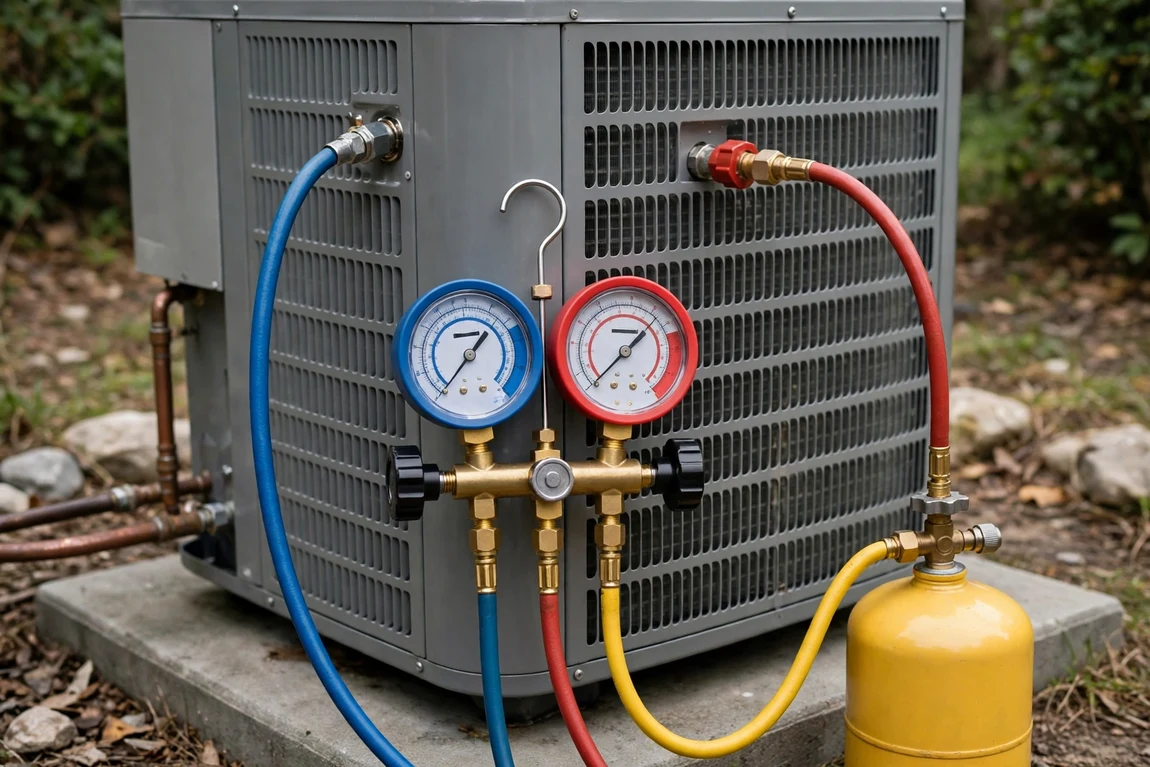
DIY vs hiring a professional
A few maintenance tasks are safe and sensible to do yourself. Changing a clogged filter, clearing leaves from around the outdoor unit, checking that vents are open, and gently flushing an accessible condensate drain can all restore airflow and cooling.
Almost everything beyond that belongs with a licensed technician. Compare the saving on an AC repair cost with the risk before opening a condenser cabinet, because capacitors hold an electrical charge, refrigerant handling is regulated, and a wrong diagnosis wastes money on parts you did not need.
Professionals also test the whole system, not just the obvious fault. A good technician checks airflow, electrical draw, and refrigerant pressures together, which often reveals the underlying cause that made the first component fail.
Keep a simple record of each visit. Dates, part names, and prices make the next quote easier to judge, and they build the repair history you will need when you eventually weigh up replacement.

Repair or replace: how to decide
Age is the first test. If a system is near the end of its expected life and needs a compressor or coil, replacement often wins, while a young system with a failed capacitor is almost always worth repairing.
Use the 50 percent guide that Fixr recommends. If a repair will cost more than half the price of a new system, replacement is usually the better long-term option, especially when the new system also cuts running costs.
Frequency is the second test. One repair in several years is normal, while breakdowns every summer, rising energy bills, and uneven cooling together suggest the equipment is wearing out rather than suffering bad luck.
Our published guide to central air installation costs sets out current replacement prices by home size, so you can compare a major repair quote against a realistic new-system budget before you decide.
Ways to keep repair bills down
Book an annual tune-up before the cooling season. Cleaning, electrical checks, and a drain flush catch small problems early, and a maintained system is less likely to fail on the hottest day of the year.
Check your warranty before you pay for any part. Have the model and serial number ready when you call, and ask the contractor to confirm cover with the manufacturer before ordering a compressor or coil.
Get more than one quote for any major job, and compare each AC repair cost estimate on the same basis. Prices for the same compressor change can vary widely between firms, and a second opinion sometimes finds a cheaper fault, such as a failed capacitor, behind a dramatic symptom.
Frequently asked questions
What is the average AC repair cost in 2026?
Fixr puts the average at $375, with most projects between $250 and $700. Minor repairs start from a $75 service fee, while a compressor replacement can reach $600 to $3,000 depending on the system and its warranty status.
Why is my AC running but not cooling?
Common causes include a clogged filter, a dirty outdoor coil, low refrigerant from a leak, or a failing capacitor or fan motor. Start with the filter and the outdoor unit, then call a technician if cooling does not improve.
Should I repair or replace a 15-year-old air conditioner?
It depends on the fault. A small electrical repair is still sensible, but a compressor or coil failure at that age usually makes replacement the better buy, particularly if repairs have become frequent or energy bills have risen.
How much is an emergency call-out?
Expect emergency labour at roughly $150 to $300 per hour, or two to three times the standard rate, according to Fixr. Ask for the call-out fee and the hourly rate on the phone before the technician is dispatched.
Can I recharge the refrigerant myself?
No. Refrigerant work requires certification, specialist gauges, and leak testing, and a system that needs recharging has a leak that must be fixed first. Repeated top-ups without a repair waste money and release refrigerant into the air.