

Few home emergencies ruin a morning like a cold shower and a puddle around the tank. Before you panic-order the first unit you find, it helps to know the going water heater replacement cost for a standard tank model. In 2026, Angi reports a national average of $1,348 for a like-for-like tank replacement, with most jobs landing between $882 and $1,826 installed, based on 30,979 verified projects.
This guide covers standard storage tank water heaters only: what the unit and labor cost by size and fuel type, which code upgrades add to the bill, and how to tell a fair quote from an inflated one. If you are curious about going tankless instead, that is a different job with different pricing, covered in our separate guide linked below.
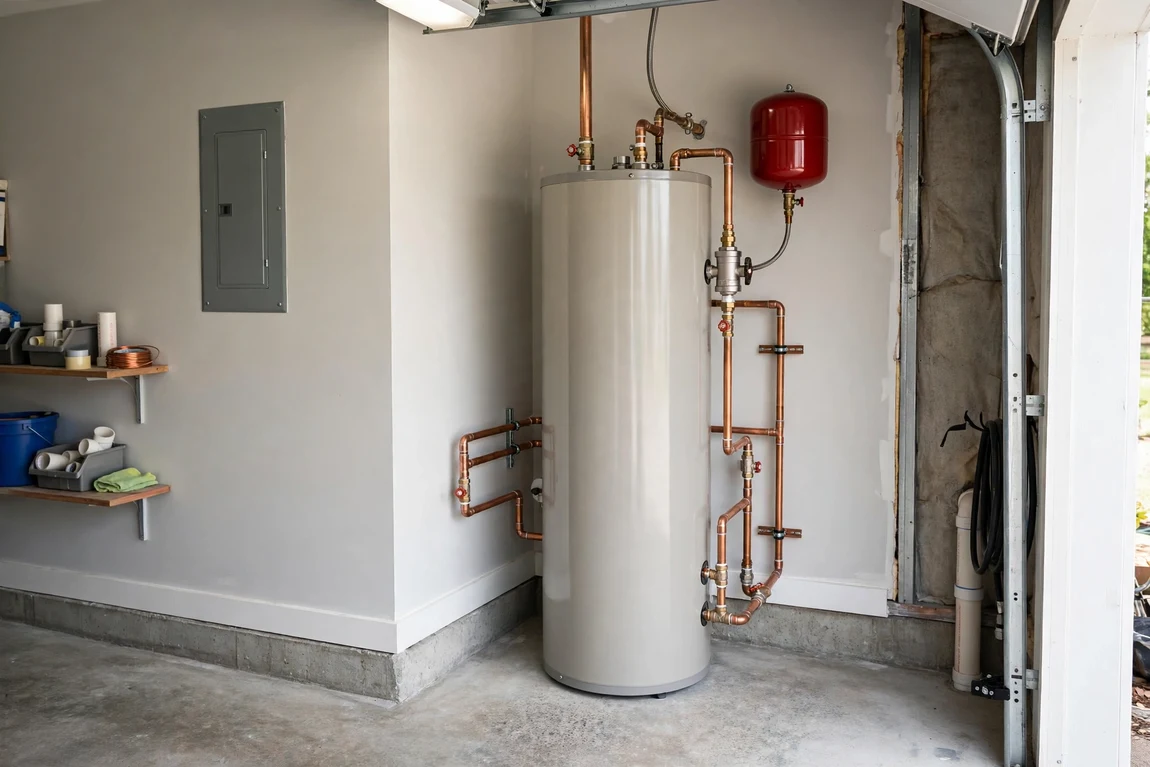
Signs Your Tank Water Heater Needs Replacing
A standard tank heater typically lasts 6 to 12 years. Once yours passes the eight-year mark, start watching for the warning signs rather than waiting for a flood.
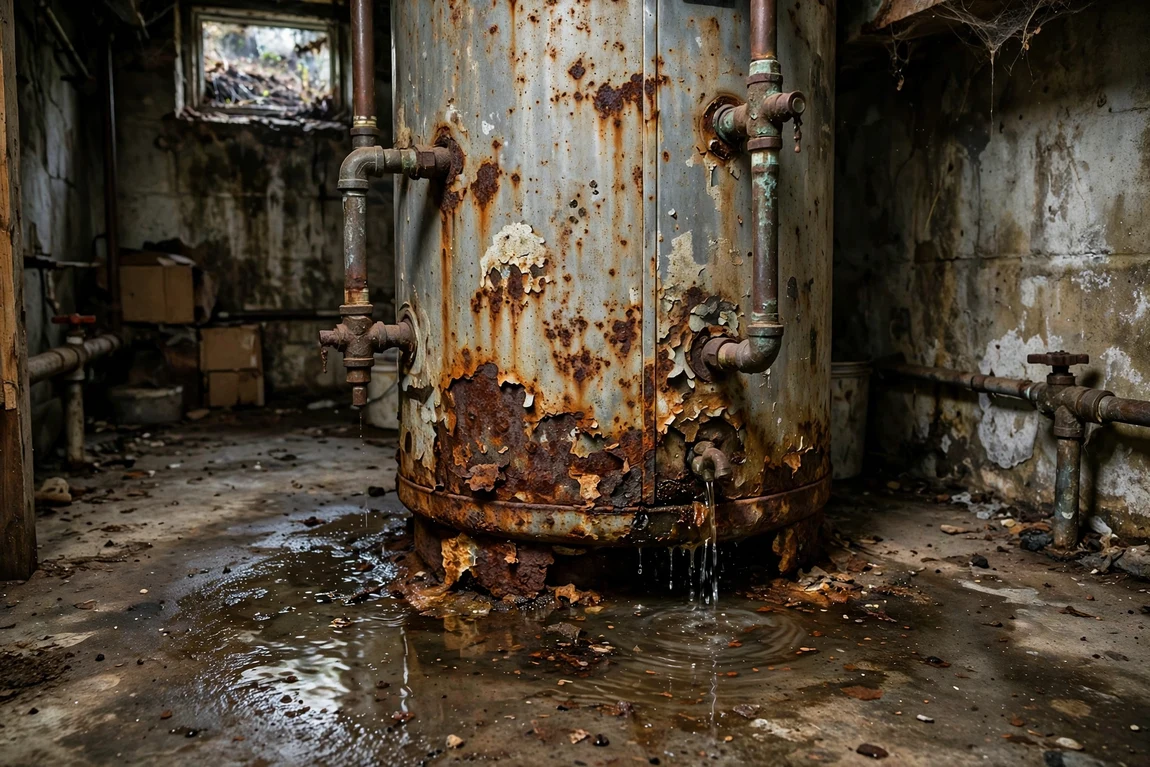
Rusty or discolored hot water suggests corrosion inside the tank. Rumbling and popping sounds mean sediment has built up on the bottom, forcing the burner or elements to work harder.
Moisture or pooling around the base is the most serious sign. A tank that has started to leak cannot be repaired, because the pressure vessel itself has failed.
Running out of hot water faster than you used to, or water that never quite gets hot, can also point to an aging unit, though a failed element or thermostat is sometimes a cheaper fix.
How Much Does Water Heater Replacement Cost in 2026?
For a straightforward swap, the water heater replacement cost most homeowners pay falls between $882 and $1,826, with an average of $1,348 in Angi’s October 2026 data. Broader guides that include large tanks and difficult installs put the full range for conventional tanks at $600 to $3,100.
That installed price covers the new tank, labor, and removal of the old unit on a typical job. It assumes the new heater goes in the same spot, on the same fuel, with no major plumbing changes.
The figures in this guide are drawn from The Pricer’s 2026 breakdown of Angi and HomeGuide pricing, which compares thousands of verified replacement projects.
Tank Replacement Prices by Size and Fuel Type
Capacity and fuel are the two biggest pricing levers. Electric tanks are usually cheaper to install because there is no venting, while gas models cost more but often cost less to run.
| Tank Water Heater Type | Typical Installed Cost in 2026 | Best For |
|---|---|---|
| Standard tank, like-for-like average | $1,348 average ($882 – $1,826 typical) | Most homes replacing an existing tank |
| 40-gallon electric tank | $900 – $1,600 | 1–2 people, 1 bathroom |
| 40-gallon gas tank | $1,000 – $1,800 | Small households with gas service |
| 50-gallon electric tank | $700 – $1,800 | Most common family size |
| 50-gallon gas tank | $1,000 – $3,100+ | Most common family size, gas |
| 75-gallon gas tank | $1,600 – $2,500 | Large families, big soaking tubs |
| Permits | $25 – $300 | Required in most jurisdictions |
| Labor, standard swap | $400 – $900 | Included in the installed prices above |
A 50-gallon tank is the most common residential size, and a like-for-like swap usually lands near the middle of the range. Undersizing a tank to save money backfires, because an overworked heater wears out sooner.
Thinking about ditching the tank altogether? Read our guide to tankless water heater cost for the installation prices and upgrade work that option involves, then compare it honestly against the tank prices above.
Factors That Affect Your Final Price
Tank size. Bigger tanks cost more to buy and take longer to install. Moving from a 40-gallon to a 50-gallon unit is a modest step up; jumping to 75 gallons is a bigger one.
Fuel type. Gas installs must cover venting, gas connections, and combustion safety checks. Switching fuels almost always adds line work, so staying with your current fuel keeps the water heater replacement cost at the low end of the range.
Location and access. A heater in an open garage is a quick swap. One wedged into a tight closet, attic, or crawl space takes more labor to remove and set, and tight spaces can limit your model choices.
Code upgrades. This is the line item that surprises people. Current code may require an expansion tank, a drain pan, a new shutoff valve, updated connectors, or seismic strapping where applicable, on top of the permit fee of $25 to $300.
Emergency timing. A heater that fails on a weekend gets weekend pricing. If your tank is old but still working, replacing it on a planned weekday schedule is almost always cheaper.
Repair or Replace?
Not every problem needs a new tank. A faulty thermostat, a burned-out heating element, or a pilot assembly issue can often be repaired for a few hundred dollars.
Use the age test. If the heater is under six years old and the tank itself is sound, repair usually wins. If it is past eight to ten years and needs a major part, replacement is the better spend.
A leaking or heavily corroded tank settles the question. There is no safe repair for a failed pressure vessel, and waiting risks a full tank of water on your floor.
DIY vs. Hiring a Licensed Plumber
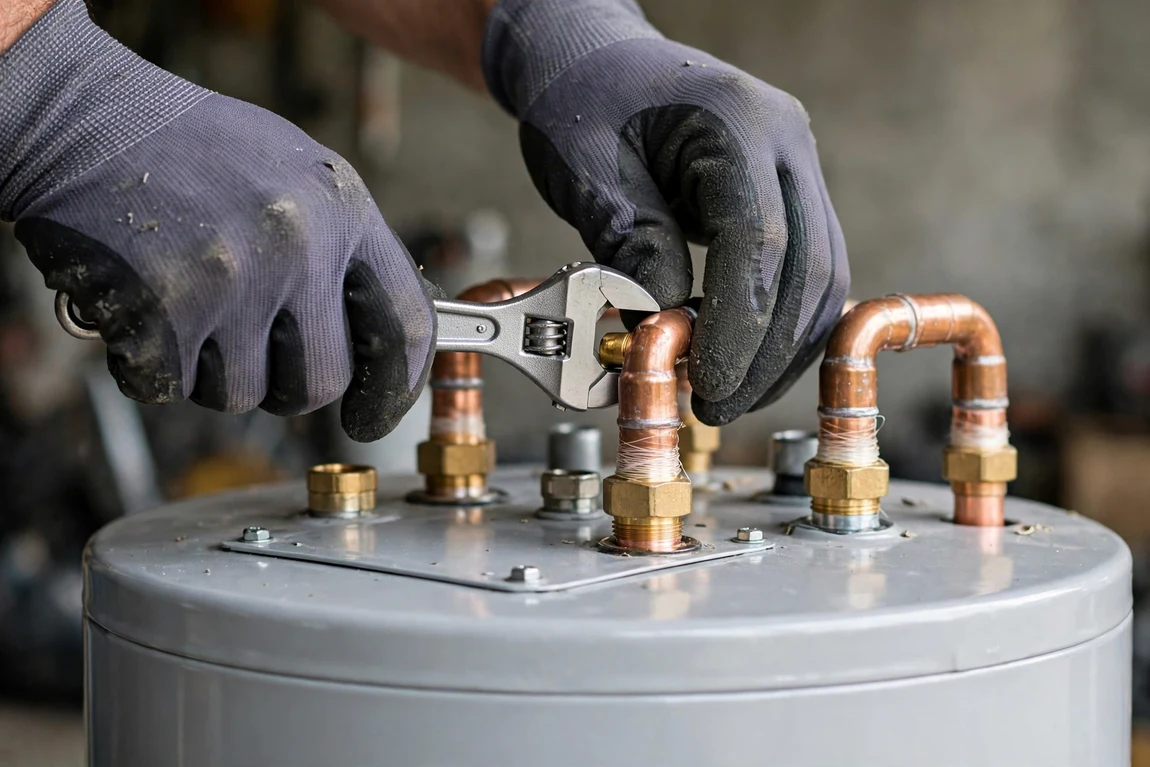
A tank swap looks simple, and experienced DIYers do handle electric models in some areas. But the job combines heavy lifting, pressurized water lines, and either gas or high-voltage electricity.
Gas work in particular leaves no room for error. A bad venting job can leak carbon monoxide, and many jurisdictions require a licensed plumber and a permit for the install to be legal and insurable.
Professional installation typically adds $400 to $900 in labor, and it buys you code compliance, proper disposal of the old tank, and a workmanship warranty. For most homeowners, that is money well spent.
If you do hire out, get itemized quotes that separate the unit, labor, permit, haul-away, and any code upgrades, so a low headline price cannot hide missing pieces.
A Note on Tax Credits in 2026
Older guides often promise a federal tax credit for efficient water heaters. For standard tank replacements, plan your budget without one.
The former federal Energy Efficient Home Improvement Credit for heat pump water heaters ended for equipment placed in service after December 31, 2025. Local utility rebates may still exist, so it is worth a quick check with your power or gas company before you buy.
Frequently Asked Questions
How long does a replacement take?
A standard like-for-like swap takes two to four hours in most cases. Add time if the plumber needs to change venting, move the unit, or bring the install up to current code.
What size tank does my home need?
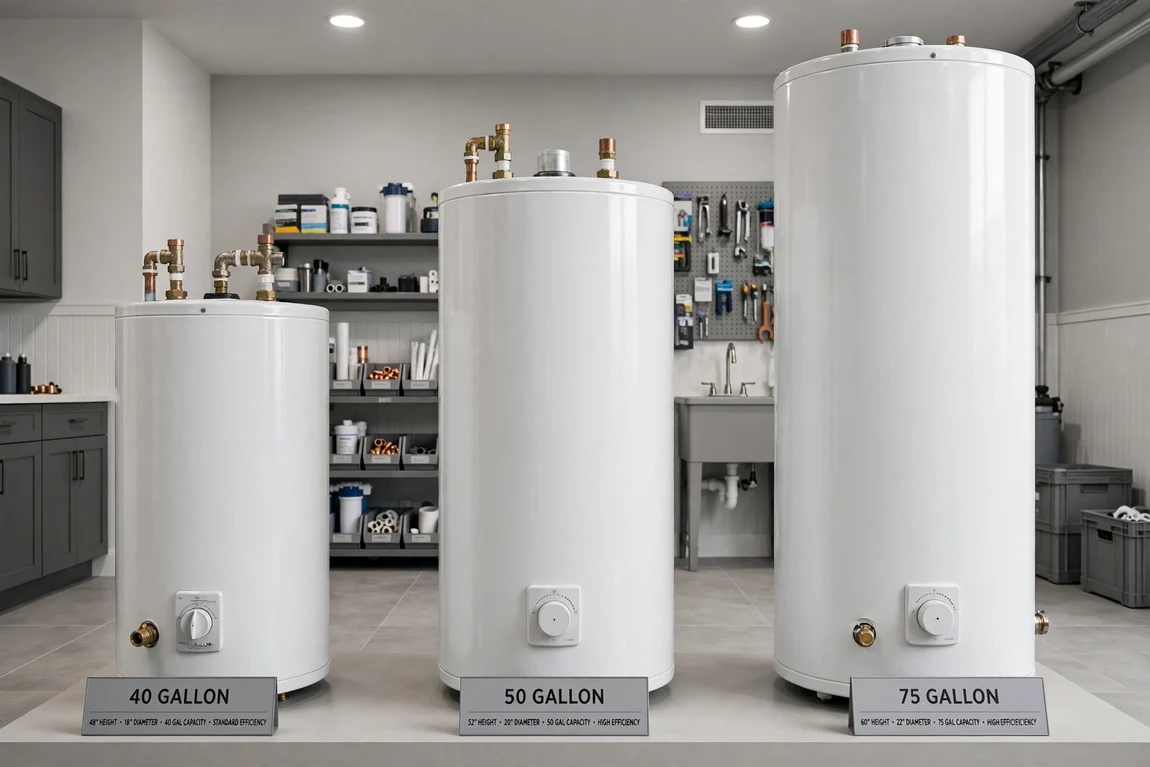
A 40-gallon tank suits one to two people, a 50-gallon suits three to four, and larger households or homes with big tubs do better with 75 gallons. Count bathrooms and peak morning use, not just headcount.
Why did my quote come in above the average?
Quotes above the typical water heater replacement cost range usually include code upgrades, a larger or power-vent model, difficult access, or emergency scheduling. Ask for the itemized breakdown before you judge it.
Can I replace a gas heater with an electric one?
Yes, but it is rarely the cheap option. You may need a new dedicated circuit and panel capacity, plus capping the gas line and vent, which erases the savings on the unit itself.
Should I flush my new tank every year?
Yes. Draining a few gallons, or a full flush annually in hard-water areas, clears sediment, keeps the heater quiet and efficient, and helps it reach its full 6 to 12 year lifespan.
The Bottom Line
Budget $882 to $1,826 for a standard like-for-like tank swap, with $1,348 as the national average, and keep a little extra aside for permits and code items. Choose the right size, stay with your current fuel, and schedule before the old tank fails.
Your exact water heater replacement cost will depend on size, fuel, and access, but done on your terms instead of in an emergency, this is one of the most predictable big-ticket jobs in home maintenance.