

If you are tired of dragging hoses across the lawn every summer, an in-ground irrigation system can save you hours every week. Before you book an installer, it helps to understand the sprinkler system installation cost in 2026, what drives that price up or down, and how water savings help pay you back. For most U.S. homeowners, the total falls between $2,500 and $6,500 for a standard residential yard, depending on yard size, number of zones, soil, and the heads and controller you choose.
This guide breaks down prices by zone and yard size, compares drip, spray, and rotor systems, and explains when DIY makes sense versus hiring a pro. Prices vary by region and yard size.
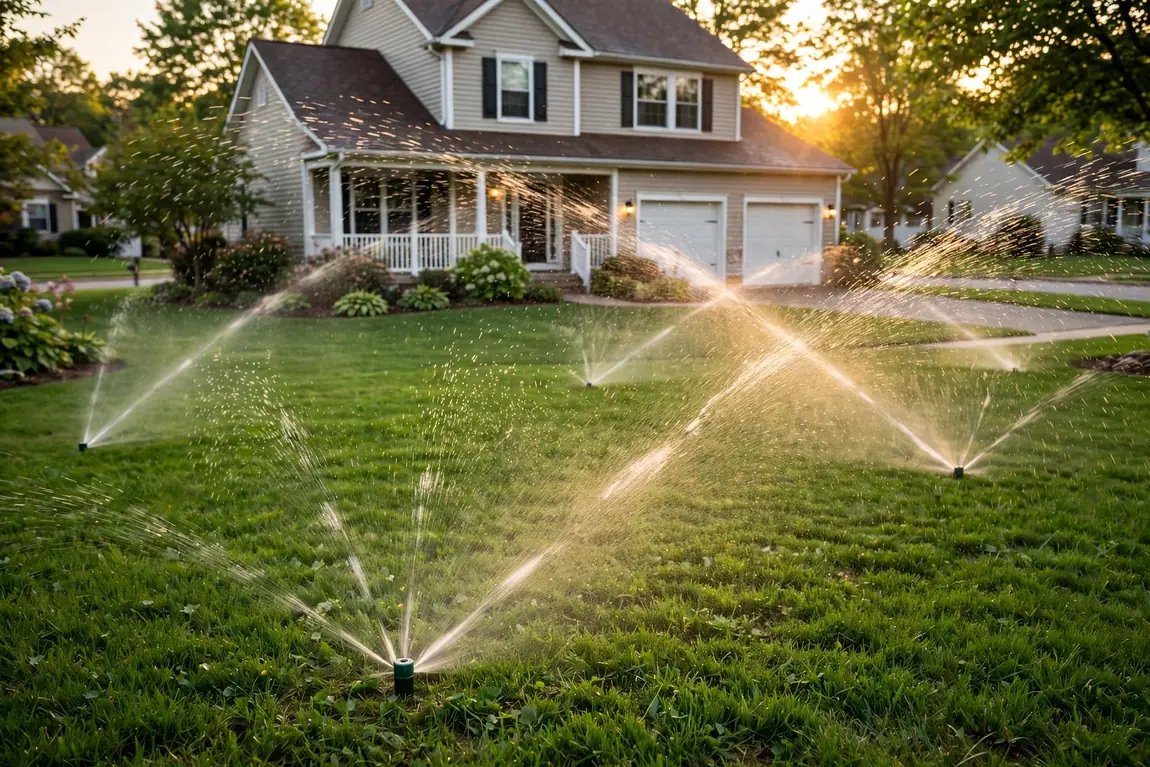
Lawn sprinklers watering a green yard — a well-designed system waters evenly and cuts outdoor water waste.
Understanding sprinkler system installation cost in 2026
The national average sprinkler system installation cost is about $3,800 to $4,200 for a typical 1/4-acre lot with six to eight zones. Smaller yards can start near $1,800 to $2,500, while large or complex properties with smart controls, drip lines for beds, and difficult soil can reach $8,000 to $12,000 or more. Labor is usually 40% to 50% of the total, with parts, trenching, permits, and the backflow preventer making up the rest.
Installers price most jobs per zone and per square foot: roughly $0.35 to $0.65 per square foot, or $400 to $900 per zone. A zone is a group of heads run by one valve — your yard is split into zones because home water pressure cannot run every head at once. More zones mean more pipe, valves, and labor, so zone count is one of the fastest ways the sprinkler system installation cost rises.
| Cost Item | Average Range (2026) | Notes |
|---|---|---|
| Cost per zone | $400 – $900 per zone | Most homes need 6–12 zones |
| 1/4 acre yard | $2,500 – $4,500 | Typically 6–8 zones |
| 1/2 acre yard | $4,000 – $7,500 | Typically 8–12 zones |
| 1 acre yard | $6,500 – $12,000+ | 12–20+ zones |
| Spray head system | $0.35 – $0.55 per sq ft | Small, flat lawn areas |
| Rotor system | $0.45 – $0.65 per sq ft | Medium to large lawns |
| Drip irrigation | $300 – $700 per zone | Beds and gardens, lowest water use |
| Smart controller add-on | $150 – $350 + $100 – $200 install | Weather-based, app control |
| Backflow preventer | $150 – $450 installed | Required by code in most areas |
| Annual maintenance | $150 – $350 per year | Start-up plus mid-season check |
| Winterization / blowout | $75 – $150 per visit | Essential in freezing climates |
Ask every bidder to itemize zones, heads, controller, and backflow preventer so a low bid cannot hide missing items.
Factors that affect sprinkler system installation cost
Yard size and layout. A flat, rectangular lawn is cheapest to irrigate. Slopes, curves, trees, walkways, and separate beds all add zones and heads. Pairing irrigation with low-maintenance landscaping ideas can reduce repeat trenching and replanting.
Soil and trenching. Sandy or loamy soil trenches quickly. Clay, rock, and tree roots slow the crew and can add $500 to $1,500. Replacing sod also costs more than working in bare new-construction soil.
Water pressure. Low pressure or an undersized meter may require a larger main line, a booster pump ($400–$1,200), or a separate irrigation meter. Your installer should test pressure and flow before finalizing the design.
Permits and code. Many cities require a permit ($50–$300) and annual backflow testing ($50–$100). HOA rules can also limit watering days.
Parts quality. Commercial-grade rotors and pressure-regulating heads cost more up front but reduce leaks and repairs.
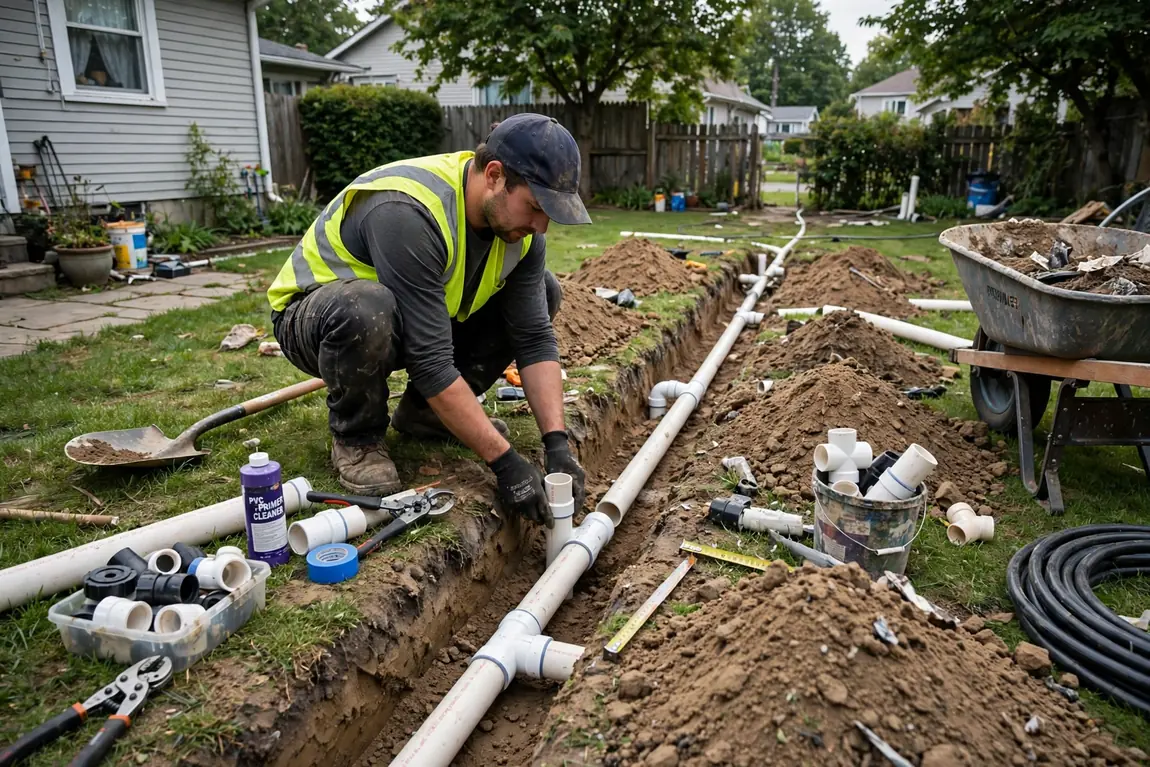
A worker trenching and laying underground lines — labor and soil conditions are a major part of the total price.
Types of sprinkler systems compared
Spray heads
Pop-up spray heads throw a fixed fan of water 5 to 15 feet. They are inexpensive and ideal for small areas and tight corners, but can cause runoff on slopes if run times are too long.
Rotor heads
Rotors rotate a single stream 15 to 50 feet and are the workhorse for medium and large lawns. They apply water slowly and evenly and need fewer heads per zone. Never mix rotors and sprays on one zone — they deliver water at different rates.
Drip irrigation
Drip lines deliver water slowly at the roots of shrubs, trees, and garden beds, using 30% to 50% less water than overhead watering for beds. Most complete designs combine rotors or sprays for turf with drip for beds, balancing sprinkler system installation cost against long-term savings.
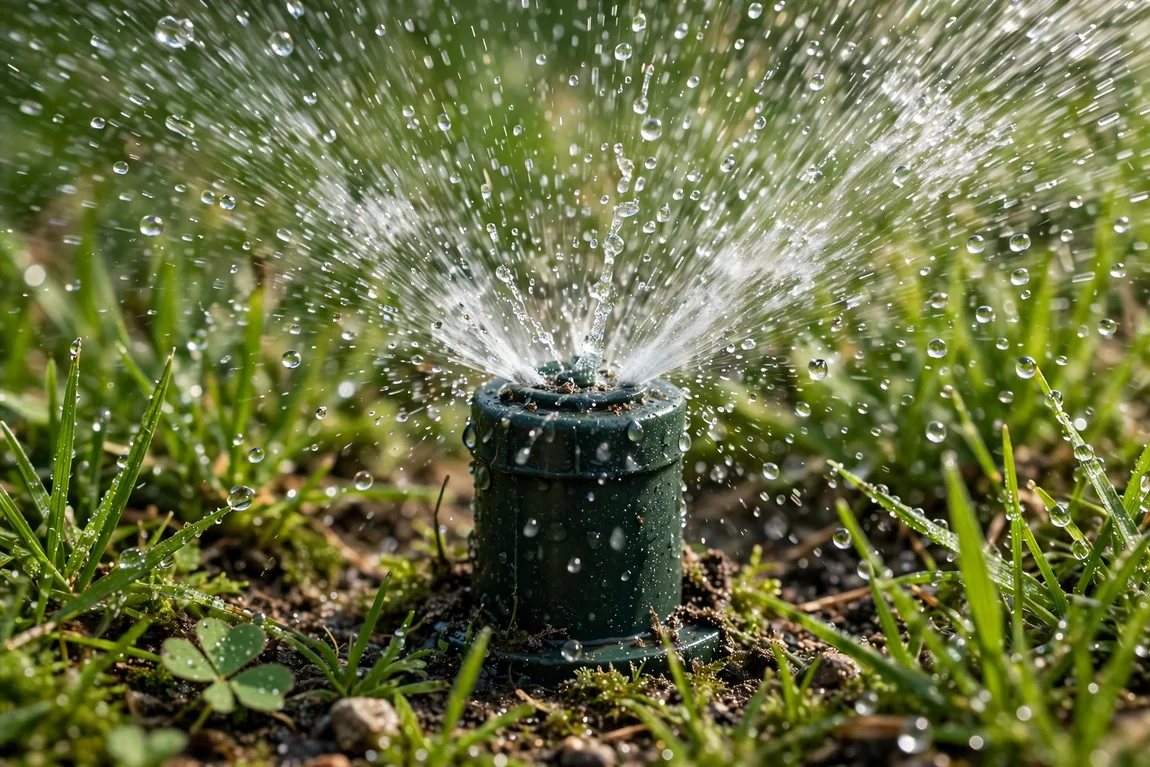
Pop-up sprinkler heads in close-up — matching head type to lawn size keeps coverage even and prevents dry spots.
DIY vs. professional installation
A DIY kit for a small yard costs $800 to $2,000 in parts, plus $200 to $500 to rent a trencher — a 30% to 50% labor saving if you are comfortable with plumbing and digging. Risks include dry spots, shallow pipe that bursts in winter, and a backflow preventer that fails inspection.
Professional installation adds roughly $1,500 to $3,500 in labor, but includes design, pressure testing, permits, and a warranty (often one to three years). For yards over 1/4 acre or sloped lots, the pro route is often cheaper once mistakes are counted. If you are also budgeting a project from our guide to deck building cost, run sleeves under walkways before surfaces go down.
Water savings and smart controllers
The EPA estimates homes can waste up to 50% of outdoor water through evaporation, wind, and poor timing. A well-designed system with matched heads, a rain sensor, and cycle-and-soak programming can cut outdoor use by 20% to 40%. A WaterSense smart controller ($150–$350) adds weather-based adjustments that skip watering around rain, often saving about 7,600 gallons a year for an average home.
At typical rates, that is $150 to $400 saved per year, so a smart controller pays for itself in one to two seasons. Many utilities offer $75 to $250 rebates, too. Over a 15- to 20-year life, lower bills are a major offset to the initial sprinkler system installation cost.
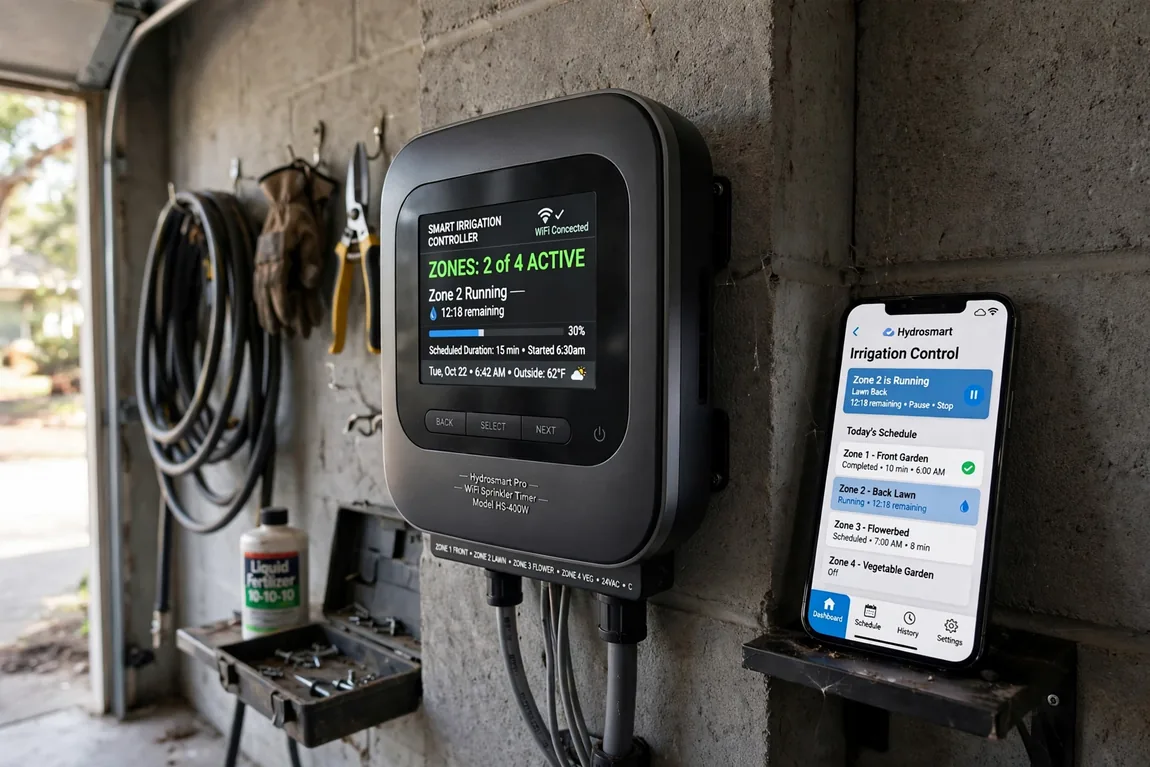
A smart irrigation controller with app control adjusts watering to the weather and pays for itself quickly.
Annual maintenance and winterization
Budget $150 to $350 per year. A spring start-up ($75–$150) includes pressurizing lines, testing the backflow preventer, and adjusting heads. In cold climates, a professional blowout ($75 to $150) prevents cracked pipes that can cost $300 to $800 to repair. Pair it with our guide on how to winterize your home. Between visits, clean filters and watch for soggy spots that signal a leak.
How to get an accurate quote and save money
- Get at least three itemized quotes listing zone count, head brand, controller model, and warranty.
- Ask for a scaled design drawing — head-to-head coverage should be shown, not just promised.
- Install in early spring or fall when crews are less booked; off-peak discounts of 10% to 15% are common.
- Choose drip for beds and pressure-regulating heads for slopes to cut water use.
- Confirm who pulls the permit, arranges the backflow test, and repairs sod after trenching.
When you compare bids on sprinkler system installation cost, judge the design as carefully as the price — a cheap system with dry corners costs more in retrofits later.
Frequently asked questions
How much does it cost to install a sprinkler system for a 1/4-acre yard?
Most homeowners pay $2,500 to $4,500 in 2026, typically with six to eight zones, depending on soil, head type, controller, and local labor rates.
How many zones do I need?
Plan on one zone per 800 to 1,200 square feet with spray heads, and fewer, larger zones with rotors. Sun, shade, and drip beds should each be zoned separately.
Does a sprinkler system add value to a home?
A working system signals a cared-for lawn and can help a listing stand out, especially in dry regions. It rarely returns its full cost at resale, but it protects landscaping and curb appeal.
How long does installation take?
A professional crew usually finishes in one to three days. DIY commonly takes two to four weekends.
Can I install a sprinkler system myself legally?
In many places, yes, but most jurisdictions require a permit and an approved backflow preventer. Check local code and call 811 before you dig so utilities are marked for free.