

If your basement floods after heavy rain or your old pump has started cycling non-stop, your first question is probably a practical one: what does sump pump installation cost in 2026? The honest answer is that most homeowners pay between $1,200 and $2,800 for a complete professional job, including the pump, a new basin, and labor. A simple replacement in an existing pit can cost $500 to $900, while a new system with a battery backup can reach $3,500 or more. Prices vary by region and home, so use these ranges to compare quotes fairly.
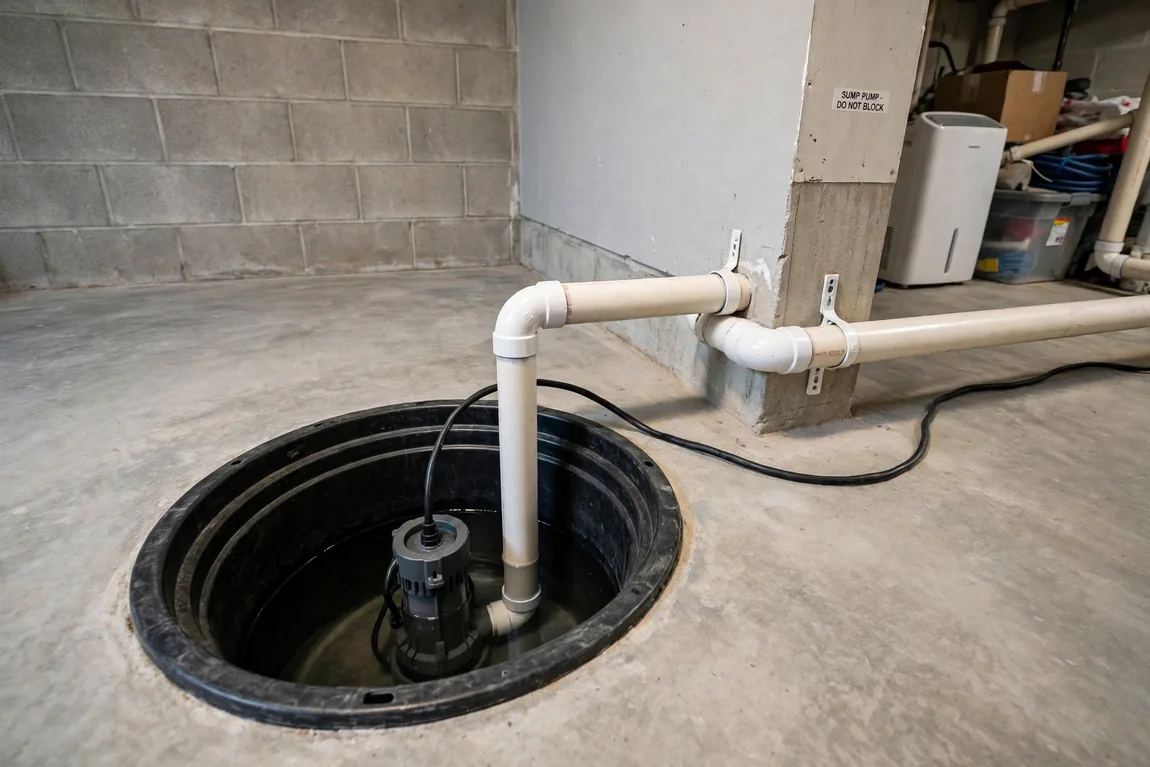
A submersible pump seated in a sealed basin is the most common setup in US basements.
What the sump pump installation cost includes in 2026
The table below shows typical 2026 US price ranges for each part of the job, based on the ranges published by major home-cost guides such as Angi and HomeAdvisor. Your total sump pump installation cost depends on which of these pieces your home actually needs.
| Item | Typical cost (parts) | Installed / with labor |
|---|---|---|
| Pedestal sump pump (1/3–1/2 HP) | $60–$200 | $500–$900 (in existing basin) |
| Submersible sump pump (1/3–1/2 HP) | $150–$450 | $700–$1,300 (in existing basin) |
| New sump basin (pit) and lid | $50–$150 | $400–$800 extra if concrete must be cut |
| Installation labor (new system) | — | $600–$1,500 |
| Battery backup pump system | $200–$600 | $400–$1,000 installed |
| Discharge pipe, check valve and fittings | $50–$200 | Included in most quotes |
| Total installed range (new system) | — | $1,200–$2,800 typical; up to $3,500+ with backup |
Replacement is almost always cheaper than a first-time installation. If a working basin, discharge line, and outlet are already in place, a plumber may swap the pump in under two hours. A first-time system takes longer because the crew must dig the pit, set the basin in gravel, and route discharge water away from your foundation.
What affects the price?
Several factors move your quote up or down, and knowing them helps you read estimates with confidence:
- Pump type and horsepower. Pedestal pumps are cheaper and easier to service, but louder. Submersible pumps cost more, run quietly, and handle higher volumes. Most homes do well with 1/3 HP; homes with a high water table often need 1/2 HP or more.
- New basin vs. existing pit. Cutting concrete, digging, and hauling soil away is the single biggest labor cost in a new installation.
- Battery backup. A backup pump adds $400 to $1,000 installed, but it keeps working during a power outage — exactly when storms are most likely to flood your basement.
- Discharge distance. Longer pipe runs, freeze protection, and connecting to a dry well or storm drain all add materials and time.
- Permits and electrical work. Some areas require a permit, and a new dedicated outlet or GFCI circuit installed by an electrician can add $150 to $400.
- Regional labor rates. Labor in the Northeast and West Coast commonly runs 20–40% higher than in the Midwest and South.
Pedestal vs. submersible: which type is right?
A pedestal pump sits above the basin on a column, with only the intake in the water. It costs less and is easy to reach for repairs, but it is noisier and takes up floor space. A submersible pump sits sealed inside the basin under a lid. It is quiet, out of sight, and better for finished basements, but costs more and is slightly harder to service.
When you compare quotes, ask which type is included, because a low sump pump installation cost estimate sometimes hides a basic pedestal unit where a submersible would serve you better.
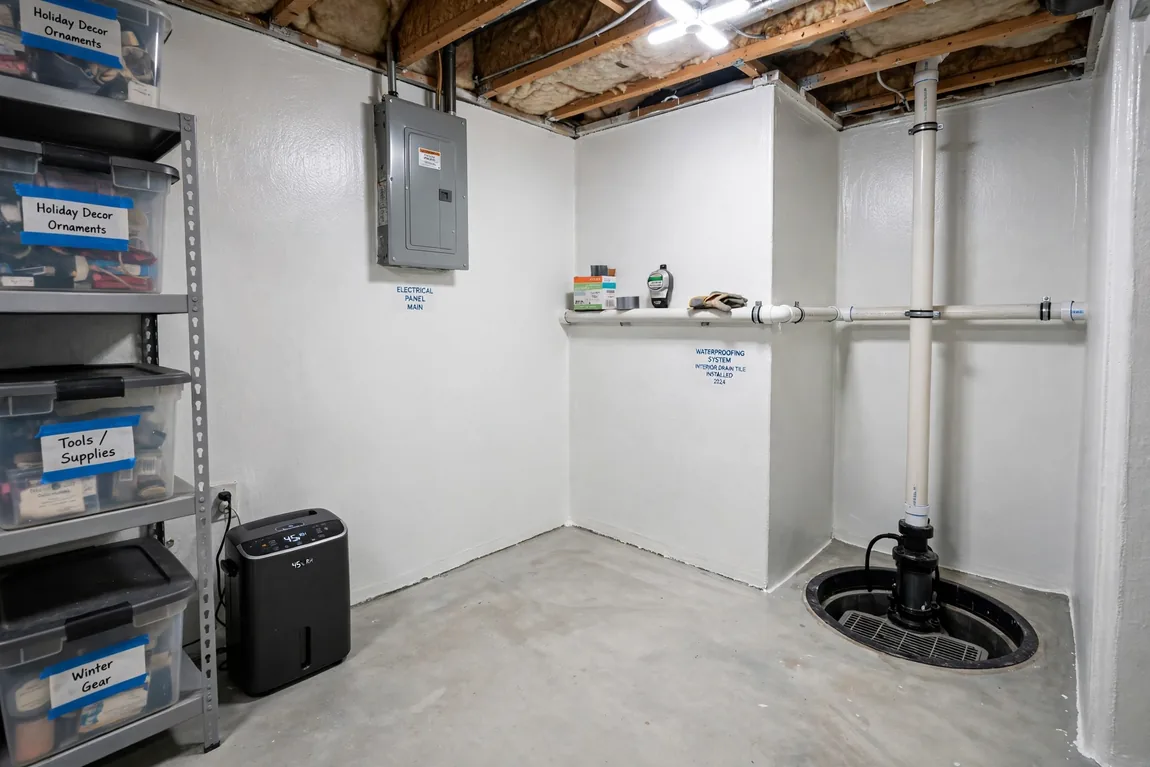
A dry, finished basement is the goal — the pump works quietly below the floor to keep it that way.
How a sump pump fits into basement waterproofing
A sump pump rarely works alone. In most wet basements it is the heart of an interior drainage system: a perimeter drain collects groundwater and directs it into the basin, and the pump sends it outside. If you are weighing a full system, our guide to basement waterproofing cost explains how drain tile, membranes, and pumps are priced together. Tackling the pump and drainage in one project is usually cheaper than paying for two separate mobilizations.
It also helps to fix the simple causes first. Gutters that dump water beside the foundation, soil graded toward the house, and a cracked discharge line can all overwhelm a good pump. Our roundup of common plumbing problems covers the related leaks and drainage issues homeowners run into most often.
Battery backup: is it worth the extra cost?
For most homes with a history of water intrusion, yes. The sump pump installation cost rises by roughly $400 to $1,000 when you add a battery backup, but consider when pumps fail: during severe storms, when the power is most likely to go out and the rain is heaviest. A backup pump runs on a marine battery, switches on automatically, and can move thousands of gallons before the battery runs down. Water-powered backups are another option where water pressure is strong, since they need no battery at all.
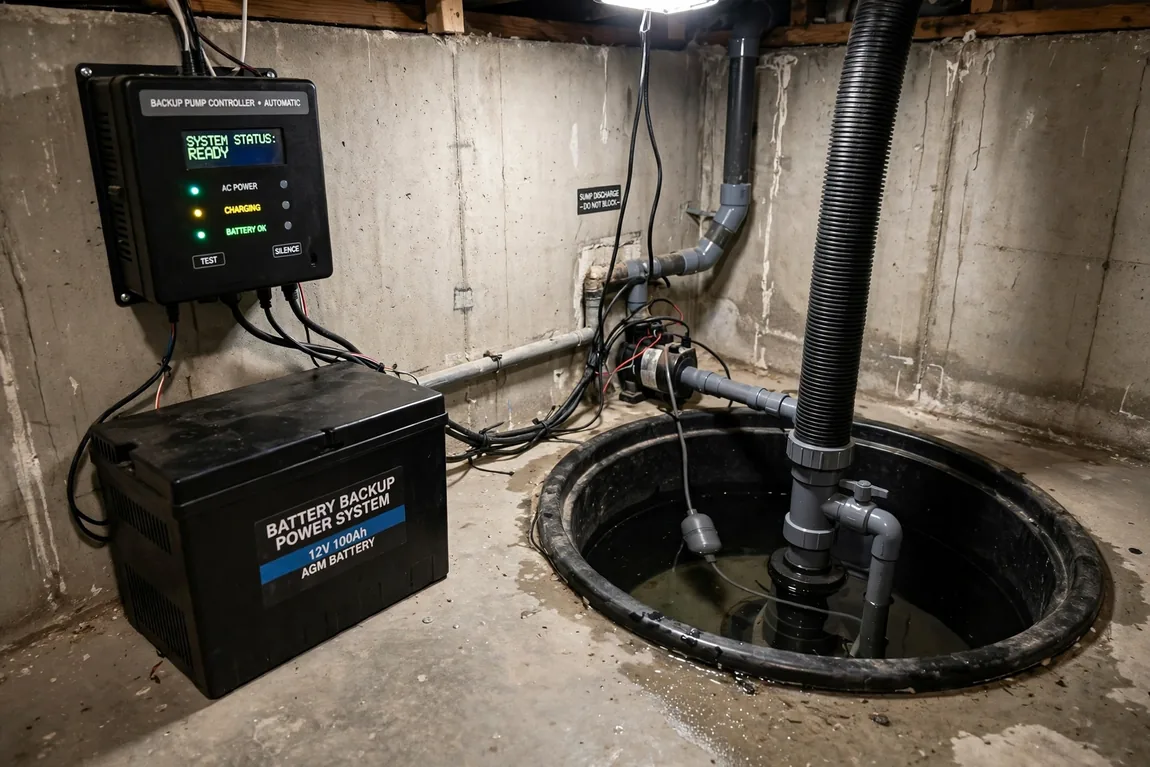
A battery backup system keeps pumping during a power outage, when flooding risk is highest.
DIY vs. hiring a pro
Replacing a pump in an existing basin is a realistic DIY job for a confident homeowner: unplug the old unit, disconnect the discharge pipe, set the new pump, reconnect with a new check valve, and test it with a bucket of water. The parts alone run $150 to $450 for a quality submersible pump, so DIY replacement can cut the bill roughly in half.
A first-time installation is a different story. It involves breaking concrete, digging to the correct depth, setting the basin level in gravel, installing a check valve so water cannot flow back, and routing the discharge line so it does not freeze or recycle water back to the foundation. Mistakes here are expensive and wet. For a new system, most homeowners are better served by a licensed plumber or waterproofing contractor, and professional work normally comes with a warranty.
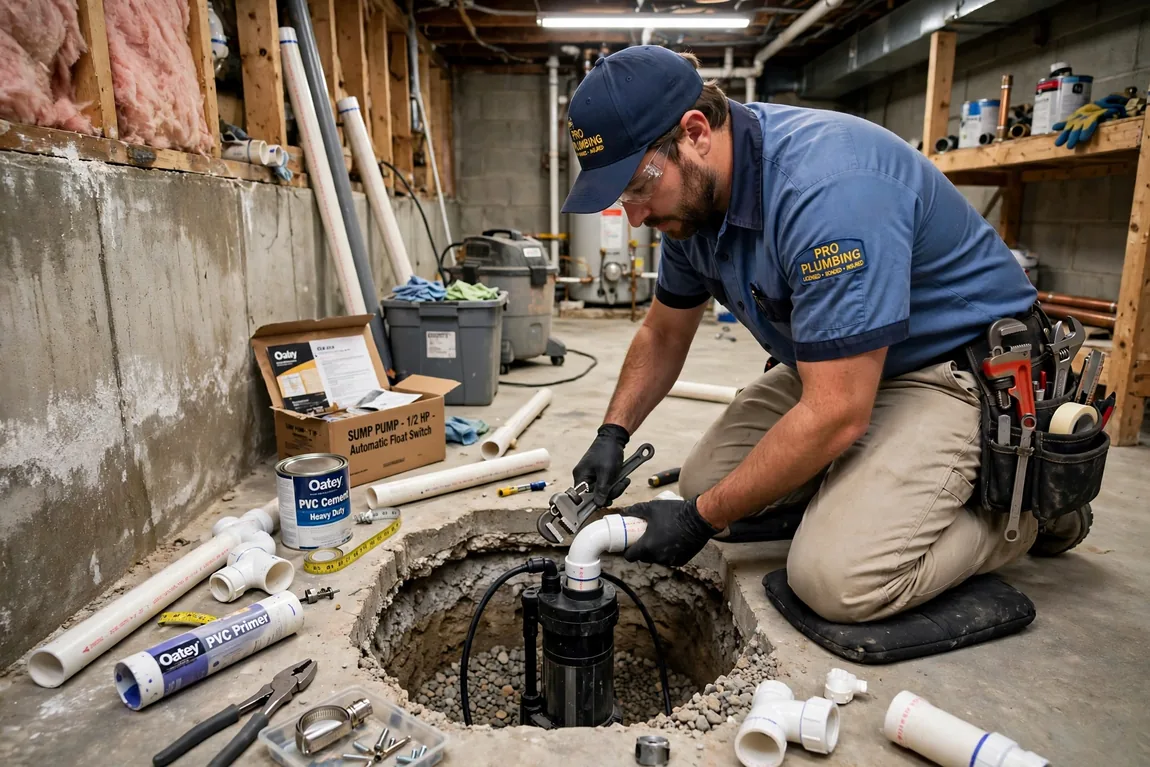
A professional installation includes correct basin depth, a check valve, and a properly routed discharge line.
How to save money on installation
- Get at least three quotes and ask each contractor to itemize pump, basin, labor, and backup separately so you can compare like with like.
- Replace before it fails. Emergency weekend calls cost more, and a planned replacement lets you choose the pump instead of accepting whatever is on the truck.
- Keep the existing basin and discharge line if they are in good condition — reusing them is the biggest single saving available.
- Buy the pump yourself only if the installer agrees and the warranty still applies; otherwise let the contractor supply it.
- Bundle the work. Having the backup pump fitted during the main installation costs far less than a separate visit later.
- Maintain what you have. Test the pump quarterly, keep the basin free of debris, and replace the backup battery every three to five years.
Frequently asked questions
How long does a sump pump last?
Most pumps last about 7 to 10 years. Pumps that run constantly in high-water-table homes wear out sooner, which is another reason a backup unit is good insurance.
How long does installation take?
A replacement in an existing basin usually takes 1 to 2 hours. A complete new system, including cutting concrete and digging the pit, typically takes 4 to 8 hours — most jobs are finished in a single day.
What size pump do I need?
A 1/3 HP pump suits most homes and can move roughly 2,000–3,000 gallons per hour. Choose 1/2 HP or higher if your basement has flooded before, your water table is high, or the discharge line rises more than about 10 feet.
Does a sump pump need a dedicated circuit?
It is strongly recommended. The pump should plug into a GFCI-protected outlet, and many local codes require a dedicated circuit.
Is a permit required?
Rules vary. Some municipalities require a plumbing permit for a new basin and discharge line, while a like-for-like replacement usually does not. Your contractor should include any permit fee in the written quote.
The bottom line: budget $1,200 to $2,800 for a typical professional job in 2026, less for a replacement, and more with a battery backup. Get itemized quotes and confirm pump type and warranty in writing, and you will know your sump pump installation cost is fair.