

If you have found water on the floor, damp walls, or a musty smell downstairs, your first question is probably simple: what will it cost to fix this properly? Understanding basement waterproofing cost before you call anyone helps you compare quotes fairly and avoid paying for work you do not need. In 2026, most homeowners pay a few hundred dollars for a minor sealant repair and many thousands for a full drainage system, depending on where water enters and whether the fix is inside, outside, or both.
Last updated: October 23, 2026.
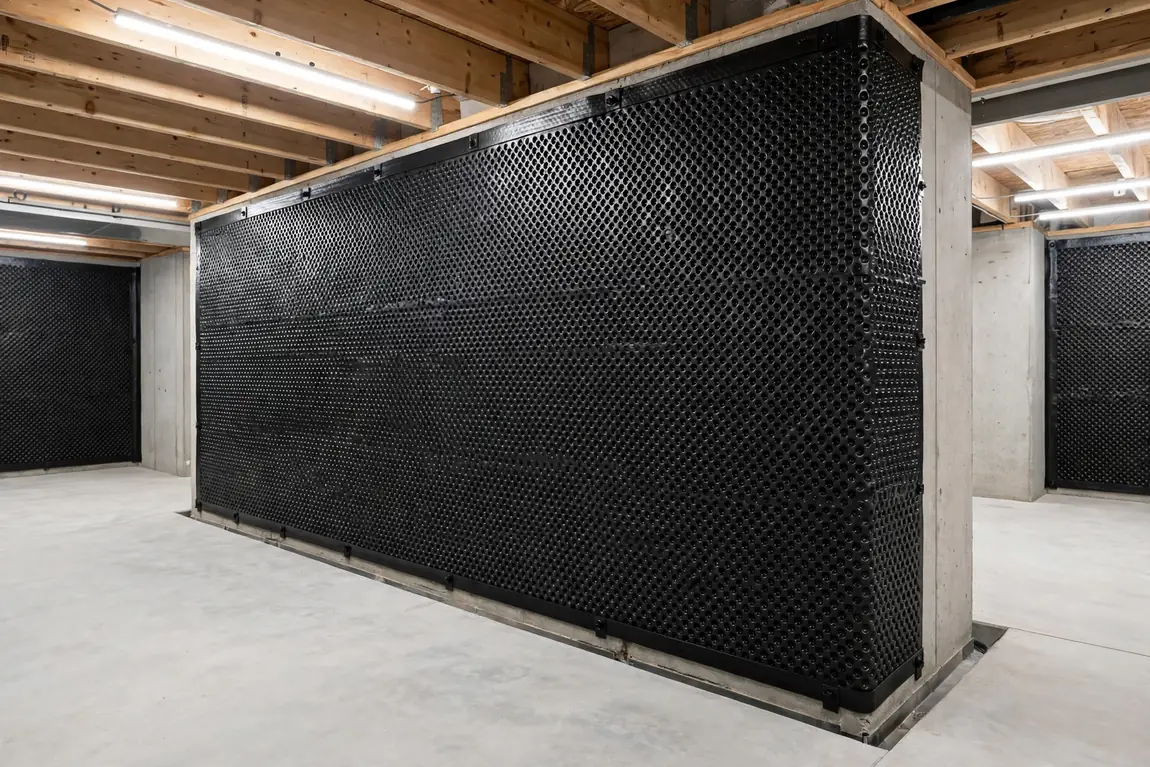
What basement waterproofing cost includes, method by method
There is no single price because waterproofing covers very different jobs. A perimeter drain and a full exterior excavation are both sold as waterproofing, but they solve different problems. Interior systems manage water after it reaches the wall and direct it to a sump pump. Exterior systems stop water before it gets in, by excavating, repairing cracks, and applying a membrane. Sealants can slow minor seepage, but will not stop water under pressure.
That is why the cheapest quote is not always the best value. If groundwater pushes up through the floor joint after rain, sealant will fail. If the problem is one hairline crack, a full exterior dig is hard to justify. A good contractor starts with the source of the water and prices the matching method clearly.
Basement waterproofing prices compared for 2026
The table below gives typical 2026 price ranges in the United States for a standard single-family basement. Your price will vary with basement size, soil, access, local labor rates, and how much finishing must be removed and replaced. Treat these figures as a starting point for comparing quotes, not as a promise.
| Method | Typical 2026 cost range | Best for | Typical lifespan |
|---|---|---|---|
| Interior French drain system | $3,000 to $9,000 for most basements, or roughly $40 to $85 per linear foot | Water entering at the floor and wall joint, high water table | Long-term, with pump maintenance |
| Exterior excavation and membrane | $8,000 to $20,000 or more, or roughly $100 to $250 per linear foot | Serious wall leaks, failed exterior drainage, major cracks | Long-term when done correctly |
| Interior sealants and coatings | $300 to $1,500 for a typical room or wall area | Minor dampness, condensation, very light seepage | Short to medium term |
| Sump pump installation | $800 to $2,500 installed, depending on basin, pump, and discharge work | Collecting and removing groundwater from a drain system | Pump itself often 5 to 10 years |
Notice how wide the ranges are. An interior drain in a small, unfinished basement can sit near the bottom, while the same system in a finished basement, where flooring and drywall must come out and go back, costs considerably more. Exterior work varies most, depending on decks, porches, driveways, and footing depth.
Interior French drain systems
An interior French drain is the most common recommendation for a wet basement, and usually for good reason. A channel is cut along the inside perimeter, a perforated pipe is set in gravel, and water is directed to a sealed sump basin. The channel is covered with concrete, leaving a drainage gap at the wall so water can reach the system instead of spreading across the floor.
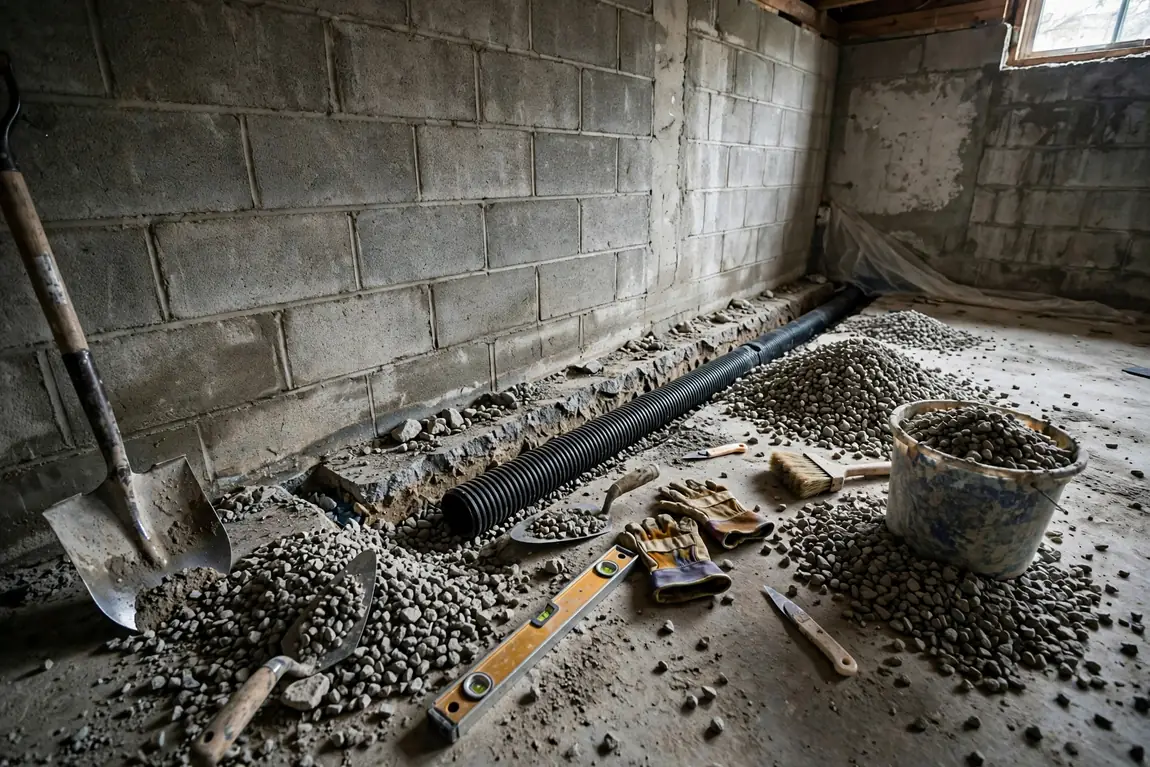
This approach needs no digging in your yard, works in most weather, and deals directly with the most common entry point, the floor and wall joint. It does not repair a cracked wall, so ask whether crack repair is included. If you also have water in an adjoining low area, our guide to what to do if you have got water in your crawl space explains the shared drainage causes.
- Best when water appears along the edges of the floor after rain or snowmelt.
- Usually faster and less disruptive outside than exterior excavation.
- Needs a reliable sump pump and a discharge line that carries water well away from the house.
- Finished floors and walls add removal and repair costs.
Exterior waterproofing and excavation
Exterior waterproofing is the most thorough and expensive option. Crews dig to the footing, repair the wall, apply a membrane, install new exterior drain tile, cover it with gravel, and backfill. Done well, it keeps water off the wall and allows cracks to be fixed that cannot be properly repaired from inside.
The trade-off is disruption and cost. Anything against the house may need removal, and landscaping will need restoring afterward. Think about grading and planting together, rather than putting thirsty beds back against a freshly sealed wall. Our roundup of low-maintenance landscaping ideas includes tidy approaches that do not demand constant watering next to the foundation.
Sealants, coatings, and crack repair
Sealants are useful, as long as you are honest about what they can do. Waterproof paint, coatings, and crack injection can reduce minor dampness and seal a single, stable crack. They are affordable and quick, and sometimes enough for a basement that has never had standing water. They are not a substitute for drainage when water enters under pressure or in several places at once.
Be cautious of any quote promising a paint-on product will solve active leaks everywhere. Ask what happens if water returns and what the warranty covers. A cheap coating over a flaking surface will not last.
Sump pumps and backup protection
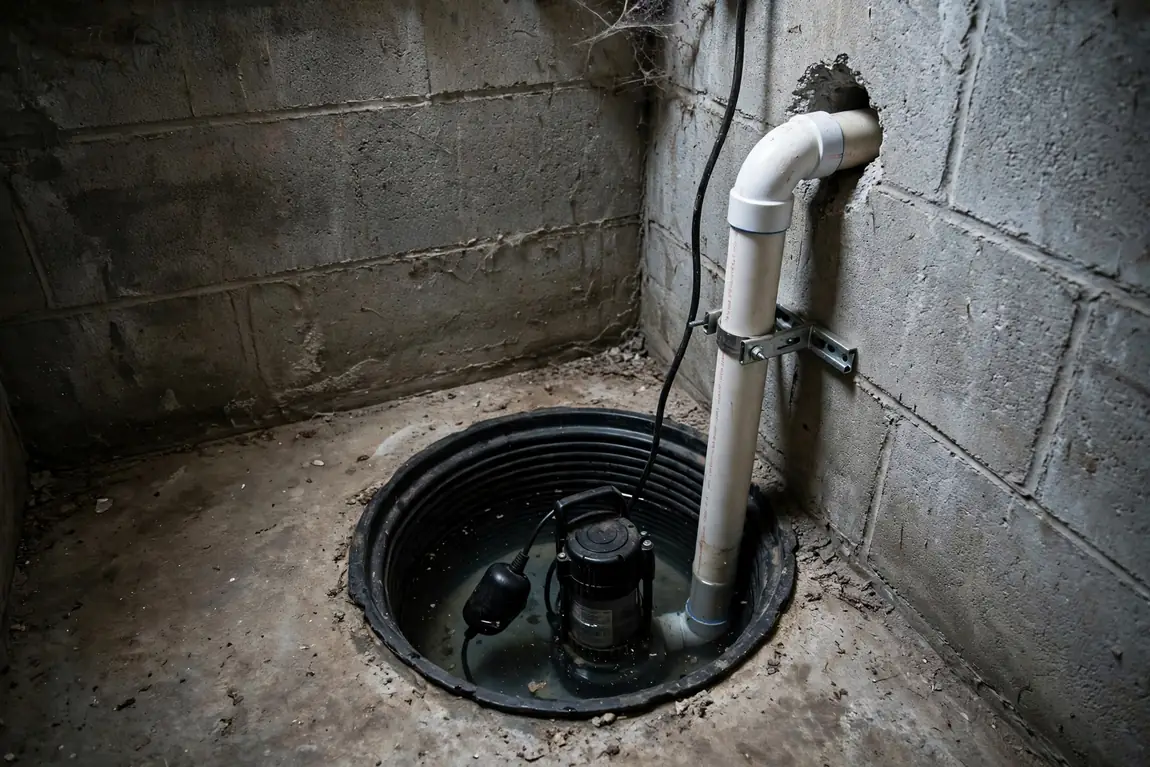
Most interior systems depend on a sump pump, so do not treat it as an afterthought. The basin collects water from the drain, the pump switches on as the level rises, and a discharge pipe carries water outside, away from the foundation. Cost depends on whether a basin exists, discharge distance, and extras like a check valve and alarm.
A battery backup is worth pricing at the same time, especially if flooding happens during storms, when power is most likely to fail. It costs less than replacing flooring after one outage. Ask for pump, backup, and alarm priced as separate lines.
What pushes the price up or down
- Basement size: Drain and excavation work is priced largely by linear foot, so a larger footprint costs more.
- Finished versus unfinished: Removing and replacing flooring and walls adds labor and materials.
- Access: Tight stairways, porches, decks, and concrete against the foundation all slow the work.
- Soil and water: Heavy clay, a high water table, and deep footings make exterior work harder.
- Extras: Backup pumps, dehumidification, mold cleaning, and permits can be necessary, but should be itemized.
To keep costs down, fix cheap water sources first: clean and extend gutters and downspouts, correct soil sloping toward the house, and seal gaps around pipes. These steps reduce the water any system must handle, and sometimes show the problem is smaller than it looked.
Frequently asked questions
Is interior or exterior waterproofing better?
Neither is better in every house. Exterior work stops water at the wall and suits major damage, while interior drainage is less disruptive and very effective for water at the floor joint. Most homes need one well-chosen system, not both.
Can I waterproof a basement myself?
You can handle grading, gutters, minor coatings, and sometimes a single crack kit yourself. Cutting concrete and installing a drain, basin, and pump are possible for an experienced DIYer, but heavy work with real consequences if the slope is wrong. Get a professional assessment first.
Does waterproofing add value to a home?
A dry, warranted basement is easier to sell and finish, and less likely to trigger a buyer’s demand for a price cut. It may not return every dollar, but it protects value a wet basement destroys and makes the space usable.
How long does basement waterproofing take?
A sealant or crack repair may take a day. An interior drain and pump often takes two to four days, while exterior excavation can take a week or more. Ask for a schedule including curing and cleanup.

Conclusion: price the problem, not just the product
The right way to judge basement waterproofing cost is to match the method to the water. Start with gutters, grading, and where water actually enters. Price sealants only for minor dampness, an interior French drain for the common floor-joint leak, a properly sized sump pump to move water out, and exterior excavation when the wall needs repair from outside. Get itemized quotes and choose the system you would trust after the next heavy storm.