

Understanding your landscaping cost before you call a contractor is the easiest way to avoid a quote that shocks you. In 2026, most U.S. homeowners pay somewhere between a few hundred dollars for a small cleanup and planting job and $15,000 or more for a full design-and-install project, with Angi reporting an average project around $3,500 and typical professional labor of about $50 to $100 per hour. Where your project lands in that wide range depends on scope, yard size, materials, and your local labor market.
This guide breaks down realistic 2026 ranges reported by sources such as Angi and LawnStarter. No honest guide can give one exact price for every yard, so always confirm with itemized local quotes.
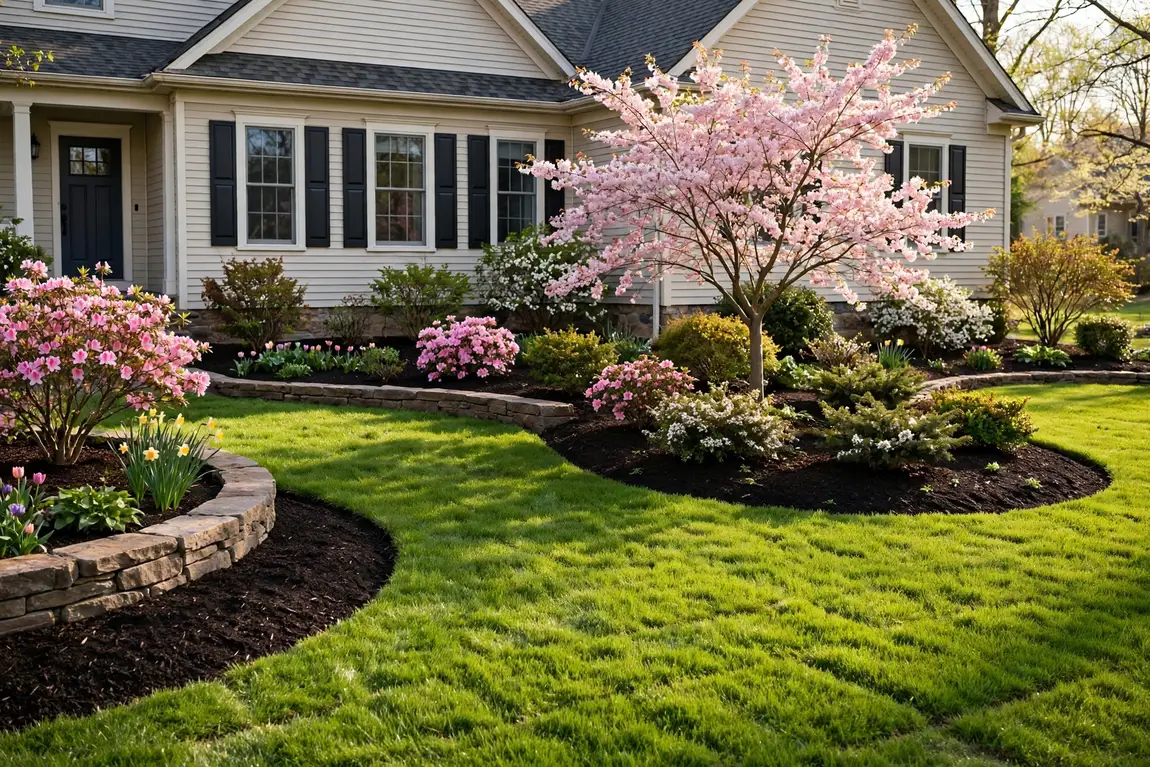
A freshly landscaped front yard with new sod, curved planting beds, and mulch — the pieces that make up most residential projects. (Illustrative image)
Average landscaping cost by project type
At the basic end, a one-off service visit — cleanup, pruning, fresh mulch, and a few new plants — commonly runs about $200 to $800. A mid-range refresh with new beds, shrubs, edging, and partial sod usually falls between $1,500 and $5,000. A full design and installation, where a designer plans the whole space and a crew handles grading, planting, and irrigation, commonly runs $5,000 to $15,000 or more.
Design is a separate line item. Landscape designers commonly charge about $50 to $150 per hour, while licensed landscape architects often charge about $70 to $250 per hour. Many designers instead quote a flat plan fee, commonly around $700 to $3,000, with LawnStarter reporting broader design projects at $1,390 to $6,850. A plan lets you install in phases and compare bids on equal terms.
| Project Type | Typical Cost Range (2026) | Notes |
|---|---|---|
| Basic service visit (cleanup, pruning, mulch) | $200 – $800 | One-off visit, materials extra or included |
| Landscape design plan only | $700 – $3,000 | Flat fee; complex plans up to about $6,850 |
| Designer / architect hourly rate | $50 – $150 / $70 – $250 per hour | Designer vs licensed landscape architect |
| Mid-range front yard refresh | $1,500 – $5,000 | Beds, shrubs, edging, partial sod |
| Full front yard design + install | $4,000 – $15,000 | Beds, mulch, shrubs, small trees, edging |
| Full yard design + install | $6,000 – $30,000+ | Backyard scope, grading and irrigation add cost |
| Professional labor (general) | $50 – $100 per hour | Per Angi homeowner data |
What the individual pieces cost
Most quotes are built from the same building blocks. Angi’s 2026 figures put sod installation at roughly $950 to $4,300 per project, or about $1 to $2 per square foot installed. Planting bed installation commonly runs about $800 to $3,000, depending on soil preparation and plant sizes. Tree planting ranges widely, roughly $120 to $2,500 per tree installed — a small ornamental and a large specimen shade tree are very different jobs — and shrubs commonly run about $25 to $230 each.
Finishing pieces add up too. Mulch is commonly priced around $30 to $120 per cubic yard for material, with installed mulch quoted higher once delivery and labor are included. Edging runs a few dollars per linear foot for basic metal or plastic, and more for stone. Landscape lighting is commonly reported around $2,000 to $6,000 for a typical system, or roughly $200 to $550 per fixture installed. Budget separately for irrigation — our guide to sprinkler system installation cost breaks down per-zone pricing.
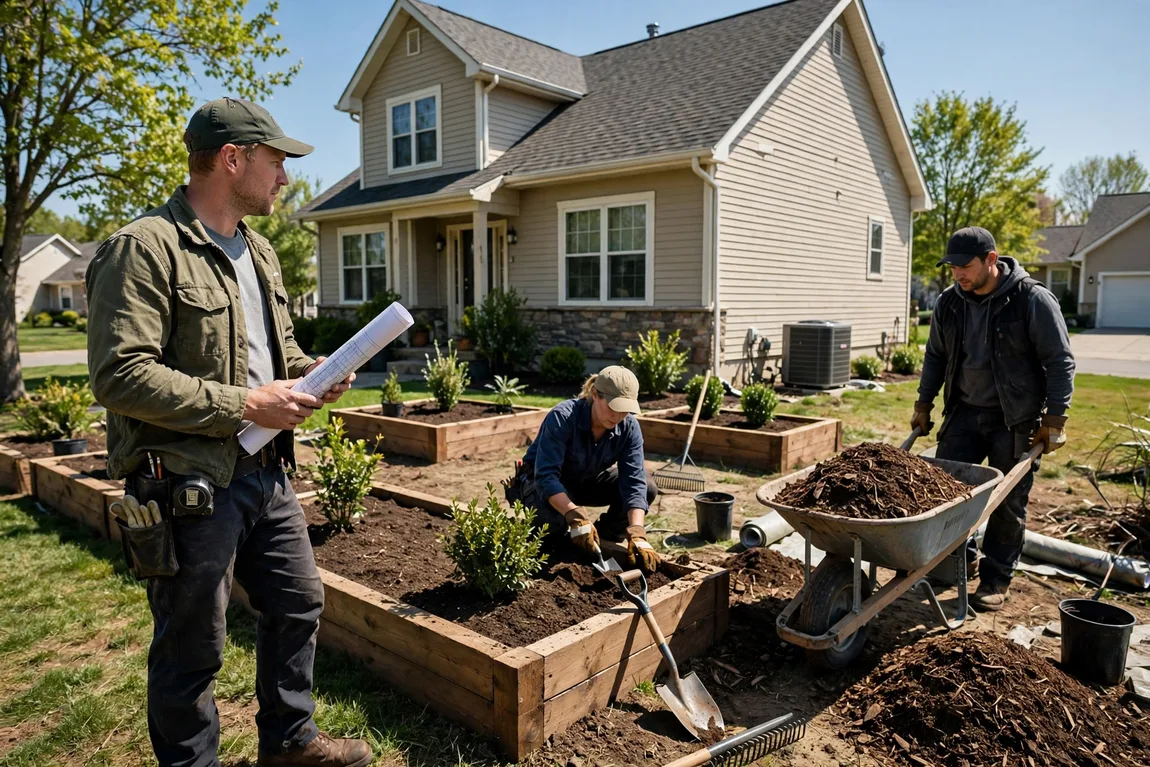
A designer-led crew installing planting beds — design and labor are separate, visible parts of a good quote. (Illustrative image)
Front yard vs full yard examples
Most homeowners start with the front yard, because it delivers the curb appeal. A typical package — reshaped beds, a dozen shrubs, one or two small trees, fresh mulch, edging, and spot sod repair — commonly lands around $4,000 to $15,000 for full professional design and install, with simpler refreshes well below that. See our low-maintenance landscaping ideas for choices that cut upkeep.
A full-yard project adds the backyard, where grading, drainage, and larger lawn areas live. Full backyards commonly run $6,000 to $30,000 or more once patios, planting, and irrigation are included, and hardscape is usually the most expensive part per square foot. If a deck is part of the plan, price it separately using our deck building cost guide.
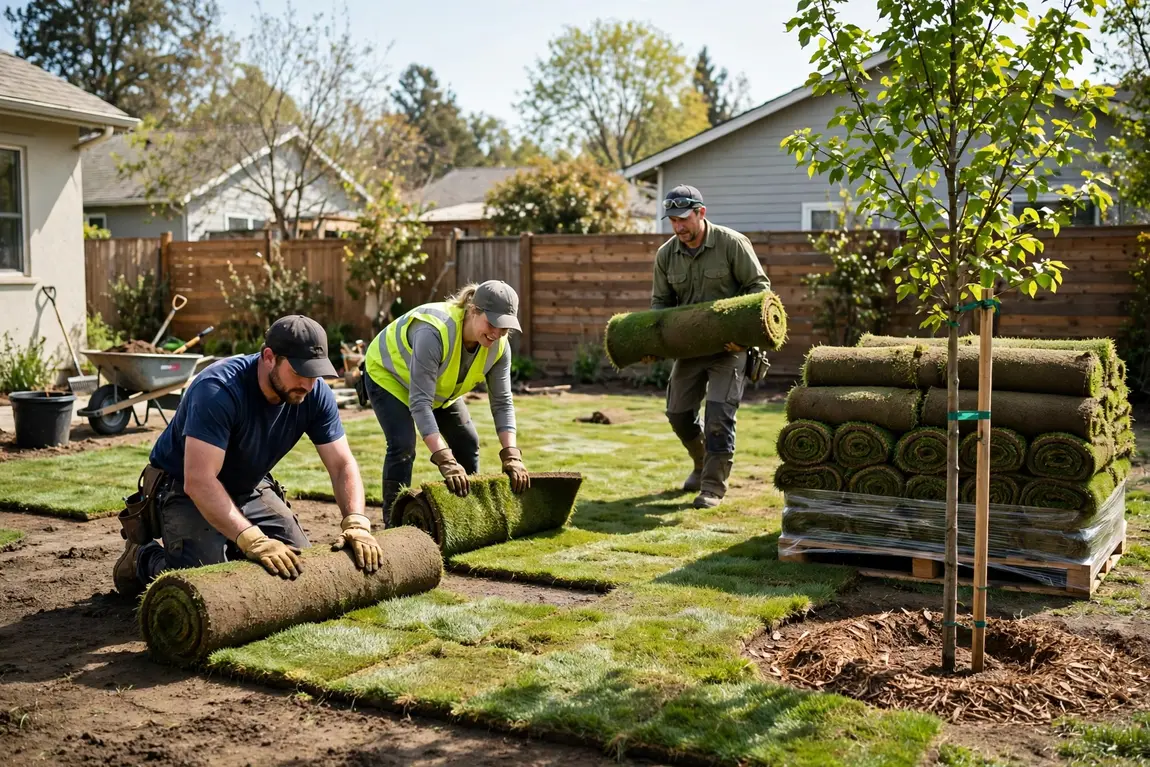
Sod and a young shade tree going in — per-piece pricing makes it easier to compare bids line by line. (Illustrative image)
Factors that affect landscaping cost
- Yard size and access: Bigger yards need more material and crew time, and tight gates or steep slopes that force hand-carrying raise labor costs.
- Site preparation: Grading commonly runs about $1,025 to $3,300 according to Angi, and clearing, stump removal, or drainage fixes add more before any planting starts.
- Plant size and rarity: Mature or specialty plants cost far more than standard nursery sizes.
- Materials: Natural stone and premium pavers cost more than basic mulch and concrete.
- Region and season: Coastal and metro labor rates often run 20% to 30% above national ranges.
- Permits and utilities: Irrigation tie-ins, electrical work for lighting, and retaining structures may need permits or licensed trades.
Ongoing maintenance costs
Installation is only the first bill. Basic lawn care visits commonly run roughly $50 to $200 per visit, and full-service maintenance — mowing, pruning, fertilizing, and seasonal cleanups — commonly adds up to a few hundred dollars per month. Mulch needs refreshing yearly, and irrigation systems need spring start-up and fall winterization. Budgeting roughly 5% to 10% of your installation cost per year for upkeep is a reasonable planning rule.
DIY vs hiring a pro — and the hybrid option
Doing it yourself removes the $50 to $100 per hour labor charge, so confident gardeners can save real money on mulch, planting, edging, and small beds, paying only for plants, materials, delivery, and tool rental. The trade-offs are time and mistakes: a poorly graded bed or a tree planted too deep can cost more to fix than the labor saved. Design, grading, drainage, irrigation tie-ins, electrical lighting, and large tree planting are where a pro usually pays for themselves.
The hybrid approach works best for many homeowners: pay a designer for a plan, hire pros for grading, irrigation, and large trees, then do the planting, mulching, and edging yourself in phases.
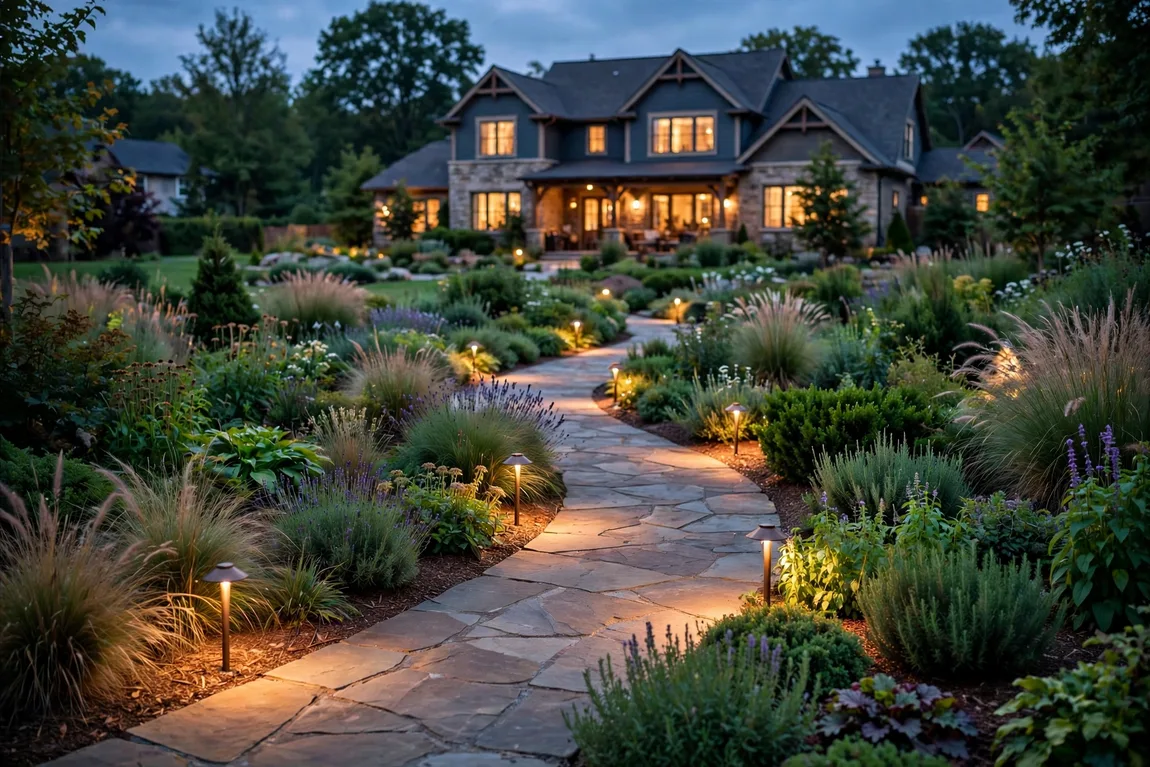
Low-voltage lighting finishes a backyard project and extends how long you can use the space each evening. (Illustrative image)
How to save money on landscaping
- Get a design first, then collect at least three itemized bids for the same plan so prices are comparable.
- Phase the project: do beds and trees this year, lighting and extra planting next year, spreading cost without rework.
- Choose smaller plant sizes: younger shrubs and trees cost much less and often establish faster, filling in within a few seasons.
- Keep existing healthy plants and transplant what you can instead of removing and replacing everything.
- Do the simple labor yourself — mulching, edging, and planting small stock — and hire out only technical work.
- Book off-peak: late fall and late summer scheduling can be easier and sometimes cheaper than the spring rush.
Frequently asked questions
What is the average landscaping cost in 2026?
Angi reports an average project around $3,500, but the range is wide — from about $200 for a small service job to $14,000 or more for extensive work. Yard size and scope matter more than any single average.
How much does a landscape designer charge per hour?
Industry guides commonly put landscape designers at about $50 to $150 per hour and licensed landscape architects at about $70 to $250 per hour. Many residential designers instead quote a flat plan fee, commonly around $700 to $3,000 for a straightforward design.
Is landscaping worth the money before selling a home?
Modest refreshes — beds, mulch, edging, and lawn repair — usually deliver more visible impact per dollar than a full redesign. Keep pre-sale spending focused on curb appeal.
How can I get an accurate quote?
Ask for an itemized written quote that separates design, site preparation, plants, materials, irrigation, lighting, and labor. Itemized bids are easier to compare, easier to phase, and much harder for hidden costs to slip into.
Start with a clear plan, price the pieces honestly, and phase the work to your budget — and your yard will repay the effort every time you pull into the driveway.