

Every winter, the same story repeats: the first hard freeze arrives, a pipe bursts in the night, a furnace dies on the coldest weekend of the year, or an ice dam sends water through the ceiling. Almost all of it is preventable — and October is when you prevent it. This guide shows you exactly how to winterize your home, system by system, in the order that matters, with typical costs and a one-weekend plan. Do these jobs before the first freeze and winter becomes the cozy season it is supposed to be.
Last updated: October 21, 2026.
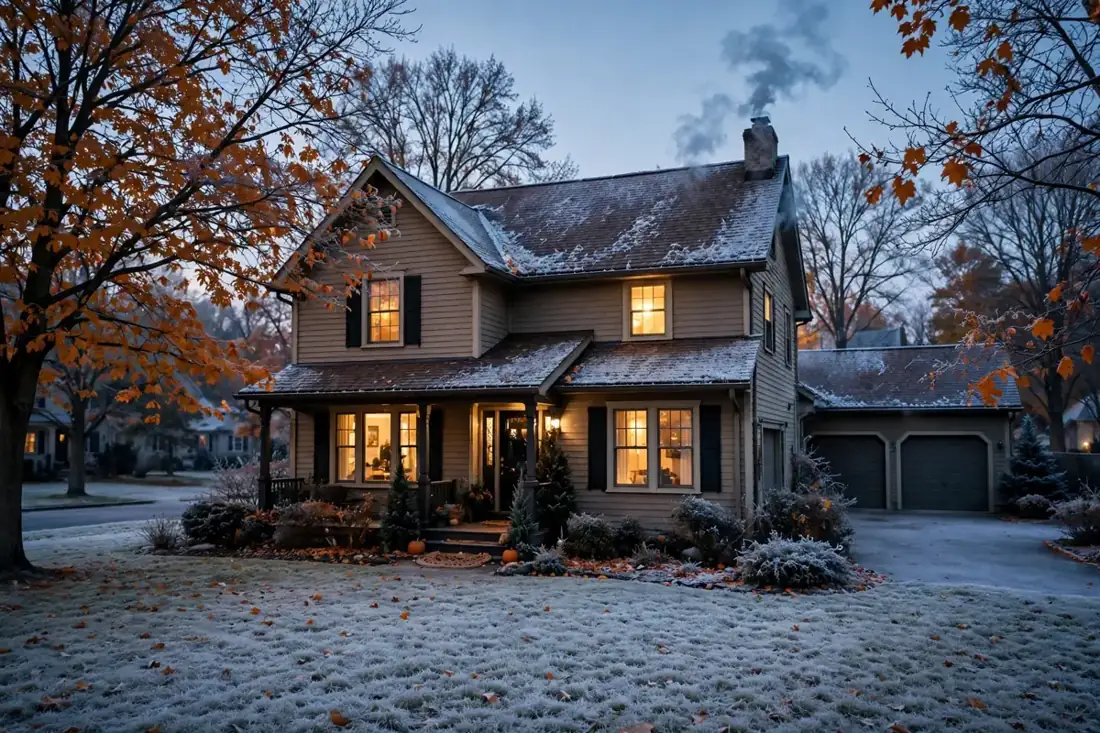
The Winterize-Your-Home Checklist at a Glance
| Area | Key jobs | Typical cost |
|---|---|---|
| Heating | Furnace tune-up, new filter, test thermostat, reverse ceiling fans | $80–$200 service; filters $10–$30 |
| Drafts | Weatherstrip doors, caulk windows, door sweeps, attic hatch insulation | $20–$100 DIY |
| Plumbing | Insulate exposed pipes, drain hose bibs, disconnect hoses, blow out sprinklers | $10–$40 DIY; $50–$150 sprinkler blowout |
| Roof & chimney | Clean gutters, check shingles, chimney sweep and inspection | Gutters $100–$250 pro; sweep $150–$300 |
| Yard | Store furniture and hoses, trim branches, winterizer fertilizer, service mower | Mostly DIY |
| Safety | Test smoke and CO alarms, check extinguisher, generator and space-heater rules | Alarms $15–$40 each |
1. Service the Heating System First
Heating failures cluster on the first cold night of the year, because that is when idle systems go straight to full load. Book a furnace or heat-pump tune-up in October, while HVAC companies still have slots: a typical service runs $80–$200 and covers the burner or heat exchanger, ignition, blower, and safety controls. Change the filter (and write the size on the frame so replacements are effortless), test the thermostat in heat mode on a mild day, and make sure no furniture or rugs block registers and returns. If radiators hiss or heat unevenly, bleed them now. And if your system already struggles, noises, short cycling or rising bills are warnings — our furnace repair guide walks through what each symptom usually means. Finish by switching ceiling fans to clockwise at low speed: it pushes warm air pooled at the ceiling back down where you live.
2. Seal the Drafts
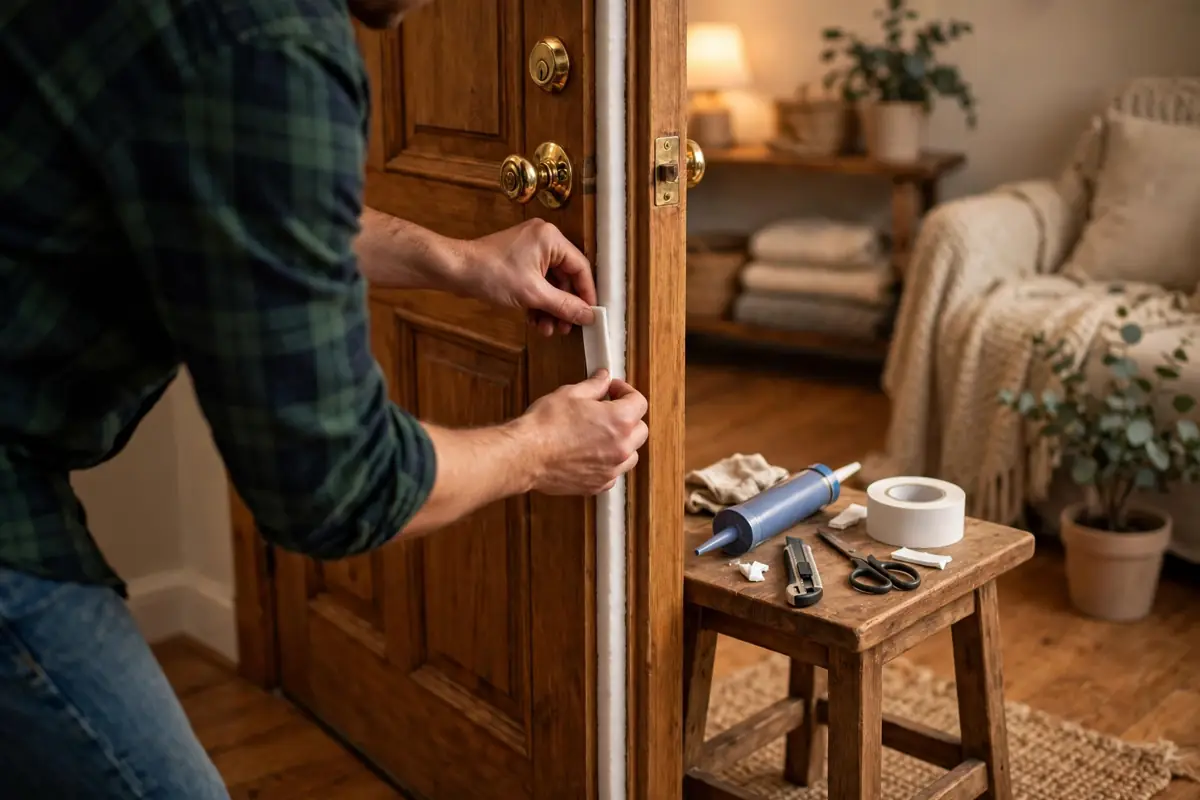
The US Department of Energy estimates that drafts and air leaks can waste 5–30% of a home’s heating energy — the cheapest “heating upgrade” you will ever buy is a tube of caulk and a roll of weatherstripping. Walk the house on a breezy day with a lit incense stick: wherever the smoke wavers, air is moving. Seal exterior door frames with foam or V-strip weatherstripping, add a door sweep to any door you can see daylight under, caulk gaps around window frames and where pipes, vents and cables pass through walls, and insulate the attic hatch — an uninsulated hatch is a hole in your ceiling. Window film kits ($10–$20 for several windows) genuinely help older single-pane windows get through one more winter.
3. Protect Your Plumbing
Frozen pipes are the most expensive item on this list when they go wrong: a burst line can release hundreds of gallons before anyone notices, and water-damage claims routinely run into five figures. Work through it methodically:
- Insulate exposed pipes in basements, crawl spaces, garages and exterior walls with foam sleeves — a few dollars per length, ten minutes per pipe.
- Disconnect every garden hose. A hose left attached traps water in the faucet and the pipe behind it — the single most common cause of a “mystery” burst pipe in spring.
- Shut off and drain outdoor faucets: close the interior shut-off valve, open the outside faucet, and open the small bleeder cap to empty the line.
- Winterize sprinklers: shut off the water and blow out the lines, or book it ($50–$150) — frozen backflow preventers are a $300+ lesson.
- Know your main shut-off valve and confirm it actually turns. In a burst-pipe emergency, minutes decide the size of the loss.
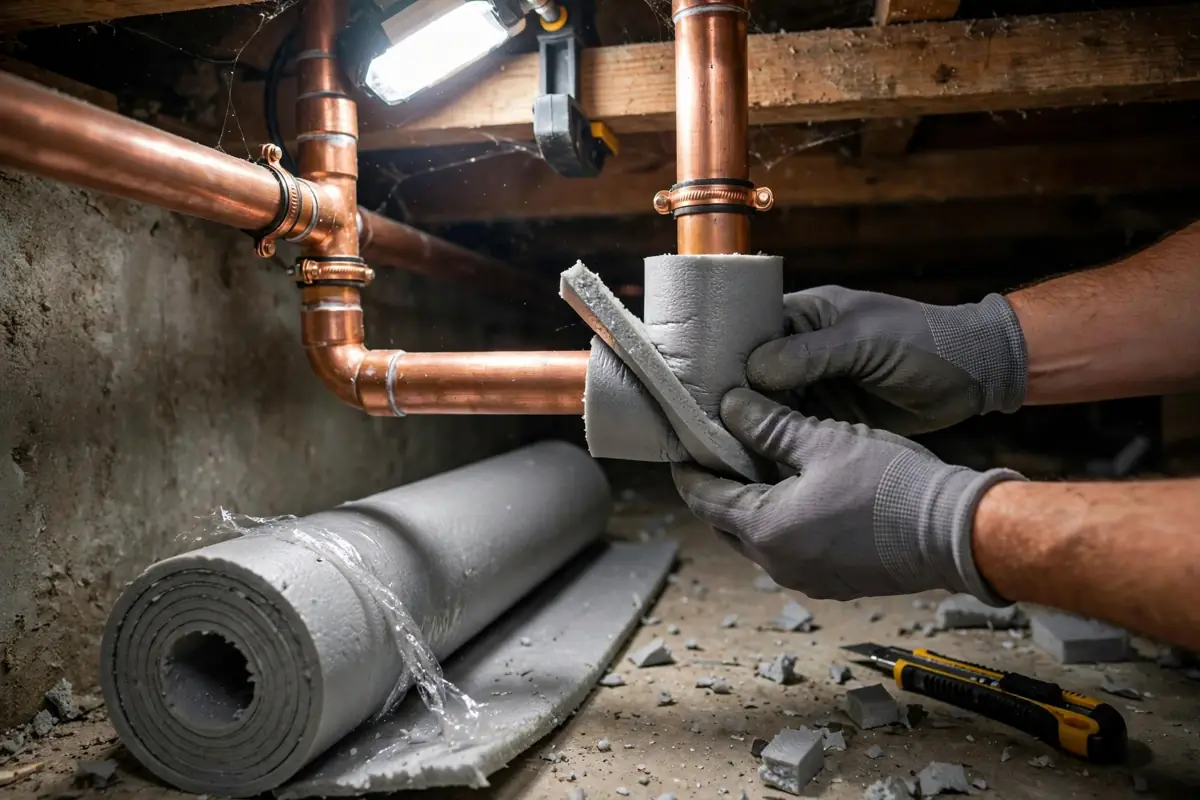
Go deeper with our dedicated guides: how to prevent frozen pipes covers the full defense, and how frozen pipes burst explains the physics of why pipes fail — and which ones fail first. When a deep freeze hits (pipes are at serious risk around 20°F / -7°C), open cabinet doors under sinks on exterior walls and let faucets drip slowly overnight.
4. Roof, Gutters and Chimney
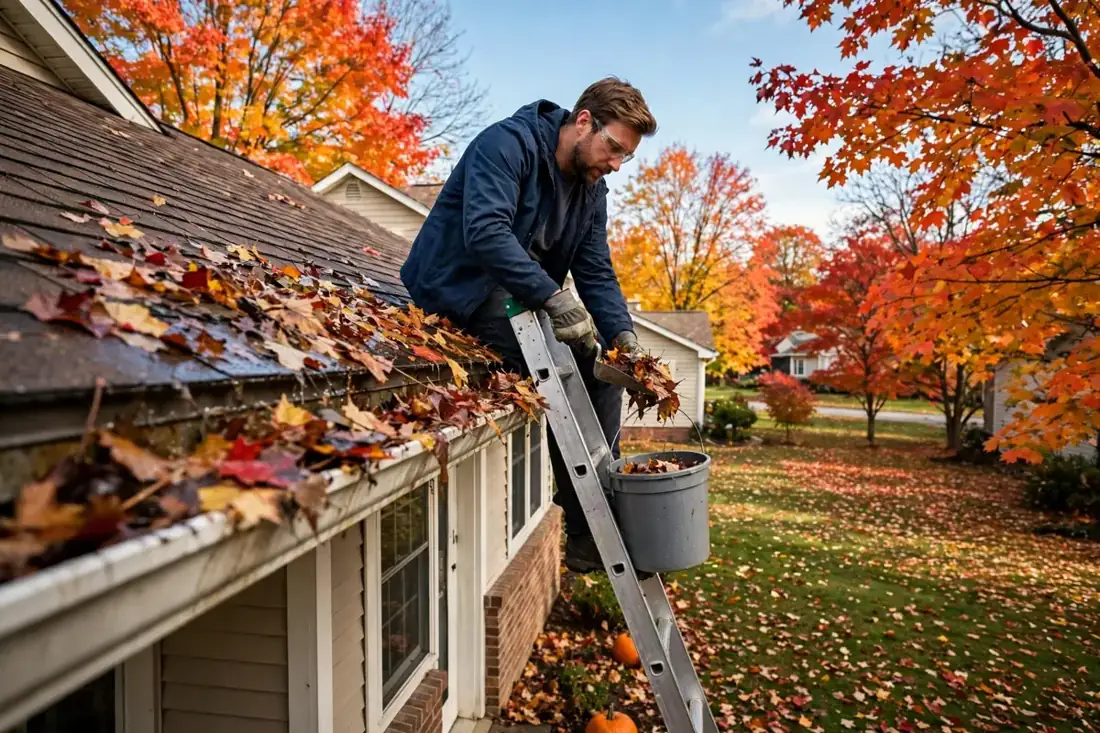
Water that cannot drain will find its own way — usually into your house. Clean the gutters after most leaves have fallen (mid-to-late October in most regions, again in late November if your trees drop late), and check that downspouts discharge at least 4–6 feet from the foundation. From the ground with binoculars, look for missing, curled or cracked shingles and damaged flashing. Clogged gutters are the first ingredient of ice dams; if yours misbehave even when clean, our investigation into why clean gutters still overflow covers the hidden causes. Finally, before the first fire of the season, have the chimney swept and inspected (typically $150–$300): creosote buildup is a fire risk, and blockages can push carbon monoxide into the house. Our chimney problems guide shows what an inspector is looking for.
5. The Yard and Exterior
Drain and store hoses indoors, empty and cover (or store) patio furniture, and shut off the exterior water supply to anything that will not be used until spring. Trim branches that hang over the roof or touch the house — winter storms plus ice weight turn them into roof damage, and bare branches against the wall are also a highway for pests looking for a warm home; sealing entry points now pairs with the prevention approach in our insect home proofing guide, and it matters just as much for mice, who move indoors every fall. Apply a winterizer lawn fertilizer while the grass is still growing, rake leaves off the lawn (a thick mat smothers it), and give the mower its end-of-season service: run the fuel dry or add stabilizer, clean the deck, and store it dry. Last, stage the winter kit where you can reach it: snow shovel, ice melt, flashlights, and the plumber’s number on the fridge.
6. Safety Checks That Matter More in Winter
- Test every smoke and carbon monoxide alarm and replace batteries — fuel-burning appliances run hardest in winter, and CO risk rises with them. Alarms older than 10 years should be replaced entirely.
- Space heaters: keep 3 feet of clearance on all sides, plug directly into the wall (never an extension cord), and never leave one running unattended or overnight.
- Generators: outdoors only, at least 20 feet from the house, exhaust pointed away. Every winter, generators kill people who ran them in garages.
- Fire extinguisher: check the gauge is in the green and everyone knows where it lives.
- The coldest room: if one room is always freezing, fix it now rather than heating the whole house harder — our guide to fixing the coldest room in your house works through the causes from cheapest to most involved.
Leaving for Winter? Extra Steps for Empty Houses
An empty house is the highest-risk house. If you travel for more than a few days in freezing weather, keep the thermostat at 55°F (13°C) minimum — never off — and consider shutting the water at the main and draining the lines entirely for longer absences. Open cabinet doors under sinks, leave the washing machine hoses in view (they are a top leak source), and ask a neighbor to walk through weekly. Smart leak sensors under the water heater and behind washing machines cost little and phone you before a drip becomes a flood.
The 5 Winterizing Mistakes That Cost Homeowners Most
- Leaving a hose connected. The faucet and its pipe freeze from the outside in; the damage is discovered at spring thaw.
- Turning the heat off in an empty house. The money “saved” buys a burst-pipe renovation.
- Skipping the chimney sweep because “we only had a few fires last year.” Creosote does not care.
- Insulating pipes but not the attic hatch or rim joists, leaving the coldest air washing over the very pipes you wrapped.
- Waiting for the first freeze warning. Every pro on this list is booked solid that week; October prices and October schedules are both kinder.
Frequently Asked Questions
When should you winterize your home?
Before the first hard freeze — in most of the northern US that means finishing by late October. Heating service and chimney sweeping should be booked even earlier, in September or early October, before the seasonal rush.
How much does it cost to winterize a house?
A thorough DIY pass costs roughly $100–$300 in materials (filters, foam sleeves, weatherstripping, caulk, window film). Adding professional furnace service, a chimney sweep and a sprinkler blowout brings a typical total to about $400–$800 — far less than one burst-pipe repair.
At what temperature do pipes freeze?
Pipes in unheated or exterior-wall locations are at serious risk when temperatures fall to around 20°F (-7°C) and below, especially with wind chill on exposed lines. Insulation slows freezing but does not stop it in a prolonged deep freeze — that is when dripping faucets and cabinet doors come in.
Should you turn the water off when winterizing?
For a home you will live in all winter, no — winterize the vulnerable lines (outdoor faucets, sprinklers) and leave the main supply on. For a home standing empty for weeks, yes: shut the main, drain the system, and keep the heat at 55°F.
Conclusion: One Weekend in October, Zero Emergencies in January
Winterizing is not glamorous, and that is precisely its advantage: a serviced furnace, sealed drafts, protected pipes, clean gutters and tested alarms quietly remove almost every way winter can ambush a house. Set aside one October weekend, work the checklist from the top, and when the first freeze warning flashes on your phone, your only job will be to make something warm to drink and enjoy the season you prepared for.