

To learn how to warm up a cold basement, start by stopping air leaks and insulating rim joists. Next, insulate foundation walls with rigid foam and fix any moisture problem first. Add a warmer floor surface, then supply heat with ducts, baseboards, or a mini-split. Small sealing jobs cost little and often make the biggest difference.
Walk down the basement stairs in January and you feel it. The air changes. Your socks suddenly seem too thin, and the concrete seems to pull heat right out of your feet.
That chill is not just about comfort. It leaks upward into every room above. A cold basement makes the whole floor plan feel drafty. Learning how to warm up a cold basement is cheaper than most people expect.
Why Basements Run Cold in the First Place
The ground stays cool all year. Concrete and stone touch that soil directly, so they stay cold too. Heat moves toward cold, so your warm air drifts down and out through the walls. It never stops.
Basements also hide a lot of leaks. Gaps sit around the sill plate, the rim joist, small windows, and old pipe holes. In an older house, the stone foundation may let air whistle right through.
Add one more factor: many basements have almost no heat supply. Ducts may skip them. Radiators may end at the first floor. So the room starts cold and gets colder.
Find the Leaks Before You Buy Anything
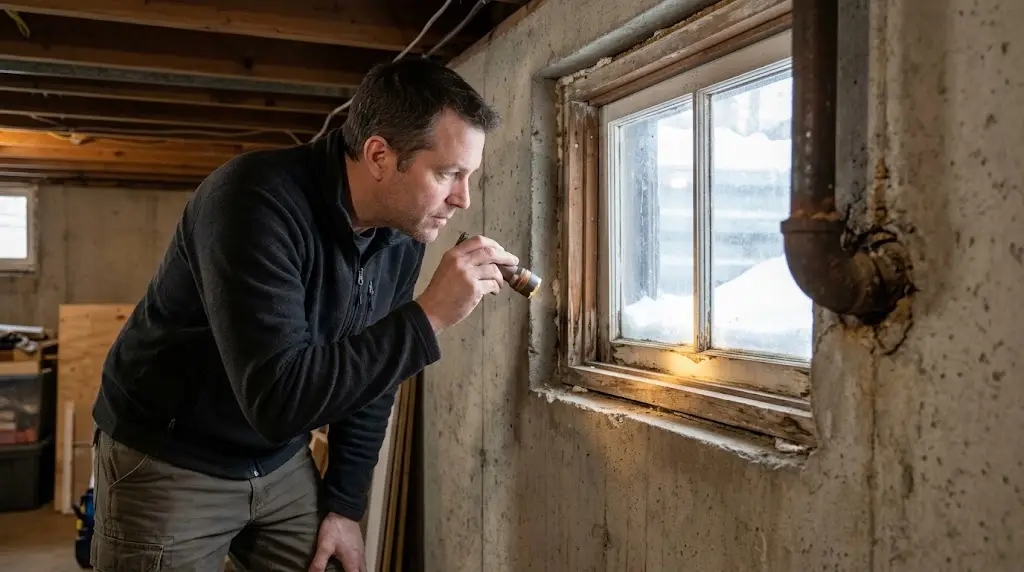
A little detective work saves money. You need ten minutes and one cold day. Start with simple checks.
Run your hand along the rim joist, the wood band that sits on top of the foundation. Feel for moving air. Light an incense stick and watch the smoke near windows and pipe openings. If it bends or streams sideways, you found a leak.
Check the walls for dark patches, white powder, or a musty smell. Those point to moisture. That matters because insulation over a wet wall can trap water and breed mold. Fix the water first.
Outdoor causes count too. Overflowing gutters can soak the soil beside the foundation. Wet soil carries cold into the wall far better than dry soil. Sort out drainage before you spend a dollar on insulation.
How to Warm Up a Cold Basement Without a Full Remodel
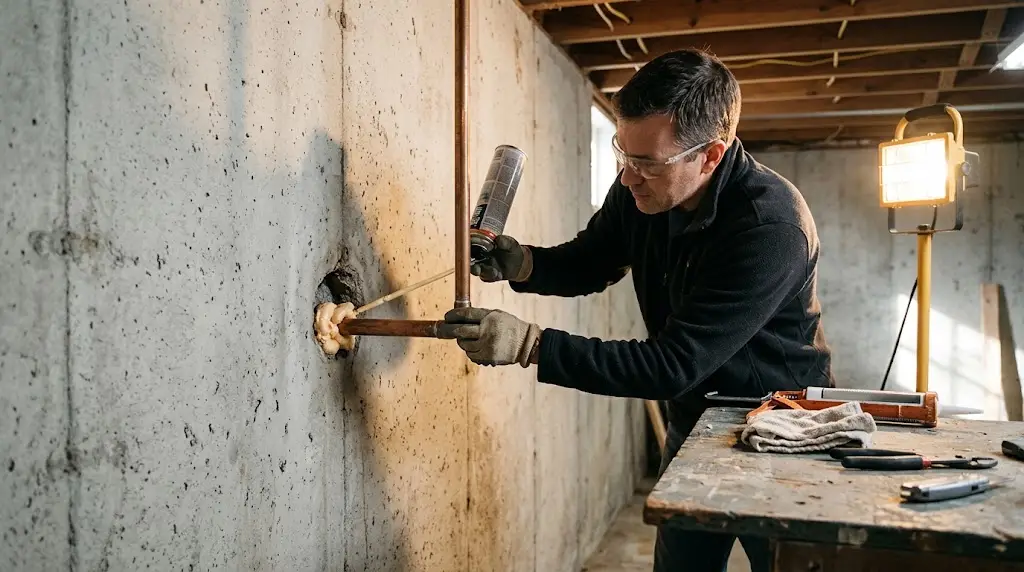
You do not need to gut the room. Start with the cheap jobs, because they pay back fastest. Here is the quick list.
- Caulk small gaps around windows, pipes, and wiring.
- Use expanding foam for gaps wider than a quarter inch.
- Add weatherstripping and a sweep to the basement door.
- Cover old windows with an interior insulating film or a snug foam panel.
- Seal the top of the stair door so warm air stays put.
These steps can take one afternoon. Wear gloves and a mask for the foam. Use fire-rated sealant near flues and chimneys.
Sealing gaps also keeps pests out. If you already hear scratching in the walls, read our guide on how to get rid of mice in your house.
Do not seal combustion air for a furnace or water heater. Those appliances need fresh air to burn safely. If you are unsure, ask a heating pro before you block anything. A carbon monoxide alarm is a must in any basement with fuel-burning gear.
Insulate the Rim Joists
This is the single best upgrade for most homes. The rim joist is a thin wooden band with almost no insulation. Cold air pours through it. Tiny gaps become big losses.
The Department of Energy explains that air sealing and insulating the band joist helps create a continuous air barrier. Its guidance on insulating and sealing rim joists names rigid foam and spray foam as the usual choices. Rigid foam cut to fit each cavity works well for DIYers. Seal the edges with caulk or foam.
Skip loose fiberglass here. It lets air slip through and can soak up moisture. Foam holds up better in this spot. You will often feel the difference in the floor above within a day.
Insulate the Foundation Walls
Walls are the second big target. Bare concrete stays close to ground temperature. Rigid foam boards glued or fastened to the wall block that cold surface. They also resist moisture better than batts.
Build a stud wall in front of the foam only if you plan to finish the room. Otherwise, the foam alone does a decent job. Tape the seams so air cannot sneak behind.
Stone foundations in old houses need extra care. The walls breathe, and they move water. Closed-cell spray foam applied by a professional is often the safest choice there. Ask a contractor who knows historic masonry.
Don’t Forget the Door and the Stairs
The stairwell is a chimney. Warm air from the kitchen slides down, and cold air climbs up. An uninsulated basement door makes this worse. Many old doors are thin and warped.
Fit a tight door sweep and weatherstripping on all four edges. Hang a heavy curtain on the stair side if the door is open-slatted. A foam insulating panel on the back of a hollow door also helps. It takes ten minutes.
Warm the Floor Under Your Feet
Cold floors cause most of the complaints. A bare slab pulls heat from your body fast. A few layers fix that without much work.
Interlocking foam tiles are the easiest start. They snap together and feel softer right away. Dimpled subfloor panels add a thin air gap and a plywood top. They suit rooms you plan to finish.
An area rug with a thick pad helps too. Electric radiant mats go further. They heat the floor directly and can run on a timer. Use them only with a proper installation and a dry slab.
Get Heat Into the Room
Even the best insulation needs a heat source. Pick the option that fits your system. Think about running costs, not only purchase price.
Extend your ducts. If your furnace has capacity, a pro can add a supply and a return. This blends the room into the main system.
Add electric baseboards. They are simple and cheap to install. They cost more to run, so use them in a well-insulated space.
Try a ductless mini-split. It heats efficiently and cools in summer. It also handles a large basement without ductwork.
Use a space heater with care. A small heater works for short stints. Never leave it unattended, and keep it clear of boxes. For more on prevention, see our guide to fire safety at home.
Older houses often rely on radiators. If yours need some attention, here is how to safely dust and wash old radiators without wrecking the paint.
Control Moisture So the Warmth Stays Healthy
A warmer basement can feel damp if you ignore humidity. Warm air holds more moisture. It can then condense on cold walls and pipes. That invites mold.
Aim for relative humidity between 30 and 50 percent. A basic hygrometer costs a few dollars. If readings stay high, run a dehumidifier. Make sure it drains properly.
Seal any wall cracks that leak. Grade the soil so it slopes away from the house. Check that downspouts extend several feet out. Dry walls insulate better than wet ones.
A Simple Cost Ladder
If you are still stuck on how to warm up a cold basement on a budget, think in tiers. Work upward only as far as you need.
- Under $100: weatherstripping, caulk, foam tiles, and a door sweep.
- A weekend project: rim joist foam, window panels, and a thick rug.
- A bigger job: wall insulation and a subfloor system.
- Pro territory: ductwork, a mini-split, or spray foam on stone.
Most homeowners see a big improvement after tier two. Take it slow. Reassess in a week before you spend more.
Mistakes That Keep a Basement Cold
Some errors cost real money. Skipping the air sealing is the top one. Insulation without a tight seal still leaks. Hot air slips around it.
Another mistake is covering a damp wall. The moisture gets trapped and rots the materials. People also forget that a bigger heater is not a fix. If the room leaks, more heat just escapes faster.
Finally, don’t ignore a leaky duct. A forgotten joint can dump warm air into a wall cavity. Check the ducts for gaps and seal them with foil tape. That is quick and nearly free.
Quick Answers to Common Questions
What is the fastest way to warm up a cold basement?
Seal the air leaks and add a door sweep. Then lay foam tiles or a thick rug. You can finish both in one weekend.
How much can insulation change the temperature?
It varies with climate and leaks. Many owners notice a warmer floor above after rim joist work.
Is a cold basement bad for my pipes?
It can be. Frozen pipes are a real risk in hard winters, so insulate exposed lines. Banging pipes are another warning sign, as our guide to water hammer in old house plumbing explains.
Do I need a permit?
Electrical, gas, and ductwork often do. Check local rules before you start.
Take Back the Space Under Your Feet
Tonight, grab a flashlight and walk the basement perimeter. Feel for drafts, and look at the rim joist. Pick one cheap fix and do it this weekend. By spring, that gloomy room could be the warmest spot in the house.