

Gutters overflowing after a fresh cleaning usually point to a hidden flaw. The common causes are a clogged downspout, poor pitch, sagging hangers, or an undersized system. Valley splash, too few outlets, and the wrong gutter guards also play a part. Run a hose test first, then fix the cheapest problem on the list.
- A clogged downspout below the gutter
- Poor gutter pitch or slope
- Sagging hangers and loose fasteners
- Gutters too small for the roof
- Too few downspouts
- Roof valleys and inside corners
- Gutter guards that clog on top
You scrubbed the gutters last weekend. You bagged the leaves and rinsed the channel clean. Then the first real storm arrived, and water poured over the edge anyway.
It feels unfair, but you probably did nothing wrong. A clean gutter is not always a working gutter. Most overflow problems come from design or installation flaws that debris used to hide.
Seeing gutters overflowing right after a cleanup is more common than most people think. This guide covers seven real causes and shows how to spot each one. You will also get simple fixes, a fall checklist, and signs it is time to call a pro. Autumn is the best moment to act, because heavy rain and early frost expose weak drainage systems.
What Causes Gutters Overflowing After a Cleaning?
Gutters carry rainwater from your roofline to the downspouts and away from the foundation. That job depends on slope, capacity, and free flow.
Debris is only one thing that can break the chain. A gutter can be spotless and still fail if the pitch is wrong. It can also fail if the outlet is too small for the roof above it.
The good news is that every cause leaves clues. A quick test will point you toward the right one.
Start With a Simple Garden Hose Test
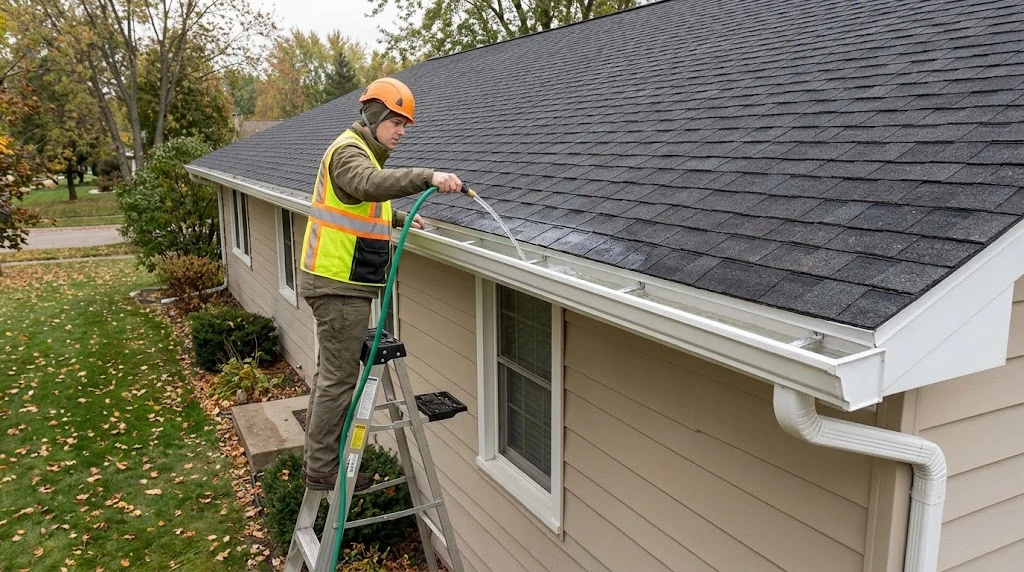
Put a ladder on level ground and ask a friend to steady it. Run a hose at the high end of each gutter run for a few minutes. Watch where the water slows, pools, or spills.
Each result tells a different story:
- Water that lingers mid-run points to a pitch problem or a sagging section.
- Water that backs up near the outlet points to a clogged downspout.
- Water that spills at a corner points to a joint or inside-corner issue.
- Water that copes with a trickle but spills at full flow points to low capacity.
Turn the flow up near the end, because real storms hit far harder than a trickle. If your roof is high or steep, skip the ladder and hire a pro for the inspection.
1. A Clogged Downspout Is Blocking the Flow
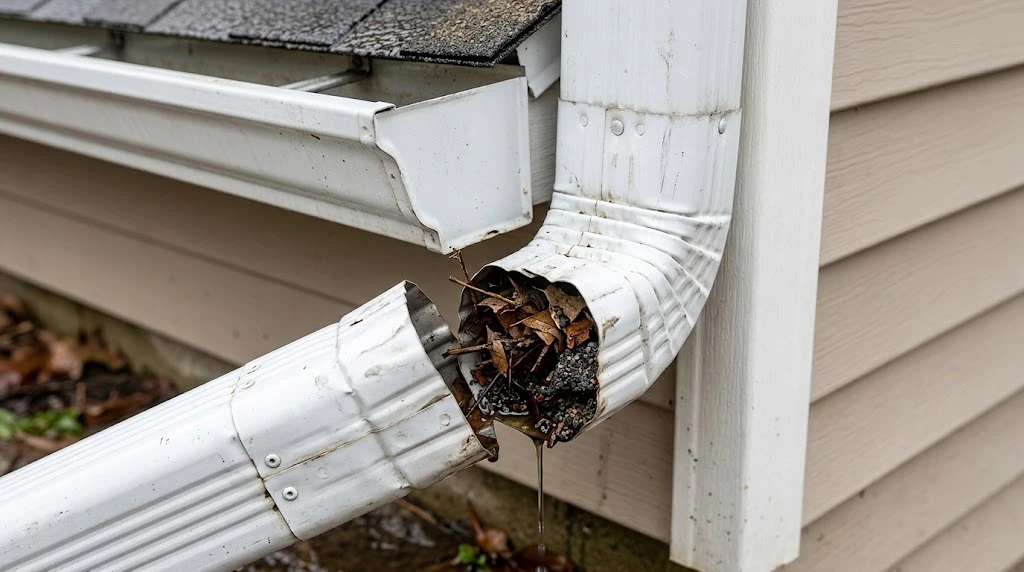
Many homeowners clear the channel but miss the plug lower down. Wet leaves, shingle grit, and small toys can jam the elbow near the bottom. Water then backs up and spills over the front edge.
How to spot it: The hose test shows water piling up near the outlet. Little or nothing comes out at the bottom of the downspout.
How to fix it: Remove the lower elbow and flush the downspout from the top with a hose. A plumber’s snake clears stubborn jams. Reattach the elbow and test again.
If the downspout feeds an underground drain, the clog may sit deeper. Then a drain-cleaning service is the better call.
2. The Gutter Pitch Is Off
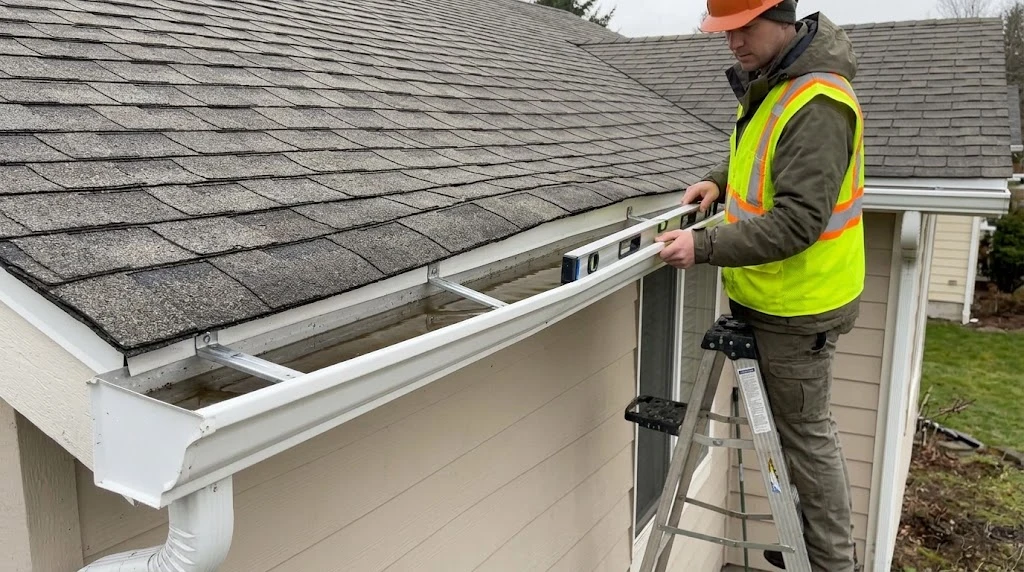
Gutters need a gentle slope toward the downspout so water keeps moving. This Old House’s gutter-sizing guide puts standard slope at about a quarter inch per 10 feet. Its gutter installation guide suggests half an inch per 10 feet. Too little slope leaves standing water, which collects debris fast.
Over the years, ground movement, heavy snow, and loose fasteners can change that slope. A run that worked a decade ago may now tilt the wrong way.
How to spot it: You see standing water after the hose test. Or sludge returns soon after cleaning.
How to fix it: Use a level and a chalk line to find the dips. Adjust the brackets so the gutter drops toward the outlet. For runs over 40 feet, the guide suggests pitching from the middle toward a downspout at each end. Short runs suit DIY, while tall second-storey runs suit a pro.
3. Sagging Hangers and Loose Fasteners
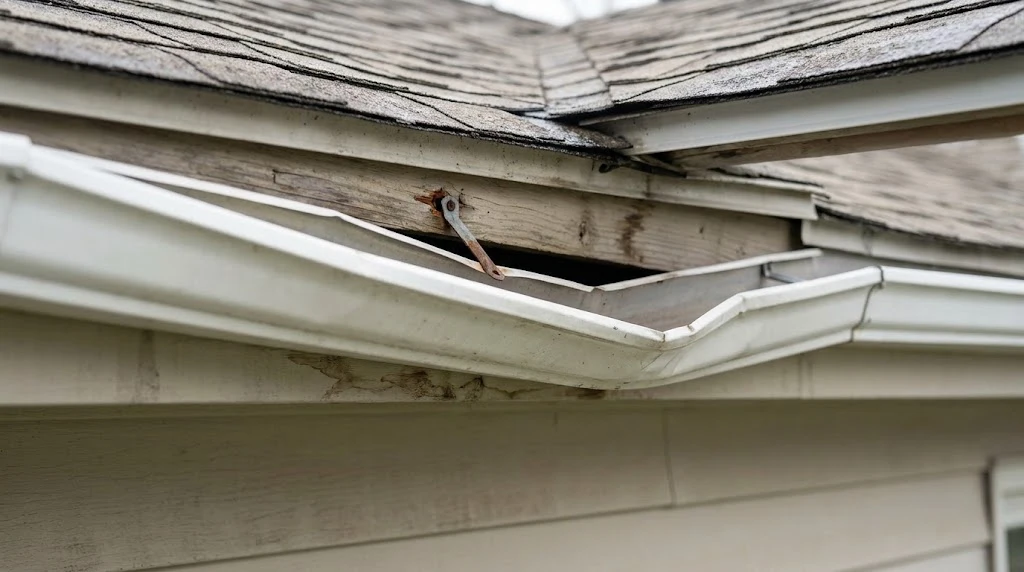
Older gutters often hang on long spikes driven into the fascia. Over time, the wood loosens and the spikes back out. The gutter then droops, and water pools in the low spots.
The sag also tips the front lip forward. That makes spills far more likely during heavy rain.
How to spot it: Look for gaps between the gutter and fascia. Visible dips and stains on the board below are also clues.
How to fix it: Swap old spikes for hidden hangers or screw-in brackets. The installation guide places brackets on every other rafter tail, which works out to roughly 32 inches apart. Check the fascia first, because rotted wood will not hold new fasteners.
4. The Gutters Are Too Small for Your Roof
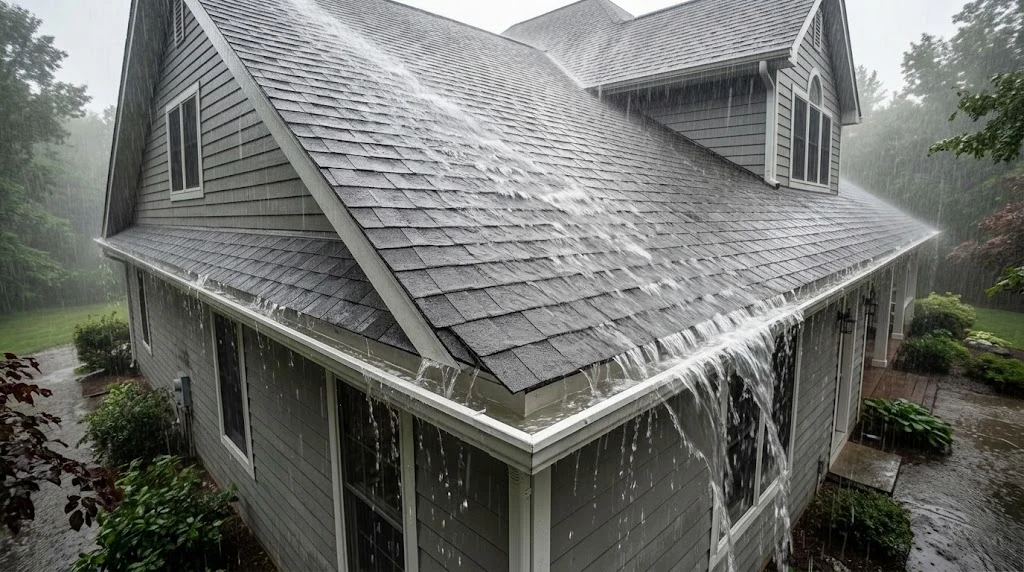
Sometimes nothing is broken. The system simply cannot handle the roof’s runoff. The sizing guide says a 5-inch K-style gutter handles 5,520 square feet of drainage area. A 6-inch one handles about 7,960.
Steep roofs and valleys send water down faster and in bigger surges. Downspout size matters too. One rule of thumb is one square inch of downspout per 100 square feet of roof.
How to spot it: You get gutters overflowing only during downpours, even though everything is clean and level.
How to fix it: Move up to 6-inch gutters or bigger downspouts. This is a replacement job, so ask an installer to size the system. If a re-roof is on your list, our roofing guides can help you plan both projects together.
5. There Are Not Enough Downspouts

A gutter drains only as fast as its outlets allow. One downspout serving a long run fills the channel faster than it empties. General contractor Tom Silva suggests at least two outlets on runs of 60 feet or more.
How to spot it: Overflow shows up in the middle of a long run during heavy rain.
How to fix it: A pro can add a second outlet and pitch the gutter toward both downspouts. That costs far less than replacing the whole system.
6. Roof Valleys and Corners Throw Water Over the Edge
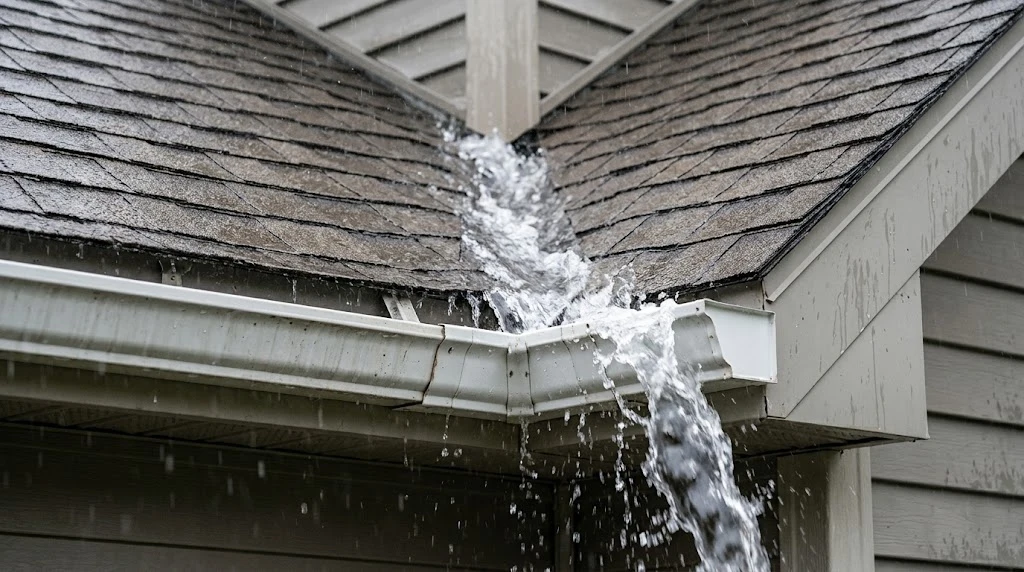
Where two roof planes meet, rain gathers speed and volume. That stream can shoot across the gutter and over the far side. Inside corners also trap leaves and create tiny dams.
How to spot it: Overflow appears below a valley or at a corner every single storm.
How to fix it: Add a splash guard, often called a valley diverter, to slow the water. Seal corner joints with gutter sealant so they do not leak.
7. Gutter Guards Are Making Things Worse
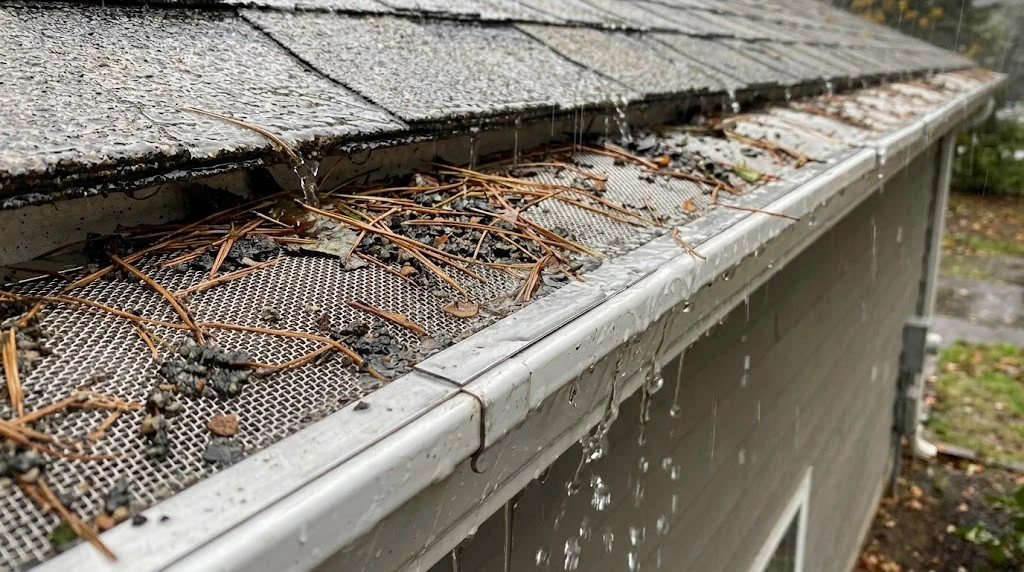
Guards promise less cleaning, but the wrong type can backfire. Fine debris like pine needles and shingle grit can form a mat on top. Water then sails over the front edge instead of dropping in.
How to spot it: The channel underneath is clean, yet the guard surface is crusted with debris.
How to fix it: Clean the guard surface and check that its design suits your trees. A gutter specialist can tell you whether swapping the guard makes sense.
Where the Water Goes After the Downspout
Fixing the gutter is only half the job. The downspout must also send water well away from the foundation. An extension at the bottom is a cheap and effective upgrade.
Hard surfaces around the house add even more runoff. Our guide on how to install a permeable paver driveway shows one way to manage that water. Soil that slopes away from the walls helps too.
Fix the Cheap Problems First
Start with clogs, because they cost nothing. Next, tighten hangers and correct the pitch. Only then consider bigger gutters or extra downspouts. That order saves money and avoids needless replacements.
When It’s Time to Call a Professional
Many fixes suit a free Saturday. Some jobs need backup.
- Your roof is high, steep, or hard to reach safely.
- The fascia board is soft, stained, or rotted.
- Water leaks behind the gutter or into the soffit.
- You see damp spots in the basement or pooling at the foundation.
- You need larger gutters, extra outlets, or a full re-hang.
Ask for a clear diagnosis, not just a quote. A good installer checks pitch, hangers, outlets, and fascia in one visit. You can also browse more gutter guides on our site.
Your Fall Gutter Checklist
- Clear debris from every gutter run and downspout.
- Flush each downspout and confirm water exits freely.
- Run the hose test on every section.
- Look for sagging, loose hangers, and gaps along the fascia.
- Check corners, seams, and end caps for leaks.
- Watch the system during the first heavy rain.
This Old House advises cleaning twice a year, and more often if trees surround your home. Do that, and most problems show up early.
FAQs About Gutters Overflowing
Why do my gutters overflow only in heavy rain?
Usually capacity is the issue. The gutters, downspouts, or both cannot handle the sudden volume. Undersized gutters and clogged elbows are the usual suspects.
Can gutters overflowing damage my house?
Yes. Spilled water can soak the fascia, stain siding, and erode soil. Over time it can cause rot and basement dampness.
How often should I clean gutters?
At least twice a year, usually in late spring and late autumn. Homes near trees may need more.
Do gutter guards stop overflow completely?
They reduce clogs, but they do not fix pitch or capacity. Some designs can even add to the problem.
Let the Rain Run Where It Should
Overflow feels like a mystery, but it rarely is. Once you know the clues, the cause tends to show itself fast. Start with the hose test and work down the list.
Fix the free problems first, then move on to the bigger ones. If gutters overflowing keep returning, stop cleaning the same channel again and again. Bring in someone who can read the whole system. A small fix now beats a rotted fascia next spring.