

Buying the charger is only part of the bill. The EV charger installation cost is what surprises most new owners, because the same charger can cost a few hundred dollars to install in one garage and several thousand in another. The difference is rarely the charger itself. It is your electrical panel, the distance to where you park, and whether your home needs a new 240-volt circuit.
This guide breaks down realistic 2026 US prices from Angi, HomeAdvisor and Qmerit-style installer data, as ranges, because labour, permits and panel work vary by region.
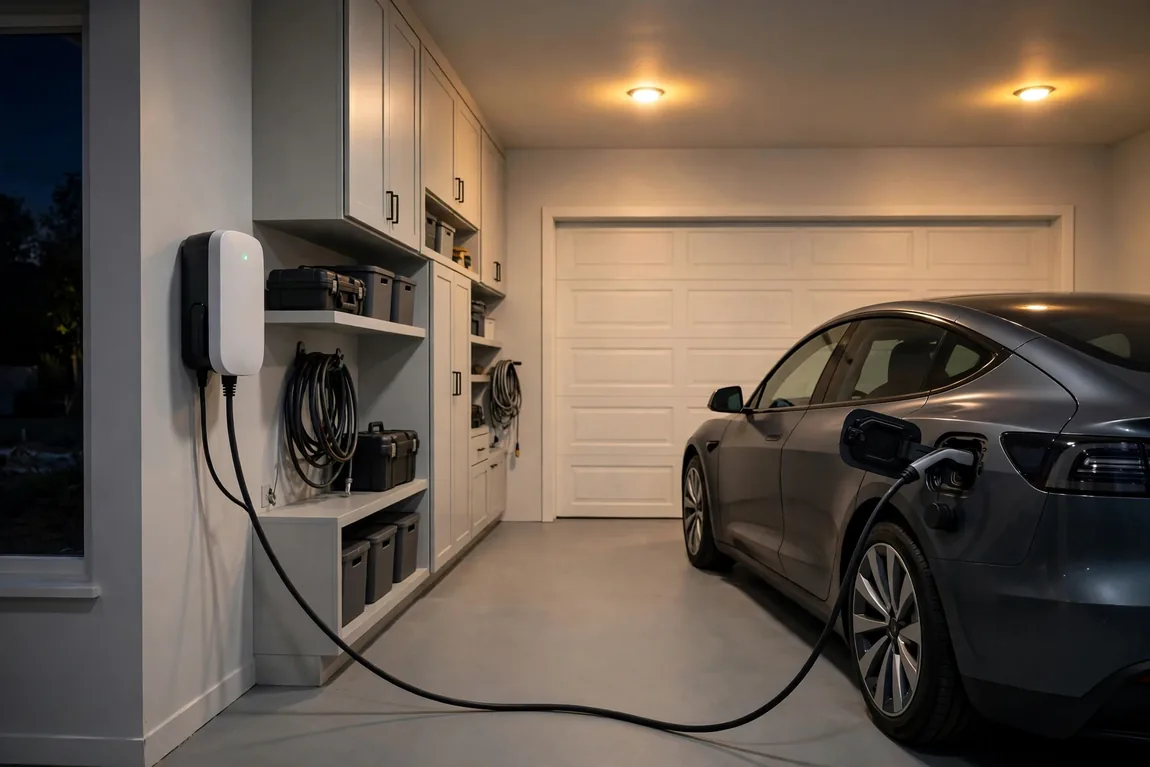
A Level 2 charger installed in a home garage — for most owners, the circuit and panel work matter more than the charger itself. (Illustrative image)
EV charger installation cost breakdown
Angi’s 2026 guide puts professional installation at about $552 to $1,380, with an average near $966, before panel upgrades. Qmerit, which manages installations for several car brands, has put standard Level 2 installation at about $749 to $2,500, with an average around $1,700. The ranges differ because quotes bundle different things: some include the charger, permit and materials, others labour only. Always ask for an itemised quote, so you can see whether you are paying for a charger or for a panel.
| Cost item or scenario | Typical 2026 range | Notes |
|---|---|---|
| Level 1 charger (standard outlet) | $300–$600 | Often included with the car |
| Level 2 charger hardware | $300–$900 | More amps and smart features cost more |
| Electrician labour, new 240V circuit | $400–$1,200 | Usually 2–4 hours, short run |
| Wire, breaker, conduit and outlet | $200–$500 | Depends on run length |
| Permit and inspection | $50–$300 | Angi: about $150–$200 typical |
| Total: Level 2, new circuit, no panel upgrade | $1,000–$2,600 | Hardware, labour, materials, permit |
| Panel or service upgrade, if needed | $800–$3,000 | Angi: $800–$2,000; Qmerit-style: $1,500–$3,000 for 200A |
| Total: Level 2 with panel upgrade | $2,500–$5,000+ | The panel is the big variable |
Level 1 vs Level 2: what you actually get
Level 1 charging
Level 1 uses a normal 120-volt outlet. It adds only about 3 to 5 miles of range per hour, or roughly 30 to 40 miles overnight. That is enough for a short commute or a plug-in hybrid. Installation can cost close to zero if a suitable outlet is already near the car, although an electrician should check the circuit is not shared with other heavy loads.
Level 2 charging
Level 2 uses a 240-volt circuit, like an electric dryer or range. It adds about 25 to 40 miles of range per hour, so most EVs refill overnight. This is the setup most homeowners install, and where almost all of the cost in this guide sits. Chargers are commonly rated at 32, 40 or 48 amps. A 48-amp hardwired unit charges fastest, but needs a larger circuit and more panel capacity.
Planning other electrical work? Our guide to the future of electronics in the home covers why panel capacity matters before you add more loads.
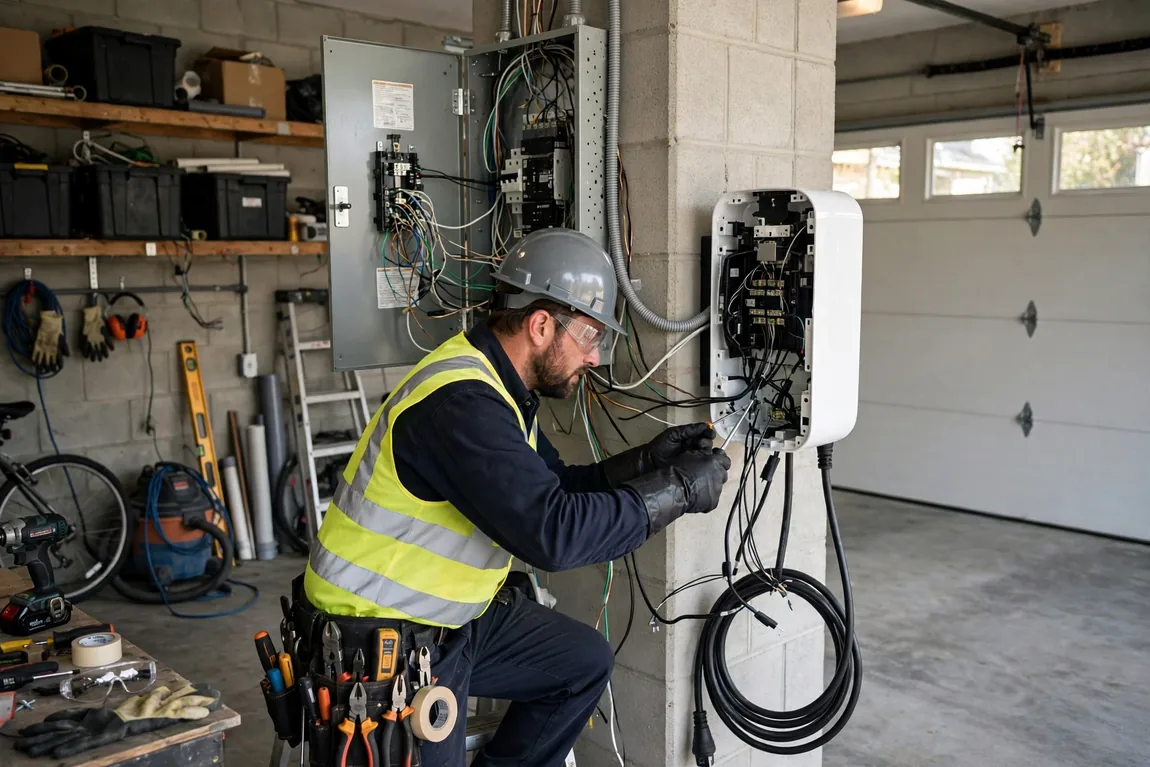
A licensed electrician installs the circuit behind a Level 2 charger — new electrical work is not a DIY job. (Illustrative image)
Factors that affect the final price
Your electrical panel
This is the single biggest factor. Newer homes with 200-amp service and spare breaker spaces can often add a charger circuit with no panel work. Older homes with 100-amp service, a full panel, or an outdated panel may need a replacement, subpanel, or full service upgrade — adding $800 to $3,000 or more. An installer should do a load calculation, not just look at empty slots. Load management can sometimes avoid an upgrade by reducing charging when the house is using a lot of power.
If you are also pricing a heat pump installation, get both jobs quoted together, so one panel upgrade can serve both.
Distance from the panel
A charger on the same wall as the panel is the cheapest job. Every extra foot adds wire, conduit and labour. A long run to a detached garage costs much more, and trenching adds again — commonly about $1,000 to $1,500 extra.
Hardwired vs plug-in
A plug-in charger connects to a 240-volt outlet, usually a NEMA 14-50 receptacle. It costs a little more for the heavy-duty outlet and protection, but you can take the unit with you when you move. A hardwired charger connects directly to the circuit: a cleaner, permanent installation that supports 48-amp charging and avoids outlet wear. Neither is automatically cheaper — the circuit behind the wall is most of the bill either way.
Permits, location and mounting
Most cities require a permit and inspection for a new 240-volt circuit, often $50 to $300, sometimes higher. Outdoor mounting, pedestals and high-cost metro areas push the price up, and electrician rates vary far more by region than charger prices.
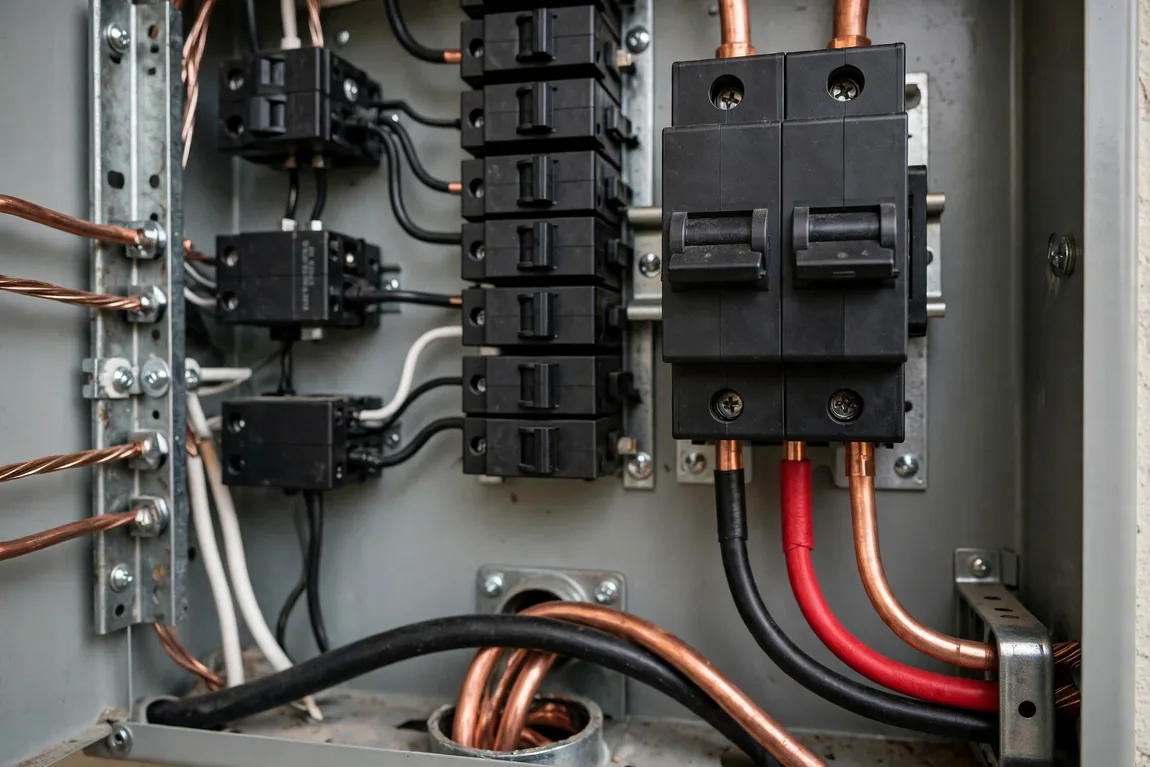
Panel capacity is the biggest cost variable — a load calculation decides whether an upgrade is needed. (Illustrative image)
DIY vs hiring a professional
There is a clear line here. Mounting the unit on the wall, fitting a cable hook, and plugging a plug-in charger into an existing, suitable outlet are reasonable DIY tasks if you follow the manufacturer’s instructions.
Everything electrical behind that point is licensed-electrician work: adding a breaker, running a new 240-volt circuit, installing an outlet, hardwiring a charger, load calculations and any panel upgrade. This is high-current work that runs for hours. A loose connection that might be fine for a dryer cycle can overheat during an overnight charge, and an unpermitted installation can create problems with insurance, a home sale, and the warranty. Save money on shopping and setup, not on the circuit.
Incentives in 2026: read this carefully
Do not budget around a federal credit without checking the date. The federal Alternative Fuel Vehicle Refueling Property Credit, known as Section 30C, covered home charging equipment placed in service on or before June 30, 2026, and expired for equipment placed in service after that date. If your charger was operating on or before that deadline and your home met the eligibility rules, talk to a tax professional about claiming it for that tax year. If you are installing now, do not assume it is available.
State and utility help has not disappeared. Many utilities still offer rebates for a charger or wiring, off-peak rates, or charger-prep credits for panel work. Rules change often and depend on your address, so check current federal, state and utility incentives with your utility and state energy office before you sign, and keep the itemised invoice.
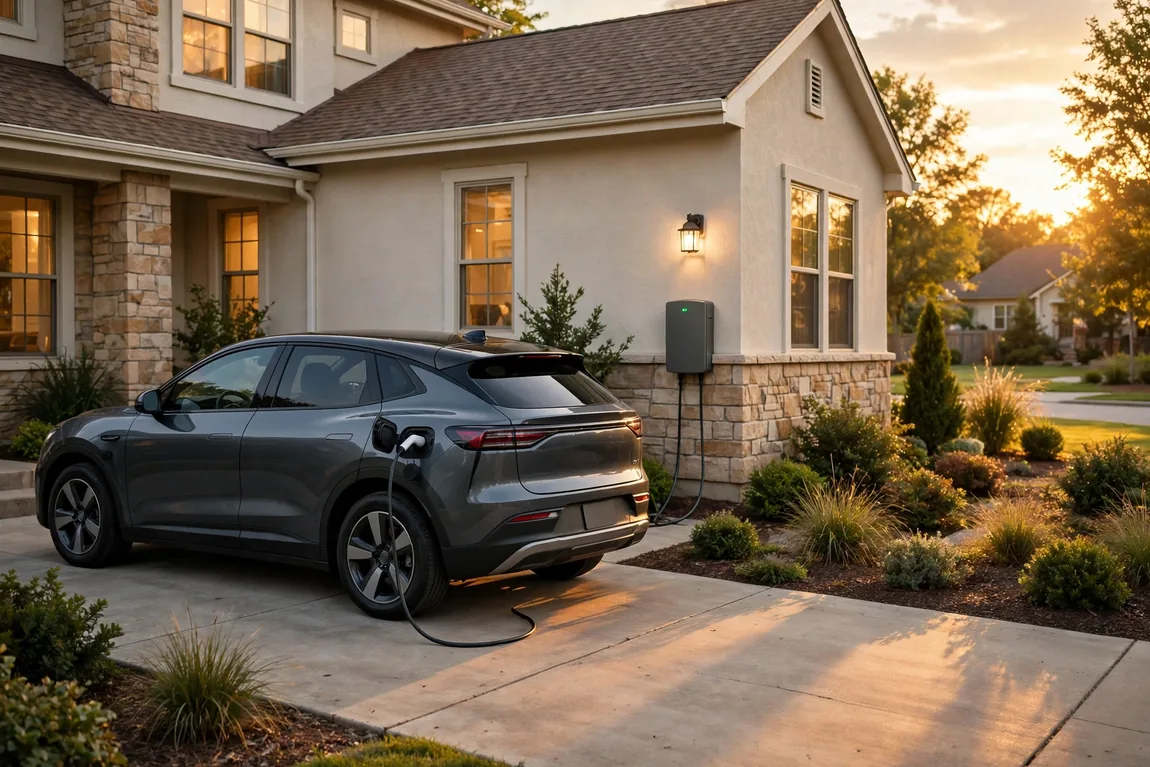
An outdoor plug-in Level 2 setup — mounting close to the panel keeps the wiring run, and the cost, down. (Illustrative image)
How to save money on installation
- Mount the charger close to the panel. A short run is the easiest saving.
- Choose the amperage you need, not the maximum. A 32-amp or 40-amp charger refills most cars overnight and may fit your panel.
- Ask about load management first. A smart charger can sometimes avoid a $1,500 to $3,000 panel upgrade.
- Get at least three itemised quotes. Compare hardware, labour, materials and permit separately.
- Use an existing 240-volt outlet if suitable. A checked dryer outlet near the garage can remove the new-circuit cost.
- Check rebates before you buy. Some programs only pay for approved models or require pre-approval.
- Bundle electrical work. One visit and one permit can be cheaper than separate jobs. Compare other projects in our attic insulation cost guide when setting a whole-home budget.
Frequently asked questions
How much does it cost to install a Level 2 charger at home?
For a new 240-volt circuit with no panel upgrade, about $1,000 to $2,600 including a $300 to $900 charger, based on Angi and Qmerit-style ranges. With a panel upgrade, $2,500 to $5,000 or more is common.
Do I need to upgrade my electrical panel?
Not always. Homes with 200-amp service and spare capacity often do not. Homes with 100-amp service, a full panel, or several large loads are more likely to need a subpanel, load management, or a service upgrade. Only a load calculation by a licensed electrician can answer this for your house.
Can I install an EV charger myself?
You can mount the unit and plug into an existing suitable outlet. Adding a circuit, breaker or hardwired connection, and any panel work, should be done by a licensed electrician, with a permit where required.
Is Level 1 charging enough?
For drivers covering roughly 30 to 40 miles a day or less, often yes. It is slow, but it costs very little to set up. Drivers with longer commutes or large batteries usually need Level 2.
How long does installation take?
A straightforward installation near the panel is often finished in 2 to 4 hours, plus permit and inspection scheduling. Long runs and panel upgrades can turn it into a full day or a multi-visit project.
Bottom line: budget for the circuit, not just the charger. Get a load calculation, keep the run short, and check current state and utility incentives before you sign.