

A soggy lawn, a puddle that never dries, or water creeping across the basement floor usually points to the same problem: water has nowhere to go. A French drain gives it a path away from your house, and understanding the French drain installation cost before you call a contractor helps you budget and compare quotes. In this guide, all prices are typical US planning estimates and ranges for 2026, not fixed quotes, because every yard and run length is different.
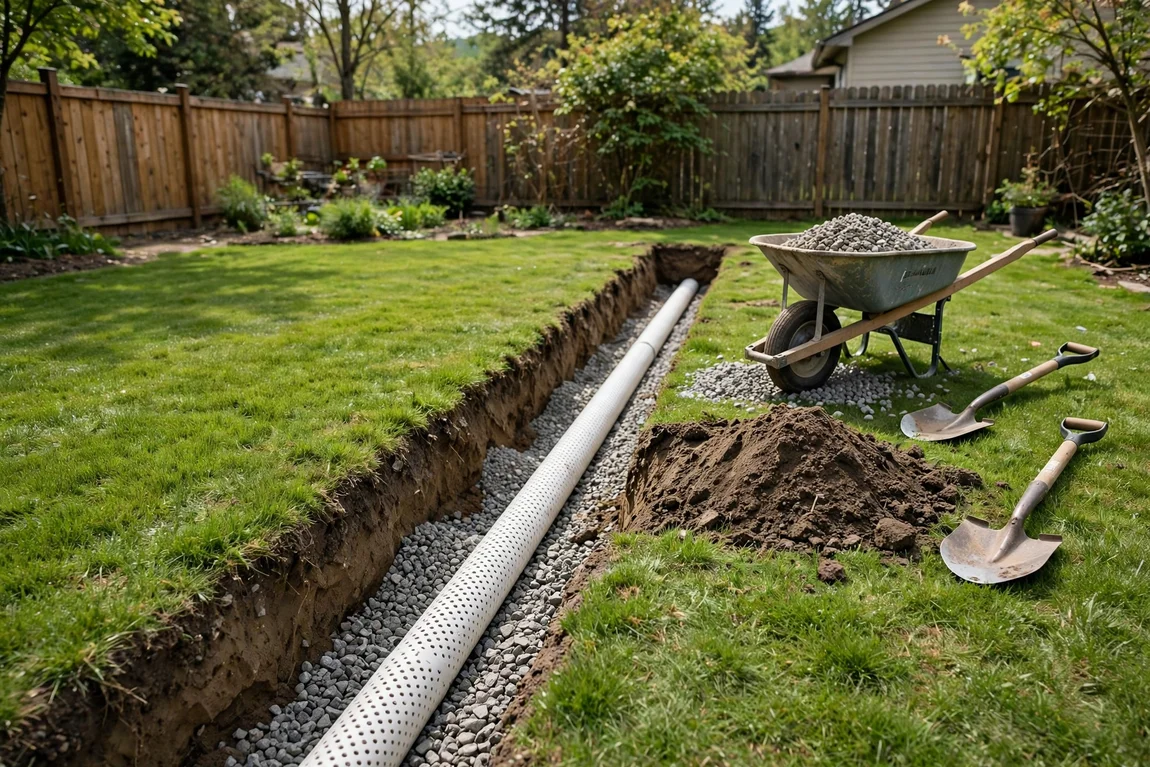
A trench with perforated pipe and gravel being installed in a yard. (Illustrative image)
What a French Drain Is and What Problems It Solves
A French drain is a gravel-filled trench that holds a perforated pipe. Water in the surrounding soil seeps through the gravel, enters the pipe through its small holes, and flows downhill to a safe outlet such as a dry well, a storm drain, or a daylight exit at a lower point in the yard. Most trenches are lined with landscape fabric to slow down silt, and the pipe is buried so the surface looks like normal lawn again.
Homeowners install French drains to solve problems such as:
- Standing water and muddy patches after rain
- Water pooling against the foundation, which can lead to damp walls and leaks
- A wet or flooding basement fed by groundwater pushing up around the footings
- Erosion on slopes, where surface water cuts channels through soil and mulch
- Soggy areas near driveways and patios that stay wet
A French drain manages groundwater and slow seepage well. It is not the right fix for a burst pipe or a roof leak, so confirm the water source before you dig.
French drain installation cost: The Typical Price Ranges
The table below gives typical US planning ranges for 2026. Use them to sanity-check quotes rather than as a promise of a final price, because access, depth, and soil can move a real quote up or down.
| Type of drain | Typical planning range (2026) | Notes |
| Exterior yard drain | $20 to $50 per linear foot installed | Standard shallow trench in open lawn is usually at the lower end |
| Interior basement drain | $40 to $85 per linear foot installed | Includes breaking and re-pouring a concrete strip along the wall |
| Curtain drain | $25 to $55 per linear foot installed | Shallower drain on a slope that intercepts water before it reaches the house |
| Full exterior system, typical yard | $2,500 to $7,500 total | Common 80 to 120 foot run with one outlet, planning estimate only |
| Full interior basement system | $4,500 to $12,000 total | Often paired with a sump pump; larger basements cost more |
| Materials only, for DIY | $5 to $15 per linear foot | Pipe, gravel, and fabric; excludes tools, rental, and spoil removal |
Interior systems often need a pump to lift collected water out of the basement. If that is part of your plan, compare the figures here with our guide to sump pump installation cost so the two budgets line up.
Exterior vs Interior French Drains
An exterior drain sits outside the house, usually in the yard or along the footing. Yard drains are commonly 12 to 24 inches deep and handle surface and shallow groundwater. A footing drain is deeper and more disruptive, because the trench must reach the base of the foundation. Exterior work is normally the first choice for lawn drainage and water travelling downhill toward the home.
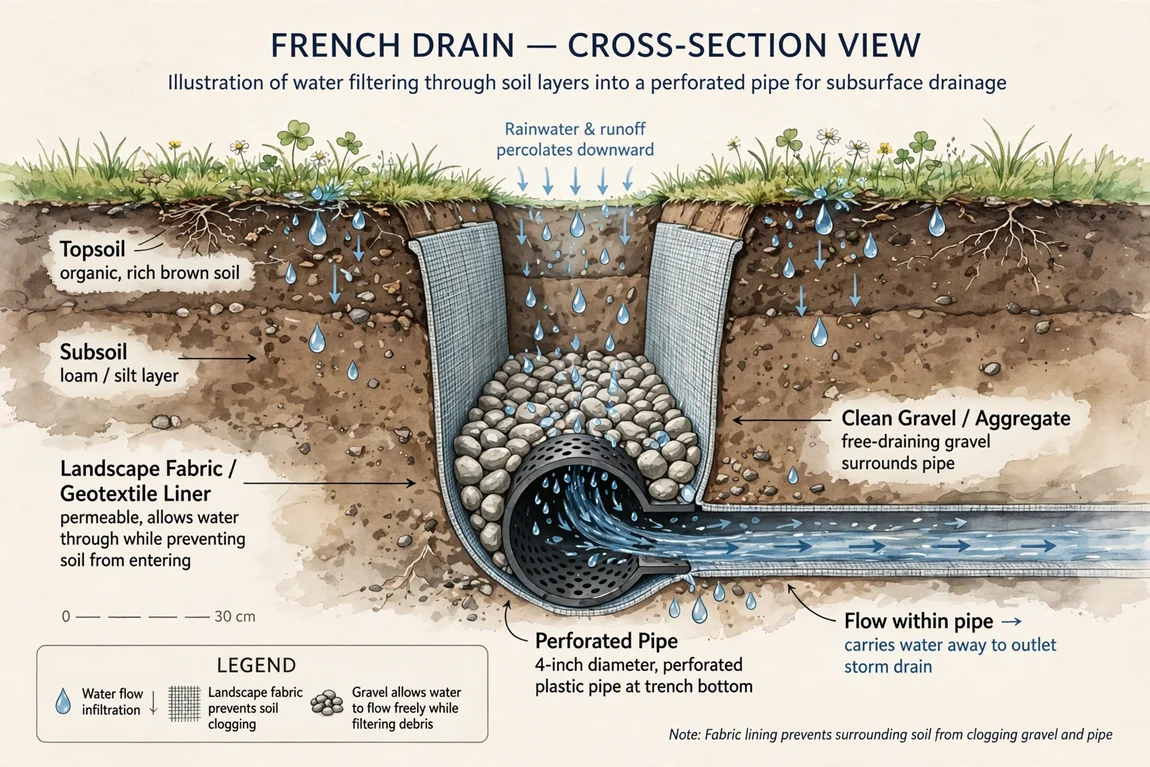
Cross-section style view of a gravel drain channel with fabric and perforated pipe. (Illustrative image)
An interior drain is installed inside the basement, just below the floor along the foundation wall. The concrete strip is cut out, a trench is dug, pipe and gravel are laid, and the water is routed to a sump basin. Interior systems are often less disruptive than digging outside a finished, landscaped property, and they address water entering where the floor meets the wall. They do not stop water coming through a cracked wall higher up, which may need separate repair.
What Installation Involves
Whether the drain is inside or outside, the basic steps are similar:
- Planning the route so the pipe slopes gently and continuously toward the outlet, with no low spots where water can sit
- Marking underground utilities before digging, and checking local rules on where drain water may discharge
- Digging the trench to the planned width and depth, and removing the spoil
- Lining the trench with landscape fabric, adding a bed of washed gravel, and laying the perforated pipe
- Connecting the outlet, backfilling with gravel, wrapping the fabric, and covering with soil or stone
- Restoring the surface with sod, seed, concrete, or paving as agreed
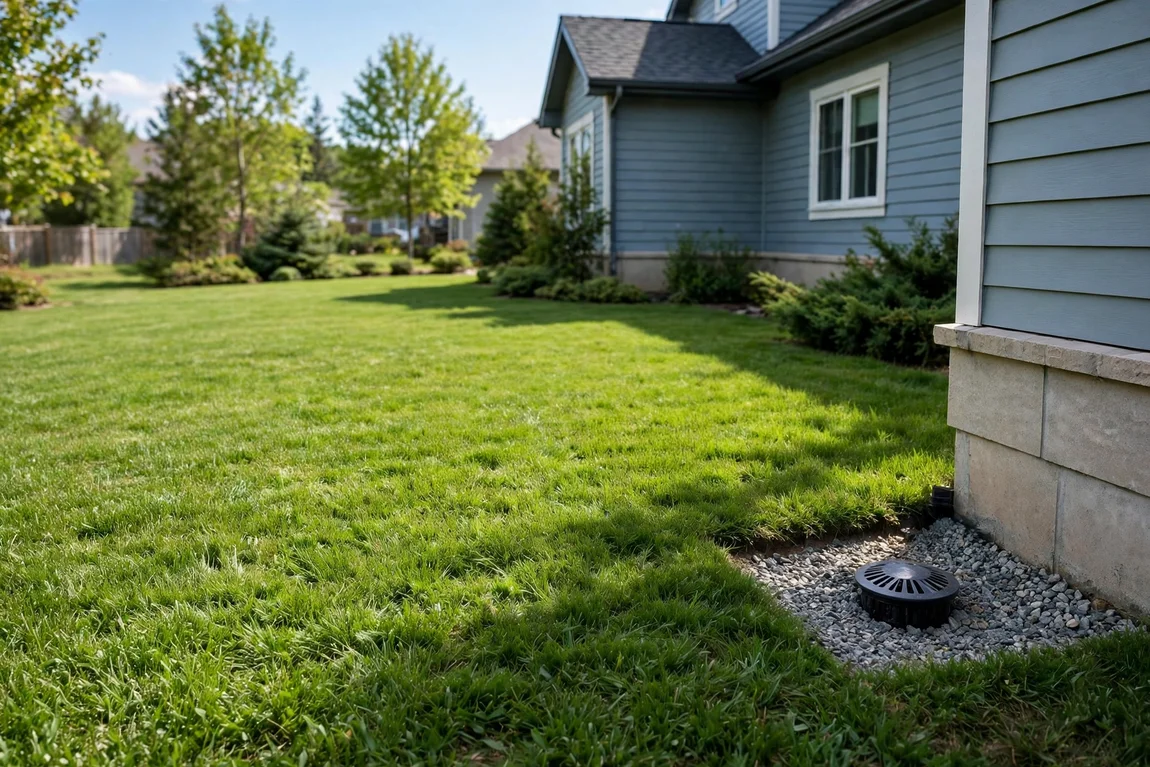
A dry, healthy lawn after drainage work, with a gravel outlet at the yard edge. (Illustrative image)
Restoration is easy to overlook. Re-sodding, replanting beds, or repairing a patio can be a real part of the final bill, so check whether your quote includes it. Our breakdown of landscaping cost can help you estimate that finishing work if priced separately.
Factors That Change the Price
Length is the biggest driver, since most quotes are built per linear foot. Depth comes next: a deeper trench means more digging, more gravel, and more spoil to remove. Rocky or heavy clay soil slows excavation and raises labour cost, while tight access, fences, and decks add time. Inside the basement, concrete thickness and whether the perimeter is finished also matter. Extras such as catch basins, cleanout ports, a dry well, or a pump add parts and labour, and permits and discharge rules vary by area.
DIY vs Hiring a Pro
A short, shallow yard drain is a realistic DIY project for a confident homeowner, and the materials-only range in the table shows the potential saving. The hard parts are unforgiving: digging by hand is slow, the slope must be consistent or the drain will silt up, and trencher rental, gravel delivery, and spoil disposal eat into the saving. Hiring a pro costs more but brings correct grading and usually a workmanship warranty. For interior work, where concrete must be cut and a pump wired in, most homeowners are better served by a professional. If an existing drain is simply blocked, a cleanout may restore it for far less than replacement; see our guide to drain cleaning cost for typical prices.
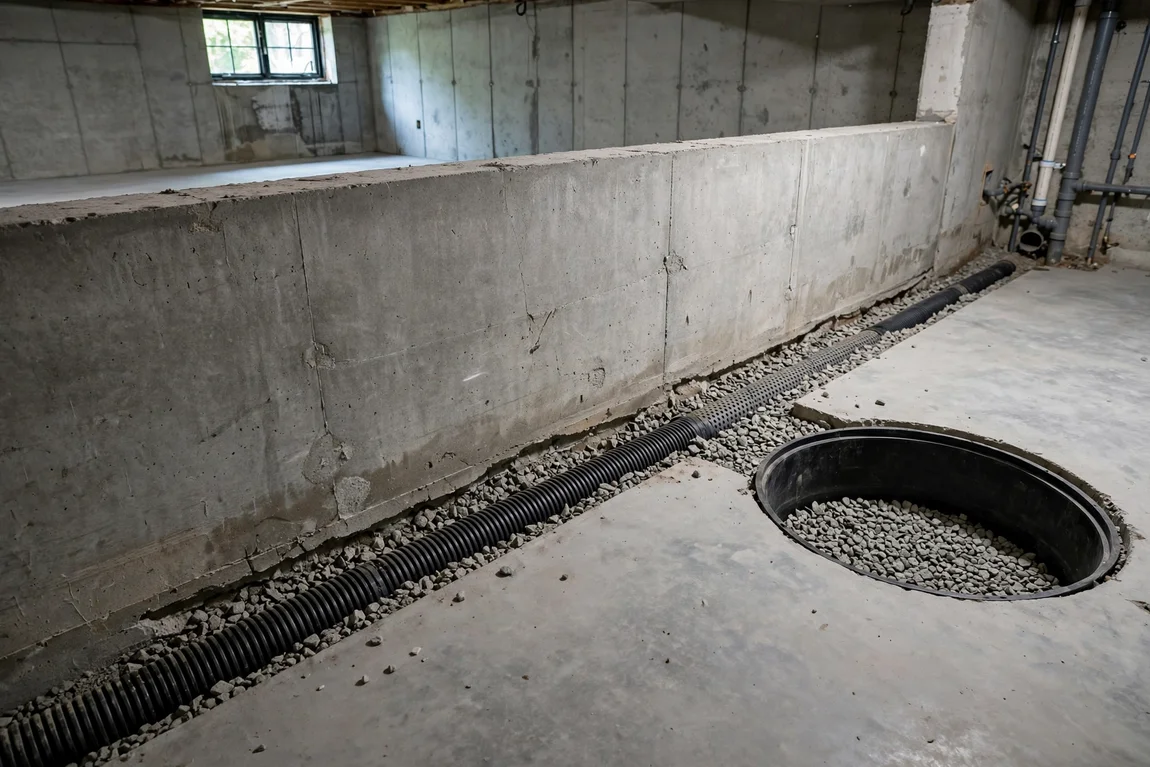
An interior basement drainage channel along a wall, leading toward a sump basin. (Illustrative image)
How to Save Money on a French Drain
- Get at least three written quotes that state length, depth, materials, outlet type, and restoration, so you compare like with like
- Fix the cheap causes first: extend downspouts away from the house and regrade small low spots before paying for a long drain
- Keep the route simple and accessible; every corner, tree root, and crossing under a patio adds cost
- Do the surface restoration yourself, such as reseeding or replanting, if the contractor prices it separately
- Combine related work, for example adding irrigation while the yard is already open; our guide to sprinkler system installation cost shows typical ranges
Maintenance and How Long a French Drain Lasts
A well-built drain needs little routine care, but it is not fit-and-forget. Keep the outlet clear of leaves, mulch, and soil so water can always exit. If your system has cleanout ports, flush them with a hose periodically to move silt along. Watch for warning signs such as the yard staying wet again or sediment at the outlet, which suggest a partial blockage. Keep deep-rooted trees away from the line where possible, and do not connect roof downspouts directly into a perforated drain unless it was designed for that volume, because roof grit accelerates clogging. With sound materials and fabric properly installed, a French drain should serve for many years, and most failures come from poor slope or silt rather than the pipe itself.