

Heating is one of the largest energy costs in most homes, but the biggest savings rarely require a new furnace on day one. If you are learning how to lower your heating bill, start with the settings, leaks, and maintenance items that stop you paying for heat that escapes or is never needed.
This guide follows U.S. Department of Energy (DOE) Energy Saver guidance. It gives realistic savings figures, attributed to DOE, and separates free changes you can make today from low-cost weekend jobs and larger projects worth planning.

How to Lower Your Heating Bill With a Thermostat Schedule
The thermostat is the fastest place to save. DOE says you can save as much as 10% a year on heating and cooling by turning your thermostat back 7 to 10 degrees for eight hours a day from its normal setting, as explained in its Energy Saver winter steps guide.
The DOE Consumer Guide to Home Heating and Cooling puts the same point another way: you can save about 1% on heating bills for each 1 degree Fahrenheit you set the thermostat back during an eight-hour period, according to the DOE Consumer Guide to Home Heating and Cooling.
Use the hours you will not notice. Set the temperature back while everyone is asleep under blankets, and again while the house is empty for work or school. Program the system to recover shortly before you wake or return, so comfort is there when you need it.
A programmable or smart thermostat makes that schedule automatic. Set it once, then leave it alone. Constantly overriding a schedule erases much of the benefit, because the house spends more hours at the higher, more expensive temperature.
Heat pumps need care with setbacks. A deep setback can trigger costly backup electric heat when the system recovers, which can cancel the saving. If you heat with a heat pump, use a thermostat designed for it and follow its recovery guidance.
Seal Air Leaks Before You Buy Anything Big
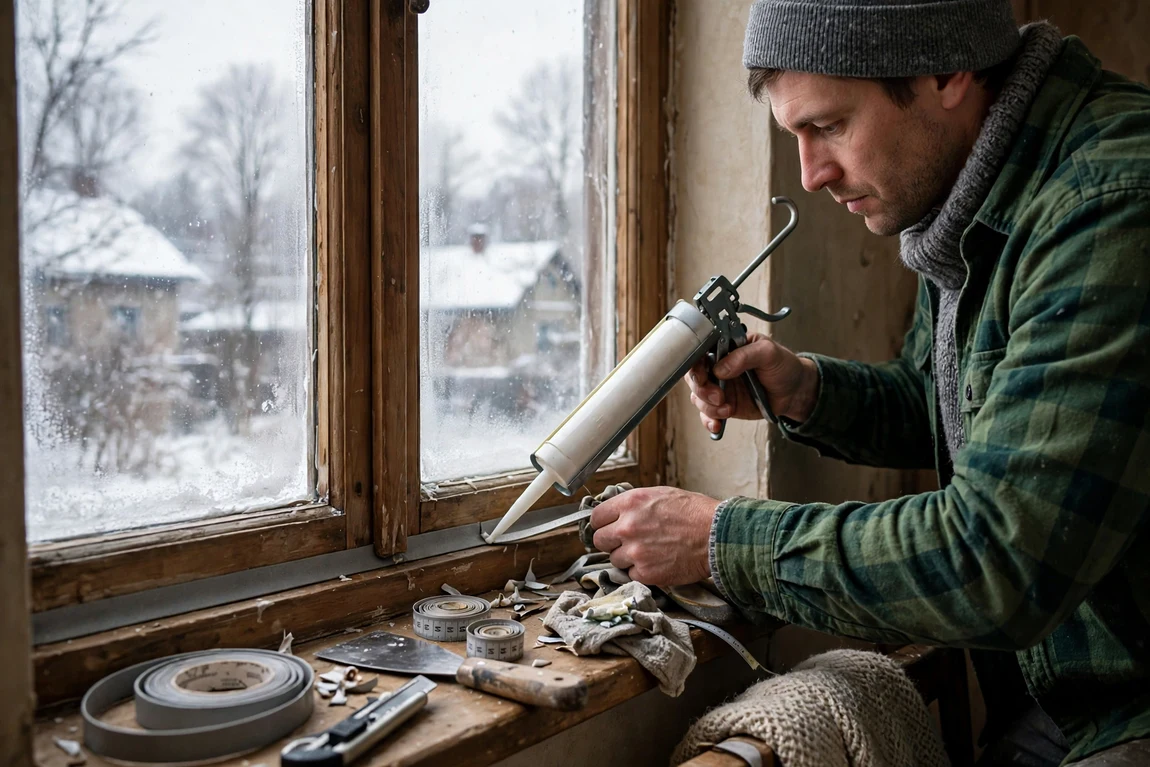
Warm air leaking out forces the heating system to replace it with cold air from outside. DOE lists weatherstripping, caulking, and increasing insulation as low-cost ways to reduce air leaks around the home. Start where drafts are easiest to feel: doors, windows, and attic hatches.
Work through a simple checklist. Caulk stationary window frames and cracks around trim. Replace worn weatherstripping on exterior doors. Add a door sweep where you can see daylight at the bottom. Seal gaps where pipes, wires, and vents pass through walls, floors, and the attic floor.
Do not forget the fireplace. DOE’s consumer guide advises closing the fireplace damper when it is not in use. An open damper is a direct path for warm air to leave through the chimney, even when no fire has burned for days.
Windows deserve attention too. DOE notes that about 30% of a home’s heating energy is lost through windows. Heavy curtains, shades, or plastic window coverings can reduce that loss, and opening coverings on sunny windows during the day lets in free solar warmth.
Add Insulation Where Heat Escapes Fastest
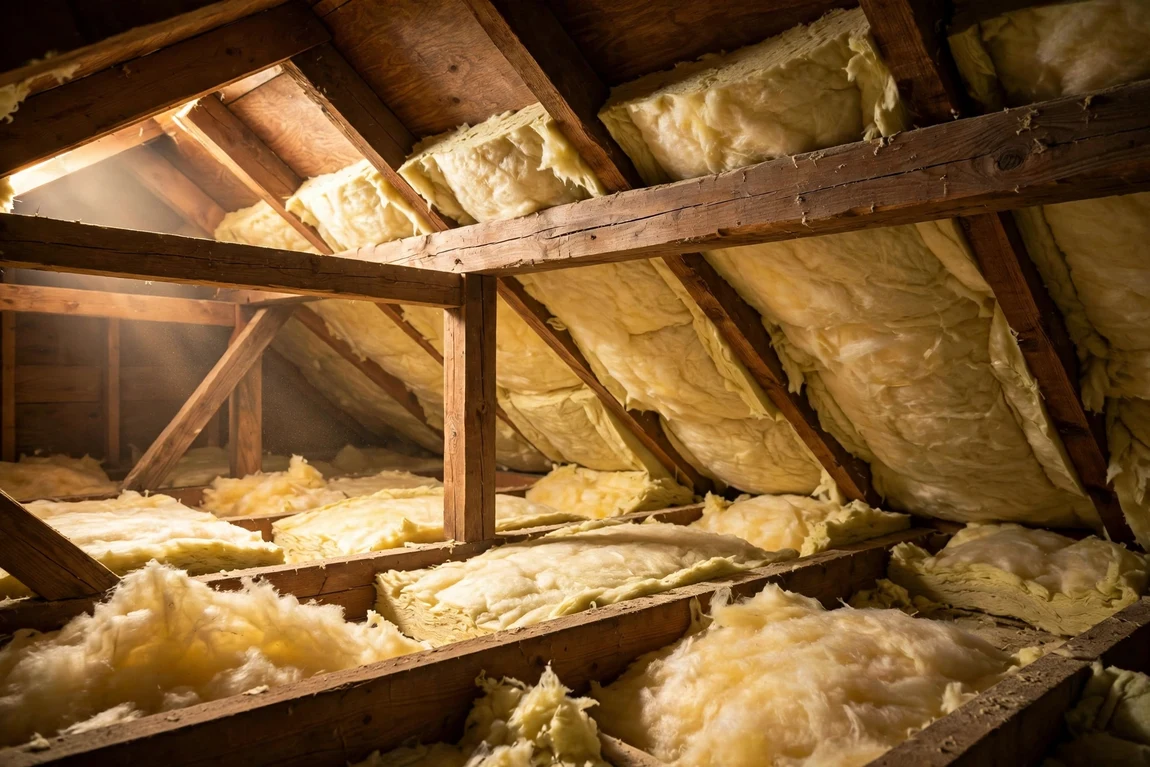
Insulation slows heat loss through ceilings, walls, and floors. The attic is usually the most important place, because warm air rises and a thin attic layer lets that heat pass straight into a cold roof space. Check the depth and condition before you assume the attic is fine.
If insulation sits below the tops of the attic joists, or is patchy and compressed, topping it up is often worthwhile. Our guide to attic insulation cost explains typical project ranges, and spray foam insulation cost covers the higher-performance option for specific areas.
Seal before you insulate. Air sealing the attic floor first stops warm, moist air leaking into the insulation layer. Burying gaps under new insulation without sealing them leaves the leak in place and can create moisture problems that are harder to reach later.
Insulation is a longer-term measure than a thermostat change. It costs more up front, and the payback depends on your climate, fuel, and current insulation level. Treat it as a comfort and durability upgrade as well as a bill measure, especially in rooms that are always colder than the rest.
Maintain the Furnace and Change the Filter
A neglected system works harder to deliver the same heat. DOE’s consumer guide says following a regular maintenance schedule can help reduce heating and cooling costs by 10% or more and will prolong the life of the equipment.
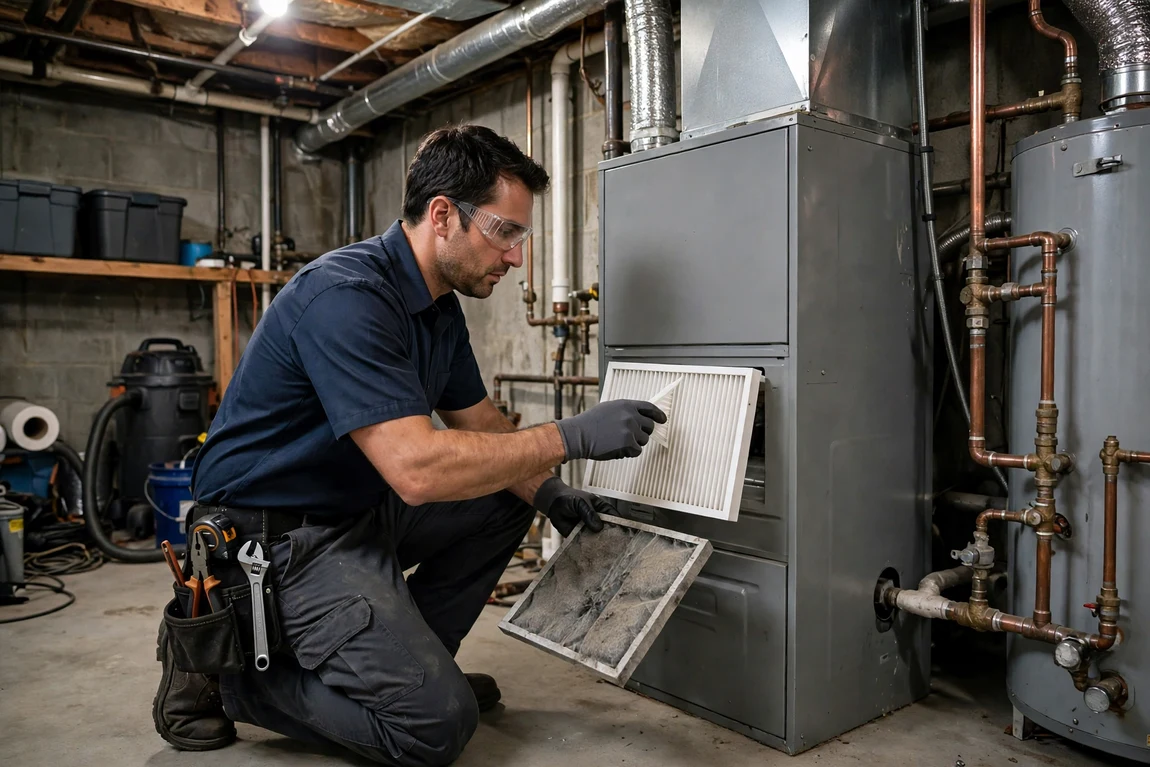
The guide also advises cleaning or replacing filters monthly during seasons of peak use. A clogged filter restricts airflow, makes rooms heat unevenly, and can strain the blower. Mark a monthly date during winter so the job does not depend on memory.
Book a professional furnace check in the fall. A technician can inspect burners, safety controls, venting, and airflow, and can spot a cracked or blocked component before it becomes an emergency call on the coldest night of the year.
Keep vents working for you. DOE advises keeping air vents clean and unblocked. Move furniture, rugs, and curtains away from supply registers and return grilles, and vacuum dust from grilles so heated air can circulate as the system was designed to deliver it.
Use Sunlight, Fans, and Rooms Smarter
Small habits matter for how to lower your heating bill over a long winter. DOE advises letting in sunlight during cooler months. Open curtains on sun-facing windows during the day, then close coverings at night to add a layer between the room and the cold glass.
Ceiling fans can help in rooms with high ceilings. Run the fan on its low winter setting, where the model provides one, to push warm air that has collected near the ceiling back down into the living space. Turn fans off when you leave the room, because fans cool people, not empty rooms.
Close off rooms you do not use, if your system allows it safely. Do not close so many registers that airflow and system pressure suffer, and never let unused rooms fall to temperatures that risk frozen pipes. A modest setback in a spare room is safer than shutting it down completely.
Dress for the season indoors. DOE’s winter guide lists layering up as a simple step that costs nothing. A sweater and warm socks can make a slightly lower thermostat setting feel normal, which is often the difference between a schedule you keep and one you abandon.
Plan Bigger Fixes in the Right Order
Once settings, sealing, and maintenance are done, judge larger projects for how to lower your heating bill on evidence. A home that is still drafty after basic sealing may need duct sealing, because leaky ducts can lose heated air into an attic, crawl space, or basement before it reaches the rooms.
Our guide to winterizing your home gives a seasonal order of work that pairs well with these steps. Work through the cheap envelope fixes first, live with the result for a billing cycle or two, and then decide where the next dollar will do the most good.
An older, unreliable furnace is a different case. If repair bills are rising and efficiency is low, compare the running cost with replacement rather than spending more on a system near the end of its life. Our furnace replacement cost guide explains the ranges to expect.
Be careful with savings claims from sellers. Ask what figure is based on, whether it assumes a thermostat setback, sealing, or new equipment, and what your home would need to achieve it. DOE figures in this guide are described as savings you can reach, not guarantees for every house.
Frequently Asked Questions
What is the quickest free way to cut heating costs?
A thermostat setback. Learning how to lower your heating bill usually starts there, because DOE puts the potential saving at as much as 10% a year for a 7 to 10 degree setback held for eight hours a day.
Does turning the heat down at night really save money?
Yes. A cooler house loses heat more slowly, so the system uses less energy during the setback than it would have used holding the higher temperature. The energy needed to warm the house again does not erase that saving for most conventional systems.
How much can sealing leaks save?
It depends on how leaky the house is. Sealing is low-cost and improves comfort even when the bill change is modest. Drafty homes with large attic and duct leaks gain the most, while a tight, well-sealed home will see a smaller additional effect.
Should I replace my furnace to save money?
Not as a first step. Settings, sealing, insulation, and maintenance are cheaper and often enough. Replacement makes more sense when the furnace is old, unreliable, or expensive to repair, and the decision should compare total running and repair costs, which is why how to lower your heating bill is a sequence, not a single purchase.
Are there current federal tax credits for these upgrades?
Do not count on an expired credit when you budget. The federal residential clean-energy credit ended for systems placed in service after December 31, 2025, so check current federal, state, and utility programs carefully before assuming any incentive applies to your project.