

When a furnace starts failing in the middle of winter, most homeowners ask the same question first: what will a furnace replacement cost? The honest answer is that prices vary a lot by fuel type, efficiency, home size and region, so this guide gives typical US planning ranges for 2026 rather than a single fixed price. Use these figures to budget and compare quotes fairly.
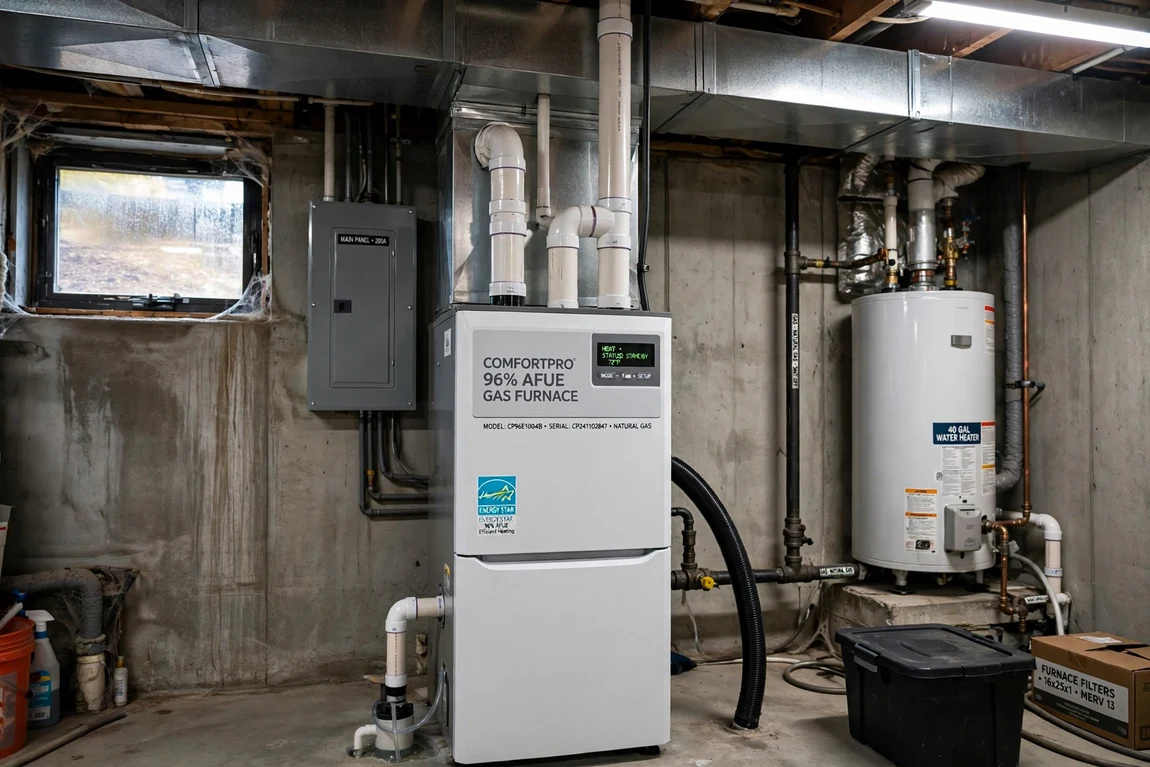
A modern high-efficiency gas furnace installed in a basement utility area. (Illustrative image)
Signs Your Furnace Needs Replacing
Furnaces rarely fail without warning. The signs usually build up over one or two heating seasons, and spotting them early gives you time to get several quotes instead of accepting the first offer in an emergency.
- The system is 15 to 20 years old or older, and repairs are becoming more frequent.
- Heating bills keep rising even though your usage and energy prices have not changed much.
- Some rooms are always cold while others overheat, even after filter changes and vent checks.
- The furnace is noisy — rattling, banging, humming or frequent loud cycling on and off.
- You see rust, cracks or corrosion on the unit, or the pilot light and burners look worn.
- A repair quote is large relative to the age of the system, especially for a heat exchanger, control board or blower motor.
One urgent exception: if a technician finds a cracked heat exchanger or a carbon monoxide problem, treat that as a safety issue, not a budgeting question. In that case, replacement or at least shutting the unit down comes first, whatever the timing.
What the Replacement Job Involves
A standard replacement is more than swapping one box for another. A typical job includes shutting off gas and power, removing and disposing of the old furnace, setting the new unit, reconnecting the gas line, flue or venting, electrical supply and condensate drain, and tying the system back into your existing ductwork. The installer should also fit or reuse a thermostat, test airflow, check for gas and carbon monoxide leaks, and walk you through how the new system runs.
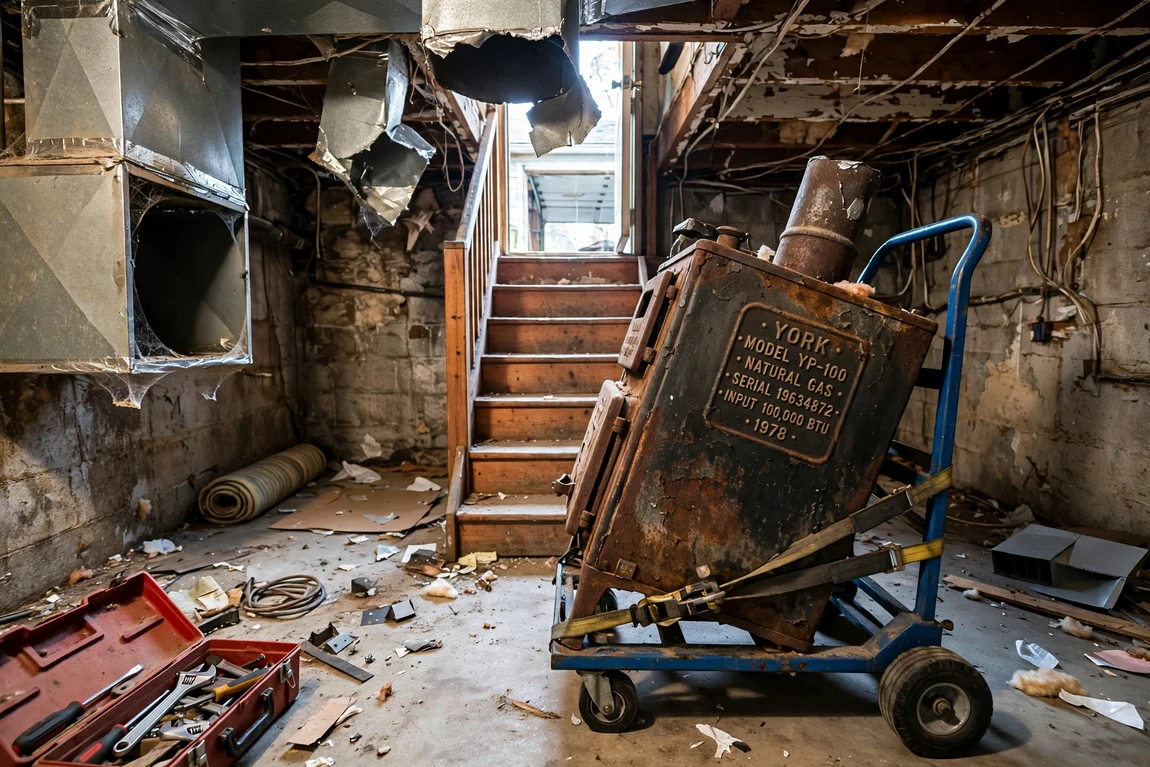
An older furnace disconnected and prepared for removal before the new unit goes in. (Illustrative image)
Most straightforward like-for-like swaps take a single day. Jobs take longer when the new furnace needs different venting, a resized gas line, duct repairs or a new condensate pump. This is also a sensible moment to ask about the condition of your ducts — our guide to air duct cleaning cost explains what that separate job involves and what it typically costs.
furnace replacement cost Breakdown by Fuel and Efficiency
The table below shows typical installed US price ranges for 2026, including the unit, standard labour, basic venting connections and disposal of the old furnace. Treat every figure as a planning estimate and a range, not a quote: your final price depends on the factors covered in the next section, and only an in-home assessment can give you an exact number.
| Furnace type | Standard efficiency (around 80% AFUE) | High efficiency (96% AFUE or above) |
|---|---|---|
| Natural gas | $3,800 – $7,500 | $5,500 – $10,500 |
| Propane | $4,200 – $8,000 | $5,800 – $11,000 |
| Oil | $5,000 – $9,000 | $6,500 – $11,500 |
| Electric | $2,500 – $5,500 | Electric furnaces run at or near 100% AFUE, so there is no separate high-efficiency tier; price depends mainly on size and electrical work needed |
AFUE — annual fuel utilization efficiency — describes how much of the fuel becomes heat for your home rather than being lost up the flue. An 80% AFUE furnace is usually cheaper to buy and can often reuse existing metal venting. A model at 96% AFUE or above costs more upfront, typically needs new venting and a condensate drain, but uses less fuel each month.
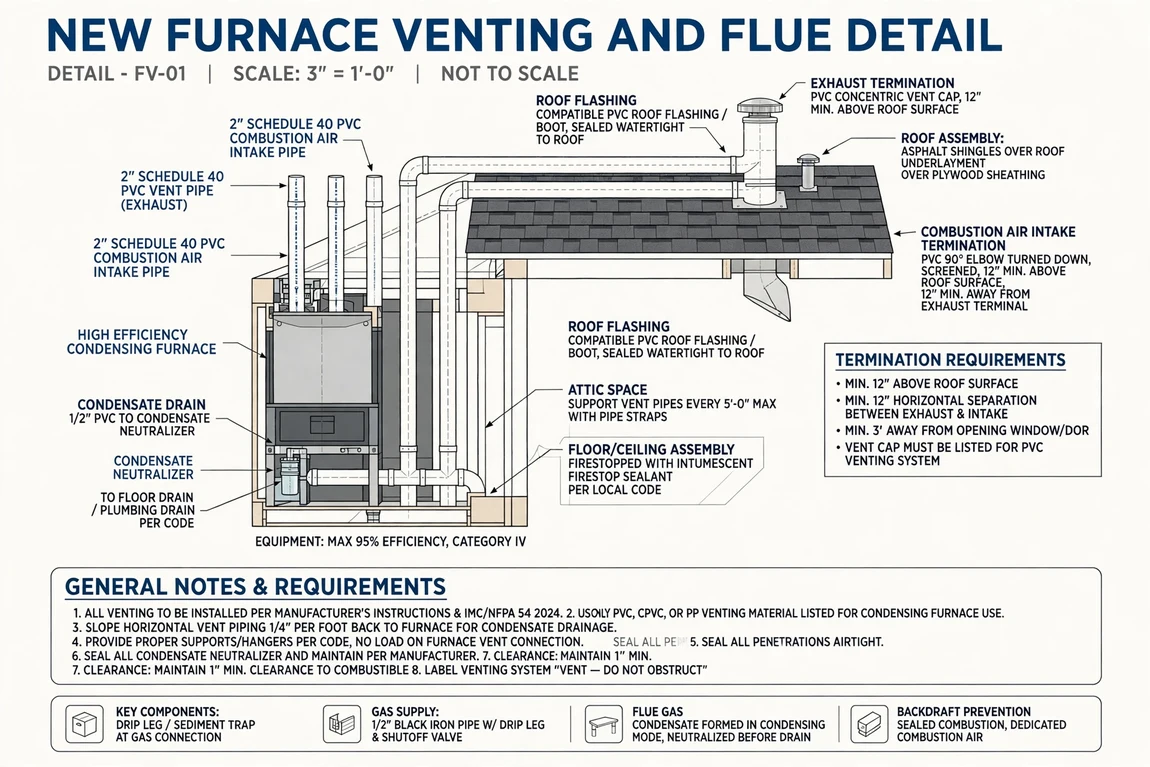
New venting and flue detail on a condensing high-efficiency furnace. (Illustrative image)
Factors That Change the Price
- Home size and furnace capacity: bigger homes need larger units measured in BTUs, and an oversized or undersized furnace will cost you in comfort and efficiency.
- Fuel type and fuel lines: switching fuels, extending a gas line or upgrading an electrical panel can add $500 to $2,500 or more to the planning range.
- Venting changes: moving from an 80% model to a condensing high-efficiency model usually means new vent pipes and drainage.
- Ductwork condition: repairing, sealing or partly replacing ducts is extra, and heavily damaged ductwork can add several thousand dollars.
- Thermostat and controls: a basic thermostat may be included, while a smart thermostat is usually an added line item.
- Permits and disposal: permit fees and old-unit disposal are sometimes included and sometimes billed separately, so check the quote.
- Region and timing: labour rates vary widely by area, and emergency mid-winter replacements rarely get the best price.
If you are replacing the whole heating and cooling setup rather than the furnace alone, it is worth comparing a furnace with a heat pump system. Our guide to heat pump installation cost sets out those installed price ranges so you can compare both routes side by side.
Repair or Replace? How to Decide
Repair usually makes sense when the furnace is under about 10 to 12 years old, the fault is a single modest part such as an igniter, flame sensor or capacitor, and the system has otherwise run reliably. Replacement moves ahead when the unit is older, needs a major component, breaks down repeatedly, or heats unevenly and expensively. If you are weighing a repair quote first, our overview of furnace repair covers common faults and fixes. In short, the older the furnace and the bigger the repair bill, the more that money is usually better put towards a new system with a fresh warranty.
How to Save on a New Furnace
- Get at least three written quotes for the same size and efficiency tier, so you are comparing like with like.
- Replace in spring or autumn if the old system still runs safely, when installers are less booked up.
- Ask about utility rebates and manufacturer offers for high-efficiency models, and check current federal or state incentives before you sign, as programmes change.
- Do not pay for capacity you do not need; ask each installer how they sized the unit for your home.
- Keep existing ductwork and venting where a professional confirms they are sound and correctly sized.
A home thermostat set for winter, the everyday control for your new furnace. (Illustrative image)
Hiring Red Flags to Watch For
- A quote given over the phone without anyone measuring your home or inspecting the existing system.
- Pressure to sign the same day, or a discount that is only available immediately.
- No mention of permits, load sizing, venting or disposal in the written quote.
- A company that will not provide licence and insurance details, or a written warranty for parts and labour.
- A price far below every other quote with no clear explanation of what is excluded.
A good installer explains the sizing, lists exactly what the price includes line by line, and is comfortable putting the full scope and warranty in writing before work starts.
Maintenance That Protects Your New Furnace
A new furnace should run reliably for years, but only with basic care. Change or wash the filter regularly through the heating season, keep the area around the unit clear, and keep supply and return vents unblocked. Book a professional service visit about once a year so burners, safety controls and venting can be checked before winter. Our breakdown of what HVAC maintenance costs explains what a routine visit includes and what it typically runs. Planned this way, replacement stops being an emergency purchase and becomes a budgeted home improvement with no surprises.