

When you are comparing quotes, the crawl space encapsulation cost for a typical US home usually falls between $3,000 and $8,000 for a full professional job, with smaller, simpler spaces costing less and larger or wet spaces costing more. All prices in this guide are typical US planning estimates and ranges for 2026, not fixed quotes. Your final price depends on the size of the crawl space, the thickness of the liner, and how much clean-up, drainage, or repair work is needed before the new liner can go down.
Encapsulation is an effective way to deal with a damp, musty crawl space, but it is a bigger job than many homeowners expect. This guide explains what it includes, how it differs from a simple vapor barrier, and how to read a quote.
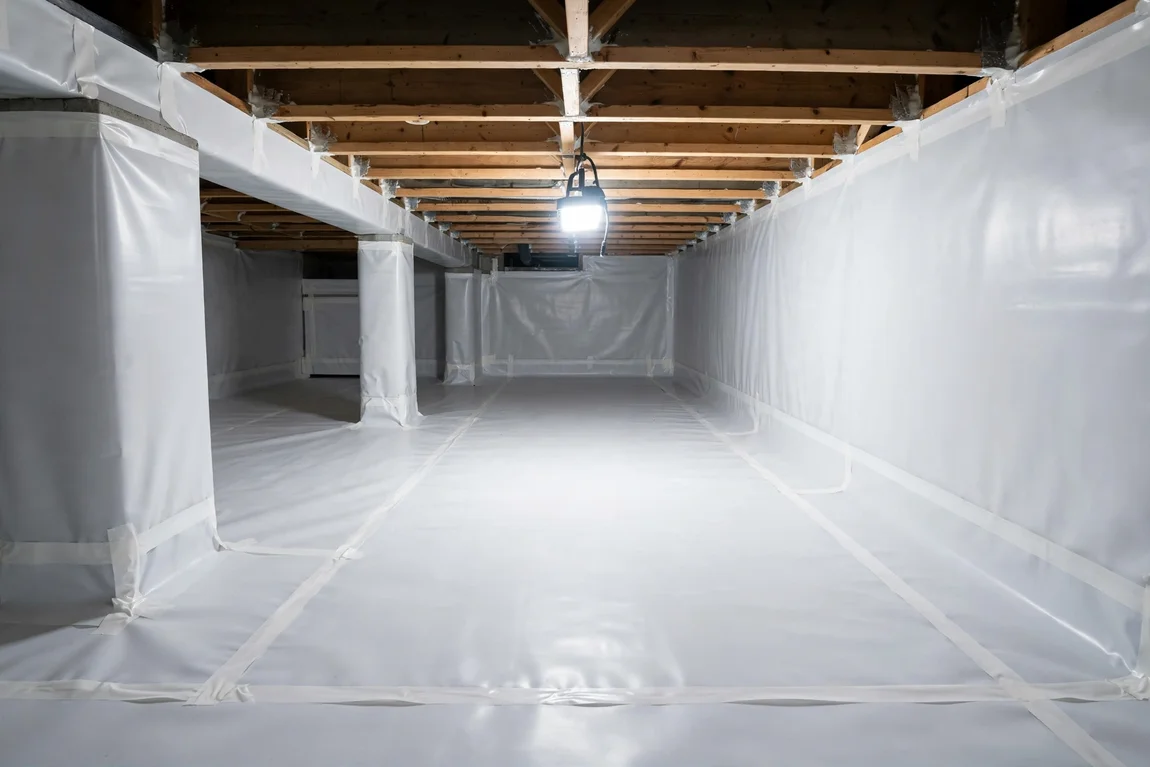
A fully sealed crawl space with a clean white liner covering the floor and lower walls. (Illustrative image)
What crawl space encapsulation cost covers, and how it differs from a vapor barrier
A simple vapor barrier is usually a single layer of plastic sheeting laid loosely over the dirt floor. It helps slow ground moisture, but seams are often untaped, the edges stop short of the walls, and vents are left open. Air, pests, and moisture can still get in around the edges.
Full encapsulation goes further. The liner runs across the floor, up the foundation walls, and around piers, and all seams are overlapped, taped, and sealed. Foundation vents are closed and sealed, the access door is insulated or sealed, and the walls may be insulated. Many systems also add a drainage mat under the liner, a sump pump where water collects, and a dehumidifier to control humidity after sealing. If standing water is already a problem in your home, read our guide on got water in your crawl space before you seal anything in.
Signs you may need encapsulation
- Musty or earthy smells inside the house, especially on the ground floor
- Cupping wood floors, soft spots, or high indoor humidity in summer
- Visible mold or mildew on floor joists, subfloor, or stored items
- Standing water, mud, or a liner that is torn, thin, or pulling away
- Falling or damp insulation hanging from between the joists
- Pest activity, termite concerns, or rust on metal ducts and pipes
Not every damp crawl space needs full encapsulation straight away. Sometimes grading, gutters, or drainage fixes solve the problem first. If moisture keeps returning, sealing is often the next step. Where mold is present, cleanup usually comes first, and our guide to mold remediation cost explains that separate work.
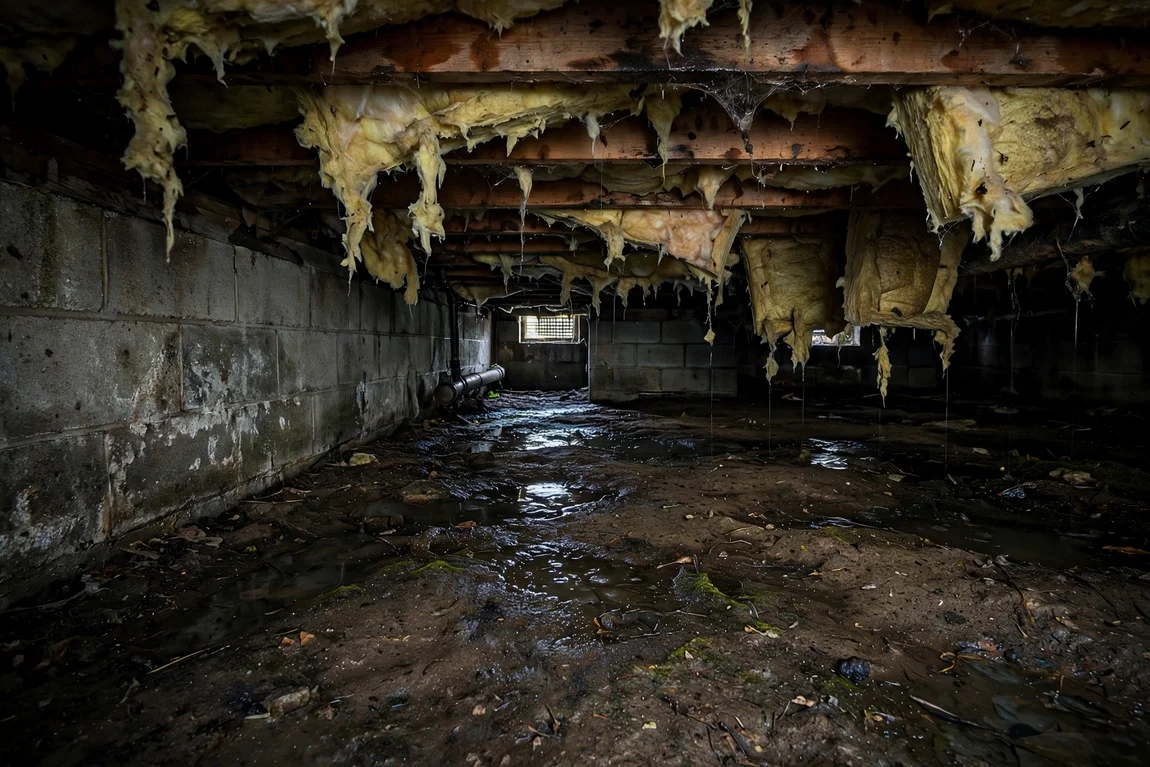
A damp, unsealed crawl space with exposed dirt and standing moisture before work begins. (Illustrative image)
What installation involves
A professional installation usually follows a clear order. First, the crew inspects the space, measures it, and checks for plumbing leaks, wood damage, pests, and mold. Next comes clean-out: old plastic, fallen insulation, debris, and sharp objects are removed, and the ground is levelled as far as practical.
Drainage work is done at this stage, including a perimeter drain and sump basin where needed. Then vents are sealed, wall insulation is fitted if included, and the liner is cut, laid, overlapped, taped, and sealed around piers and walls. Finally, the access door is sealed and a dehumidifier, if included, is installed. A typical job often takes two to four days.
Cost breakdown by size and liner thickness
Liner thickness is measured in mil. A 10 mil liner is the lightest option commonly offered, 12 mil is a middle choice, and 20 mil is a heavy, puncture-resistant liner recommended where the space will be entered regularly. Thicker liners cost more but generally last longer. The table below is a planning guide only, using typical US ranges for 2026 for full professional encapsulation including labor, liner, sealing, and vent closing, but excluding a dehumidifier, drainage, and major repairs.
| Crawl space size | 10 mil liner | 12 mil liner | 20 mil liner |
| 500 sq ft | $1,500 – $2,750 | $1,750 – $3,250 | $2,250 – $4,000 |
| 1,000 sq ft | $3,000 – $5,500 | $3,500 – $6,500 | $4,500 – $8,000 |
| 1,500 sq ft | $4,500 – $8,250 | $5,250 – $9,750 | $6,750 – $12,000 |
As a rough per-square-foot guide, full encapsulation often works out at about $3 to $8 per square foot installed, depending on liner choice and condition of the space. Always ask each contractor to state the liner thickness, whether wall coverage is included, and what is excluded, so quotes are genuinely comparable.
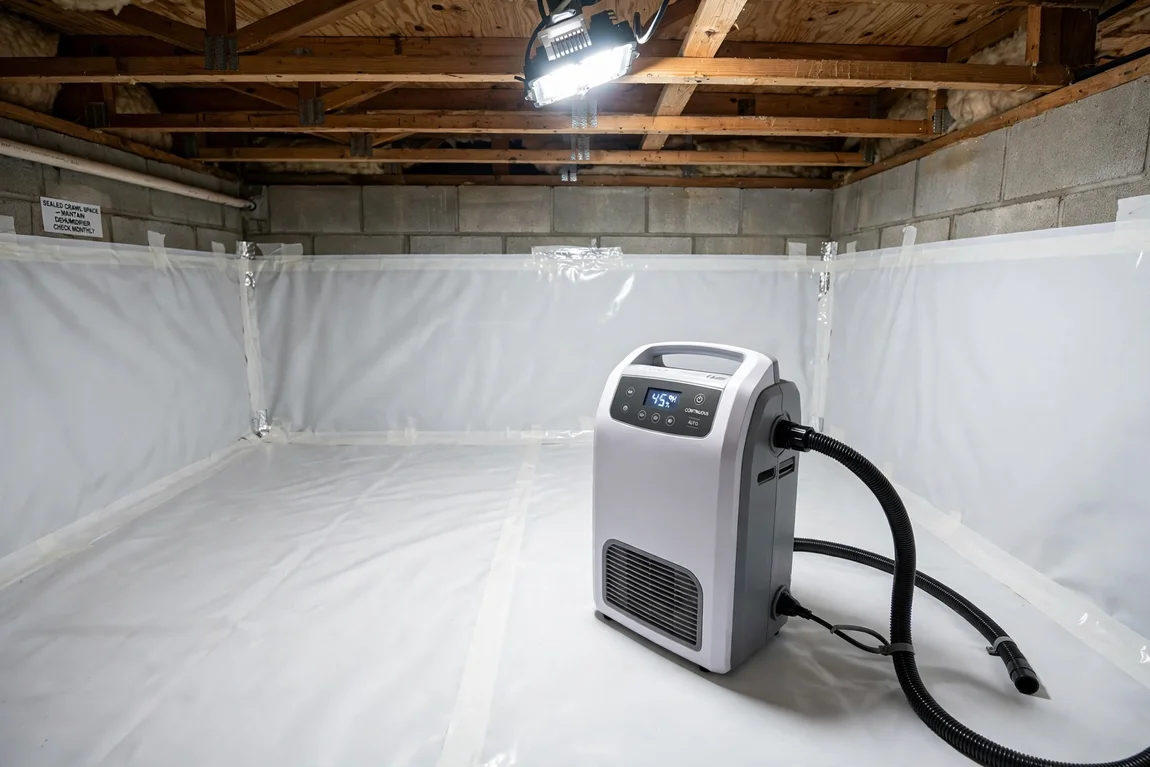
A sealed crawl space with a dehumidifier helping to keep humidity under control. (Illustrative image)
Factors that change the price
- Size and height: larger spaces use more material, and very low spaces are slower and harder to work in.
- Liner thickness and wall coverage: thicker liners and full wall wrapping raise material and labor costs.
- Clean-out and repairs: removing debris, treating mold, or replacing damaged wood or insulation adds cost.
- Drainage: a perimeter drain, sump pump, or grading work can add substantially to the total.
- Access: a small or awkward access door, tight piers, and ductwork all slow the job.
- Location: labor rates vary by region, so the same job can price differently across the US.
If your quote includes drainage, compare the pump portion with our guide to sump pump installation cost so you can see how that part of the price is built up.
The dehumidifier add-on
Sealing alone does not always keep humidity low enough, especially in humid climates. Many installers recommend a crawl-space dehumidifier sized for the area. As a typical US planning range for 2026, expect about $1,000 to $2,500 installed for a dedicated unit, including a condensate drain or pump. A standard portable unit is cheaper but is rarely designed for continuous crawl-space use and may not last as long there. Ask whether the dehumidifier, its drain, and any electrical work are included in your quote.
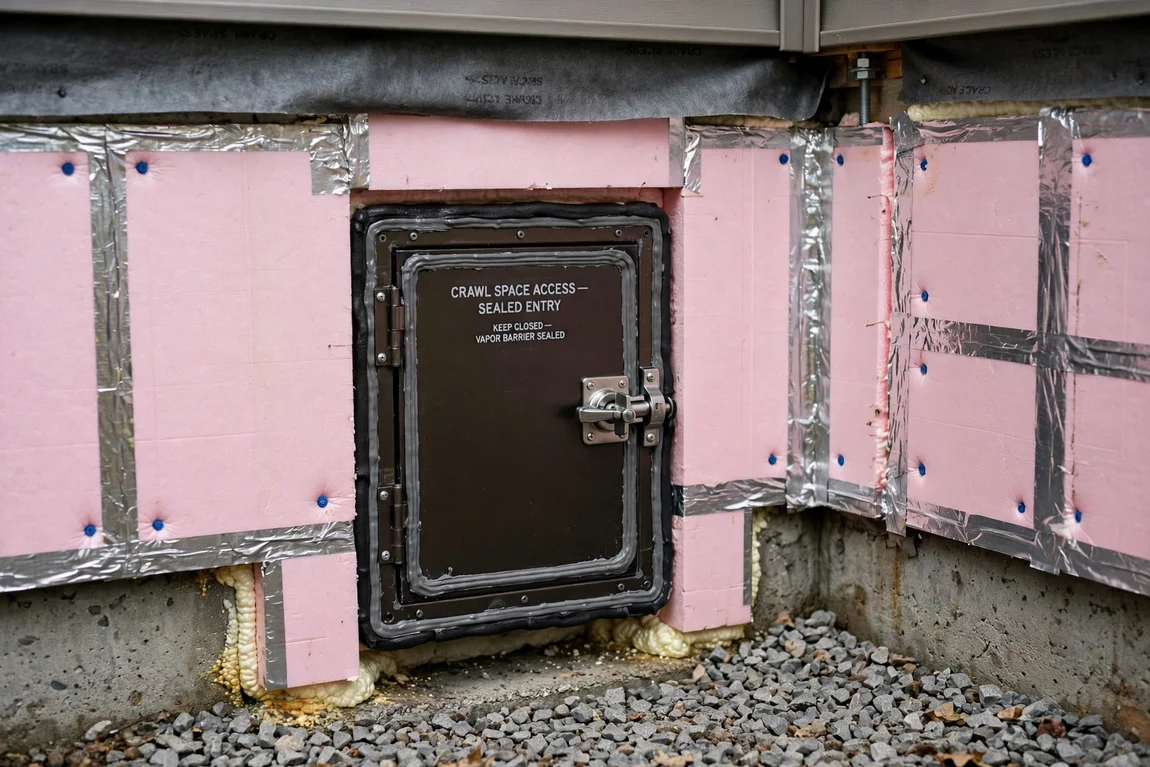
A sealed crawl space access door and insulated foundation detail, an important part of a complete job. (Illustrative image)
DIY vs professional installation
Doing it yourself can save labor costs. Materials for a basic DIY encapsulation for an average space might fall in a typical planning range of about $1,000 to $3,000 for liner, tape, sealant, and vent covers, before any dehumidifier or drainage parts. The trade-offs are real, though: the work is physically hard in a tight space, seams and pier wrapping are easy to get wrong, and hidden mold, wiring, or structural problems can be missed. Many homeowners handle a simple loose vapor barrier themselves but hire a professional for full encapsulation, where a warranty on materials and labor may also be offered. Get at least two or three written quotes, check what each includes line by line, and confirm who is responsible for permits if your area requires them.
Maintenance after encapsulation
Encapsulation is low maintenance, not no maintenance. Check the space once or twice a year. Look for liner tears, loose seams, plumbing leaks, and pests. Check the dehumidifier filter as the maker directs, confirm its drain is clear, and use a humidity monitor so you can see if levels climb. After heavy rain, a quick look through the access door can confirm there is no standing water on the liner.
In short, plan your budget around the size of your space, choose the thickest liner that fits your budget, and deal with drainage and mold before sealing.