

A new fence adds privacy, security and curb appeal, but quotes can vary by thousands of dollars for the same yard. Understanding the real fence installation cost in 2026 helps you compare bids fairly and budget without surprises. According to Angi’s 2026 cost data, most homeowners spend between $1,856 and $4,843 on a new fence, while HomeAdvisor puts the national average at about $3,220. Where your project lands depends mainly on the material, how many linear feet you run, and your yard’s condition. This guide breaks down prices by material, the extras that push quotes up, and the smartest ways to save.
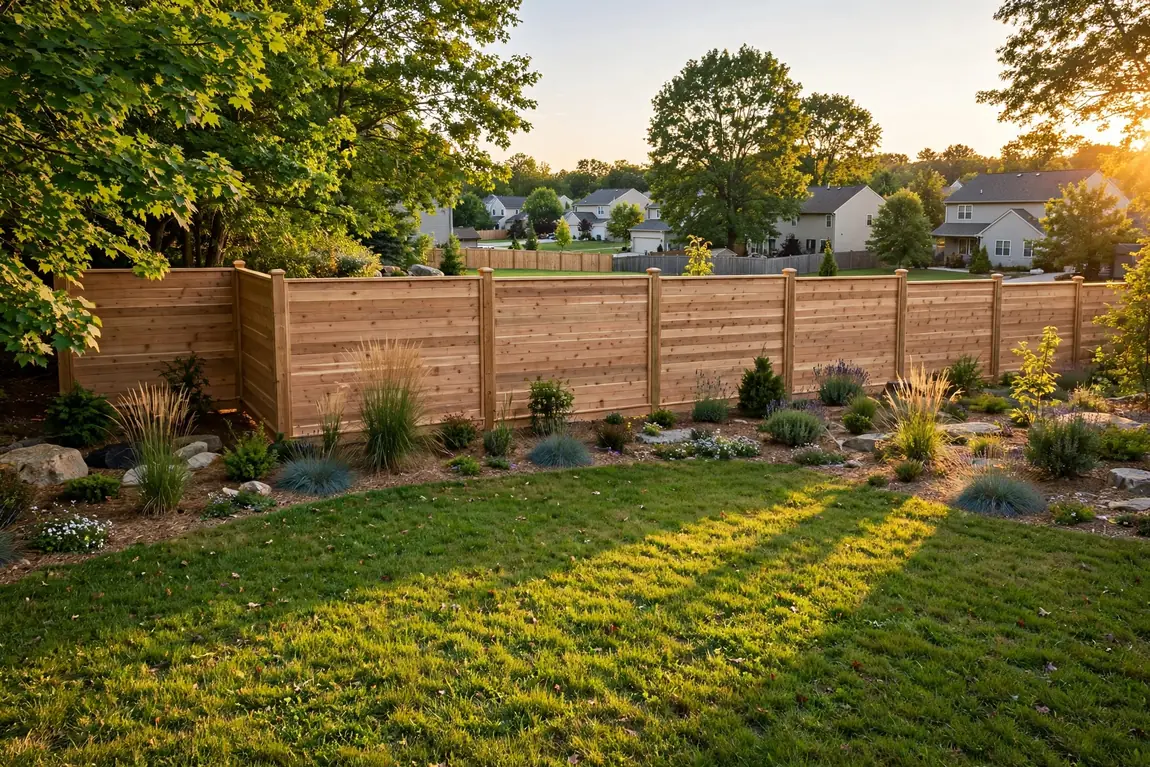
A new wood privacy fence — the most popular project behind today’s average fence prices. (Illustrative image)
fence installation cost by material in 2026
Material is the single biggest factor in your quote. The table below shows typical installed prices per linear foot — materials and labor combined — compiled from Angi and HomeAdvisor 2026 cost ranges for a standard 6-foot fence on level ground. Treat them as planning ranges, not fixed quotes: height, style and local labor rates move any of them.
| Fence Material | Installed Cost per Linear Foot | Cost for 150 Linear Feet | Typical Lifespan |
|---|---|---|---|
| Chain link | $10 – $25 | $1,500 – $3,750 | 15–20 years |
| Wood (pressure-treated / cedar) | $15 – $35 | $2,250 – $5,250 | 15–20 years |
| Vinyl (PVC) | $20 – $40 | $3,000 – $6,000 | 25–30 years |
| Aluminum | $25 – $55 | $3,750 – $8,250 | 25+ years |
| Composite | $25 – $50 | $3,750 – $7,500 | 25–30 years |
| Wrought iron | $30 – $60 | $4,500 – $9,000 | 50+ years |
Chain link is the budget option: not the prettiest, but it secures a yard for the least money — see our guide to chain link fence styles, coatings and privacy slats if you are considering it. Wood is the most popular privacy choice because it looks natural and sits mid-range on price, though it needs staining or sealing every few years. Vinyl and composite cost more up front but ask for little more than an occasional wash. Aluminum gives the look of wrought iron without rust or weight — a favourite around pools — while real wrought iron is the premium, longest-lasting option.
A worked example: a typical backyard
Most suburban backyards need roughly 120 to 180 linear feet of fencing. Take a typical 150-linear-foot wood privacy fence at $15 to $35 per foot: the fence itself runs $2,250 to $5,250. Add one walk gate at $200 to $600 and a permit where required, and you have a realistic all-in budget. The same yard runs roughly $3,000 to $6,000 in vinyl before gates, and $1,500 to $3,750 in chain link. The spread between materials is bigger than the spread between contractors, so compare quotes on the same material.
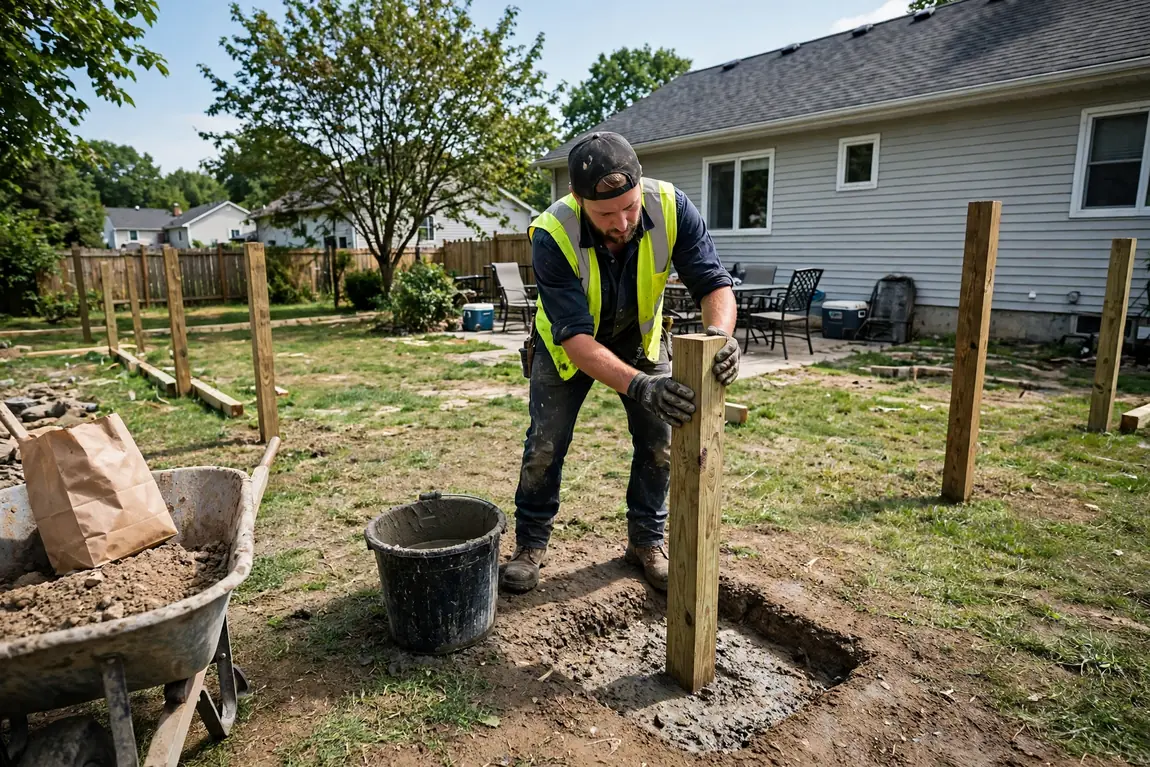
Posts set straight and in concrete keep a fence upright — and are a big part of the labour you pay for. (Illustrative image)
Factors that affect your total price
Length, height and style
Cost scales directly with length, and taller fences need more material and sturdier posts. Six feet is the standard benchmark; 4 feet trims roughly 15% off the per-foot price, while 8 feet can add 25% to 30%. Decorative styles such as board-on-board or horizontal boards cost more than a basic stockade design, because they use more material and labour.
Gates
Gates are priced separately from the per-foot rate. Angi lists gates at $150 to $2,000 depending on size and material. In practice, expect about $150 to $600 for a standard 4-foot walk gate installed, $400 to $1,200 for a wide double gate you can fit a mower or trailer through, and $1,500 or more for an automatic driveway gate with an opener.
Permits, surveys and HOA rules
Many towns require a permit for a new fence, especially one over 6 feet or facing a street. Angi puts a typical fence permit at $20 to $60, although stricter cities can charge $100 to $500. If you are unsure where your property line runs, a survey costs a few hundred dollars — far cheaper than moving a fence later. Check HOA rules before ordering materials, too: many dictate height, style and even which side faces out.
Removing an old fence
Replacement projects carry a cost new builds do not: taking the old fence away. Installers typically charge $3 to $5 per linear foot to remove and haul off an existing fence, per Angi, with disposal fees of roughly $100 to $500 on top. Posts set in concrete cost more to pull than driven posts.
Terrain, slope and soil
Flat, soft ground is the cheapest to fence. A sloped yard needs stepped or racked panels and longer posts, and rocky or root-filled soil slows digging considerably. Expect uneven ground to add roughly 10% to 30% to labour, and if the yard needs serious levelling first, Angi puts land grading at $1,000 to $3,200. Plan digging-heavy yard work, such as a sprinkler system installation, in a sensible order so crews do not undo each other’s work.
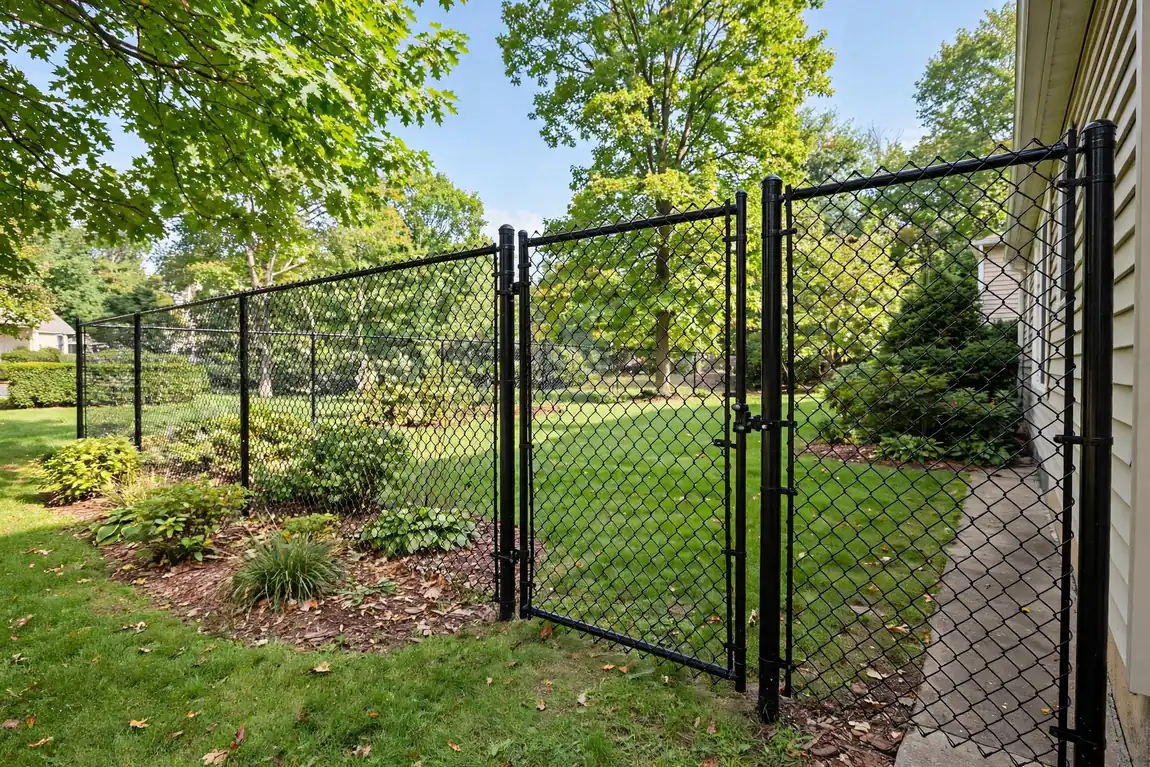
Chain link with a vinyl coating and a simple walk gate — the lowest-cost way to secure a yard. (Illustrative image)
DIY vs hiring a pro
Labour is roughly half of a professionally installed fence’s price — Angi estimates it at about 50% of the total, around $1,600 on an average job, and puts the average DIY saving at about $1,700 in labour fees. On a 150-foot wood fence, DIY materials, concrete and tool rental might run $1,200 to $2,800 instead of $2,250 to $5,250 installed.
The catch is that fencing is heavy, unforgiving work. You will need an auger or post-hole digger rental, a level, a saw and a drill, plus a way to haul materials. Posts set too shallow or out of line create problems that cost more to fix than the labour saved. A pro crew usually finishes in one to three days, handles permits and utility marking, sets posts below the frost line, and backs the work with a warranty. A popular middle path: hire a pro to set the posts, then hang the panels yourself.
How to save money on a new fence
- Get at least three itemised quotes. Ask each contractor to separate materials, labour, gates, removal and permits so you compare like with like.
- Choose the material honestly. For privacy, wood beats vinyl on price; over decades, vinyl or composite can win on lifetime cost by skipping staining and repairs.
- Keep the design standard. Stock heights, straight runs and pre-made panels are cheaper than custom heights and decorative cuts.
- Share the cost where legal. Splitting a boundary fence with a neighbour halves your biggest expense — get the agreement in writing.
- Book off-season. Late autumn and winter quotes are often softer than peak spring prices.
- Bundle backyard projects. Planning a fence alongside other work, such as a deck, spreads delivery costs — our deck building cost guide shows how the numbers compare.
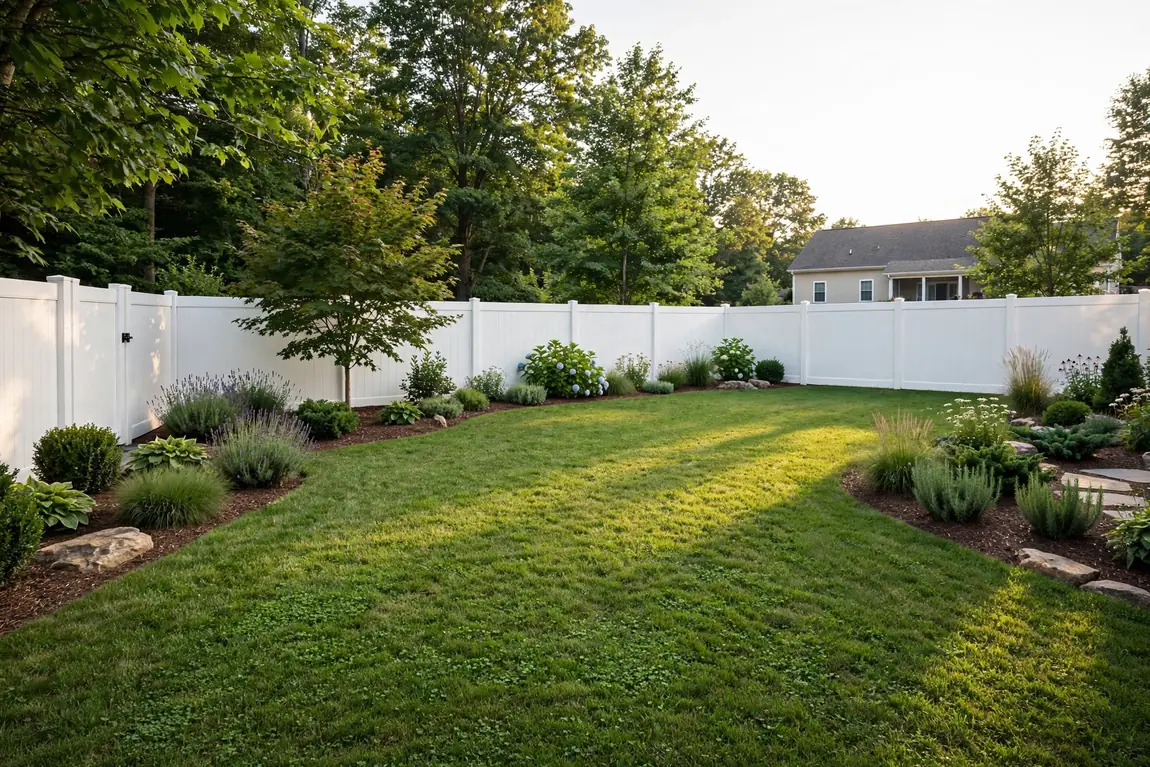
A finished vinyl privacy fence: higher up-front cost, but no staining — just occasional washing. (Illustrative image)
Frequently asked questions
How much does it cost to fence a typical backyard?
For about 150 linear feet, expect roughly $1,500 to $3,750 for chain link, $2,250 to $5,250 for wood, and $3,000 to $6,000 for vinyl, installed. Across all materials, Angi reports most homeowners spend $1,856 to $4,843 in total, before extras such as automatic gates or major grading.
What is the cheapest fence to install?
Chain link is usually the cheapest at about $10 to $25 per linear foot installed, followed by basic pressure-treated wood. A vinyl-coated chain link or added privacy slats raise the price slightly but improve the look.
Do I need a permit to install a fence?
Often, yes — especially for fences over 6 feet, front-yard fences, or homes in an HOA or historic district. Typical fees run $20 to $60 per Angi, though some cities charge more. Always call 811 before digging so utilities are marked, whether you DIY or hire a pro.
How long does fence installation take?
A pro crew typically installs an average backyard fence in one to three days once materials are on site. DIY usually takes a first-timer two to four weekends, including digging, setting posts and letting concrete cure.
Does a new fence increase home value?
A fence rarely returns its full cost at resale, but it improves privacy, security and curb appeal — features buyers actively look for. A style that matches the neighbourhood protects that value best.