

A dented, noisy or unreliable door is hard to ignore. Understanding the real garage door replacement cost in 2026 helps you budget properly and spot a quote that is missing half the job. According to Angi’s 2026 cost data, most homeowners pay between $754 and $1,707 per door, with a national average of around $1,231, although premium materials can push a project to $8,000 or more. This guide breaks down prices by size and material, explains what is and is not included, and shows where you can save without cutting corners on safety.
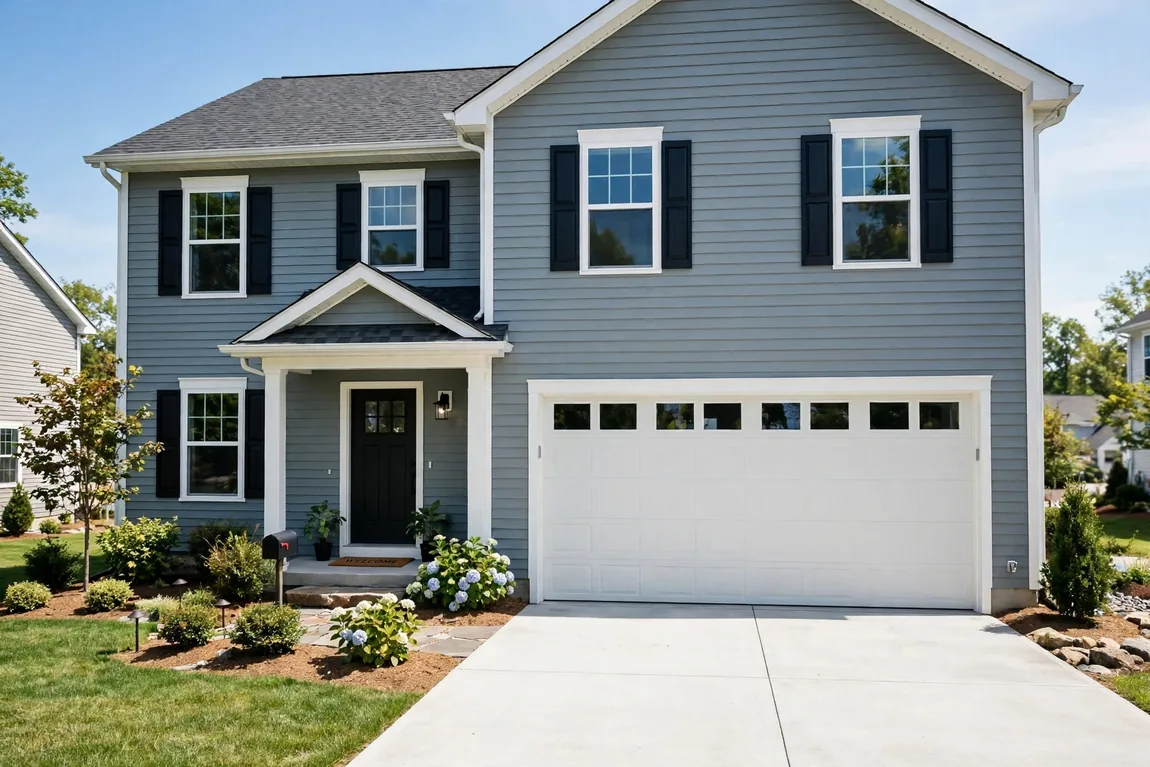
A new insulated double door is the most common replacement project — and the one where size, insulation and windows move the price most. (Illustrative image)
What the average garage door replacement cost includes
For a standard replacement, the quoted price usually covers the new door itself, new tracks, rollers, cables and springs matched to the door’s weight, professional fitting, and basic weather seals. Labor alone typically runs about $200 to $500 when it is priced separately, according to Angi, averaging roughly $350. A standard swap in an existing opening takes a crew about three to five hours.
Two items are often not included unless the quote says so: a new opener, and haul-away of the old door. Disposal typically adds about $50 to $200 when it is charged separately, although many installers include it — always ask. Permits, where required, usually add about $50 to $200. If only the surround is shabby rather than the door itself, that is a much smaller job: see our guide to garage door trim costs instead of replacing a door that still works well.
Cost by material and size
Size and material are the two biggest price drivers. A single door is usually 8 or 9 feet wide by 7 feet tall, while a double door is typically 16 feet wide. A double is not twice the price of a single — figure roughly 50% to 80% more — but two separate single doors will usually cost more than one double, because you are buying two sets of hardware and paying for two installations. The ranges below are installed prices reported across 2026 cost guides, including Angi and HomeAdvisor-style data.
| Material | Single door (installed) | Double door (installed) | Best for |
|---|---|---|---|
| Steel | $750 – $1,800 | $1,200 – $2,800 | Best overall value, low upkeep |
| Wood | $1,200 – $4,000 | $2,000 – $6,000+ | Traditional and luxury curb appeal |
| Aluminum | $1,000 – $3,500 | $1,500 – $5,000+ | Coastal homes; full-view glass designs cost most |
| Fiberglass | $1,000 – $2,500 | $1,800 – $4,000 | Humid and coastal climates, dent resistance |
| Composite | $1,000 – $2,800 | $1,800 – $4,500 | Wood look without the refinishing |
Steel is the default choice for most homes: strong, widely available, and offered at every insulation level. Wood looks superb but is the expensive option over time, because it needs resealing or repainting every few years. Aluminum will not rust and suits modern full-view glass doors, but dents more easily and insulates poorly without upgraded glazing. Fiberglass resists salt air and dents, though it can fade after a decade and crack in severe cold. Composite copies painted wood, shrugs off moisture, and needs far less maintenance — the popular middle ground.
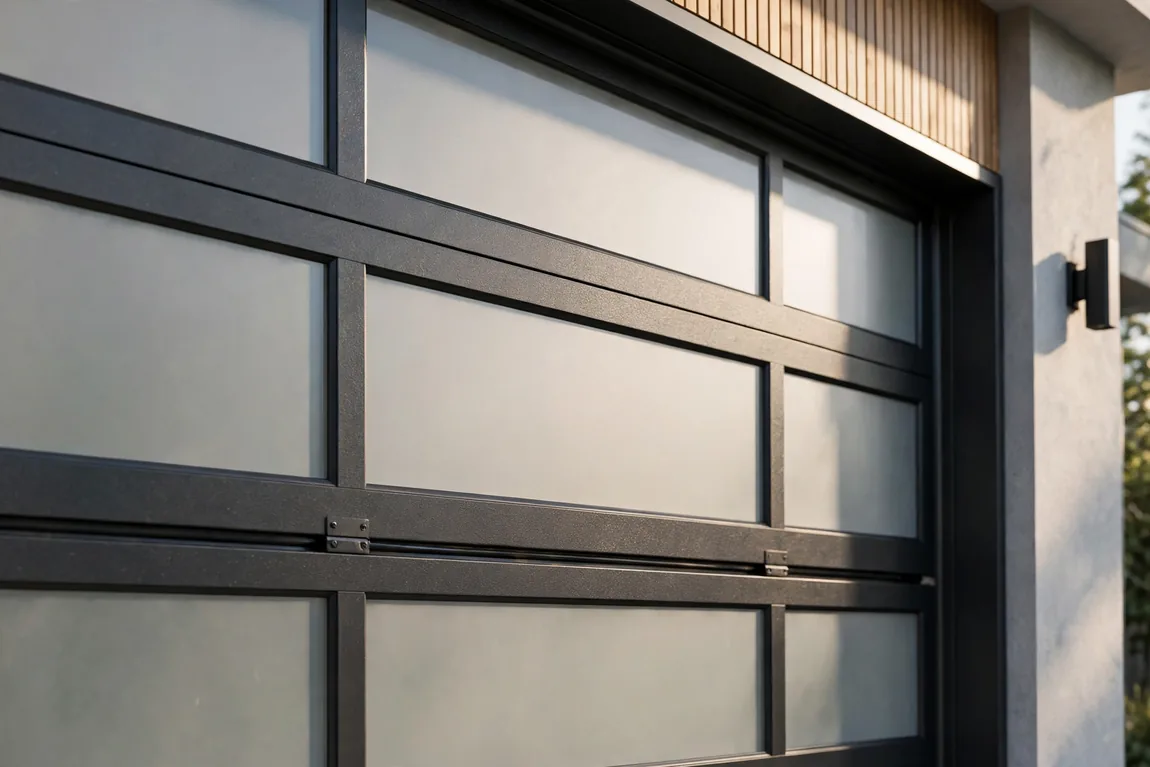
Full-view aluminum and glass doors sit at the top of the price range, but they transform a modern home’s frontage. (Illustrative image)
Factors that affect the final price
Insulation
An uninsulated single-layer steel door is cheapest, but it is also the noisiest and least rigid. Moving to an insulated two- or three-layer door typically adds about $200 to $800, and buys you a quieter, stiffer door with an R-value anywhere from about R-6 to R-18. Insulation matters most when the garage is attached, sits under a bedroom, or doubles as a workshop in a cold or hot climate.
Windows and design details
A single row of windows across the top section typically adds about $150 to $600, with insulated or decorative glass costing more. Carriage-house styling, custom colors and decorative hardware can add a few hundred dollars more. On a street-facing garage these upgrades are not wasted money: the door can be a third of your home’s front, so it drives curb appeal — the same reason choosing the perfect front door matters so much.
Opener replacement
A new opener is a separate line item, typically about $250 to $750 installed depending on type — chain-drive models are cheapest, belt-drive models are quieter, and smart Wi-Fi models with battery backup cost most. If your existing opener is under ten years old and lifts the new door’s weight comfortably, reusing it is one of the easiest savings on the whole project.
Hardware, framing and location
New springs, tracks and hardware matched to the door are normally part of a full replacement quote, but replacing worn springs on their own typically runs about $150 to $400. Rotten framing or converting an old tilt-up door adds framing work. Metro labor runs noticeably higher than rural rates, and high-wind regions may require a wind-rated door, adding several hundred dollars.
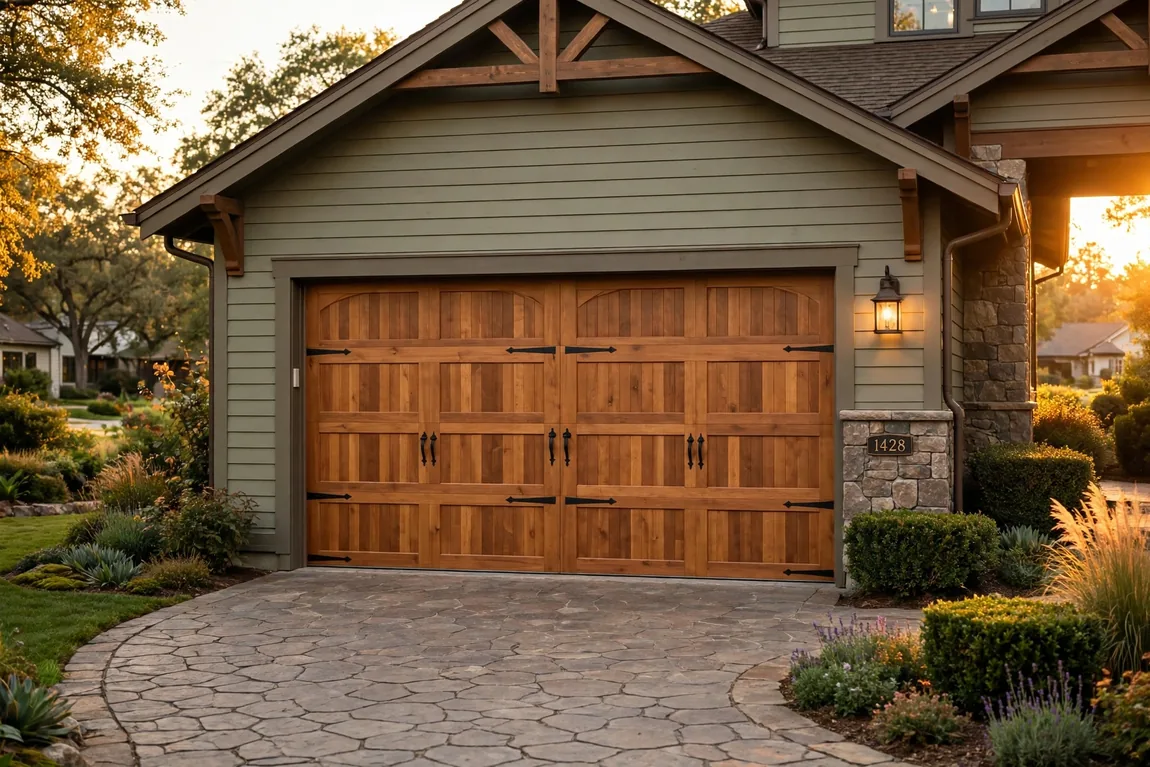
Carriage-house styling in composite or steel gives the wood look that suits traditional homes, without solid wood’s upkeep. (Illustrative image)
DIY vs professional installation
Doing it yourself saves the labor charge — roughly $200 to $500 on a standard door — and a door-only purchase can look temptingly cheap. Be honest about what the job involves, though. A double insulated door can weigh 250 to 400 pounds, panels are awkward even with a helper, and the torsion springs that lift the door are wound under extreme tension. A spring that slips or snaps during DIY removal can cause serious injury, which is why manufacturers and installers consistently warn homeowners never to adjust or release torsion springs themselves.
A realistic compromise: leave the door, tracks and springs to a pro, and handle low-risk work yourself — clearing the garage, painting trim, or fitting weatherstripping afterwards. While the garage is empty, it is also the perfect moment to plan storage; our guide to how to install overhead garage storage makes good use of the ceiling space above the new door. Professional fitting also protects the warranty, since many manufacturers require it.
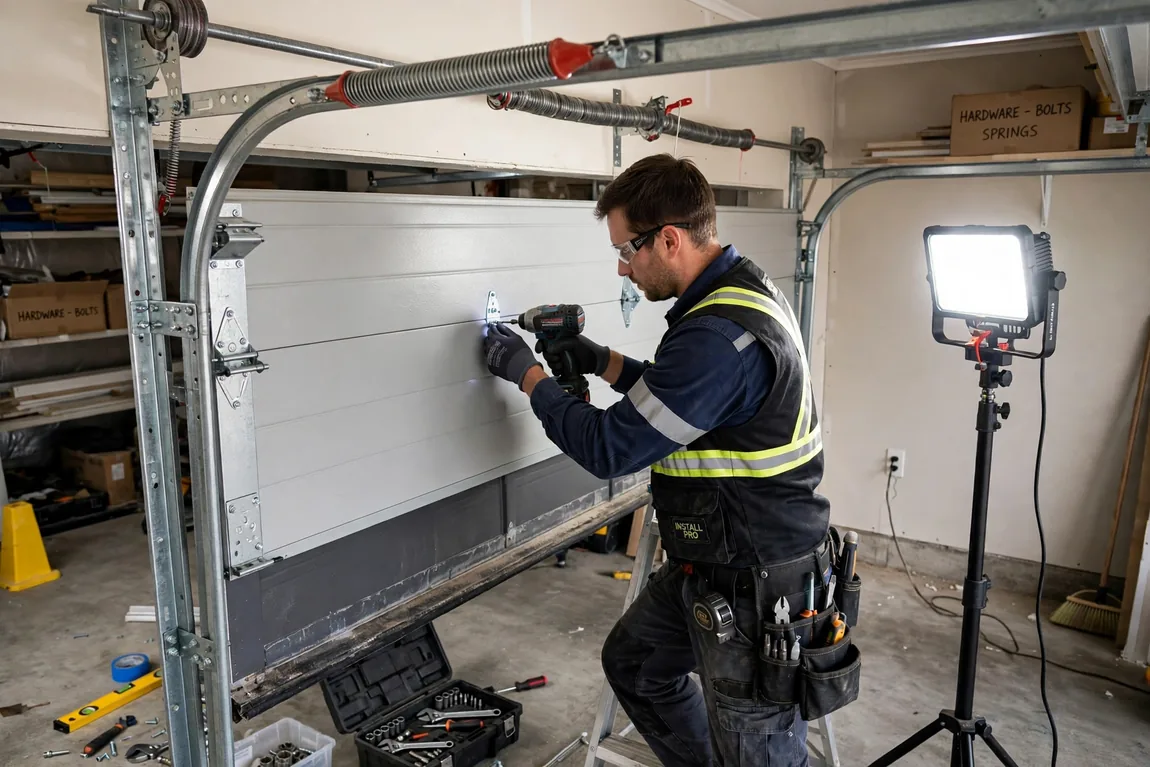
A professional crew fits, balances and tests a standard replacement in about half a day — including the spring work homeowners should not attempt. (Illustrative image)
How to save money on a replacement
- Choose insulated steel in a standard size. Stock sizes and finishes are hundreds cheaper than custom orders and arrive weeks faster.
- Reuse a healthy opener. Keeping a compatible opener under ten years old can save $250 to $750.
- Get three itemized quotes. Ask each installer to list the door, labor, disposal, hardware and opener separately, so you can see what a low headline price leaves out.
- Skip windows on a side or rear garage. Windows are worth it on a street-facing door; on a door nobody sees, they are pure extra cost.
- Ask about disposal and seals upfront. Confirm haul-away of the old door and new weather seals are in writing before you sign.
- Time it flexibly. If the door still opens safely, booking in a quieter winter month sometimes earns a better price than an emergency weekend call-out.
Frequently asked questions
How long does a garage door replacement take?
A crew typically completes a standard like-for-like replacement in about three to five hours. Custom or oversized doors, and framing repairs, can stretch the job to a full day.
Are springs and tracks included in the price?
Usually, yes. A proper full replacement includes new tracks, rollers, cables and springs sized for the new door’s weight, because reusing worn hardware shortens the new door’s life. Confirm it on the written quote, since a door-only price excludes them.
Should I repair instead of replace?
Repair makes sense for a single damaged panel, a failed opener or one broken spring on an otherwise sound door. Replacement is the better buy when the door is over 15 to 20 years old, badly rusted or warped, uninsulated under living space, or needing several major repairs at once.
How long does a new garage door last?
Most steel, aluminum and composite doors last about 15 to 30 years with basic care, per manufacturer and industry guidance. Wood can last as long only if resealed on schedule.