

Modern furniture door styles include slab (flat panel), shaker, glass-insert, inset, full overlay, and frameless invisible doors. Each style differs in profile, mounting method, and finish. Slab doors suit minimalist spaces; shaker works across most styles; frameless doors create a wall-flush, architectural look popular in contemporary interiors.
Walk into any well-designed home today, and the first thing that pulls your eye isn’t the sofa or the artwork — it’s the doors. Cabinet doors, wardrobe doors, room dividers. They set the tone for everything around them. And right now, modern furniture door styles are doing a lot more design work than they used to.
If you’re updating your kitchen, redesigning a bedroom wardrobe, or building from scratch, understanding your door style options is one of the most practical things you can do. This guide covers every major modern furniture door style, how each one works, what it looks like, and where it fits best.
What Exactly Is a Furniture Door Style?
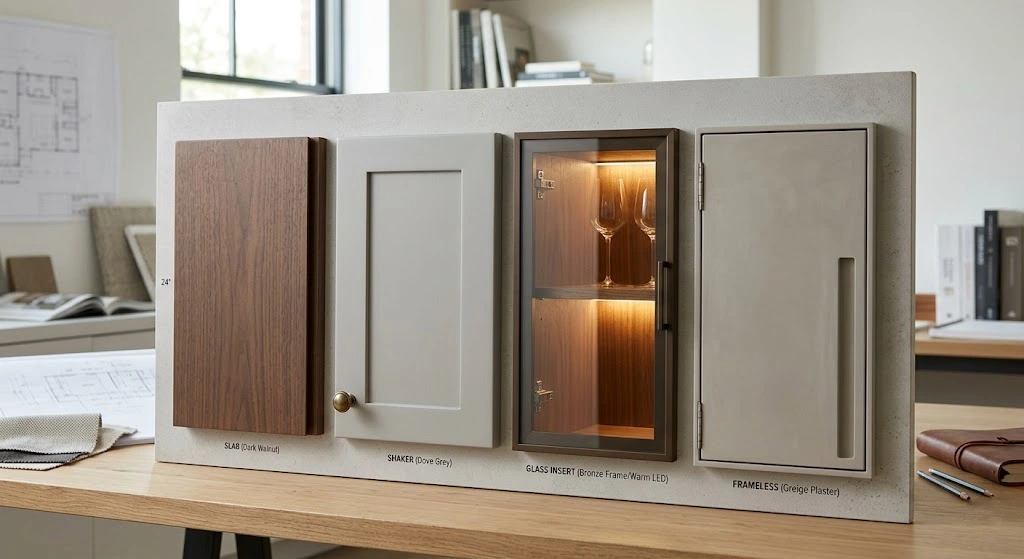
Before getting into specific types, it helps to know what “door style” actually means. It refers to two things: the visual profile of the door face (flat, recessed, raised, grooved) and how the door mounts to the cabinet frame (inset, partial overlay, or full overlay).
Both decisions shape the final look. A flat slab door mounted as full overlay gives you a completely different result than the same slab door set inset into a frame. The face profile and the mounting method work together — and getting both right is what separates a cohesive design from one that just looks off.
Slab Doors: The Minimalist’s First Choice
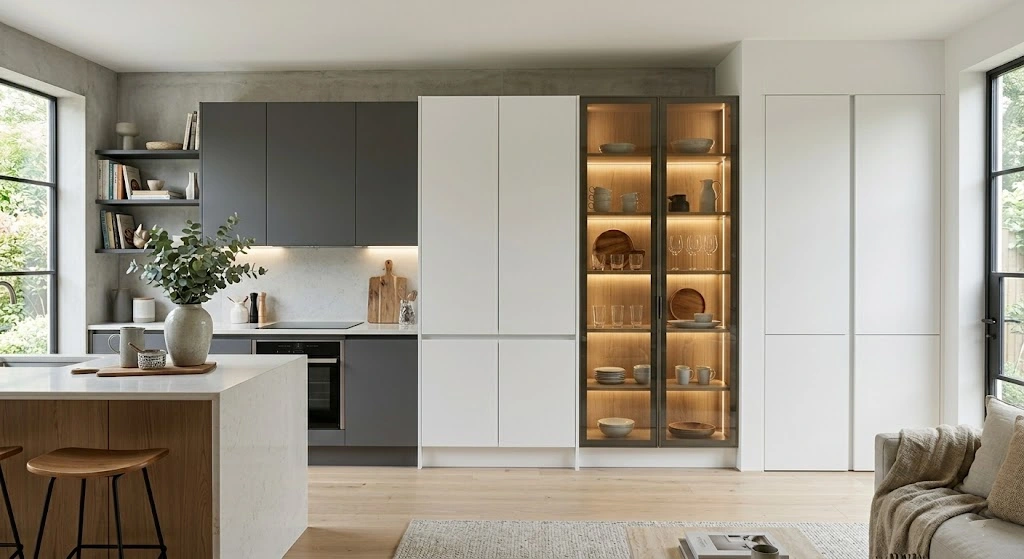
Slab doors — also called flat-panel or one-piece doors — are exactly what the name suggests. One unbroken surface, no frame, no panel detail, no grooves. Just a clean, smooth face from edge to edge.
This is the most minimal option available, and it’s surged in popularity because it works so well in modern and contemporary interiors. The door itself becomes a showcase for the material. If you’re using real oak veneer, high-gloss lacquer, or a matte finish with a deep color, the slab format puts all of that on display without distraction.
There’s a practical trade-off, though. Because there’s nowhere to hide imperfections, the finish quality has to be flawless. MDF slab doors painted in matte white are forgiving; high-gloss slab doors in a dark color will show every fingerprint and dust particle. Combine high-gloss upper cabinets with matte lower ones — that balance manages fingerprints in areas you touch most while keeping the aesthetic you want on top.
Material options include solid hardwood (the most durable and expensive), furniture-grade plywood, and MDF. For most residential projects, MDF with a high-quality painted or laminate finish hits the sweet spot between cost and appearance.
Shaker Doors: The Style That Works Almost Everywhere
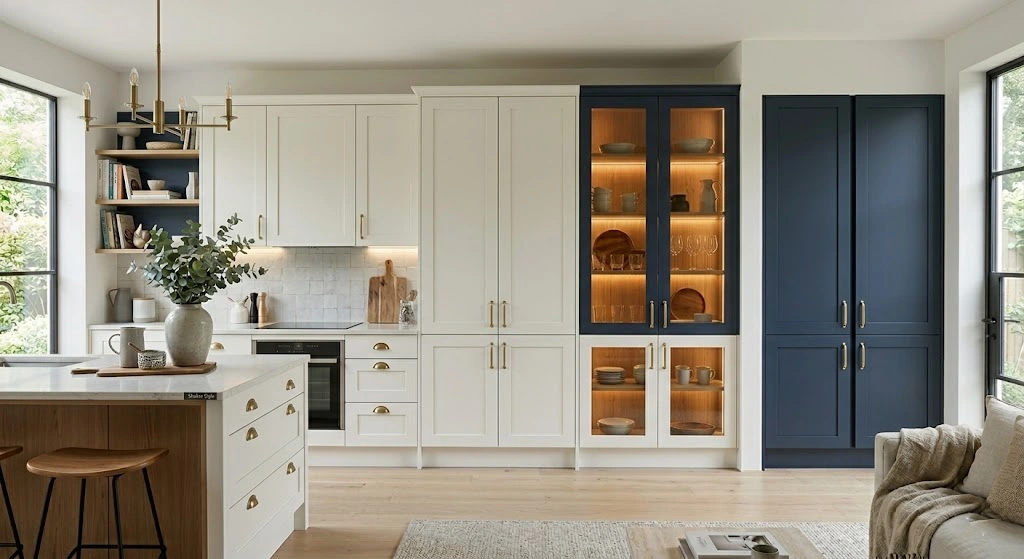
Shaker is the most popular cabinet door style in use today, and for good reason — it’s flexible enough to work in modern, transitional, farmhouse, coastal, and even Scandinavian interiors.
The shaker door has a five-piece construction: two vertical stiles, two horizontal rails, and a recessed center panel. That frame-and-panel build is practical, not just decorative. The center panel has room to expand and contract with changes in humidity without cracking, which matters in kitchens and bathrooms where moisture fluctuates daily.
What makes shaker “modern” versus “traditional” is almost entirely about finish and hardware. White shaker cabinets with brushed nickel pulls read as transitional. The same shaker profile in matte black with no visible hardware reads as contemporary. Dark green shaker cabinets with aged brass handles land somewhere between modern and vintage.
Shaker doors cost about 10 to 15 percent more than basic slab doors, but significantly less than raised panel options. For most homeowners working through a renovation on a real budget, shaker gives the most flexibility at a reasonable price point.
Raised Panel Doors: Classic Structure in a Modern Context
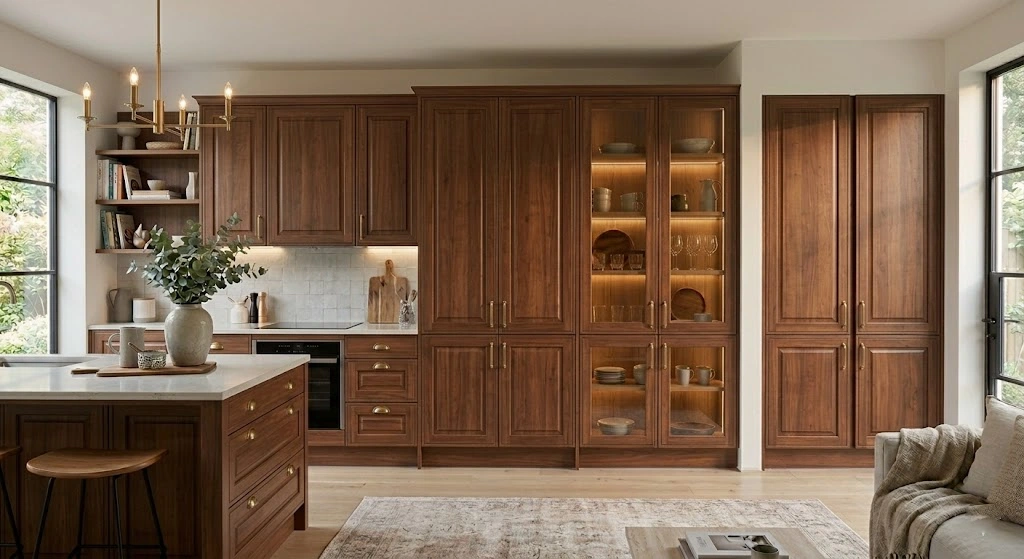
Raised panel doors have a center section that sits higher than the surrounding frame, creating a three-dimensional profile with shadow and depth. This is the door style most associated with traditional and formal interiors — think Georgian kitchens, colonial cabinetry, and estate-style homes.
They’re less common in strictly modern settings, but they haven’t disappeared. In transitional design — spaces that blend classic and contemporary — a raised panel door in a muted tone with simple hardware can feel current without feeling cold. The key is restraint. An ornate raised panel with curved molding reads as traditional; a clean, geometric raised panel in a flat color reads as transitional.
The main downside is maintenance. The ridges and grooves created by the raised profile collect dust, grease, and moisture. In high-use kitchens, this becomes a real cleaning challenge over time.
Glass-Insert Doors: Bringing Light Into Your Furniture
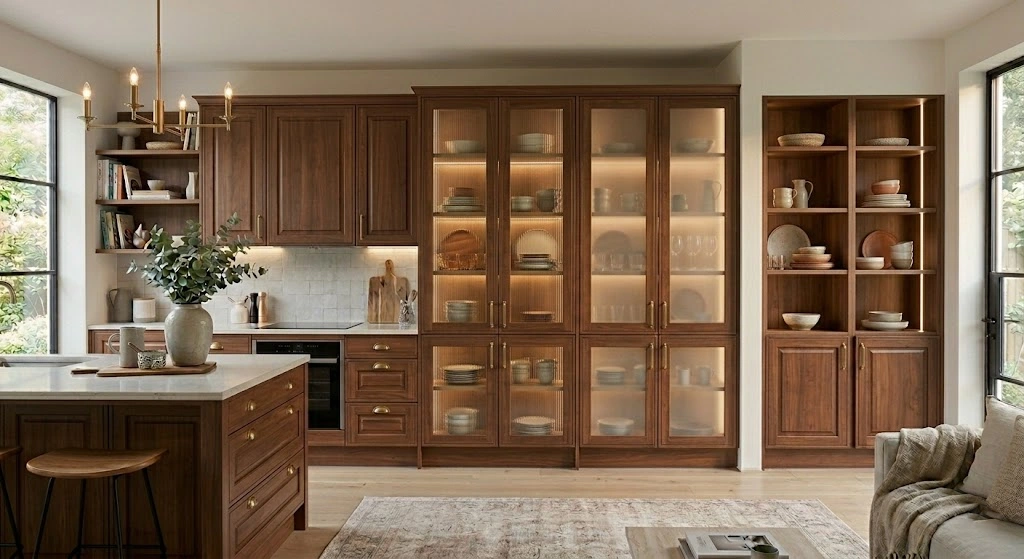
Glass-insert doors combine a wood or metal frame with a glass panel — clear, frosted, textured, or reeded. They’ve become one of the most requested styles in modern furniture design because they solve a specific problem: letting light move through a space while keeping storage areas defined.
In kitchens, glass uppers create visual breathing room that solid cabinet doors don’t. You can display a few well-chosen items inside without the room feeling closed off. In living rooms and dining areas, glass-insert doors on display cabinets or sideboards add a layer of depth that solid doors simply can’t match.
Reeded and fluted glass textures are particularly popular right now. They soften incoming light, create privacy without full opacity, and add a subtle decorative quality to an otherwise minimal door. Frosted glass does the same job in a cleaner, more understated way.
Steel-framed glass doors — often called Crittal-style — are trending for use as room dividers and kitchen partitions. The slim metal grid lines add contrast, and the glass panels keep rooms visually connected. Modern versions frequently use thermally broken aluminum rather than steel, giving the same look at a lighter weight with better insulation.
Inset Doors: The Furniture-Grade Finish
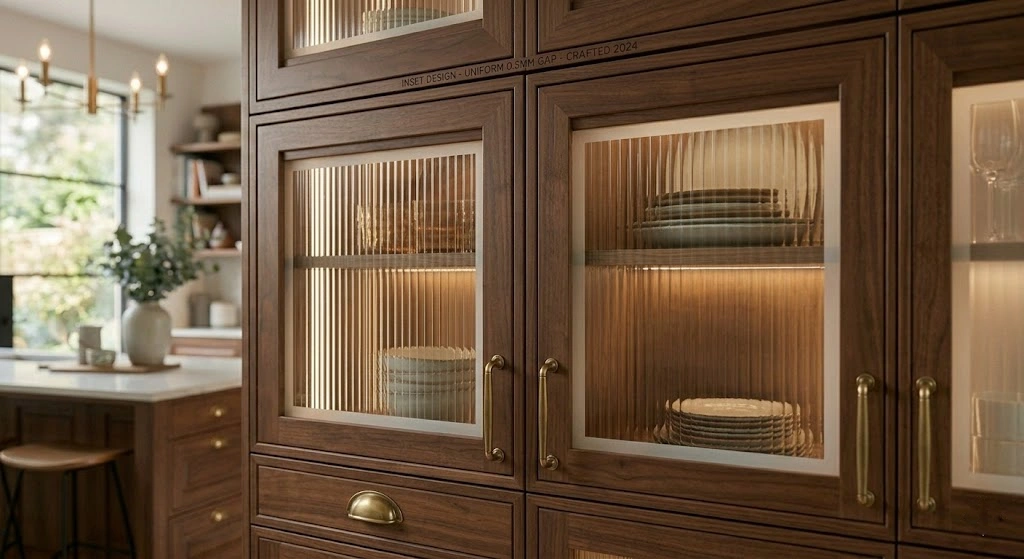
Inset doors sit inside the cabinet frame rather than on top of it. When you close an inset door, it’s flush with the face of the frame — no overlap, no reveal. The result is refined and intentional, closer to what you’d see in bespoke furniture than standard cabinetry.
This is a premium construction method. Getting an inset door to fit correctly requires precise manufacturing. The gap between the door edge and the frame needs to be consistent — typically around 1/16 to 3/32 of an inch — all the way around. Any variation is immediately visible because the frame lines are exposed.
Inset doors can be paired with shaker profiles, slab faces, or recessed panels. The mounting method is what defines “inset,” not the face design. They tend to come with exposed hinges — a detail that, in the right setting, adds to the furniture-like quality of the finished piece.
Full Overlay Doors: Clean Gaps, Contemporary Look
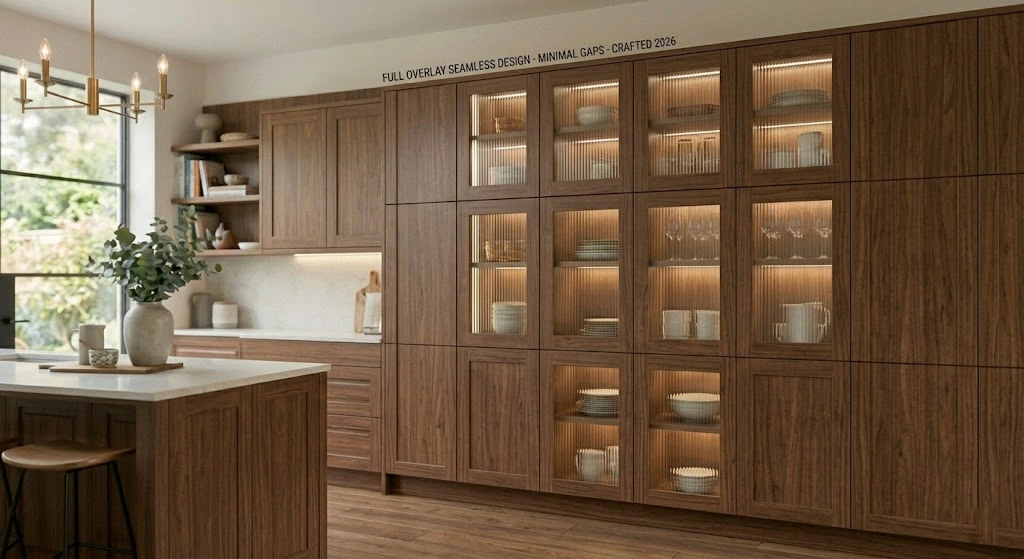
Full overlay is the most common mounting method in modern furniture today. The door covers almost the entire cabinet frame, leaving only a small, consistent gap between adjacent doors. You don’t see much of the frame itself.
This creates a continuous surface across the front of a cabinet run — exactly the look that works in minimalist and contemporary kitchens. When combined with a slab door face and handle-free hardware (push-to-open mechanisms or J-pull channels), full overlay cabinetry can feel like a seamless wall of material.
The visual gap between doors in a full overlay system is tight, usually 3 to 4 millimeters. Getting that consistent requires careful installation, but the result is a level of finish that reads as high-end even when the individual doors are relatively simple.
Frameless (Invisible) Doors: Architecture Meets Furniture
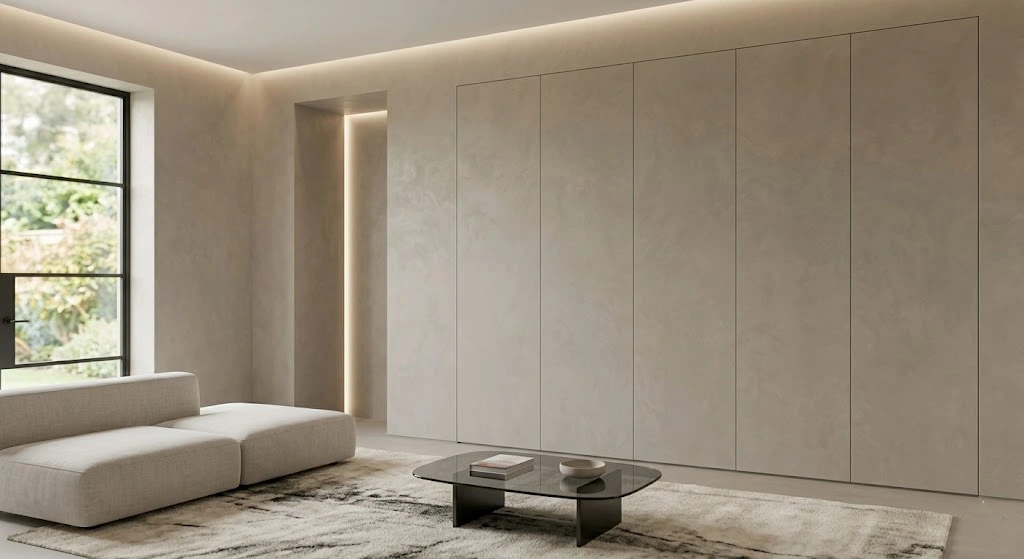
One of the fastest-growing trends in modern interior design is the frameless or “invisible” door — a door that blends completely into the surrounding wall. There’s no visible frame, no handle, and often no visible hinge. The door and the wall surface use the same finish material, so the door disappears until you push it open.
These are used in both room doors and furniture. A wardrobe built into a wall with invisible doors reads as part of the architecture, not as a separate piece of furniture. In smaller rooms, this matters — you gain visual space because your eye registers a flat wall rather than a cabinet with edges.
The trend is especially strong in high-end residential projects and luxury apartment design. It requires precision manufacturing and careful installation, but the results are striking. For homeowners who want a room to feel larger and cleaner without removing any storage, invisible doors are the most effective single choice available.
Materials and Finishes: What You Choose Changes Everything
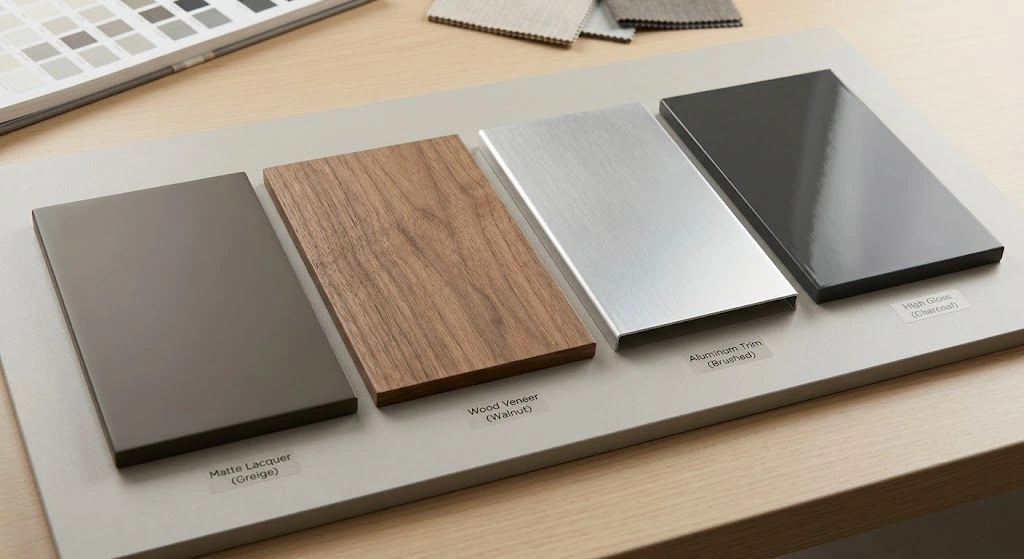
The same door profile in two different finishes can look like completely different styles. Matte finishes are dominant right now — they read as considered and calm, and they resist showing fingerprints compared to high-gloss. Anti-fingerprint matte surfaces have become a practical standard in kitchens and high-touch areas.
Wood veneer is back in a significant way, but not in the rustic sense. The current preference is for refined, flat-grain oak, walnut, or ash with a clear matte lacquer — natural texture preserved, without the heavy reddish stains that defined wood cabinetry in the 1990s and early 2000s. Paired with matte black or brushed brass hardware, wood veneer doors look genuinely current.
Aluminum inserts — thin strips set into a flush door face — add a detail that reads as architectural without adding bulk. A single vertical aluminum line in matte black changes the proportions of a door visually, making it feel taller and more deliberate. This detail works particularly well on wardrobe doors in bedrooms.
How to Choose the Right Style for Your Space
Start with the architecture of the room. Slab and frameless doors belong in spaces with clean lines and minimal ornamentation. Shaker works almost anywhere. Raised panel suits formal or transitional settings.
Then think about use. High-traffic kitchens need durable, easy-to-clean surfaces — matte finishes over high-gloss, and profiles without deep grooves that trap grease. Bedroom wardrobes and living room display cabinets can handle more delicate finishes because the wear is lower.
Finally, think about how the door hardware will interact with the style. Handle-free doors require either push-to-open mechanisms or integrated channels. Visible hardware — whether it’s a slim bar pull, a ceramic knob, or a sculpted brass handle — should feel like it was chosen for this door specifically, not pulled from a catalog and applied.
Modern furniture door styles aren’t about trends for their own sake. They’re about making your space work better and look more intentional. Choose the profile that fits your architecture, the material that fits your lifestyle, and the finish that you’ll still like five years from now — that’s the decision worth making carefully.