

Creative DIY garden edging ideas include brick borders, stacked stones, wood logs, metal strips, and upcycled items like bottles or tires. Each option frames your beds, blocks grass from creeping in, and adds personality to your yard without costing a fortune.
A garden without edging looks unfinished. Grass creeps into flower beds. Mulch spills onto the lawn. The whole yard feels a little messy, even if the plants themselves are healthy and full.
Edging fixes that problem fast. It draws a clean line between your lawn and your beds, and it gives your whole yard a more polished look. The best part is you don’t need a big budget or a landscaping crew to pull it off. Most of these projects can be done in a weekend with tools you probably already own.
Below, you’ll find a mix of classic and creative garden edging ideas. Some use materials you can buy at any hardware store. Others use things sitting in your garage right now. Pick the one that matches your style, your budget, and how much time you want to spend digging.
Why Garden Edging Matters More Than You Think
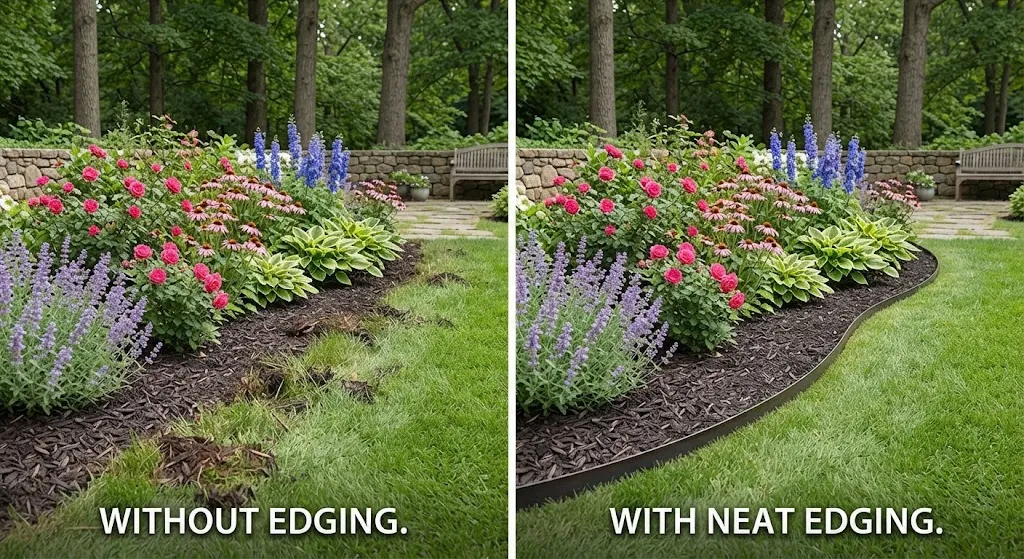
Edging isn’t just decoration. It keeps grass roots from spreading into your flower beds, which means less weeding for you. It also holds mulch and soil in place during heavy rain, so your beds stay tidy instead of washing out onto the sidewalk.
There’s a visual reason too. A defined edge makes your whole yard look intentional. Even a simple garden with just a few plants looks better when it has a clear border. Your eye follows the line, and the space feels organized instead of random.
Edging also protects your plants. Without a barrier, lawn mowers and trimmers can accidentally nick stems or roots near the edge of a bed. A solid border keeps equipment where it belongs and your plants safe from stray blades.
Classic Brick Edging for a Timeless Look
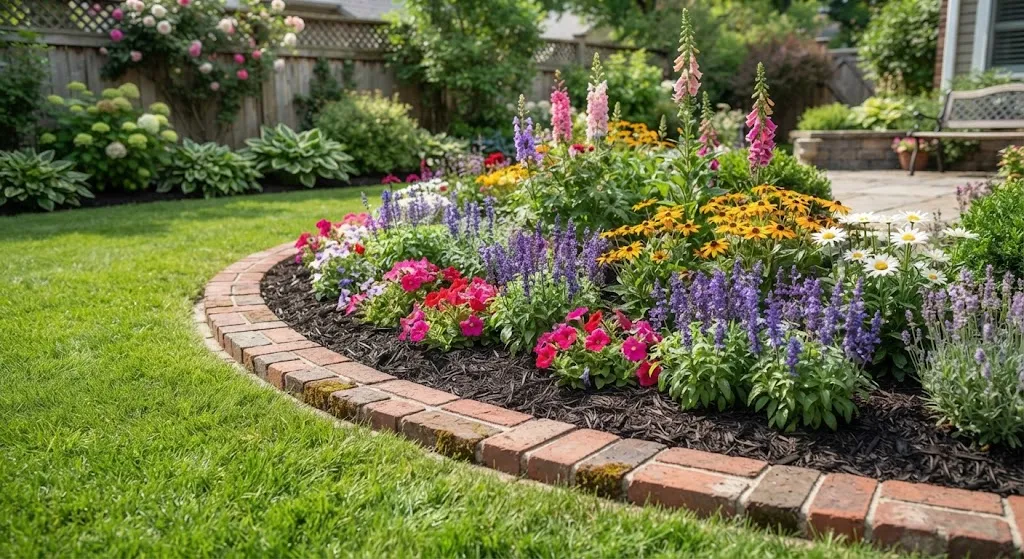
Bricks are one of the easiest materials to work with, and they never go out of style. You can lay them flat for a low, subtle border, or stand them on an angle for a bolder, more textured line. Either way, they hold up well against rain, frost, and heat.
To install brick edging, dig a shallow trench along the line where you want your border. Pack the soil firmly, then set each brick snugly against the next one. A little sand underneath helps keep everything level and stops the bricks from shifting over time.
If you want to make the project more personal, try painting a few bricks before you set them. Weather-resistant outdoor paint holds up fine outside, and a sealed coat protects the design from sun and rain. It turns a plain border into something that shows off your own style.
Natural Stone and Rock Borders
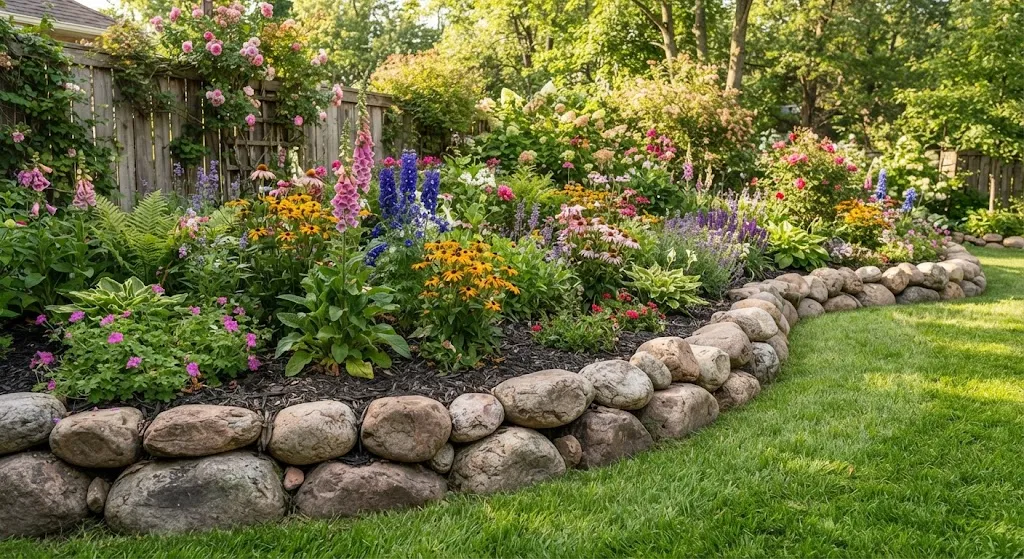
Nothing blends into a garden quite like real stone. Large, rounded rocks create a soft, natural border that works well in cottage gardens, woodland-style beds, or anywhere you want a relaxed, unfussy look. Smaller stones or gravel work better for tighter spaces or modern layouts.
The installation is simple. Dig a shallow groove, set your rocks in place, and pack soil around the base so they don’t roll. For a more finished look, mix in a layer of pea gravel between larger stones. This adds texture and helps with drainage, especially in beds that tend to hold water after rain.
Stone edging also barely needs maintenance. Unlike wood, it won’t rot or warp. Unlike plastic strips, it won’t crack in the cold. Once it’s in the ground, you can pretty much forget about it for years.
Wood and Log Edging for a Rustic Feel
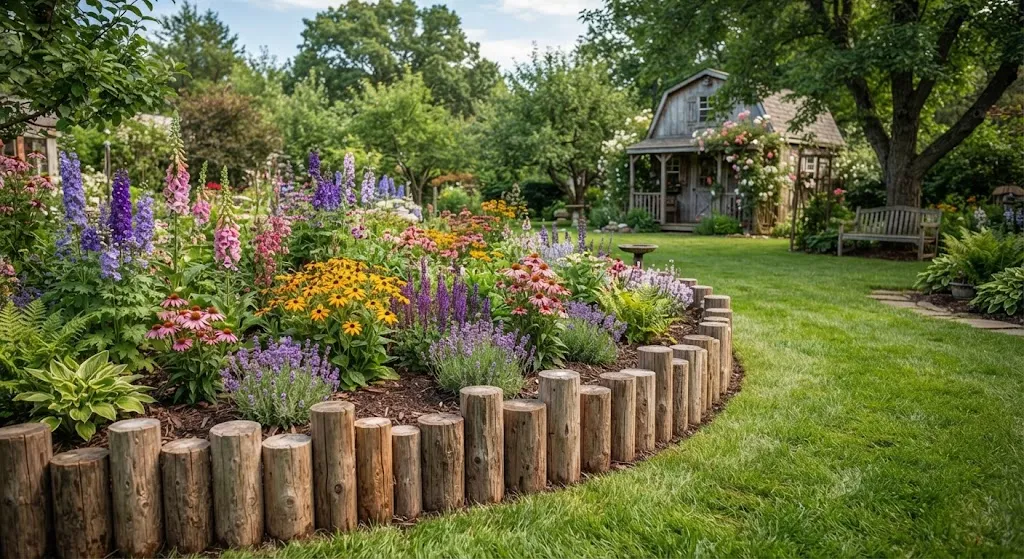
If you have leftover firewood, fallen branches, or scrap lumber, wood edging is a great way to put it to use. Logs laid end to end create a rustic, natural border that suits vegetable gardens and casual flower beds especially well. Cut planks work too, either standing upright for a stronger visual line or laid flat for something more subtle.
Before you install wood edging, treat it with a wood sealer or preservative. Untreated wood will eventually rot when it sits in damp soil, so this one extra step adds years to its life. Stain or paint it if you want a specific color, or leave it natural for a more weathered look.
Wood edging works especially well in gardens near a wooded area or in yards with a farmhouse feel. It’s inexpensive, especially if you’re using materials you already have, and it’s one of the easier projects to finish in an afternoon.
Metal Edging for Clean, Modern Lines
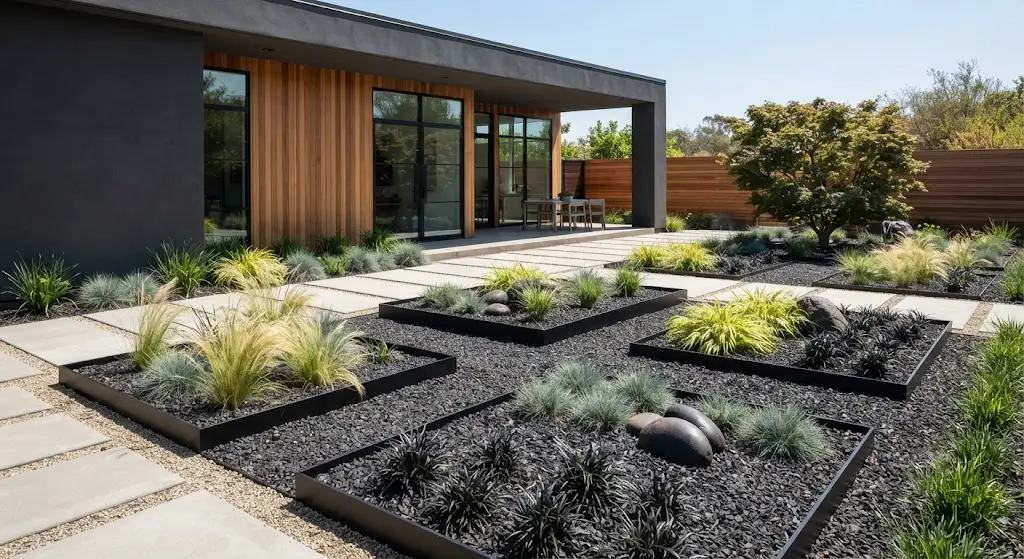
For a sharp, modern border, metal edging is hard to beat. Aluminum or steel strips create crisp, straight lines that look great around geometric flower beds or minimalist landscaping. Unlike stone or wood, metal edging takes up almost no visual space, which lets your plants and mulch stand out.
Installing metal edging usually means digging a narrow trench, setting the panel in place, and securing it with stakes every few feet. Most metal edging comes flexible enough to curve around beds, so you’re not limited to straight lines if your garden has softer shapes.
One thing to watch for is sharp edges, especially with steel. Wear gloves during installation, and consider a cap or rounded top piece if you have kids or pets running through the yard. Once it’s in, though, metal edging holds its shape for years with almost no upkeep.
Upcycled and Budget-Friendly Edging Ideas
If you want a border with personality and a lower price tag, upcycled materials are worth a try. Old wine or beer bottles, buried neck-down in a row, create a colorful and surprisingly sturdy edge. Terra cotta pots, whether whole or broken, add a rustic touch when lined up along a bed. Even old tires, painted and half-buried, work well around vegetable gardens or kids’ play areas.
Broken concrete, sometimes called urbanite, is another option worth considering. Construction sites often give this away for free, and the irregular pieces create a natural, stacked-stone look once they’re arranged along your border. It’s a great way to keep old materials out of the landfill while building something useful.
These upcycled options aren’t just cheap. They also make your garden look like nobody else’s. A neighbor might have the same bag of mulch from the same store, but they won’t have your exact row of hand-painted bottles or your specific mix of broken pavers.
Gravel, Gabion, and Woven Willow Options
For something with more texture, consider gravel combined with a border material like brick or stone. The gravel handles drainage while the solid edge keeps it contained, which works particularly well along patios or wide garden beds. It’s a good middle ground between a fully solid border and a soft, natural one.
Gabion edging, which uses wire mesh baskets filled with stone, brings an industrial look that fits modern landscaping. It’s more involved to build than a simple trench-and-stack border, but it holds up extremely well and gives your yard a distinct, structured feel.
Woven willow edging is the opposite end of the spectrum. It has a soft, natural look that works beautifully in cottage or English-style gardens. Willow branches are flexible enough to weave into a low fence along your beds, and they double as light support for climbing plants like sweet peas.
Tips for a Border That Lasts
Whatever material you choose, a few basics will help your edging hold up over time. Dig your trench deep enough that your border material sits firm, usually a few inches below ground level. Pack the soil tightly around the base so nothing shifts after the first heavy rain.
Take a little time to plan your line before you start digging. A garden hose laid along the ground is an easy way to test curves and angles before committing to a shape. Once you’re happy with the layout, mark it with spray paint or stakes so you have a clear guide while you work.
Finally, match your edging to how your garden will be used. A border near a play area should avoid sharp materials like broken glass or jagged metal. A vegetable garden benefits from something sturdy enough to survive foot traffic during harvest season. Thinking through how the space gets used will point you toward the right material almost every time.
Garden edging doesn’t need to be complicated or expensive. Whether you go with classic brick, natural stone, or a row of upcycled bottles, the right border pulls your whole yard together. Pick a weekend, grab a shovel, and give your garden the frame it deserves.