

Boxelder bug control starts with sealing cracks around windows, doors, and siding. Vacuum up bugs already inside instead of crushing them, since crushing releases a foul smell and stains. Outdoors, spray clusters with soapy water or rubbing alcohol, and remove female boxelder trees if you want a long-term fix.
What Are Boxelder Bugs?
Boxelder bugs are those black insects with reddish-orange stripes that show up on the sunny side of your house every fall. They belong to the same family as stink bugs, so they share a similar shape and a similar knack for showing up uninvited. Adults grow to about half an inch long, and you’ll usually spot them in groups rather than alone.
These bugs feed mainly on boxelder trees, along with some maple and ash trees nearby. They use their piercing mouthparts to pull sap from leaves, seeds, and twigs. This feeding rarely hurts a healthy tree, so the bugs aren’t really a threat to your yard.
The real problem starts when the weather cools down. Boxelder bugs search for warm places to spend the winter, and your house looks like a great option. They squeeze through tiny gaps in siding, window frames, and door thresholds, then hide in your walls until spring.
Once inside, they don’t bite, sting, or spread disease. But they can still cause real headaches. Crush one on your carpet or couch, and you’ll be left with a stain and a smell that lingers. Large numbers of them gathering on your siding or window sills can also feel overwhelming, even if they’re harmless.
Why Boxelder Bugs Choose Your Home
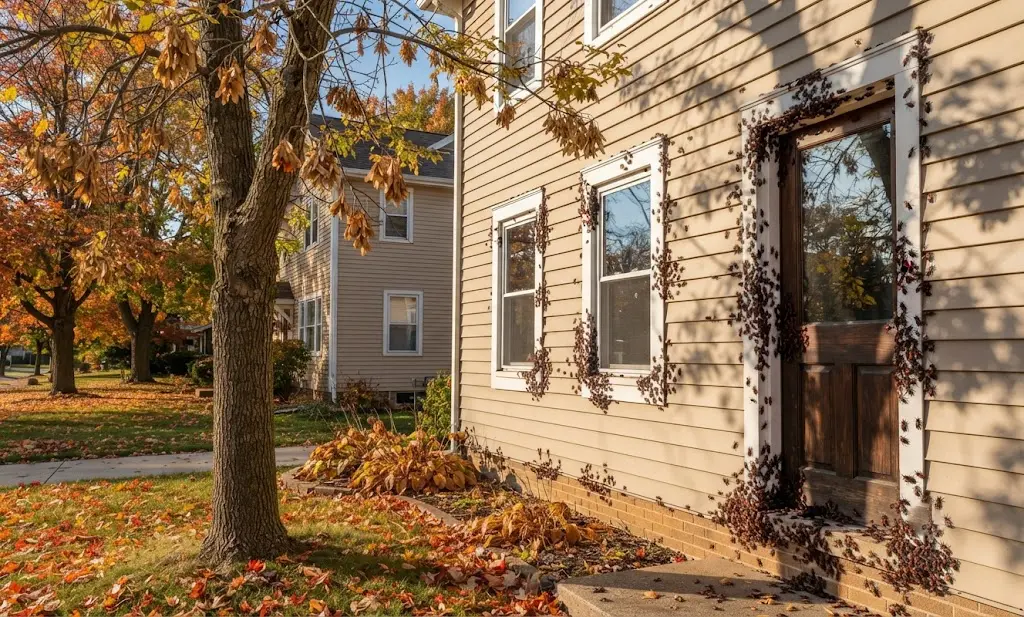
Boxelder bugs are drawn to heat and light. Homes with a lot of sun exposure on the south or west side tend to attract bigger clusters. Dark siding absorbs more heat, which makes it even more appealing to them.
If you have a female boxelder tree nearby, that raises your risk too. Female trees produce the seeds that boxelder bugs feed on and lay eggs near, so a tree close to your house practically hands them an invitation. Neighboring yards count too. The bugs can fly right over from a neighbor’s tree even if you don’t have one yourself.
Cracks and gaps around your home’s exterior give them the access they need. Loose siding, unsealed vents, worn weatherstripping, and torn screens are all common entry points. Once they find one opening, more bugs tend to follow the same path.
How to Get Rid of Boxelder Bugs Indoors
If boxelder bugs have already made it inside, don’t reach for a broom or a shoe. Squashing them releases a strong odor and leaves behind a stain that’s hard to clean off fabric or paint. Vacuuming works much better.
Use a vacuum with a hose attachment to suck up the bugs you find on window sills, walls, and floors. Empty the vacuum bag or canister right away, and seal it in a plastic bag before tossing it outside. This keeps any surviving bugs from crawling back into your home.
You can also sweep bugs into a dustpan and release them outdoors, though this takes more patience if you’re dealing with a large group. Whatever method you choose, try to find where they’re getting in so you can seal that spot afterward. Removing bugs without closing their entry point just invites more of them in later.
For a natural spray option, rubbing alcohol works well indoors. A 91 percent rubbing alcohol solution in a spray bottle will kill boxelder bugs on contact without leaving behind the mess that squashing creates. Test it on a hidden spot first if you’re spraying near furniture or fabric, since alcohol can affect certain finishes.
How to Control Boxelder Bugs Outdoors
Outside your home, a simple soap-and-water spray is one of the easiest ways to knock down a boxelder bug population. Mix a tablespoon of dish soap into a spray bottle full of water and shake it gently. Spray it directly on any cluster of bugs you find on your siding, deck, or fence.
The soap breaks down the waxy coating on their bodies, which either kills them or drives them away. This method won’t harm your plants or pets, which makes it a solid first choice before turning to chemical pesticides. A strong blast from a garden hose can also scatter and remove bugs gathered on warm surfaces like brick or stone.
If soap and water aren’t cutting it, a pyrethroid-based insecticide can help during their most active swarming period, which usually runs from late September through October. Spray it directly on the clusters, and follow the label instructions closely. Wear long sleeves, long pants, and gloves while applying it, since these products are meant to be handled carefully.
Focus your outdoor treatment on the sunny sides of your house, especially areas near siding, eaves, and foundation cracks where the bugs like to gather. Treating these hot spots before bugs move indoors gives you a real head start on the problem.
Sealing Your Home Against Boxelder Bugs
Spraying and vacuuming will only get you so far if your home still has open doors for these pests. Sealing your exterior is the step that actually keeps boxelder bugs from coming back year after year.
Walk around your house and check for gaps around windows, doors, and where pipes or wires enter the wall. Caulk small cracks and use expanding foam or copper wool for larger gaps around utility lines. Copper wool works especially well because bugs can’t chew through it the way they can chew through some foam products.
Replace any torn or damaged window and door screens, since even a small tear gives boxelder bugs an easy way in. Check your weatherstripping too, and swap it out if it’s worn down or doesn’t sit flush against the frame anymore. Gaps under exterior doors are a common weak spot that people often overlook.
Pay close attention to areas where a window air conditioning unit doesn’t fully meet the frame. These gaps are wide enough for boxelder bugs to slip through easily, and they’re easy to miss during a quick inspection. A few dollars of foam sealant here can save you a lot of frustration later.
Long-Term Prevention Tips
Sealing your home handles the entry points, but a few other habits will help keep boxelder bug numbers down over time. If you have a female boxelder tree on your property, consider removing it or replacing it with a male tree, which doesn’t produce the seeds these bugs feed on.
Clean up fallen seeds and leaf litter near your foundation regularly, since boxelder bugs often hide and lay eggs in these spots. Keeping mulch and debris a few feet away from your exterior walls removes another comfortable hiding place. Trimming back tree branches that touch your roof or siding also cuts off an easy bridge into your home.
Planting native flowering shrubs like catmint, salvia, or Russian sage can attract beneficial insects such as assassin bugs and praying mantises, which will eat boxelder bugs when given the chance. This won’t eliminate them completely, but it adds another layer of natural control to your yard.
Treating your home’s exterior twice a year, once in spring and once at the start of fall, gives you the best shot at staying ahead of new bugs before they gather in large numbers. Many pest control companies recommend this timing because it catches boxelder bugs before they start actively searching for winter shelter.
When to Call a Professional
Most boxelder bug problems can be handled with the DIY steps above. But if you’re dealing with a large, repeated infestation, or the bugs keep finding new ways inside no matter how much you seal, it might be time to call a pest control professional.
A trained technician can identify entry points you may have missed and apply treatments designed to last through the season. They can also help you figure out if a nearby boxelder tree, yours or a neighbor’s, is fueling the problem, and offer guidance on your options there.
Boxelder bugs might be harmless, but nobody wants to share their living room with hundreds of them. With consistent sealing, the right cleanup methods, and a little seasonal maintenance, you can keep your home comfortable and bug-free through every fall.