

To get rid of flying ants, spray them with dish soap and water, set sticky traps near windows, or vacuum them up immediately. Seal all entry points with caulk, destroy the nearby colony, and use vinegar or diatomaceous earth to prevent them from returning.
You’re sitting at home, minding your own business, when suddenly a swarm of winged insects fills your kitchen. Your first thought? Termites. But look closer — those are flying ants, and while they’re less destructive, they still signal a problem you need to deal with. The good news is that getting rid of them is totally doable, and you don’t need to panic.
This guide walks you through exactly what to do, from the moment you spot them to keeping them gone for good.
What Are Flying Ants, Exactly?
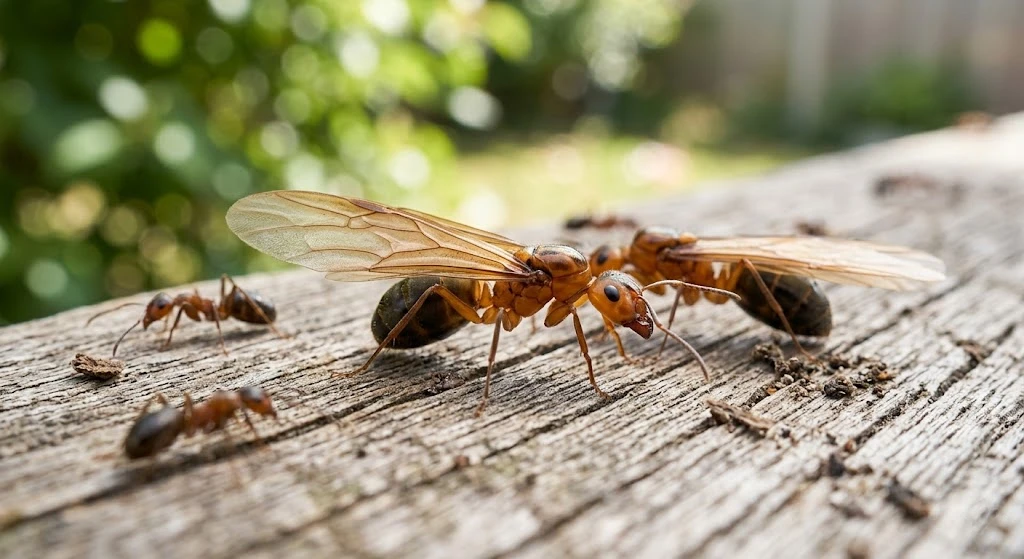
Flying ants are not a separate species. When ants gain the ability to fly, they’ve become sexually mature — referred to as “reproductive” ants. The queen produces them when a colony is ready to expand. Worker ants keep them fed until swarming season arrives.
Flying ants are known as swarmers, and they come out during warm seasons. They exist for one purpose: to mate and start new colonies. Once they’ve done that, most of them die off naturally. So yes, the swarm does eventually end on its own — but waiting it out isn’t always the best move, especially if the colony is inside your walls.
Flying Ants vs. Termites — How to Tell the Difference
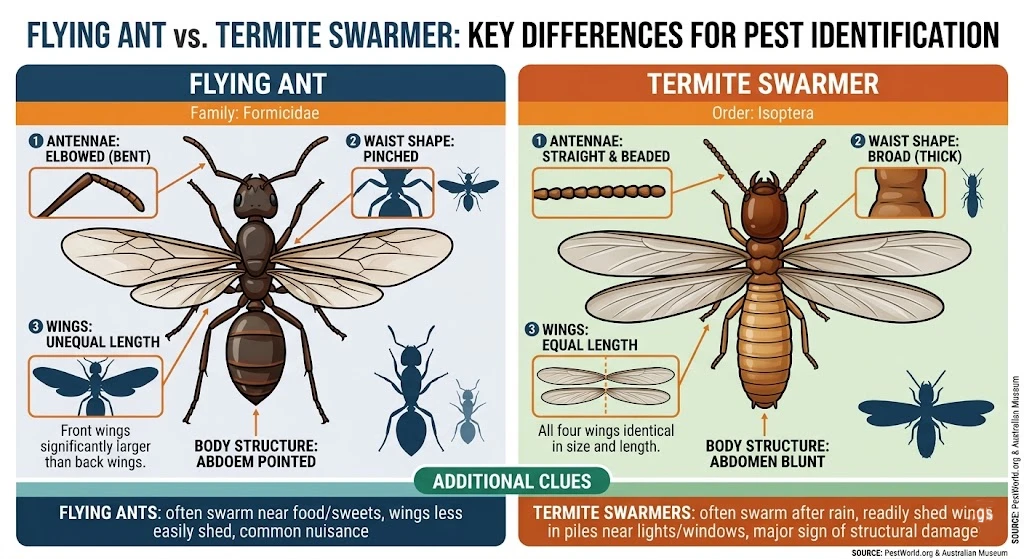
Before you treat anything, you need to confirm what you’re dealing with. Most flying ants do not harm buildings unless they’re carpenter ants, which can weaken wood if they establish a nest inside your home. Termites, on the other hand, eat wood and can cause serious structural damage.
Here’s a quick way to tell them apart without calling anyone. Flying ants have unequal wing lengths — their front wings are larger than their hind wings. Termites have wings that are equal in length and usually twice as long as their bodies. Body shape is another clear giveaway. Termites have straight, beaded antennae, while swarming ants have antennae that are elbowed or bent. Flying ants also have a noticeably pinched waist; termites have wide, straight bodies with no visible waist at all.
If you’re still not sure after looking closely, call a pest control professional for an inspection. It’s worth knowing before you treat.
Step 1: Find Where They’re Coming From
Don’t waste time spraying random areas. To get rid of flying ants, you have to identify where they’re nesting, apply effective treatment, and check to see if they come back. That’s the proper sequence, and skipping step one makes everything else less effective.
Trail the ants back to their source. It could be that the ant colony is somewhere in your walls or underneath the home or building’s structure. If you can’t find it visually, look for areas with moisture damage, rotting wood, or gaps around window frames. Flying ants — especially carpenter ants — love damp wood. That’s usually where the nest hides.
If you have flying ant swarms in your home, there’s a good chance you have an established ant colony in your walls. Spotting them indoors isn’t just an annoyance; it’s a sign to dig deeper.
How to Kill Flying Ants Right Now
Once you’ve spotted them, you want to act fast. Three methods work well for immediate removal without reaching for harsh chemicals.
The dish soap spray is the easiest first move. Mix water with dish soap and spray it directly on flying ants. The soap helps to break down their exoskeletons, killing them on contact. This method is safe for indoor use and helps in reducing the number of ants flying around. Keep a spray bottle ready near windows and doorways where they tend to cluster.
A vacuum is your best tool for large swarms. If flying ants have swarmed in your home or settled on your surfaces, a vacuum is the most effective way of removing large numbers at a time. Empty the vacuum into an outside garbage container as soon as they have been collected to prevent them from finding their way back inside your home.
Sticky traps near windows also do a solid job. Since ants are drawn towards light, they can easily be trapped on glue boards and disposed of easily. Place them on windowsills and near lamps where flying ants tend to gather.
Natural Remedies That Actually Work
If you prefer to avoid chemical sprays — especially in homes with kids or pets — several natural options get the job done.
Vinegar is one of the most reliable choices. Create a solution of equal parts vinegar and water. The strong scent of vinegar disrupts their pheromone trails and deters them from entering your home. Spray it along baseboards, around windows, and at any entry point you’ve identified. It won’t kill the whole colony, but it makes your home far less appealing to scouts and foragers.
Diatomaceous earth works differently — it’s mechanical, not chemical. It kills ants by damaging their exoskeletons and causing dehydration. Sprinkle a thin layer around entry points, along ant trails, or near the nest location. Reapply after rain or if the area gets wet, since moisture reduces how well it works.
Essential oils are another option worth trying. Peppermint, lemon, and tea tree essential oils have strong scents that flying ants dislike. Mix a few drops with water in a spray bottle and spray it around entry points. These won’t eliminate a colony, but they act as a solid barrier that discourages ants from crossing into treated areas.
How to Destroy the Colony for Good
Spraying individual ants only handles the symptom, not the source. If you want the problem gone permanently, you need to go after the colony.
If you find the colony, the easiest and most effective way to destroy it is to pour boiling water over it. Keep the water as hot as possible as you quickly pour it into the hole at the top of the colony where the ants emerge. This works well for outdoor nests in soil or garden beds.
For indoor nests you can’t reach directly, bait is your best weapon. Ants consume borax mixed with sweet substances like sugar or honey and take it back to their nests, which then works to eradicate the entire colony. This method targets worker ants, the queen, eggs, larvae, and pupae, providing a long-term solution. Mix one tablespoon of borax with a few tablespoons of sugar and enough water to make a syrup. Soak cotton balls in it and place them near active trails. Keep borax well out of reach of pets and children, as it’s harmful when ingested.
You can also buy ready-to-use liquid bait traps from brands like Terro that have borax as an active ingredient. These are convenient, pre-measured, and widely available at hardware stores.
How to Keep Flying Ants From Coming Back
Killing the current swarm is only half the job. If you don’t block entry points and remove attractants, another colony will find its way in.
Caulk any areas that look like they could be letting pests in from outside. Gaps in door frames, windowsills, and other physical entry points are the most common ways ants get inside. Walk the perimeter of your home and seal anything that looks like an opening — even small cracks.
Keep your home clean and dry. Ants are attracted to food residue, standing water, and moisture. Fix leaky pipes, wipe down counters after cooking, store food in sealed containers, and don’t leave pet food sitting out. Remove any rotting wood from around your yard or near your home’s foundation.
For extra prevention, spray a boric acid solution — one tablespoon of boric acid powder mixed with one cup of water — around the areas where you found the swarm or near potential entry points. It creates a chemical barrier that deters new scouts from setting up camp.
When to Call a Professional
DIY methods handle most flying ant problems well. But there are times when calling in an expert makes more sense than spending weeks trying different home remedies.
Professional help is highly recommended when DIY methods fail or when you’re dealing with severe infestations. Pest control experts have the tools and expertise to eliminate flying ants effectively. If you’re seeing flying ants repeatedly over several weeks, notice damaged or hollow-sounding wood, or can’t locate the colony despite searching, those are clear signs the problem is bigger than a spray bottle can fix.
Also, if you’re not 100% sure whether you’re dealing with flying ants or termites, get a professional inspection first. Finding discarded wings, mud tubes, or damaged wood strongly suggests termites — and termite treatment requires a very different approach. Getting that identification right from the start saves you time, money, and a lot of stress.
Flying ants are annoying, but they’re manageable. Start with soap spray and sticky traps to deal with what’s in front of you. Find the colony. Bait it or drown it with boiling water. Seal entry points and remove what’s attracting them in the first place. Do all of that, and you won’t see them again anytime soon.