

Stink bug control works best when you seal every gap around windows, doors, and pipes, and remove outdoor lights that attract bugs at night. Vacuum up bugs already inside instead of crushing them. For large infestations, a pest control professional can find hidden entry points and stop the problem at its source.
Stink bugs show up every fall, right when the weather starts to cool down. One day your house is bug-free, and the next you’re finding these shield-shaped insects on your curtains, your ceiling, or crawling across your kitchen counter. They don’t bite, and they won’t chew through your walls, but a houseful of them is enough to drive anyone crazy.
The good news is that stink bug control isn’t complicated once you understand why these bugs show up in the first place. This guide walks you through what draws them in, how to spot an infestation early, and the solutions that actually keep them out for good.
What Causes Stink Bugs to Invade Your Home
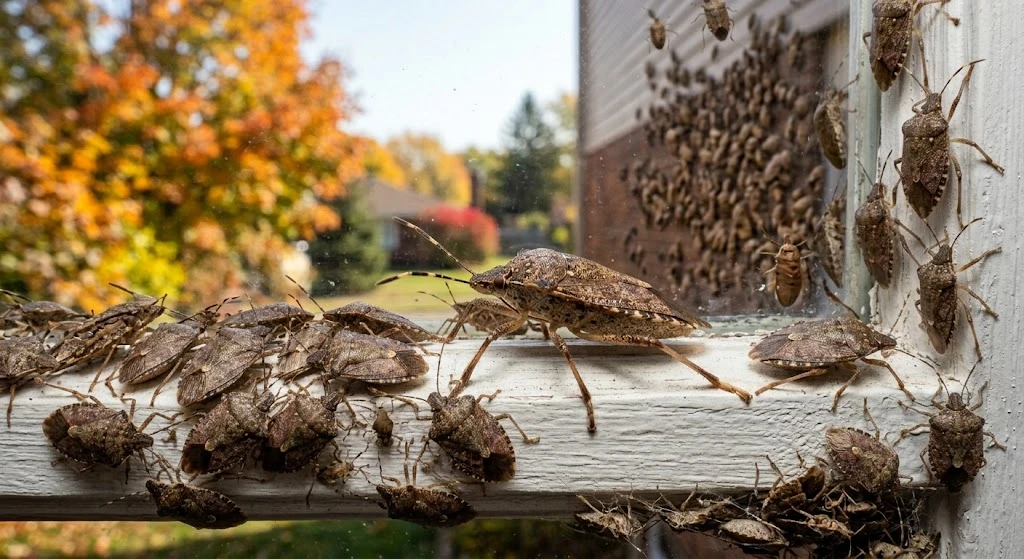
The brown marmorated stink bug is the species behind most home invasions across the United States. It originally came from Asia and was first spotted in Pennsylvania back in the late 1990s. Since then, it has spread across most of the country, and it has one main goal each fall: finding a warm, safe place to spend the winter.
As temperatures drop, these bugs gather on the sunny side of buildings in large groups. Once one bug finds a crack or gap that leads inside, it releases a scent that calls other stink bugs to the same spot. That’s why an infestation can grow fast once it starts. A single opening around a window frame or utility pipe can turn into an entry point for dozens of bugs within days.
Outdoor lighting plays a role too. Stink bugs are drawn to bright lights at night, so porch lights, motion sensor lights, and even bright indoor lights shining through uncovered windows can pull them toward your house. Overgrown bushes and trees touching your siding also give them an easy bridge to climb toward your roofline and attic vents.
How to Identify a Stink Bug
Stink bugs get their name from the smell they release when they feel threatened or get crushed. Spotting one is usually easy once you know what to look for. They have a shield-shaped body, usually around half an inch to three-quarters of an inch long. Their color ranges from mottled brown to gray, and many species have light bands running across their antennae and around the edge of their abdomen.
Unlike some pests that hide in walls or under floors, stink bugs tend to stay out in the open. You’ll usually spot them resting on walls, window screens, or ceilings rather than tucked away in dark corners. This makes them easier to track than pests like roaches or bed bugs, but it also means a small problem becomes a visible one fast.
Signs You Might Have a Stink Bug Problem
The clearest sign is simply seeing live bugs indoors, especially clustered near windows, attic vents, or light fixtures. Dead bugs near these same spots are another strong clue, since they often die after getting trapped between window screens or inside wall voids.
A musty, slightly bitter odor is another giveaway, particularly if you’ve vacuumed up bugs recently or if one got crushed accidentally. Outside, take a look at the sunny side of your house in early fall. If you see groups of bugs gathering on the siding or around window trim, that’s your warning that they’re looking for a way in.
Garden damage offers one more clue, though it points to the bugs being nearby rather than already inside. Stink bugs feed on fruits, vegetables, and ornamental plants by piercing the surface and sucking out the juice. This leaves small discolored spots or dimples on produce like tomatoes, peppers, and apples.
Are Stink Bugs Actually Harmful?
Stink bugs look intimidating, but they’re mostly a nuisance rather than a real danger. They don’t bite people, they don’t sting, and they don’t spread disease. They also won’t damage the structure of your home the way termites or carpenter ants might.
That said, a few problems can come up. Crushing one can leave a stain on fabric, walls, or carpet, along with that signature smell lingering in the room. People with allergies or asthma sometimes react to large numbers of stink bugs in a home, since their presence can affect indoor air quality. Pets that chase or eat them may experience minor stomach upset or excess drooling, though this usually passes on its own.
Natural Stink Bug Control Methods
A simple soap and water solution kills stink bugs on contact and works well for spot treatments. Mix a few drops of dish soap into a spray bottle of water, then spray any bugs you see directly. This breaks down their outer shell and kills them without leaving harsh chemicals behind.
A vacuum cleaner is the easiest way to remove bugs already inside your home, since it avoids the smell that comes from crushing them. Use an old vacuum or one with a bag you can remove right away, since dead stink bugs left inside the canister can stink up the room over time. Avoid squashing them with your shoe or a paper towel, since this triggers the odor they’re known for.
Diatomaceous earth offers another natural option for entry points like windowsills, baseboard gaps, and foundation cracks. This fine powder is made from fossilized algae, and it damages a stink bug’s outer shell on contact, causing it to dry out and die. Spread a light layer wherever you’ve noticed bug activity, and reapply after rain or heavy cleaning.
Trimming back bushes, trees, and vines that touch your house removes the bridges bugs use to reach your roof and upper-story windows. Moving firewood piles away from your foundation also helps, since stacked wood gives stink bugs a place to hide before making their move indoors.
Chemical Treatments and When to Use Them
When natural methods aren’t keeping up with the number of bugs you’re seeing, a chemical pesticide may be worth considering. Products containing deltamethrin are commonly used against stink bugs and work well as a perimeter treatment around the outside of a home. Apply these sprays to known entry points, including window frames, door thresholds, and gaps around utility lines.
Always read the label carefully before using any pesticide, since application methods and safety precautions vary by product. Keep children and pets away from treated areas until the product has fully dried. If you’re dealing with a serious infestation, pairing a perimeter spray with sealing work tends to produce better results than relying on chemicals alone.
How to Prevent Stink Bugs From Coming Back
Sealing your home is the single most effective long-term solution. Walk around your house and check every window frame, door frame, and utility pipe for gaps. Caulk works well for small cracks, while expanding foam handles larger openings around pipes and cables.
Check your window screens and door screens for tears, and replace any that are damaged. Weather stripping around doors deserves a look too, since worn or gapped stripping gives bugs an easy path inside. Installing door sweeps on exterior doors closes off one more common entry point.
Reducing outdoor lighting at night cuts down on the bugs drawn toward your home in the first place. Turn off porch lights when you’re not using them, and consider switching to yellow or sodium vapor bulbs, since these attract fewer insects than standard white lights. Closing blinds or curtains in the evening also helps, since bright indoor light shining outward has the same pulling effect.
When to Call a Pest Control Professional
Small numbers of stink bugs are usually manageable on your own with vacuuming, sealing, and the natural methods covered above. Once you’re dealing with dozens of bugs at a time, though, a professional inspection becomes worth the cost. Pest control technicians can spot entry points you might miss, including gaps inside attics, behind siding, or around rooflines that are hard to reach.
Professionals also have access to treatments not sold to the general public, along with the experience to apply them safely and effectively. Many pest control companies offer seasonal monitoring, which catches new activity early before it turns into a full infestation again next fall.
Stink bug control comes down to two things: closing off the paths bugs use to get inside, and removing what draws them to your house in the first place. Start with a walk around your home’s exterior this week, seal what you find, and keep an eye on those sunny walls as the weather starts to change. A little prevention now saves you a much bigger headache once fall arrives.