

Energy-Efficient Custom Homes: Smart Features Worth the Investment
Energy efficiency has become a defining feature of thoughtful luxury home construction, and few builders in the Greater Austin area have pursued it with more conviction than Seven Custom Homes. The smart features explored here reduce operating costs, increase long-term value, and reflect a commitment to excellence across the demanding Central Texas climate.
Why Is Energy Efficiency a Luxury Standard Rather Than a Compromise?
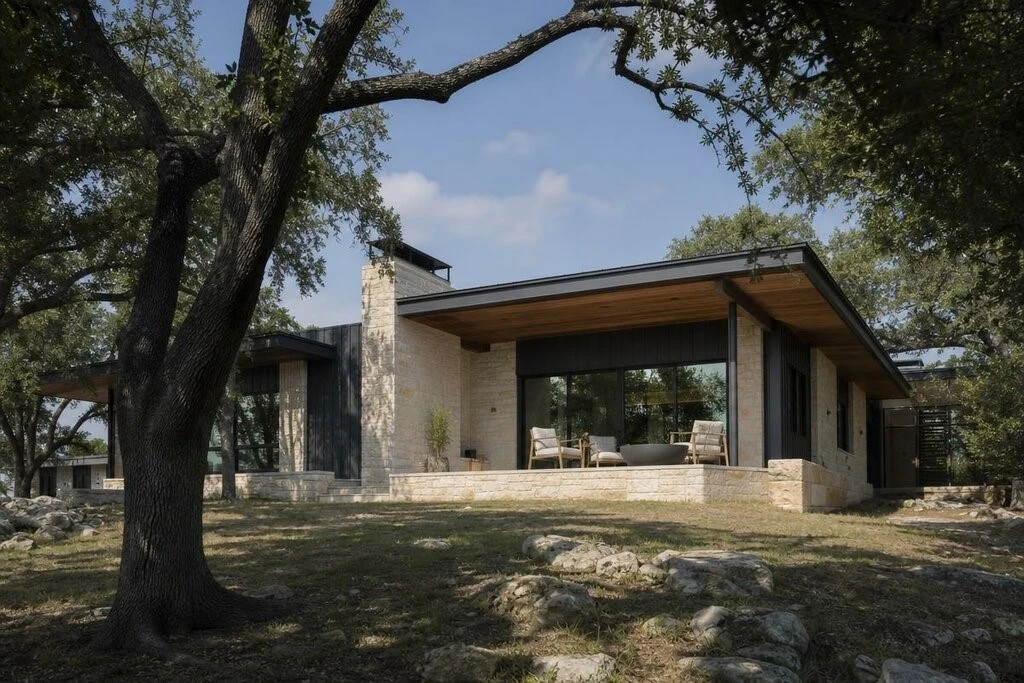
Energy efficiency in a well-built home is an architectural principle, not an aftermarket upgrade. It shapes floor plans, orientation, and material selection from the first design session, and in Central Texas the payoff is felt every month of the cooling season.
Central Texas cooling loads dominate eight to nine months of the year, with Austin recording over 3,000 cooling degree days annually. Communities like Lakeway, Bee Cave, and Dripping Springs sit west of the city, where elevation adds wind exposure. Austin and surrounding counties span IECC Climate Zones 2B and 3A, where solar gain and humidity are the primary threats.
Seven Custom Homes’ custom home building treats energy-efficient construction as a core competency, embedded from the earliest concept sketches.
The Building Envelope: Where Energy Performance Begins
Attic temperatures exceed 140°F in Central Texas summers, and envelope decisions carry more weight than any mechanical system installed afterward. Roughly half of a typical annual utility bill is attributable to air conditioning, making the assembly separating conditioned space from the attic the single most consequential investment in long-term operating cost.
What Is the Best Insulation for Texas Custom Homes?
For most high-performance homes in Central Texas, closed-cell spray foam is the strongest option, it insulates and air-seals in one application, delivering R-6.5 per inch while acting as an air and vapor barrier. Continuous rigid foam on exterior sheathing creates a thermal break through framing members. Encapsulating the attic with foam at the roofline brings HVAC equipment and ductwork into conditioned space, cutting the load summer attic heat would otherwise place on the system.
High-Performance Windows and Doors
Glazing selection occurs during the design phase so solar heat gain coefficients are calculated against actual elevation exposures. Andersen Windows with low-E coatings and argon gas fill reduce solar heat gain on west- and south-facing elevations in communities like West Lake Hills and The Hills.
For large-format openings, Fleetwood Doors with thermally broken aluminum frames deliver commercial-grade thermal performance. Deep overhangs engineered to Central Texas sun angles further reduce cooling loads without sacrificing views.
How Does a Blower Door Test Verify Envelope Performance?
A blower door test depressurizes the interior with a calibrated fan and records resulting airflow. A well-insulated home with inadequate air sealing still loses 25–40 percent of conditioned air through penetrations and framing gaps, so R-value on paper does not reflect real-world performance. The test quantifies leakage at every penetration point, providing a verified number required for IECC code compliance.
Sustainable Materials and Construction Practices That Elevate the Finished Home
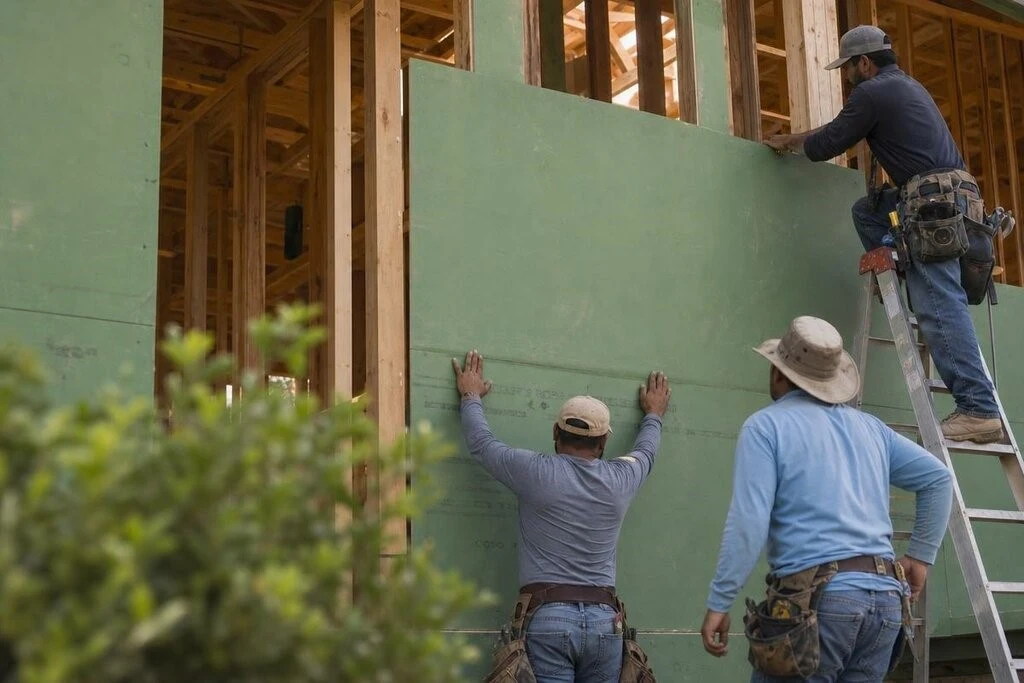
Sustainable luxury construction begins at the wall assembly. Materials specified at the sheathing layer and finish selections made during interior design both carry lasting consequences for durability, air quality, and long-term performance.
High-Performance Sheathing and Moisture Management
ZIP System sheathing integrates a structural panel and weather-resistive barrier into a single product, reducing installation variables that create moisture intrusion pathways. Taped seams create a continuous drainage plane that traditional housewrap struggles to match under sustained humidity.
Communities along the I-35 corridor experience prolonged summer humidity; west of the city, Dripping Springs, Driftwood, and Spicewood sit on limestone substrate with variable drainage, making above-grade moisture management especially consequential.
Low-VOC Finishes and Healthy Interior Environments
In a tightly sealed custom residence, air exchange is controlled rather than incidental, making VOC load a measurable factor in daily air quality. Low-VOC paints, adhesives, and sealants complement a high-performance envelope. Balanced mechanical ventilation through an energy recovery ventilator ensures tightly sealed homes receive filtered fresh air without sacrificing conditioned energy.
Custom cabinetry built with formaldehyde-free substrates and low-emission coatings is a standard element of Seven Custom Homes’ custom home building process.
Bringing It All Together: Efficiency as Long-Term Value
A tight envelope, high-performance glazing, verified air sealing, moisture-managed sheathing, and healthy interior finishes form a connected system whose combined effect is a home that costs less to operate, holds its value, and remains comfortable through the longest Central Texas summers.
Frequently Asked Questions
How Long Does It Take to Build a Custom Home With Seven Custom Homes in Austin?
Most projects take 12–18 months from design finalization to certificate of occupancy, depending on lot conditions, permitting timelines, and home complexity. Austin’s permitting process can add several weeks, so early coordination helps keep the schedule on track.
What Is the Typical Cost Per Square Foot for a Luxury Custom Home in Austin?
Luxury custom home construction in the Austin metro currently ranges from roughly $300 to $600 or more per square foot, depending on site conditions, material selections, and finish level. High-performance systems add upfront cost but reduce long-term operating expenses. Seven Custom Homes provides detailed cost breakdowns during the budgeting phase.
Can I Add Solar Panels or Battery Storage to a Custom Home During Construction?
Yes, and integrating solar and battery storage during construction is far more cost-effective than retrofitting afterward. Seven Custom Homes coordinates with electrical engineers and solar providers early in design to ensure roof orientation, structural load, and panel routing are planned correctly. Texas utility interconnection rules and the federal investment tax credit can meaningfully reduce net system cost.
Is a Custom Home in Austin More Resilient During Power Outages Than a Production Home?
A well-designed custom home with a tight envelope, high-efficiency HVAC, and optional backup power handles grid outages significantly better than a standard production home. Because the home loses and gains heat more slowly, interior temperatures remain comfortable longer without mechanical conditioning. Whole-home generators or battery backup systems can be incorporated during the build.
Do High-Efficiency Features Affect My Home’s Resale Value in the Austin Market?
Studies from the Appraisal Institute and the National Association of Realtors consistently show that documented energy efficiency improvements contribute positively to appraised value and buyer appeal. Blower door test results and product specifications on file give appraisers and buyers concrete data to support higher valuations.
What Maintenance Should I Expect for a High-Performance Custom Home After Move-In?
High-performance homes require regular filter changes for ERV/HRV systems, annual HVAC tune-ups, and periodic inspection of exterior caulking and flashing. Seven Custom Homes provides clients with a homeowner manual at closing outlining maintenance schedules specific to the installed systems.
Can Seven Custom Homes Build on a Lot I Already Own Outside of Austin Proper?
Seven Custom Homes works throughout the greater Austin area, including Dripping Springs, Lakeway, Cedar Park, and Bee Cave. Lot due diligence, soil testing, utility availability, and deed restriction review, is part of the early project process. Clients who already own land are encouraged to engage Seven Custom Homes early so home design can respond intelligently to site-specific characteristics.
About Seven Custom Homes
Seven Custom Homes is a luxury residential construction firm founded in 2007 by David Lyne, serving Greater Austin and the Texas Hill Country from their office at 312 Medical Parkway, Building B, Lakeway, TX 78738. The company has completed a portfolio spanning high-performance custom residences, lakefront properties, and custom estate development, and has been nationally recognized for its work. Their approach is guided by a single principle: they do not just build houses, they craft legacies.
Business Name: Seven Custom Homes
Address: 312 Medical Parkway Building B, Austin, TX 78738
Phone Number: (512) 662-1349