

Why Wallpaper Is Reclaiming the Living Room
Wallpaper is back, and it is not the floral repeat print from your grandmother’s dining room. The global wallpaper market was valued at $14.8 billion in 2023 and is projected to reach $20.3 billion by 2030, according to Grand View Research. That growth reflects a genuine shift in how homeowners approach interior design.
Paint still has its place. But a flat coat of color cannot replicate the depth of a textured linen finish, the drama of a botanical mural, or the architectural weight of a feature wall. Living room wallpaper decor gives you tools that paint simply cannot match.
This guide covers everything you need to make a confident decision: which materials last, which styles suit your room size, what is trending in 2026, and how to hang your first roll without calling in a professional.
Understanding Wallpaper Materials
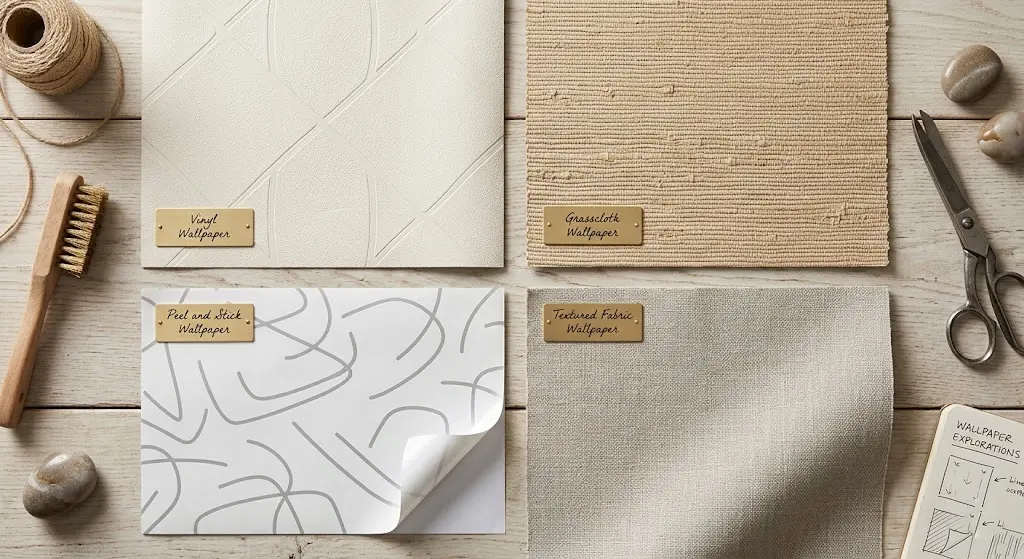
Choosing the wrong material is one of the most common and costly mistakes homeowners make. Each type has a different application method, lifespan, and suitability for high-traffic areas.
Quick Material Comparison
| Material | Best For | Durability | DIY-Friendly |
| Non-woven | Most living rooms | High | Yes |
| Vinyl | High-traffic areas | Very High | Yes |
| Grasscloth | Texture-focused designs | Medium | No |
| Peel-and-Stick | Renters, temporary use | Low-Medium | Yes |
| Silk / Hand-painted | Luxury feature walls | Low | No |
| Eco / Recycled | Sustainable interiors | Medium-High | Yes |
Non-woven wallpaper is the most beginner-friendly option. It is tear-resistant, paste-the-wall (no soaking required), and strips off cleanly when you are ready to redecorate. Most interior designers recommend it as the default choice for living rooms.
Vinyl wallpaper is the workhorse of the industry. It holds up to cleaning, resists moisture, and works well in homes with children or pets. The downside is that it is less breathable than non-woven options, which can lead to moisture buildup in older homes.
Grasscloth brings natural texture that no printed paper can replicate. It is woven from jute, seagrass, or bamboo and pressed onto a paper backing. It marks and stains more easily than vinyl, so it is best used on walls that see minimal contact.
Peel-and-stick removable wallpaper has improved significantly in recent years. High-resolution digital prints on repositionable adhesive backing make it ideal for renters and indecisive decorators. Quality brands now offer designs that are nearly indistinguishable from traditional papers at arm’s length.
Sustainable wallpapers made with FSC-certified paper, water-based inks, and recycled fibers have carved out a growing niche. Companies like Elitis and Graham and Brown now produce full ranges certified to low-VOC standards.
Living Room Wallpaper Decor Styles
The Feature Wall
The accent wall remains the safest entry point for anyone new to wallpaper. Roughly 62% of wallpaper installations in living rooms are single-wall applications, according to WGSN trend data. The wall behind the sofa or the fireplace wall works best because it frames the main focal point of the room.
Avoid papering a wall that has too many doors, windows, or outlets. Pattern interruptions reduce visual impact and make installation significantly harder.
Full-Room Immersive Design
Going all four walls with one pattern is a bold move that works when you choose the right paper. Subtle textures, tonal designs, and low-contrast geometrics are the safest options for full-room coverage. High-contrast bold prints on all four walls can overwhelm a mid-sized room within weeks.
If you want drama without sensory overload, pair a patterned paper on three walls with a complementary plain plaster-effect paper on the fourth.
The Fifth Wall: Ceilings
Ceiling wallpaper is one of the fastest-growing niches in residential interior design. It adds architectural interest without consuming floor space visually. Trellis patterns, sky murals, and soft geometric repeats work particularly well overhead.
The practical challenge is gravity. Paste-the-wall non-woven papers are the only practical choice for ceilings unless you are working with a professional installer.
Paneling and Framing
Using decorative molding to create wall panels, then wallpapering inside them, turns a flat wall into a bespoke design feature. This approach works especially well with small-repeat botanical prints and damask patterns. It gives you the visual richness of wallpaper with the order of a gallery wall.
Color Theory and Spatial Psychology
The color and finish of your wallpaper affects how a room feels, not just how it looks. Getting this right is the difference between a space that works and one that does not.
Light colors with subtle metallic detail reflect ambient light and make small living rooms feel more open. Soft silver, pale gold, and pearlescent finishes work well in rooms that lack natural light by bouncing artificial light around the space.
Dark, moody wallpapers work in reverse. Deep navy, forest green, and charcoal with tonal botanical prints make large, open rooms feel warmer and more intimate. This approach is particularly effective in open-plan living spaces where you want to define a sitting area without building physical walls.
Finish matters as much as color. Matte finishes absorb light and reduce glare, making them ideal for rooms with strong direct sunlight. Gloss and semi-gloss finishes reflect light, which adds depth to north-facing rooms but can create hotspots in south-facing ones.
Finish vs. Room Type
| Finish | Best Room Orientation | Effect |
| Matte | South-facing (high sun) | Absorbs glare, warm feel |
| Semi-gloss | North or east-facing | Adds depth and brightness |
| Metallic | Any dark or low-light room | Reflects and amplifies light |
| Textured | Any orientation | Visual depth without sheen |
Top Living Room Wallpaper Trends for 2026
Design trends in 2026 reflect a broader consumer preference for natural materials, honest textures, and personalization over generic finishes. Here is what is leading the market right now.
1. Biophilic Murals
Biophilic design has moved from a buzzword to a mainstream expectation. Large-scale forest murals, oversized botanical prints, and panoramic meadow scenes are now available at every price point. Studies show that nature-inspired interiors reduce stress markers by up to 15%, which may explain why these designs continue to outperform traditional patterns in consumer surveys.
2. New Minimalism: Textured Monochromes
Linen-effect wallpapers, plaster-finish papers, and tonal concrete prints deliver visual interest without competing with furniture or art. These papers work in any color family and are particularly popular in neutral, Japandi-inspired living rooms. They also photograph well, which matters more than ever in an era of listing homes for sale.
3. Retro Revival: 70s Geometry with a Modern Palette
Rounded arches, oversized ogee shapes, and abstract organic forms lifted from 1970s design archives are appearing in muted terracotta, sage, warm cream, and dusty rose. The difference from the original decade is restraint. Modern versions of these patterns are quieter and more intentional than the originals.
4. Digital Prints and AI-Generated Patterns
Several wallpaper manufacturers now offer bespoke design services powered by generative AI tools. You can input color preferences, room dimensions, and style references and receive a unique, production-ready repeat pattern. This removes the risk of choosing a popular design that shows up in a dozen other living rooms on your street.
Measuring Your Living Room: The Math
Accurate measurement prevents expensive shortfalls and avoids ordering too many rolls. Here is the standard formula every homeowner needs to know.
Total Rolls = Wall Area / (Roll Square Footage – Pattern Waste)
To apply this correctly, follow these steps:
- Measure total wall height and width in feet
- Multiply to get total square footage, then subtract window and door areas
- Divide by usable roll coverage (typically 25 to 30 sq ft for standard rolls)
- Add 10 to 15% waste for straight-match patterns
- Add 20 to 25% waste for drop-match patterns
Pattern Match Waste Guide
| Match Type | Extra Waste | Common Uses |
| Straight Match | 5-10% | Stripes, plain textures, tile effects |
| Drop Match | 15-25% | Large florals, geometric repeats |
| Random Match | Minimal | Grasscloth, linen textures, plaster effects |
Always order one extra roll from the same batch number. Dye lots vary between print runs, and a replacement from a different batch will be visibly mismatched.
Wall Preparation
No wallpaper installation succeeds on a poorly prepared surface. Fill all holes and cracks with a lightweight filler. Sand smooth and prime with a dedicated lining primer before hanging. In older homes with textured plaster walls, lining paper creates a consistent base that dramatically improves the final result.
Professional vs. DIY Installation
When to DIY
Non-woven paste-the-wall papers are the most forgiving material for first-time hangers. The paste-the-wall method keeps strips workable for longer, giving you time to adjust alignment before the adhesive sets.
A standard-sized living room wall (roughly 12 feet wide by 9 feet high) takes most beginners 3 to 4 hours for the first attempt. A second wall typically takes half the time.
Essential Tools:
- Plumb line or digital level
- Smoothing brush or plastic smoother
- Seam roller
- Sharp snap-off utility knife
- Paste table and wallpaper paste (unless paste-the-wall)
- Sponge and bucket for cleaning excess paste
When to Hire a Pro
Hand-painted papers, silk wallcoverings, and metallic foil papers require an experienced installer. These materials are expensive (often $200 to $600 per roll), mark easily, and demand precision seaming that takes years of practice to master. The same applies to rooms with high ceilings, heavy architectural detail, or complex ceiling angles.
Common DIY Mistakes to Avoid
- Skipping wall prep and hanging directly on bare or painted plaster
- Not using a plumb line, leading to creeping misalignment across strips
- Over-pasting non-woven paper and causing the material to stretch
- Not leaving enough overlap at edges before final trimming
- Using cold water paste in a cold room, which slows set time and causes air bubbles
Maintenance and Longevity
Most modern vinyl and non-woven papers are wipeable. Use a damp cloth with mild soap and work from the bottom of any stain upward to avoid spreading. Never scrub or use abrasive cleaners, as these damage the print layer.
Grasscloth and natural fiber wallcoverings are not washable. Dry brushing to remove dust is the only maintenance option. Stains on grasscloth are effectively permanent, so consider placement carefully in homes with children or pets.
UV damage is the primary long-term threat to printed wallpapers in south-facing living rooms. UV-filtering window film reduces color fade significantly and extends the life of any wallpaper by several years. With proper care, a quality non-woven or vinyl wallpaper should last 10 to 15 years before colors begin to fade noticeably.
Frequently Asked Questions
Is wallpaper in a living room a good idea?
Yes. Modern wallpapers are more durable, easier to install, and longer-lasting than their predecessors. They add texture, pattern, and depth that paint cannot replicate.
What type of wallpaper is best for living rooms?
Non-woven paste-the-wall wallpaper is the best all-around choice. It is easy to hang, easy to remove, and available in the widest range of designs and price points.
How much does it cost to wallpaper a living room?
DIY costs typically run $200 to $600 for materials in an average-sized room. Professional installation adds $500 to $1,500 depending on ceiling height, room complexity, and material type.
Can I use peel-and-stick wallpaper on a textured wall?
Peel-and-stick performs best on smooth, primed surfaces. On heavily textured walls, adhesion is weaker and air pockets form more easily, causing the paper to lift at the edges.
How do I calculate how many rolls I need?
Measure your total wall area in square feet, subtract windows and doors, then divide by the usable coverage per roll (usually 25 to 30 sq ft). Add 15 to 25% for pattern waste depending on match type.
How long does wallpaper last in a living room?
A quality vinyl or non-woven wallpaper lasts 10 to 15 years with proper care. UV exposure and physical contact are the two main factors that shorten its lifespan.
Final Thoughts
Living room wallpaper decor is no longer a niche choice or a design risk. The materials are better, the designs are more varied, and the installation options are more accessible than at any point in the past 50 years. Whether you want a single botanical feature wall or a floor-to-ceiling mural that changes the entire character of your home, the right wallpaper exists.
Start with one wall. Choose a material suited to your skill level and your room’s conditions. Get the prep right before you unroll a single strip. The results will speak for themselves.