

Small bathroom renovations work best when you focus on vertical space, light colors, and space-saving fixtures like floating vanities and wall-mounted toilets. Use large mirrors, recessed storage, and frameless glass showers to make the room feel open. Even a 40-square-foot bathroom can feel twice its size with the right design choices.
You don’t need a huge bathroom to have a great one. Plenty of homeowners look at their small bathrooms and feel stuck — like the space is too tight to do anything interesting with. That’s not true at all.
With the right plan, even the smallest bathroom can feel comfortable, clean, and genuinely nice to be in. It just takes a few smart decisions upfront. This guide walks you through exactly what to do, from layout choices to lighting to fixtures, so you can get the most out of every square foot you have.
Plan the Layout Before Anything Else
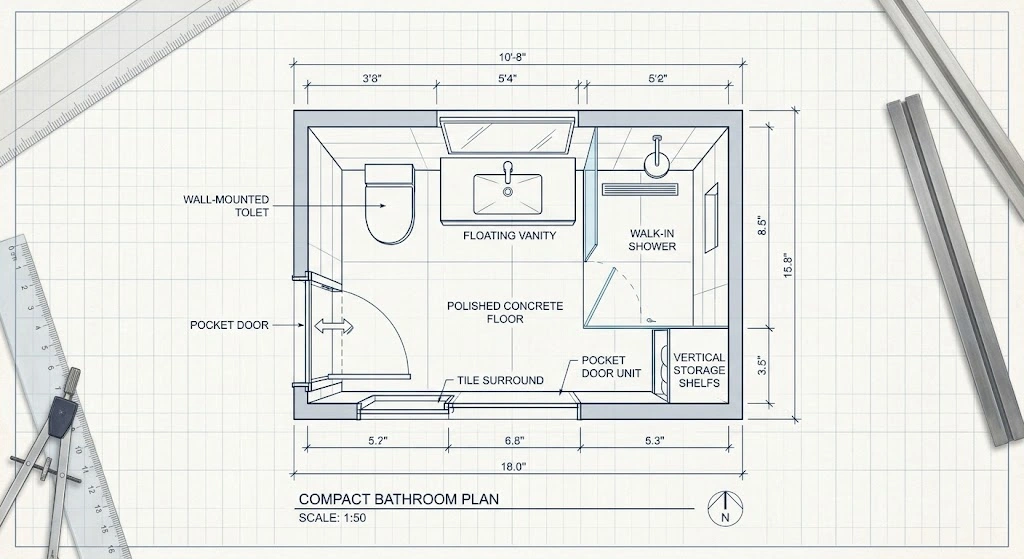
This is the step most people skip, and it’s the one that costs them the most money later. Before you buy a single tile or fixture, sit down and think hard about your current layout.
Ask yourself whether your existing plumbing positions limit your options. Moving a toilet or shower drain is expensive — it can add $1,000 or more to your total cost. If you can work with the current positions, do it. Save your budget for finishes and fixtures that actually show.
That said, sometimes a small layout change unlocks a lot of space. Designer Hannah Bayliss found that relocating her sink and toilet allowed her to build a much larger shower in the same footprint. If you’re planning a full remodel anyway, talk to a contractor about what one strategic move might do for your space.
Draw your bathroom on paper first. Note the door swing — a standard door that opens inward can eat up several square feet of usable space. Swapping to a pocket door or a barn-style sliding door is one of the most practical renovations you can make in a small bathroom.
Use Your Walls, Not Your Floor
Floor space is precious in a small bathroom. The more you can move storage and fixtures off the floor, the bigger the room feels.
Floating vanities are one of the best investments you can make here. Wall-mounted and hovering above the floor, they create a visible gap between the cabinet and the ground. That gap tricks the eye into seeing more open space. Pair one with under-cabinet LED lighting and the effect doubles.
Wall-mounted toilets follow the same logic. They’re more expensive to install than standard floor-mounted models, but they clear up floor space and make cleaning much easier. If a wall-mounted toilet is outside your budget, at least look for a compact round toilet over a standard elongated one — they’re about two inches shorter, and in a tight bathroom, two inches matters.
Think tall, not wide. A narrow shelving tower that runs floor to ceiling gives you serious storage without taking up square footage. The same goes for tall mirrored medicine cabinets recessed into the wall. Instead of protruding into the room, they sit flush with or inside the wall, keeping your walkway clear.
Choose Fixtures That Fit the Scale
Oversized fixtures in a small bathroom are one of the most common renovation mistakes. A wide double sink vanity, a soaking tub, or a large freestanding shower all look great in big bathrooms. In a small one, they crowd the space and make everything feel harder to use.
Swap your full bathtub for a walk-in shower if you rarely use the tub. This single change can free up 12 to 15 square feet of usable space — enough to breathe. A frameless glass shower enclosure works even better because the clear panels don’t visually break up the room.
For sinks, a wall-mounted basin or a compact undermount sink keeps counter space open. Vessel sinks look striking, but they sit tall and can feel crowded in a low-ceilinged bathroom. Corner sinks are another option worth considering — they tuck into otherwise wasted space and leave the main floor plan clear.
Light the Space Strategically
Poor lighting makes a small bathroom feel like a closet. Good lighting — the right kind, in the right places — makes it feel like a room.
Natural light is your best friend. If your bathroom has a window, don’t cover it with heavy curtains. Use frosted glass for privacy while still letting daylight in. If there’s no window, consider a skylight or a solar tube, which pipes daylight down from your roof without major structural work.
For artificial lighting, layer it. A backlit mirror handles most of your daily task lighting and removes the need for wall sconces that clutter the space. Add recessed ceiling lights on a dimmer so you can adjust the mood. Warm white bulbs (around 2700–3000K) make the bathroom feel welcoming rather than clinical.
Avoid single overhead fixtures as your only light source. They cast downward shadows that highlight every bump and edge, making the room feel smaller and darker than it actually is.
Pick Colors That Open the Room Up
Light colors reflect more light and make walls feel farther apart. That’s the core principle behind color choices in small bathrooms.
White, cream, soft gray, and pale greige all work well. You don’t have to go stark white — a soft warm white like off-white or linen actually feels more inviting and still reflects plenty of light. Keep your walls, floor, and ceiling in the same tonal family, and the room starts to feel continuous rather than chopped up.
That said, don’t be afraid of one accent wall with texture or a deeper shade. A dark green or charcoal wall behind the vanity can add depth and drama without making the whole room feel heavy. The key is keeping everything else light so one bold moment doesn’t overwhelm the space.
Matching your grout color to your tile is a small but powerful trick. Contrasting grout creates a grid pattern that draws attention to how small the tiles are — and by extension, how small the room is. Matching grout keeps the surface looking smooth and continuous.
Build Storage Into the Structure
Clutter is the fastest way to make a small bathroom feel unlivable. The solution isn’t just buying more organizers — it’s building storage directly into the walls and fixtures.
A recessed wall niche in the shower is worth every penny. It sits flush with the tile surface, holds your shampoo and soap, and takes up zero extra room. You can add multiple niches at different heights to handle everything from bottles to razors.
Open shelving above the toilet is another practical move. It’s dead space in most bathrooms, and a few simple shelves there can hold towels, extra toilet paper, and small decor without adding any bulk to the room. Keep it organized with small baskets so it looks intentional, not messy.
If you have a bathroom closet with a door that swings into the room, consider removing the door and converting the space to open shelving. Folded towels and a few baskets turn it into a design feature rather than a storage afterthought — and you gain back the floor space the door used to steal.
Use Tile to Your Advantage
Tile choices can visually expand or shrink a bathroom, and most people don’t think about this until it’s too late.
Large-format tiles — think 12×24 inches or bigger — create fewer grout lines, which makes the floor and walls look more continuous. Fewer visual interruptions mean the eye travels farther before stopping, and the room feels larger. Small mosaic tiles do the opposite, cutting the surface into dozens of tiny pieces that make the space feel fragmented.
Running tiles vertically draws the eye upward and makes ceilings feel higher. It’s a simple layout change — same tiles, same installation — but the effect is real. This works especially well on shower walls where you want to emphasize height.
Large mirrors amplify every trick you use. A mirror that runs the full width of your vanity wall reflects the light, the tile, and the depth of the room back at you. Some homeowners run mirrors from countertop to ceiling for maximum effect. It costs more than a standard mirror, but it’s one of the highest-return moves in a small bathroom renovation.
Know Your Budget and Where to Spend It
The average small bathroom renovation runs between $3,000 and $15,000 depending on your market, materials, and how much structural work you take on. The most expensive line items are typically labor, plumbing changes, and electrical work.
Spend the most where you’ll notice it every day — the shower, the vanity, and the lighting. These are the things you touch and see constantly. You can save money on less visible items like the toilet tank internals, basic shelving, or towel bars without sacrificing the feel of the room.
If your budget is tight, tackle one section at a time instead of trying to do everything at once. Start with the shower or the vanity — whichever one bothers you most — and build from there. A phased renovation spreads the cost and lets you live with each change before committing to the next.
Small bathrooms are actually one of the best rooms to renovate because the impact-to-cost ratio is high. You’re working with less square footage, so even modest changes — new tile, a floating vanity, better lighting — transform how the space looks and feels. Start with a clear plan, choose fixtures that match the scale of the room, and use every vertical inch available to you. The results will surprise you.