

Recessed lighting installation costs between $100 and $300 per fixture, with most homeowners spending $1,000 to $2,500 for a full room. Labor makes up the largest share. Your total depends on ceiling type, number of lights, room size, and local electrician rates.
You’ve seen those clean, flush ceiling lights in a magazine or a friend’s home and thought, “I want that.” Good news — recessed lighting is one of the more straightforward upgrades you can make to a room. The tricky part is figuring out what it’s going to cost before someone hands you an invoice.
Prices vary more than most people expect. One contractor might quote you $150 per light. Another quotes $400. Both can be right. Your specific ceiling, your home’s wiring, and how many fixtures you need all push that number higher or lower. This guide breaks everything down so you can walk into a contractor conversation knowing exactly what questions to ask.
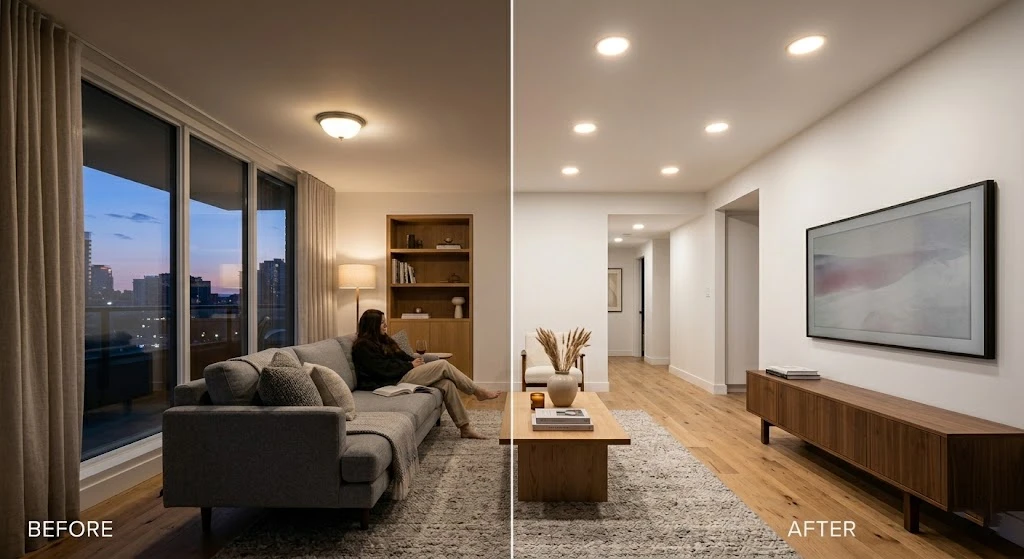
What Does Recessed Lighting Installation Cost on Average?
The national average sits at about $180 per fixture, including materials and labor. Most homeowners land somewhere between $100 and $300 per light. If you’re putting six lights in a living room, that puts your realistic budget at $600 to $1,800 for that one room alone.
For a full project, the total cost to install recessed lighting ranges from $300 to $8,000, with an average of $1,800 for a standard installation. That wide range exists because no two homes are the same. A new construction home with easy attic access and simple wiring costs far less to light than a 1960s ranch house with a finished ceiling, old wiring, and no room to maneuver.
The national average for a complete project hovers around $1,467, with most homeowners paying between $1,056 and $1,968. These numbers reflect typical installations of four to six lights in a standard room.
What Drives the Price Up or Down?
Several things directly affect what you’ll pay. Understanding them helps you budget accurately and avoid getting caught off guard.
Ceiling type is one of the biggest factors. Drywall is the easiest and cheapest ceiling to work with. An electrician can cut clean holes quickly, which keeps labor costs down. Tray ceilings and shiplap add complexity and can push costs up 20 to 30 percent. Wood and concrete ceilings require special drill bits and more careful work — labor costs can double compared to standard drywall.
Ceiling access matters just as much. If there’s an attic above the room, your electrician has space to run wires without cutting through finished drywall. No attic access means more cutting, more patching, and more hours on the clock.
Fixture type also shifts your total. IC-rated recessed lights are designed for ceilings with insulation and cost slightly more due to their enhanced safety features. Non-IC rated fixtures are less expensive but require clearance from any insulation, which can add installation complexity and labor expense.
The number of lights affects your per-unit cost in a good way. Installing all lights at once reduces labor costs by 20 to 30 percent. Electricians charge less per light for larger projects.
Labor Costs — The Biggest Line Item
Labor is where most of your money goes. Typical licensed electrician fees range from $85 to $125 per hour. On average, recessed lighting installations show a 60/40 split in costs between labor and materials.
Each light takes about two to three hours to install. This includes cutting the ceiling hole, running wires, and testing everything. For six lights in one room, expect to pay $900 to $1,800 in labor alone.
One thing many homeowners miss is the minimum service fee. Even if you only need one or two lights installed, most electricians charge a trip fee or a minimum number of hours. When requesting price quotes, ask for a detailed breakdown of all fees and expenses for your project, including any minimum service fees a company may charge.
Keeping lights on the same circuit reduces installation time by 40 percent, saving customers $200 to $400 on labor. This is a real money-saver worth mentioning when you talk to your electrician.
Cost by Room Type
Different rooms have different lighting demands, which changes your total significantly.
Kitchen: Most kitchens use eight to ten recessed lights placed about four feet apart. This provides even coverage over counters and cooking areas. Your total kitchen lighting project will cost $1,600 to $3,000, including all fixtures, trims, and professional installation. Kitchens cost more because they require more lights and careful placement.
Living Room: Six to eight lights work well for most average-sized living rooms. Many people add dimmer switches so they can adjust the mood depending on the time of day or occasion. A living room project typically runs $800 to $1,800.
Bathroom: Moisture-rated fixtures cost $10 to $30 extra per light. Budget $800 to $1,800 for bathroom recessed lighting installation. The higher price reflects the specialized fixtures and extra labor for working in tight spaces.
Bedroom: Bedrooms need fewer lights and usually have simpler wiring situations. Four to six fixtures is typical, putting costs at roughly $400 to $1,200 depending on your electrician’s rates and ceiling conditions.
Fixture Types and What They Cost
The fixture itself is the smaller portion of your total bill, but it still adds up across a full room.
LED fixtures range from $15 to $30 for basic models, $20 to $50 for IC-rated, $25 to $50 for dimmable versions, and $40 to $100 for smart LEDs.
Smart LEDs cost more upfront, but they offer real long-term value. LED lights use so little power that six fixtures cost only $5 to $10 per year to run, compared to $50 to $80 yearly for incandescent bulbs. Most homeowners recover the extra cost within two years through lower electric bills.
Our electrical team consistently sees 75 percent energy savings when converting from halogen to LED recessed lighting. LEDs last 25,000 to 50,000 hours compared to 2,000 hours for halogen bulbs. Over 10 years, you’ll replace halogen bulbs 12 to 25 times versus never replacing LEDs.
Fixture size also plays a role. Smaller fixtures — three to four inches — work well for accent lighting, hallways, and smaller rooms. Larger fixtures — five to six inches — provide better general illumination for kitchens, living rooms, and open spaces.
Permits and Hidden Costs You Should Know About
Many homeowners skip this section. Don’t. Permits protect you far more than they inconvenience you.
Electrical permits are often required for recessed lighting installation, especially if new wiring is added. Permit costs range from $50 to $250, depending on your municipality. Skipping permits can lead to fines, failed home inspections, or safety hazards.
Replacing existing fixtures with recessed lights generally requires no permits. But cost of compliance for new installations can range from $41 to $405, depending on local regulations and the scope of your project.
Beyond permits, watch for a few other costs that catch people off guard. If your home has older wiring, your electrician may need to upgrade it before touching anything else. Newer homes typically feature aluminum wiring, costing between $0.21 and $0.48 per linear foot. Older homes usually contain copper wiring at $0.43 to $1.02 per linear foot. Mixing these two wire types creates a fire hazard.
After installation, you’ll still need to paint or touch up ceilings. Budget $100 to $300 for professional ceiling painting, or plan to handle this yourself with matching paint. It’s a small cost that’s easy to forget and annoying to discover later.
DIY vs. Hiring a Professional
If you’re handy with electrical work, you might think about doing this yourself. The math is appealing. DIY recessed lighting installation can save you $600 to $2,000 in labor. For a small project, expect to spend $250 to $800.
But the risks are real. Electrical fires affect about 51,000 homes each year. Arcing faults cause 28,000 of these incidents. Poor installation is one of the top contributors. Beyond fire risk, unpermitted work can cause serious headaches when you sell your home. Inspectors catch it, and fixing it after the fact is expensive.
When replacing existing lights by removing the old fixture and attaching the new one to the box already in place, the job is similar to replacing a ceiling fan and is manageable for a skilled DIYer with basic electrical knowledge. But retrofitting recessed lighting in an older home is a job for a professional.
Many DIYers spend entire weekends on projects that professionals complete in hours. Professional installation ensures safety, code compliance, and warranty protection. Licensed electricians carry insurance, pull permits, and guarantee their work.
Smart Ways to Save Without Cutting Corners
You don’t have to pay top dollar to get a great result. A few smart moves can trim your bill without sacrificing quality or safety.
Installing all lights at once reduces labor costs by 20 to 30 percent. Choosing standard four-inch and six-inch fixtures costs less and offers more trim options than specialty sizes. Keeping your existing switch locations avoids additional wiring, which could add $200 to $500 to your project. Many contractors also offer discounts for flexible scheduling during slower periods.
Get at least three quotes before you commit to anyone. Prices vary significantly from one contractor to the next, and a detailed written quote protects you if something unexpected comes up mid-project. Ask specifically whether the quote includes permits, cleanup, and any drywall patching — because not all of them do.
Finally, go LED from the start. The fixture cost is slightly higher than older alternatives, but the energy savings start immediately and compound over years. It’s one of the few places in a home renovation where spending a little more upfront genuinely pays you back.
Recessed lighting transforms a plain ceiling into something that feels intentional and well-designed. Knowing the real numbers before you start means no surprises, no scrambling for extra budget mid-project, and a result you’ll actually be happy with. Get a few quotes, ask the right questions, and you’ll be in great shape.