

A gravel path is one of the most affordable, versatile, and attractive ways to add structure to any outdoor space. Whether you are connecting your front door to the street, creating a winding garden walkway, or adding a functional route through your backyard, gravel paths deliver both practicality and curb appeal. Unlike concrete or paving slabs, gravel is easy to install, drains naturally, and works beautifully in almost any style of garden — from formal English designs to rustic cottage layouts.
Homeowners across the UK and US are choosing gravel paths over other materials because of their low upfront cost, minimal maintenance, and long lifespan when properly laid. This guide covers everything you need to know — from choosing the right type of gravel to laying the path step by step, maintaining it over time, and avoiding the most common mistakes.
What Is a Gravel Path and Why Should You Build One?
A gravel path is a walkway surface made from loose stones, pebbles, or crushed rock. It sits within a defined border — usually edging made of metal, timber, brick, or stone — and typically rests on a compacted base and weed membrane.
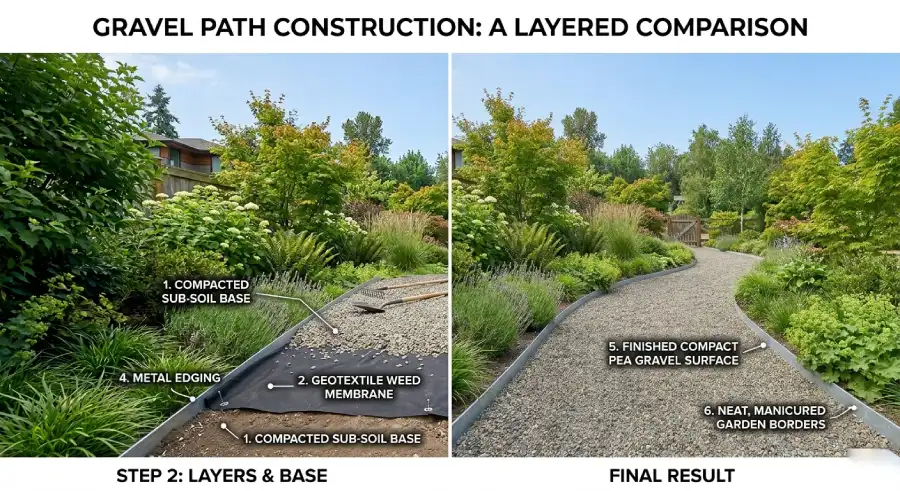
Gravel paths are popular because they:
- Drain rainwater naturally, reducing puddles and waterlogging
- Cost far less than concrete, block paving, or natural stone slabs
- Install quickly — most DIY gravel paths can be completed in a weekend
- Suppress weeds when laid correctly over membrane
- Crunch underfoot, which acts as a subtle home security deterrent
- Suit any garden size or shape, including curved or irregularly shaped routes
They are not perfect for every situation. Gravel can spread onto lawns, it is harder to push wheelbarrows over, and it needs occasional top-ups. But for most garden paths, it remains one of the best value-for-money options available.
Background: The History of Gravel in Landscaping
Gravel has been used in landscape design for thousands of years. Below is a structured overview of gravel’s role in garden history and modern landscaping.
| Detail | Information |
|---|---|
| Material origin | Natural stone, crushed rock, river pebble |
| Historical use | Roman roads, Japanese zen gardens, French formal gardens |
| Introduced to English gardens | 17th century, formal estate design |
| Popular garden styles | Cottage, Mediterranean, Japanese, modern minimalist |
| Common gravel types | Pea gravel, slate chippings, crushed granite, limestone, flint |
| Typical path depth | 5–10 cm (2–4 inches) |
| Average cost per tonne | £30–£80 (UK) / $40–$100 (US) |
| Lifespan with maintenance | 10–25+ years |
| Maintenance frequency | Raking every few weeks; top-up every 2–5 years |
| Drainage performance | Excellent — permeable surface |
| DIY-friendly rating | High — suitable for beginners |
| Best base material | Compacted hardcore or MOT Type 1 |
| Weed barrier required | Yes — geotextile membrane recommended |
| Edging types | Metal, timber, brick, stone, plastic |
Types of Gravel for Paths: Which One Should You Choose?
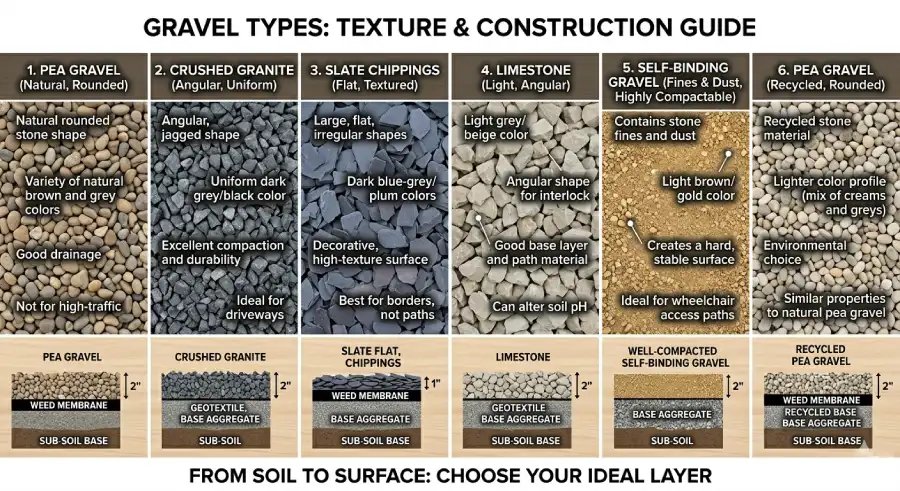
Choosing the right gravel for your path is one of the most important decisions you will make. Not all gravel behaves the same way underfoot or in terms of stability.
Pea Gravel
Pea gravel is small, rounded, and smooth. It is one of the most popular choices for garden paths because it looks attractive and comes in natural earth tones. However, because it is round, it tends to roll and shift more easily than angular gravel. It works best when contained within firm edging.
Crushed Granite or Granite Chippings
Crushed granite has angular edges that lock together when compacted. This makes it one of the most stable gravel options for a path with regular foot traffic. It comes in grey and silver tones and suits contemporary garden designs.
Slate Chippings
Slate chippings give a more dramatic, dark appearance. They work well in modern or Japanese-style gardens. Slate is sharp-edged and compacts well, though it can be slippery when wet in some conditions.
Limestone Chippings
Limestone is pale and bright, which can lighten up a shady garden path. It reflects light well and is often used in cottage or countryside gardens. It is softer than granite and may degrade slightly faster over many years.
Self-Binding Gravel
Self-binding gravel is a blend of fine particles and larger stone that compacts into a firm, almost solid surface. It is excellent for a gravel path that needs to feel more stable — great for elderly users, pushchairs, or wheelbarrows. It does not drain as freely as loose gravel.
How to Lay a Gravel Path: Step-by-Step
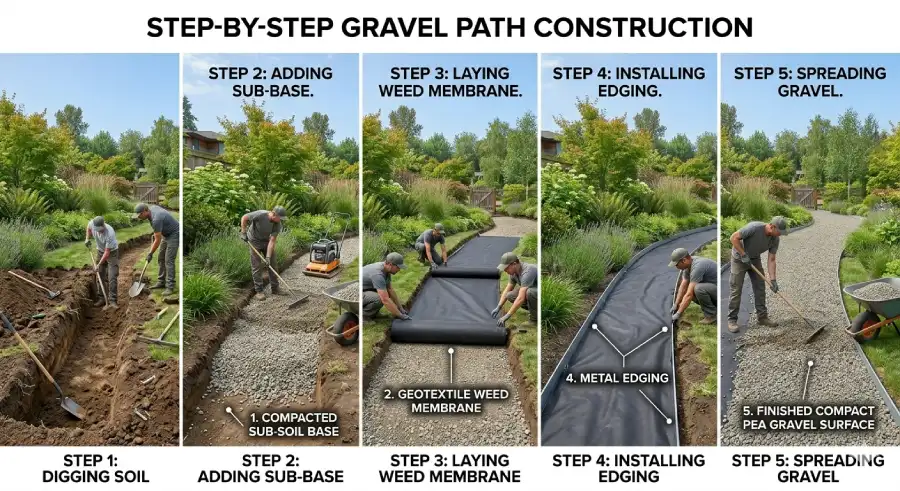
This is the core process for building a gravel path from scratch. Most homeowners can complete this project over one or two days.
What You Will Need
- Spade and shovel
- Garden rake
- Wheelbarrow
- Timber, metal, or plastic edging
- Wooden pegs or stakes
- Geotextile weed membrane
- Gravel (calculate volume below)
- Compactor or hand tamper (optional but recommended)
- String line and spirit level
Step 1: Plan and Mark Out the Path
Use string lines and pegs to mark the edges of your path. A standard garden path is 60–90 cm (2–3 feet) wide. For a curved gravel path, use a hosepipe or sand to mark the line before digging.
Step 2: Dig Out the Ground
Excavate the path area to a depth of around 10–15 cm (4–6 inches). This gives you room for a base layer and the gravel itself. Remove all grass, weeds, and roots. A clean base prevents future weed problems.
Step 3: Compact the Base
Tamp down the soil base firmly. If the ground is soft or clay-heavy, add a 5 cm layer of compacted hardcore or MOT Type 1 sub-base. This prevents the gravel from sinking over time.
Step 4: Install Edging
Fix your chosen edging along both sides of the path. Edging is essential — it keeps the gravel contained and maintains a clean border. Metal edging is the most durable and barely visible once installed. Timber railway sleeper edging gives a more rustic look.
Step 5: Lay the Weed Membrane
Roll out a geotextile membrane across the full length and width of the path. Overlap joins by at least 15 cm and secure with landscape staples or pegs. This membrane allows water to drain through while blocking weed growth from below.
Step 6: Add the Gravel
Pour and spread the gravel evenly to a depth of 5–7 cm (2–3 inches). Use a garden rake to level it out. Check the surface is even using a spirit level. Avoid going too thin — a shallow layer will shift underfoot and expose the membrane quickly.
Step 7: Compact and Finish
Walk across the gravel to help it settle. For a firmer finish, use a plate compactor (available from hire shops). Rake the surface once more for an even, neat finish.
Calculating How Much Gravel You Need
Use this simple formula:
Length (m) × Width (m) × Depth (m) = Volume in cubic metres
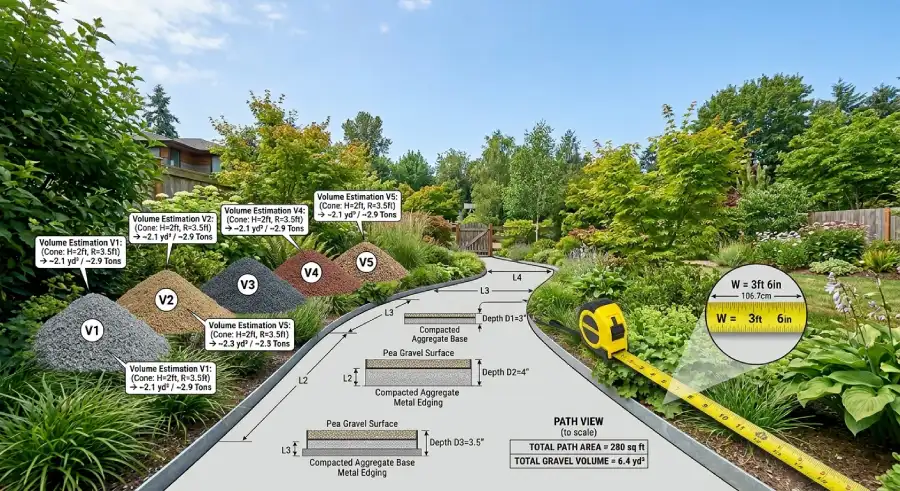
Then convert to tonnes using your gravel supplier’s conversion rate (typically around 1.5–1.7 tonnes per cubic metre for most gravel types).
| Path Size | Depth | Approx. Gravel Needed |
|---|---|---|
| 5m × 1m | 5 cm | ~0.4 tonnes |
| 10m × 1m | 5 cm | ~0.8 tonnes |
| 20m × 1m | 7 cm | ~2.2 tonnes |
| 20m × 1.5m | 7 cm | ~3.2 tonnes |
Always order 10–15% extra to account for settling and wastage.
Maintaining a Gravel Path
One of the biggest advantages of a gravel path is how little maintenance it requires — but it does need occasional attention to stay looking its best.
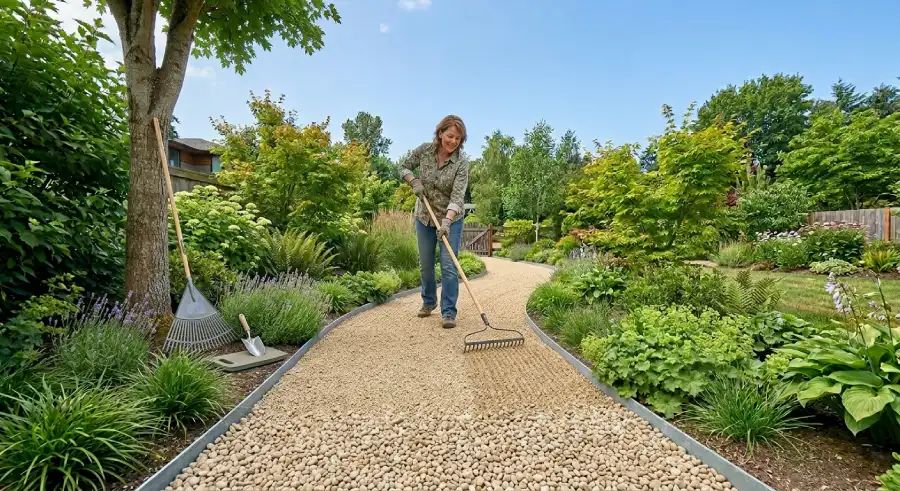
Raking: Rake the surface every few weeks to redistribute gravel that has shifted and remove debris. This also keeps it looking tidy and prevents leaves from decomposing and creating a growing medium for weeds.
Weed control: Despite the membrane, some weeds will eventually appear. Remove them by hand when small or use a path weed killer. Avoid digging, which disturbs the membrane beneath.
Top-ups: Over time, gravel gets kicked to the sides or washed away. Top up the path every 2–5 years with a fresh layer to restore depth and appearance.
Edging checks: Inspect edging periodically, especially after harsh winters. Reset any sections that have shifted or lifted.
Common Mistakes to Avoid
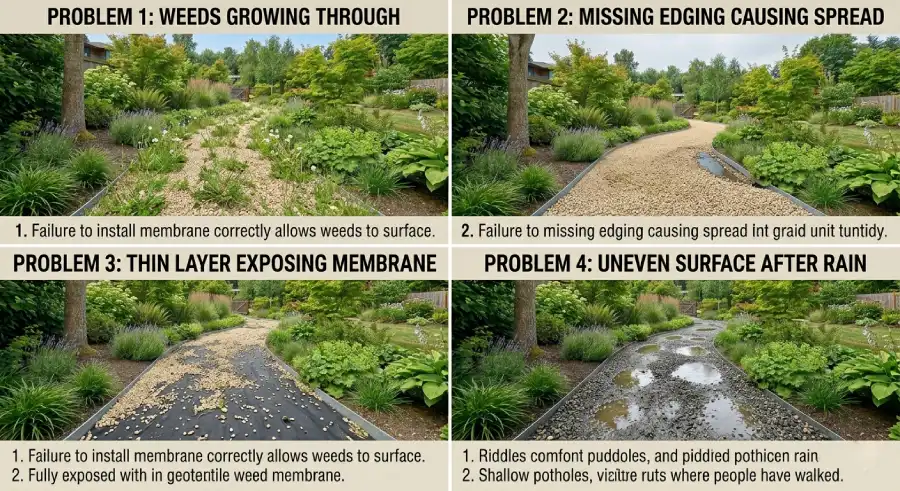
- Skipping the weed membrane — this is the single biggest mistake. Without it, you will spend years pulling weeds from the gravel.
- Using too little gravel — a depth under 4 cm will feel crunchy-thin and shift easily. Aim for at least 5 cm.
- No edging — without edging, gravel spreads into lawns and borders within weeks.
- Wrong gravel choice — very large stones are uncomfortable to walk on; very small smooth stones roll excessively. For most paths, 10–20 mm angular gravel is ideal.
- Poor drainage preparation — on clay soils, a hardcore sub-base is essential to prevent the path from sinking.
Gravel Path Design Ideas
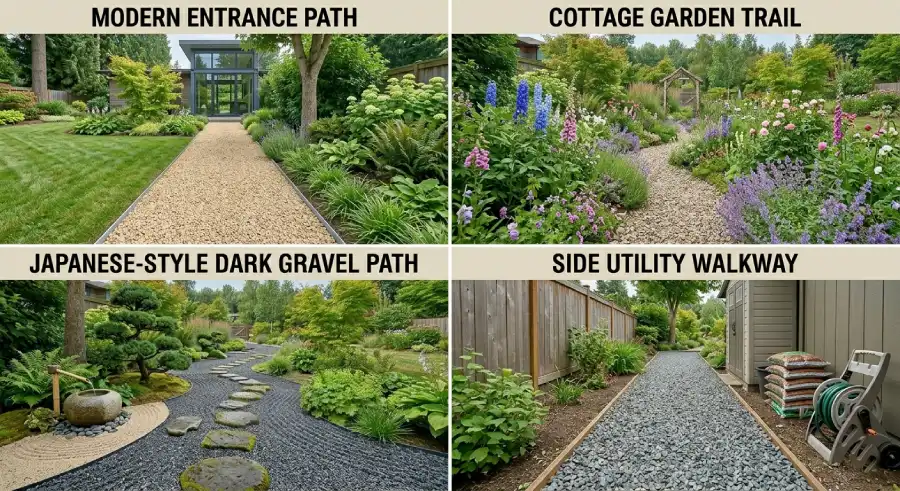
- Straight formal path with crisp metal edging and pale limestone gravel leading to a front door
- Winding cottage garden path with low-growing plants (thyme, chamomile) between the edges and pea gravel
- Japanese zen-inspired path with dark slate chippings, stepping stones, and bamboo edging
- Contemporary urban path with self-binding gravel in a charcoal tone and minimal planting
- Side-passage utility path with crushed granite for a firm, stable surface
FAQs About Gravel Paths
1. How deep should a gravel path be?
For most garden paths, a depth of 5–7 cm (2–3 inches) is ideal. This gives enough coverage to feel solid underfoot without using excessive material.
2. What is the best gravel for a garden path?
Angular gravel such as crushed granite or self-binding gravel is best for stability and comfort. Pea gravel looks attractive but rolls more. Choose based on traffic level and preferred aesthetic.
3. Do I need planning permission to lay a gravel path?
In most cases, no. Domestic garden paths generally do not require planning permission. However, if you are near a listed building or in a conservation area, check with your local authority first.
4. Will weeds grow through a gravel path?
With a good quality geotextile membrane installed properly, weed growth is significantly reduced. Some weed seeds blown in from above may germinate in the top layer, but these are easy to remove.
5. How long does a gravel path last?
A well-laid gravel path with proper edging and a compacted base can last 15–25 years or more. The gravel itself may need topping up every few years.
6. Is gravel good for drainage?
Yes. One of the main advantages of gravel paths is their permeability. Rainwater passes through freely, reducing runoff and waterlogging, which makes them ideal in areas with heavy rainfall.
7. How do I stop gravel from spreading onto my lawn?
Install firm, slightly raised edging — metal or timber works best. This creates a physical barrier that keeps gravel contained within the path boundaries.
8. Can I lay a gravel path myself?
Yes. A gravel path is one of the most beginner-friendly landscaping projects available. With basic tools and a free weekend, most homeowners can install one from scratch.
9. What is self-binding gravel and is it better than loose gravel?
Self-binding gravel is a mix of fine particles and coarser stone that compacts into a firmer surface. It is better for paths that need to feel solid (near entrances, accessible routes), but it does not drain as freely as loose gravel.
10. How much does a gravel path cost to install?
DIY installation costs roughly £5–£15 per square metre for materials. Professional installation typically costs £20–£50 per square metre depending on your location and the complexity of the project.