

Apron-glass kitchen cabinets combine a traditional apron-style frame with glass door panels, creating an open, light-filled look in any kitchen. They come in clear, frosted, seeded, and textured glass options, suit both modern and farmhouse styles, and typically cost 25–50% more than solid cabinet doors.
If you’ve been scrolling through kitchen renovation photos lately, you’ve probably noticed one thing: glass cabinets are everywhere. And not just any glass cabinets — apron-glass kitchen cabinets, with their classic framed look and gorgeous door panels, are making a major comeback in homes across the country.
There’s a good reason for that. These cabinets bring light into a space, give your kitchen a polished, collected feel, and work beautifully in everything from farmhouse kitchens to sleek modern designs. But before you start ripping out your solid wood doors, it helps to know exactly what you’re getting into — the styles, the costs, the maintenance reality, and the tricks that make them look great every single day.
This guide covers all of it.
What Are Apron-Glass Kitchen Cabinets?
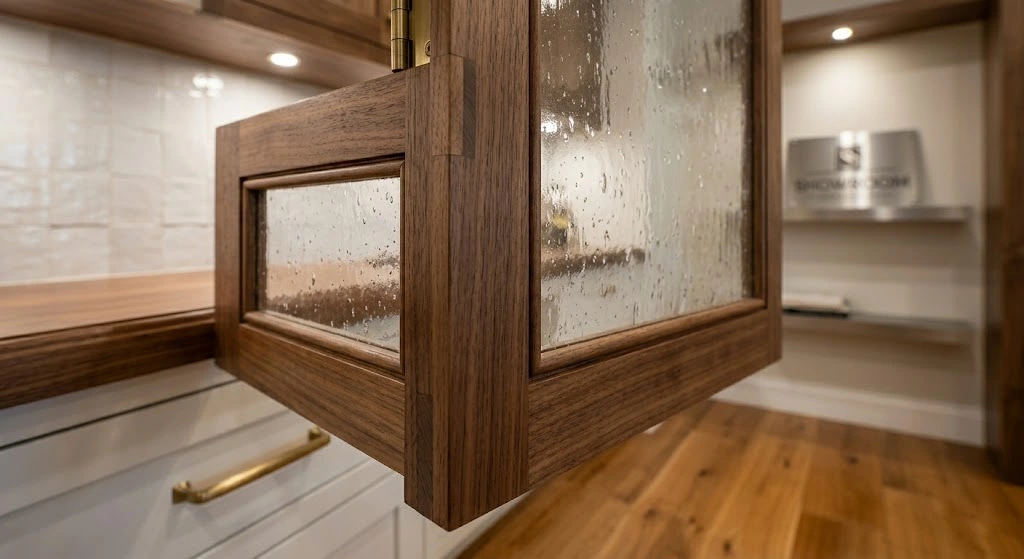
The term “apron” in cabinet design refers to the framed border that surrounds the glass panel on a cabinet door. Think of it like a picture frame — a flat or raised outer rail that holds the glass in place and gives the door its shape and structure. When you combine that apron frame with a glass insert, you get what designers call an apron-glass cabinet door.
It’s a style that’s been around for over a century, originally found in country farmhouses and traditional European kitchens. The apron frame brings a sense of craftsmanship and detail that plain, frameless glass doors simply don’t offer. That’s why this style works so well in spaces where you want warmth alongside sophistication — it feels intentional, not just modern.
The cabinet boxes themselves are standard. What changes is the door. You keep your existing cabinet structure and swap solid panels for apron-glass doors, or you plan for them during a full renovation. Either way, the transformation is significant.
The Different Types of Glass You Can Choose
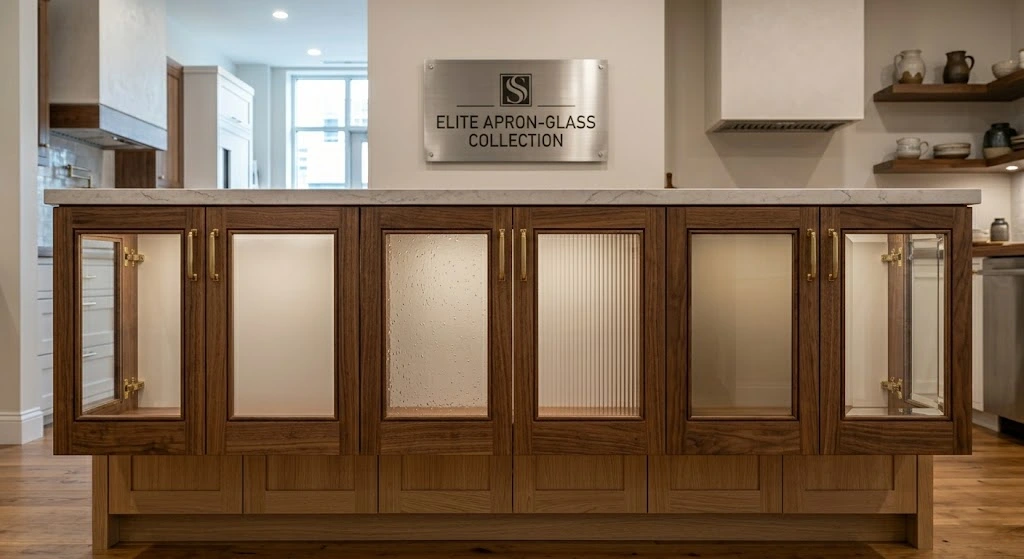
Not all glass is the same, and the type you pick will shape both the look of your kitchen and how much maintenance you’re signing up for. Here’s what’s actually available.
Clear glass is the most straightforward option. It gives you full visibility into the cabinet — which is great if you have beautiful dishware you want to show off, and not so great if your everyday mugs are a mismatched collection of freebies. Clear glass is typically the most affordable starting point, and it reflects light beautifully throughout the kitchen.
Frosted glass is the smart middle ground. It diffuses light gently without letting anyone see exactly what’s stored inside. Your shelves show through as soft shapes, not sharp details. This works perfectly if you want the bright, airy feel of glass cabinets without the pressure of keeping everything perfectly styled at all times. The frosted treatment adds around $15–25 per door compared to clear glass.
Seeded glass deserves more attention than it usually gets. Those tiny embedded air bubbles add a handmade, artisan quality that photographs beautifully and hides fingerprints better than flat glass. It blurs what’s inside just enough to give you privacy without completely obscuring the cabinet contents. It crosses style lines easily — at home in a farmhouse kitchen and equally comfortable in a transitional space. One practical note: seeded glass is heavier than standard flat glass, so make sure your hinges are rated for the extra weight.
Ribbed or reeded glass has parallel grooves that run vertically, creating a modern, textured look with partial privacy. It’s had a big moment in contemporary kitchen design and works especially well in minimal spaces where you want visual interest without too much decoration.
Tinted glass — smoky or bronze — adds a layer of sophistication and mutes the internal view. It’s a strong choice for high-end kitchens where you want a bit of drama and don’t mind that the glass itself becomes a focal point.
Leaded or beveled glass is for those who want something genuinely custom. Beveled cuts around the edges create a prism effect that catches and refracts light, adding elegance even when shelves are lightly styled. Leaded glass panels can include geometric divisions or colored inlays for a fully one-of-a-kind look.
Apron-Glass Cabinets and Design Styles — What Works Together
One of the reasons apron-glass cabinets have stayed popular for so long is how well they adapt to different kitchen aesthetics. The framing details can be adjusted to match whatever style you’re going for.
Farmhouse kitchens are perhaps the most natural home for apron-glass cabinets. Pair seeded or ribbed glass with shaker-style apron frames, natural wood finishes, and bronze hardware, and you get something that feels genuinely authentic rather than trend-driven. Mullion patterns — the decorative bars that divide a glass panel into smaller panes — also work beautifully here. An X-style mullion gives a farmhouse feel, while a simple grid pattern reads more traditional. If you have low ceilings and the individual panes would end up tiny, solid clear glass or frosted glass in a simple apron frame is a better choice than forcing a mullion pattern that won’t read correctly at scale.
Traditional kitchens benefit from arched apron frames and decorative mullion patterns that echo classic window designs. These details emphasize craftsmanship and create a timeless quality. Frosted or textured glass complements warm wood tones and classic paint palettes especially well in this setting.
Modern and contemporary kitchens take a cleaner approach. Flat apron frames, minimal hardware, and clear or tinted glass create that sleek, sophisticated look. Frameless construction works here too, though the apron-glass style still fits when you keep the profile thin and simple.
Transitional kitchens — those that blend classic and modern — benefit from mixing approaches. Clear upper apron-glass cabinets paired with solid lower cabinetry is one of the most popular combinations right now. It breaks up a wall of solid doors without going all-in on glass throughout the entire kitchen.
How Much Do Apron-Glass Kitchen Cabinets Cost?
Cost is where a lot of people get surprised. Glass cabinet doors — including apron-style framed versions — typically cost 25–50% more than solid alternatives. Basic clear glass doors start around $75–150 per piece, while premium options like leaded or custom-designed panels can reach $200–400 per door. Full installations run anywhere from $125–800 per linear foot, depending on the materials and customization level.
The good news is that a full cabinet replacement isn’t always necessary. Retrofit solutions that replace only the doors while keeping the existing cabinet boxes intact can significantly reduce both cost and project time. For an average kitchen, a door-only replacement takes roughly 2–4 days to complete.
One cost factor many people overlook: the glass type itself. Frosted adds $15–25 per door over clear glass. Seeded glass panels run approximately $82–110 per panel depending on size. Tinted or colored glass increases overall costs by roughly 20–30%. Custom leaded or beveled glass adds more on top of that.
If your budget is tight, a smart approach is to use apron-glass doors only on upper cabinets, or only on a few accent cabinets in a focal area — flanking a window or above a range, for example. That strategic placement gives you the visual payoff without covering every inch of your kitchen in glass.
The Honest Pros and Cons
Let’s be real about what glass cabinets actually deliver day-to-day, because the design inspiration photos don’t always tell the full story.
On the positive side, apron-glass cabinets make a kitchen feel more open and bright. Glass reflects light throughout the space and creates the illusion of depth. They break up what would otherwise be a monotonous wall of solid doors and add genuine visual interest. They’re also surprisingly practical — you can see where everything is at a glance, which speeds up both cooking and unloading the dishwasher. Guests navigating your kitchen can find things without opening every single door.
The downsides are real, though. Glass shows fingerprints, water spots, and dust more readily than solid wood doors. If you have kids or a busy household, plan on wiping the glass down more often than you would with solid cabinets. The contents are always on display too, which means whatever is stored inside becomes part of your kitchen’s decor whether you intended that or not. Clear glass in particular requires a deliberate, organized approach to what gets stored in those cabinets — messy shelves behind clear glass look messy from across the room.
Glass is also more fragile than wood or MDF. Tempered glass is more durable than standard glass, and it’s worth specifying for safety — it breaks into small, less dangerous pieces rather than sharp shards. But even tempered glass can crack if it takes a direct hit from something heavy. Repairs on specialty glass with frosting, etching, or custom treatments can be costly.
Lighting Inside the Cabinet — Don’t Skip This Step
One upgrade that makes a significant difference: interior cabinet lighting. LED strip lights or puck lights mounted inside apron-glass cabinets illuminate the contents beautifully while generating minimal heat. This is especially effective in kitchens where the glass doors become a display feature — crystal glassware lit from within looks genuinely stunning.
A licensed electrician should handle the installation to avoid any damage to the cabinet structure or wiring. The cost is worth it. Without interior lighting, glass cabinets in a darker kitchen can look dull and shadowy. With it, they become an intentional focal point.
How to Style the Inside of Your Apron-Glass Cabinets
This is where a lot of homeowners underestimate the work involved. Styling glass cabinets isn’t a one-time task — it’s an ongoing commitment to keeping things organized and visually coherent.
A few principles that actually work: keep a consistent color story. A cabinet filled with dishes of the same color family — all white, or white and blue, or neutral tones — looks clean and cohesive. A cabinet with different colors everywhere looks scattered. You don’t have to be precious about it, but you do need to be deliberate.
Use the lower shelves for everyday items and save the higher shelves for decorative or less-used pieces. That way, the daily grab-and-put-back happens at the lower level, and the upper display stays relatively undisturbed. It also keeps the most-used items easiest to reach.
If you have frosted, ribbed, or seeded glass, the organization requirements are more relaxed. The glass distorts the contents enough that a little visual messiness doesn’t show. Clear glass demands much more discipline.
Is It Worth It?
For most homeowners, yes — if it fits your lifestyle. Apron-glass kitchen cabinets add perceived value and design sophistication that makes kitchens feel more finished and intentional. Kitchen remodels consistently recoup 65–75% of renovation costs at resale, and glass cabinet doors signal quality craftsmanship to buyers.
If you entertain regularly, enjoy displaying beautiful dishware, and don’t mind the extra maintenance that comes with glass surfaces, apron-glass cabinets will reward you every time you walk into your kitchen. If you have a busy household with young kids, textured or frosted glass over clear is the smarter call — it gives you all the visual benefits with far less pressure to keep things perfectly arranged.
Start with a few upper cabinets, see how you feel about the maintenance reality, and go from there. Most people who try them find they can’t imagine going back.